

Kirjailija
Philip Mirowski
Kirjat ja teokset yhdessä paikassa: 18 kirjaa, julkaisuja vuosilta 1991–2019, suosituimpiin kuuluu The Knowledge We Have Lost in Information. Vertaile teosten hintoja ja tarkista saatavuus suomalaisista kirjakaupoista.
18 kirjaa
Kirjojen julkaisuvuodet: 1991–2019.
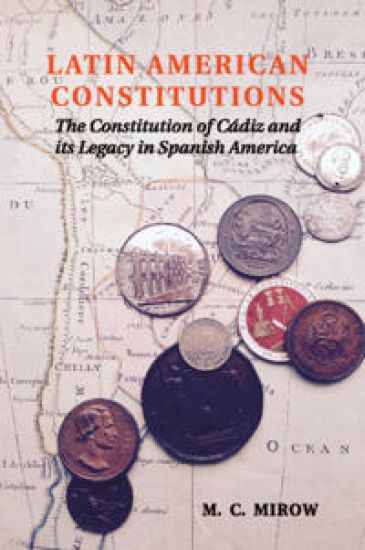
Latin American Constitutions provides a comprehensive historical study of constitutionalism in Latin America from the independence period to the present, focusing on the Constitution of Cádiz, a foundational document in Latin American constitutionalism. Although drafted in Spain, it was applied in many regions of Latin America, and deputies from America formed a significant part of the drafting body. The politicization of constitutionalism reflected in Latin America's first moments proved to be a lasting legacy evident in the legal and constitutional world of the region today: many of Latin America's present challenges to establishing effective constitutionalism can be traced to the debates, ideas, structures, and assumptions of this text. This book explores the region's attempts to create effective constitutional texts and regimes in light of an established practice of linking constitutions to political goals and places important constitutional thinkers and regional constitutions, such as the Mexican Constitution of 1917, into their legal and historical context.

Markets
Armin Beverungen; Philip Mirowski; Edward Nik-Khah; Jens Schröter
University of Minnesota Press
2019
nidottu
A media theory of markets Markets abound in media-but a media theory of markets is still emerging. Anthropology offers media archaeologies of markets, and the sociology of markets and finance unravels how contemporary financial markets have witnessed a media technological arms race. Building on such work, this volume brings together key thinkers of economic studies with German media theory, describes the central role of the media specificity of markets in new detail and inflects them in three distinct ways. Nik-Khah and Mirowski show how the denigration of human cognition and the concomitant faith in computation prevalent in contemporary market-design practices rely on neoliberal conceptions of information in markets. SchrÖter confronts the asymmetries and abstractions that characterize money as a medium and explores the absence of money in media. Beverungen situates these inflections and gathers further elements for a politically and historically attuned media theory of markets concerned with contemporary phenomena such as high-frequency trading and cryptocurrencies.
The Knowledge We Have Lost in Information
Philip Mirowski; Edward Nik-Khah
Oxford University Press Inc
2017
sidottu
Information is a central concept in economics, and The Knowledge We Have Lost in Information explores its treatment in modern economics. The study of information, far from offering enlightenment, resulted in all matter of confusion for economists and the public. Philip Mirowski and Edward Nik-Khah argue that the conventional wisdom suggesting "economic rationality" was the core of modern economics is incomplete. In this trenchant investigation, they demonstrate that the history of modern microeconomics is better organized as a history of the treatment of information. The book begins with a brief primer on information, and then shows how economists have responded over time to successive developments on the concept of information in the natural sciences. Mirowski and Nik-Khah detail various intellectual battles that were fought to define, analyze, and employ information in economics. As these debates developed, economists progressively moved away from pure agent conscious self-awareness as a non-negotiable desideratum of economic models toward a focus on markets and their design as information processors. This has led to a number of policies, foremost among them: auction design of resources like the electromagnetic spectrum crucial to modern communications. The Knowledge We Have Lost in Information provides insight into the interface between disputes within the economics discipline and the increasing role of information in contemporary society. Mirowski and Nik-Shah examine how this intersection contributed to the dominance of neoliberal approaches to economics, politics, and other realms.

At the onset of the Great Recession, as house prices sank and joblessness soared, many commentators thought that neoliberalism itself was in its death throes. And yet it seems that-post-apocalypse-we've awoken into a second nightmare more ghastly than the first: a political class still blaming government intervention, a global drive for austerity, stagflation, and exploding sovereign debt crises. Philip Mirowski argues that, as in classic studies of cognitive dissonance, neoliberal thought has become so pervasive that any countervailing evidence serves only to further convince disciples of its ultimate truth. Once neoliberalism became a Theory of Everything-a revolutionary account of self, knowledge, information, markets, and government-it could no longer be falsified by mere data from the 'real' economy. In this sharp, witty and deeply informed account-taking no prisoners in his pursuit of 'zombie' economists-Mirowski surveys the wreckage of what passes for economic thought, and finally provides the basis for an anti-neoliberal account of the current crisis and our future prospects.
Om kapitalismen : perspektiv från Engelsbergsseminariet 2010
Gerard Baker; Erik Berglöf; Edward Chancellor; Rolf Ekéus; Kevin Hassett; Oliver Kamm; John Kay; Deidre McCloskey; Philip Mirowski; Joel Mokyr; Geoff Mulgan; Wolfgang Münchau; Johan Norberg; Avner Offer; Minxin Pei; Carlota Perez; Emma Rotschild; Donald Sassoon; Nathan Shachar; Robert Skidelsky; David Ståhl; Donald Winch
Bokförlaget Atlantis
2011
sidottu
Hur ser kapitalismens framtid ut? Kommer den framgångsrika variant av kapitalism från de senaste decennierna som vi kallar globalisering att fortsätta, eller kommer regionala och kanske till och med starka nationella krafter att vinna mark i ekonomiska frågor? Medverkande: Gerard Baker, Erik Berglöf, Edward Chancellor, Rolf Ekéus, Kevin Hassett, Oliver Kamm, John Kay, Deirdre McCloskey, Philip Mirowski, Joel Mokyr, Geoff Mulgan, Wolfgang Münchau, Johan Norberg, Avner Offer, Minxin Pei, Carlota Perez, Emma Rotschild, Donald Sassoon, Nathan Shachar, Robert Skidelsky, David Ståhl, Donald Winch.

This trenchant study analyzes the rise and decline in the quality and format of science in America since World War II. During the Cold War, the U. S. government amply funded basic research in science and medicine. Starting in the 1980s, however, this support began to decline and for-profit corporations became the largest funders of research. Philip Mirowski argues that a powerful neoliberal ideology promoted a radically different view of knowledge and discovery: the fruits of scientific investigation are not a public good that should be freely available to all, but are commodities that could be monetized. Consequently, patent and intellectual property laws were greatly strengthened, universities demanded patents on the discoveries of their faculty, information sharing among researchers was impeded, and the line between universities and corporations began to blur. At the same time, corporations shed their in-house research laboratories, contracting with independent firms both in the States and abroad to supply new products. Among such firms were AT&T and IBM, whose outstanding research laboratories during much of the twentieth century produced Nobel Prize–winning work in chemistry and physics, ranging from the transistor to superconductivity. Science-Mart offers a provocative, learned, and timely critique, of interest to anyone concerned that American science—once the envy of the world—must be more than just another way to make money.
A leading scholar of the history and philosophy of economic thought, Philip Mirowski argues that there has been a top-to-bottom transformation in how scientific research is organized and funded in Western countries over the past two decades and that these changes necessitate a reexamination of the ways that science and economics interact. Mirowski insists on the need to bring together the insights of economics, science studies, and the philosophy of science in order to understand how and why particular research programs get stabilized through interdisciplinary appropriation, controlled attributions of error, and funding restrictions. Mirowski contends that neoclassical economists have persistently presumed and advanced an “effortless economy of science,” a misleading model of a self-sufficient and conceptually self-referential social structure that transcends market operations in pursuit of absolute truth. In the stunning essays collected here, he presents a radical critique of the ways that neoclassical economics is used to support, explain, and legitimate the current social practices underlying the funding and selection of “successful” science projects. He questions a host of theories, including the portraits of science put forth by Karl Popper, Michael Polanyi, and Thomas Kuhn. Among the many topics he examines are the social stabilization of quantitative measurement, the repressed history of econometrics, and the social construction of the laws of supply and demand and their putative opposite, the gift economy. In The Effortless Economy of Science? Mirowski moves beyond grand abstractions about science, truth, and democracy in order to begin to talk about the way science is lived and practiced today.
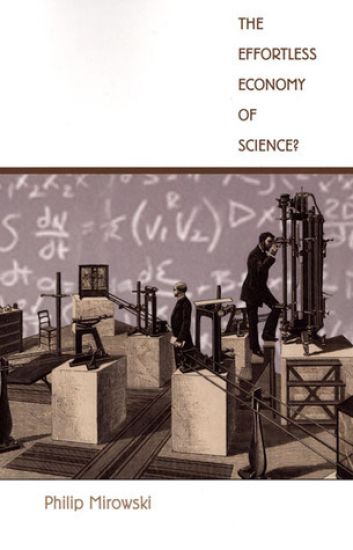
A leading scholar of the history and philosophy of economic thought, Philip Mirowski argues that there has been a top-to-bottom transformation in how scientific research is organized and funded in Western countries over the past two decades and that these changes necessitate a reexamination of the ways that science and economics interact. Mirowski insists on the need to bring together the insights of economics, science studies, and the philosophy of science in order to understand how and why particular research programs get stabilized through interdisciplinary appropriation, controlled attributions of error, and funding restrictions. Mirowski contends that neoclassical economists have persistently presumed and advanced an “effortless economy of science,” a misleading model of a self-sufficient and conceptually self-referential social structure that transcends market operations in pursuit of absolute truth. In the stunning essays collected here, he presents a radical critique of the ways that neoclassical economics is used to support, explain, and legitimate the current social practices underlying the funding and selection of “successful” science projects. He questions a host of theories, including the portraits of science put forth by Karl Popper, Michael Polanyi, and Thomas Kuhn. Among the many topics he examines are the social stabilization of quantitative measurement, the repressed history of econometrics, and the social construction of the laws of supply and demand and their putative opposite, the gift economy. In The Effortless Economy of Science? Mirowski moves beyond grand abstractions about science, truth, and democracy in order to begin to talk about the way science is lived and practiced today.
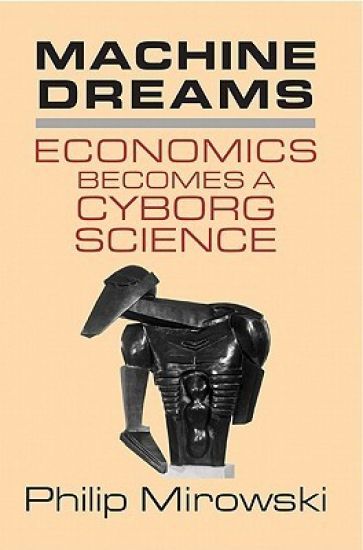
This was the first cross-over book into the history of science written by an historian of economics. It shows how 'history of technology' can be integrated with the history of economic ideas. The analysis combines Cold War history with the history of postwar economics in America and later elsewhere, revealing that the Pax Americana had much to do with abstruse and formal doctrines such as linear programming and game theory. It links the literature on 'cyborg' to economics, an element missing in literature to date. The treatment further calls into question the idea that economics has been immune to postmodern currents, arguing that neoclassical economics has participated in the deconstruction of the integral 'self'. Finally, it argues for an alliance of computational and institutional themes, and challenges the widespread impression that there is nothing else besides American neoclassical economic theory left standing after the demise of Marxism.
This was the first cross-over book into the history of science written by an historian of economics. It shows how 'history of technology' can be integrated with the history of economic ideas. The analysis combines Cold War history with the history of postwar economics in America and later elsewhere, revealing that the Pax Americana had much to do with abstruse and formal doctrines such as linear programming and game theory. It links the literature on 'cyborg' to economics, an element missing in literature to date. The treatment further calls into question the idea that economics has been immune to postmodern currents, arguing that neoclassical economics has participated in the deconstruction of the integral 'self'. Finally, it argues for an alliance of computational and institutional themes, and challenges the widespread impression that there is nothing else besides American neoclassical economic theory left standing after the demise of Marxism.
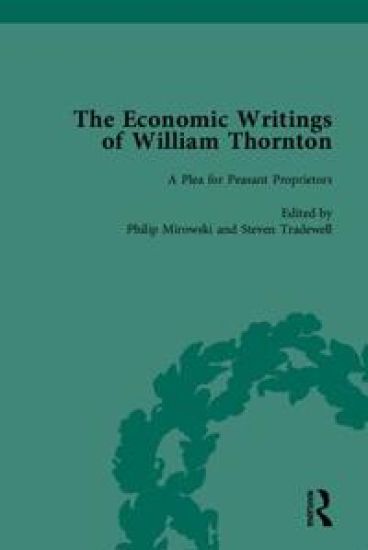
The Economic Writings of William Thornton
Philip Mirowski
Pickering Chatto (Publishers) Ltd
1999
muu
Thornton's writings are central to the history of the "Laws of Supply and Demand" and seminal in understanding the rise of neoclassical economics. Thornton has been cast as a minor player in John Stuart Mill's recantation of the wages fund doctrine. This text should show how he played a major role.
The Economic Writings of William Thornton Vol 4
Philip Mirowski; Steven Tradewell
Routledge
1999
sidottu
Thornton's writings are central to the history of the "Laws of Supply and Demand" and seminal in understanding the rise of neoclassical economics. Thornton has been cast as a minor player in John Stuart Mill's recantation of the wages fund doctrine. This text should show how he played a major role.
The Economic Writings of William Thornton Vol 2
Philip Mirowski; Steven Tradewell
Routledge
1999
sidottu
Thornton's writings are central to the history of the "Laws of Supply and Demand" and seminal in understanding the rise of neoclassical economics. Thornton has been cast as a minor player in John Stuart Mill's recantation of the wages fund doctrine. This text should show how he played a major role.
The Economic Writings of William Thornton Vol 1
Philip Mirowski; Steven Tradewell
Routledge
1999
sidottu
Thornton's writings are central to the history of the "Laws of Supply and Demand" and seminal in understanding the rise of neoclassical economics. Thornton has been cast as a minor player in John Stuart Mill's recantation of the wages fund doctrine. This text should show how he played a major role.
The Economic Writings of William Thornton Vol 5
Philip Mirowski; Steven Tradewell
Routledge
1999
sidottu
Thornton's writings are central to the history of the "Laws of Supply and Demand" and seminal in understanding the rise of neoclassical economics. Thornton has been cast as a minor player in John Stuart Mill's recantation of the wages fund doctrine. This text should show how he played a major role.
The Economic Writings of William Thornton Vol 3
Philip Mirowski; Steven Tradewell
Routledge
1999
sidottu
Thornton's writings are central to the history of the "Laws of Supply and Demand" and seminal in understanding the rise of neoclassical economics. Thornton has been cast as a minor player in John Stuart Mill's recantation of the wages fund doctrine. This text should show how he played a major role.
More Heat Than Light is a history of how physics has drawn some inspiration from economics and also how economics has sought to emulate physics, especially with regard to the theory of value. It traces the development of the energy concept in Western physics and its subsequent effect upon the invention and promulgation of neoclassical economics. Any discussion of the standing of economics as a science must include the historical symbiosis between the two disciplines. Starting with the philosopher Emile Meyerson’s discussion of the relationship between notions of invariance and causality in the history of science, the book surveys the history of conservation principles in the Western discussion of motion. Recourse to the metaphors of the economy are frequent in physics, and the concepts of value, motion, and body reinforced each other throughout the development of both disciplines, especially with regard to practices of mathematical formalisation. However, in economics subsequent misuse of conservation principles led to serious blunders in the mathematical formalisation of economic theory. The book attempts to provide the reader with sufficient background in the history of physics in order to appreciate its theses. The discussion is technically detailed and complex, and familiarity with calculus is required.