Kirjailija
Philip Priestley
Kirjat ja teokset yhdessä paikassa: 12 kirjaa, julkaisuja vuosilta 1999–2025, suosituimpiin kuuluu The Evil that We Do. Vertaile teosten hintoja ja tarkista saatavuus suomalaisista kirjakaupoista.
12 kirjaa
Kirjojen julkaisuvuodet: 1999–2025.
The working of the 1969 Children and Young Persons Act was the subject of much debate in the 1970s. Discussion had been strong on opinion and short on facts; this book, originally published in 1977, supplied some much-needed evidence, based on the results of a research project funded by the Home Office Research Unit. It also discusses the origins of the Act and its consequences for children and their families. The authors describe the way in which two groups of children were dealt with by the police, social workers, probation officers and juvenile courts during the first three months of 1972. Their findings depict a system which decides what to do with ‘children in trouble’ mainly on the basis of their offence behaviour rather than on assessments of their personal needs – a ‘judicial’ rather than ‘welfare’ system of the kind envisaged in the legislation. As a result of these observations, the authors conclude that ‘the idea of the juvenile court has been tried and found wanting, and that it suffers from the congenital defects which fresh applications of money or manpower will fail to cure.’ They recommend the abolition of the juvenile court and the raising of the age of criminal responsibility, proposing a number of controversial alternatives based on principles of non-intervention.
Social Skills in Prison and the Community
Philip Priestley; James McGuire; David Flegg; Valerie Hemsley; David Welham; Rosemary Barnitt
TAYLOR FRANCIS LTD
2025
nidottu
‘Gate fever’ is the name of a non-medical syndrome said to infect men in prison as the date of their discharge draws near. Its symptoms are euphoria and anxiety, mixed with irrational thinking; and the unfailing cure of the condition is the cold douche of reality which awaits the victim outside the prison gate. The primary aim of this book, originally published in 1984, is to describe and promote social-skills-based methods for helping offenders cope better with the problems they face in the community: finding and keeping work and accommodation, managing money and leisure time, getting on with other people and, in some cases, controlling their drinking or violent behaviour. Based on an action-research project undertaken with nearly four hundred men in Ranby and Ashwell prisons and at the Sheffield day training centre, the book outlines the origins of the project, the design and development of course materials, and the training of prison officers and probation staff to administer them. It looks at the characteristics of the men who took part in the experiment and at their problems, and details the content and conduct of the courses in practice. The results of the work are also reported, often in the words of the men who made use of the methods. Overall offending rates were not reduced but violent offenders at Ranby were less likely to be re-convicted of violent offences after release. One of the outcomes of the project was a model for working with offenders which has spread to other prisons and probation areas. A final chapter discusses the difficulties of doing innovative work in penal establishments and makes suggestions for developing social skills work with prisoners and probationers.
Originally published in 1989, Jail Journeys was a contemporary history of the English prison system in the words of those who had endured it as prisoners or who had worked within it. More than 1000 extracts from more than 150 first-hand accounts of life ‘inside’ chronicle the empty routines of the prison day and tell of the loneliness, the despair, the squalor, the fights, the friendships, the sex, the humour. There are also eye-witness accounts of the Dartmoor Mutiny, of hangings and floggings, of escapes, and personal statements by the well-known – James Phelan, Wilfred Macartney, Albert Pierrepoint, Charles Kray, John McVicar, Jimmy Boyle, Alfie Hinds, Lord Alfred Douglas – and by many others less well known. These testimonies, by turn dramatic, literate and naïve, add up to an implicit sociology of the twentieth-century English prison, depicting a divided social structure with ‘screws’ on one side and ‘cons’ on the other. The book is aimed at anyone with an interest in social issues and twentieth-century history as well as students of law, history, sociology, criminology, and social administration, and at professionals working in all these fields.
The working of the 1969 Children and Young Persons Act was the subject of much debate in the 1970s. Discussion had been strong on opinion and short on facts; this book, originally published in 1977, supplied some much-needed evidence, based on the results of a research project funded by the Home Office Research Unit. It also discusses the origins of the Act and its consequences for children and their families. The authors describe the way in which two groups of children were dealt with by the police, social workers, probation officers and juvenile courts during the first three months of 1972. Their findings depict a system which decides what to do with ‘children in trouble’ mainly on the basis of their offence behaviour rather than on assessments of their personal needs – a ‘judicial’ rather than ‘welfare’ system of the kind envisaged in the legislation. As a result of these observations, the authors conclude that ‘the idea of the juvenile court has been tried and found wanting, and that it suffers from the congenital defects which fresh applications of money or manpower will fail to cure.’ They recommend the abolition of the juvenile court and the raising of the age of criminal responsibility, proposing a number of controversial alternatives based on principles of non-intervention.
Social Skills in Prison and the Community
Philip Priestley; James McGuire; David Flegg; Valerie Hemsley; David Welham; Rosemary Barnitt
TAYLOR FRANCIS LTD
2023
sidottu
‘Gate fever’ is the name of a non-medical syndrome said to infect men in prison as the date of their discharge draws near. Its symptoms are euphoria and anxiety, mixed with irrational thinking; and the unfailing cure of the condition is the cold douche of reality which awaits the victim outside the prison gate. The primary aim of this book, originally published in 1984, is to describe and promote social-skills-based methods for helping offenders cope better with the problems they face in the community: finding and keeping work and accommodation, managing money and leisure time, getting on with other people and, in some cases, controlling their drinking or violent behaviour. Based on an action-research project undertaken with nearly four hundred men in Ranby and Ashwell prisons and at the Sheffield day training centre, the book outlines the origins of the project, the design and development of course materials, and the training of prison officers and probation staff to administer them. It looks at the characteristics of the men who took part in the experiment and at their problems, and details the content and conduct of the courses in practice. The results of the work are also reported, often in the words of the men who made use of the methods. Overall offending rates were not reduced but violent offenders at Ranby were less likely to be re-convicted of violent offences after release. One of the outcomes of the project was a model for working with offenders which has spread to other prisons and probation areas. A final chapter discusses the difficulties of doing innovative work in penal establishments and makes suggestions for developing social skills work with prisoners and probationers.
What I needed to know when I first went to school
Philip Priestley
Subversive Media Publications
2023
sidottu
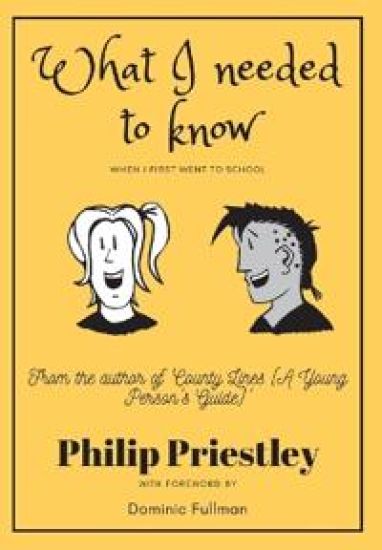
This book is written to help any young person who wants to succeed in school and in life. Philip Priestley switched from neighbourhood policing to education in 2019. Mentoring and coaching countless young people in several schools over the last four years, he has identified 12 core fundamental issues that he commonly assists and supports students with. This book seeks to explain the core fundamentals that promote successful behaviours, boost self esteem and help young people to thrive confidently in education. Join Phil, Katie, and Jez on an enjoyable and easy to read journey that aims to bring out the best in everything you do
What I needed to know when I first went to school
Philip Priestley
Subversive Media Publications
2023
pokkari
This book is written to help any young person who wants to succeed in school and in life. Philip Priestley switched from neighbourhood policing to education in 2019. Mentoring and coaching countless young people in several schools over the last four years, he has identified 12 core fundamental issues that he commonly assists and supports students with. This book seeks to explain the core fundamentals that promote successful behaviours, boost self esteem and help young people to thrive confidently in education. Join Phil, Katie, and Jez on an enjoyable and easy to read journey that aims to bring out the best in everything you do
Cara is a shy and unassuming 15 year old girl in an average secondary school who becomes drawn into the whirlwind of the County Lines organised crime phenomenon. Falling for a good looking and popular school peer - Jack - Cara becomes an exploited teenager battling against the pressure to keep up with the hard drinking toxic masculine culture that surrounds her. Aiden is an intelligent and cultured young man who has secretly held feelings for Cara since their days in primary school together. Aiden is lacking in self confidence but he tries desperately to offer Cara a way out. This is a piece of musical theatre in four acts that covers the landscape of criminal and sexual exploitation facing children and young people in even the most apparently mundane communities across the UK today. Presented in bold and fast paced movements, with musical scores to emphasise the mood and feeling of the events - this play will transport you through the ups and downs, the exhilaration and the devastation - that has hooked thousands of young people into criminalised behaviours and tragic life outcomes. This is a didactive piece that teaches as it entertains - creating insight and understanding with the presentation of characters that are complex, consistent and sincere.
Cara is a shy and unassuming 15 year old girl in an average secondary school who becomes drawn into the whirlwind of the County Lines organised crime phenomenon. Falling for a good looking and popular school peer - Jack - Cara becomes an exploited teenager battling against the pressure to keep up with the hard drinking toxic masculine culture that surrounds her. Aiden is an intelligent and cultured young man who has secretly held feelings for Cara since their days in primary school together. Aiden is lacking in self confidence but he tries desperately to offer Cara a way out. This is a piece of musical theatre in four acts that covers the landscape of criminal and sexual exploitation facing children and young people in even the most apparently mundane communities across the United Kingdom. Presented in bold and fast paced movements, with musical scores to emphasise the mood and feeling of the events this play will transport you through the ups and down - the exhilaration and the devastation - that has hooked more than 20,000 young people into criminalised behaviours and tragic life outcomes. This is a didactic piece that teaches as it entertains - creating insight and understanding with the presentation of characters that are both complex, consistent and sincere.
Compendium of Chester Gold & Silver Marks 1570-1962
Maurice H. Ridgway; Philip Priestley
ACC Art Books
2003
sidottu
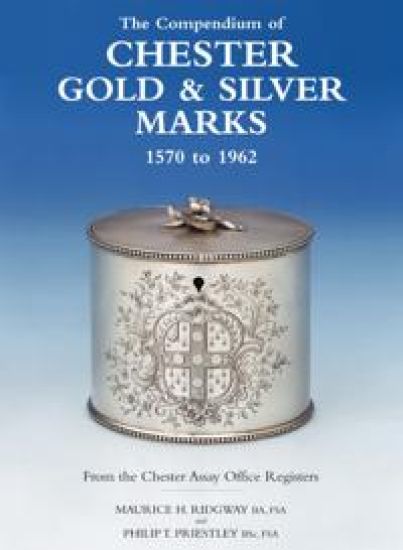
This is the first publication in a single work of all known Chester punch marks, and continues the tradition of the standard volumes of Jackson, Grimwade, Culme and Pickford. It is also the first time that the twentieth-century Chester marks have been published. It is produced in dictionary format, in alphabetical order from 1570, the date of the earliest known mark, to 1962 at which time the Chester assay office was closed. The authors, both members of the silver society, were given unlimited access to the Chester assay office records covering 1686 to 1962, and to the Chester Goldsmith's Company records dating from the 16th century. The compendium has four sections. The preface provides an historical background and details of all extant records and copper plates. Part 1 is devoted to assay office marks, with a full set of date letter tables to assist the reader in dating wares. Part 2 covers nearly 10,000 entries for makers' marks, including pictograms and monograms. Finally, the appendices include items on assay volumes and charges, thimble makers, and Liverpool watchcase makers. Since over 2,000 of the entries have Birmingham addresses, the new work will also enhance available information on jewellers and silversmiths working in this important trade center. The format of the marks' tables and the extensive index will also allow future research into the relationships between companies and agents.
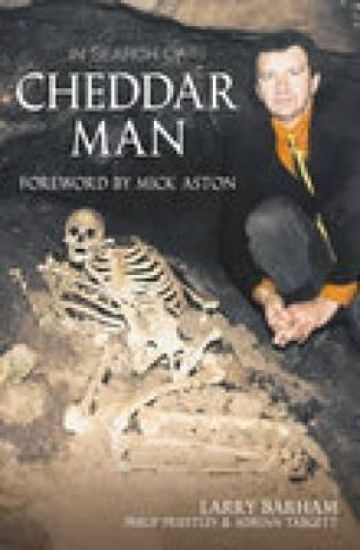
In Search of Cheddar Man
Larry Barham; Philip Priestley; Adrian Targett; Mick Aston
The History Press Ltd
1999
nidottu
This book puts Cheddar Man into a wider archaeological context and explains the scientific detective work behind the headlines which made him an international celebrity nine millennia after his death.