Kirjailija
Philip R. Davies
Kirjat ja teokset yhdessä paikassa: 22 kirjaa, julkaisuja vuosilta 1987–2015, suosituimpiin kuuluu The Origins of Biblical Israel. Vertaile teosten hintoja ja tarkista saatavuus suomalaisista kirjakaupoista.
22 kirjaa
Kirjojen julkaisuvuodet: 1987–2015.
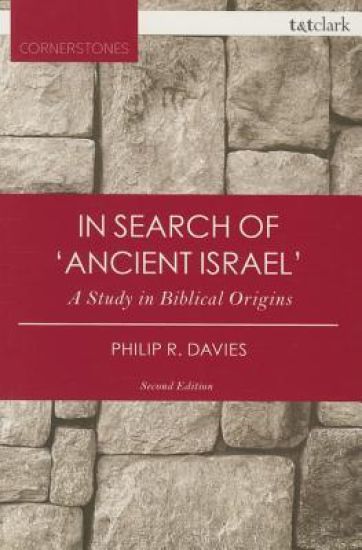
The appearance of In Search of 'Ancient Israel' generated a still-raging controversy about the historical reality of what biblical scholars call 'Ancient Israel'. But its argument not only takes in the problematic relationship between Iron Age Palestinian archaeology and the biblical 'Israel' but also outlines the processes that created the literature of the Hebrew bible-the ideological matrix, the scribal milieu, and the cultural adoption of a national literary archive as religious scripture as part of the process of creating 'Judaisms'. As such, in this volume Philip R. Davies challenges the whole spectrum of scholarly consensus about the origins of 'Israel' and its scriptures, in a manner that is both learned and accessible. For this new edition Davies has provided a new extended introduction, in which he considers how the debate has raged since the book was first published, and in which he repositions this classic work within the present scholarly context.
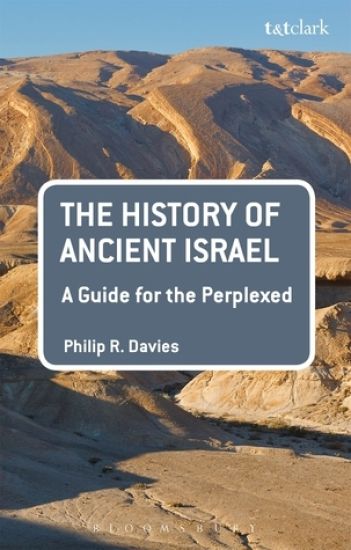
The History of Ancient Israel: A Guide for the Perplexed
Philip R. Davies
T. T.Clark Ltd
2015
nidottu
The History of Ancient Israel: A Guide for the Perplexed provides the student with the perfect guide to why and how the history of this most contested region has been studies, and why it continues to be studied today. Philip R. Davies, one of the leading scholars of Ancient Israel in recent years, begins by examining the relevance of the study of Ancient Israel, giving an overview of the sources and issues facing historians in approaching the material. Davies then continues by looking at the various theories and hypotheses that scholars have advanced throughout the 20th century, showing how different approaches are presented and in some cases how they are both underpinned and undermined by a range of ideological perspectives. Davies also explains the rise and fall of Biblical Archaeology, the 'maximalist/minimalist' debate. After this helpful survey of past methodologies Davies introduces readers to the current trends in biblical scholarship in the present day, covering areas such as cultural memory, the impact of literary and social scientific theory, and the notion of 'invented history'. Finally, Davies considers the big question: how the various sources of knowledge can be combined to write a modern history that combines and accounts for all the data available, in a meaningful way. This new guide will be a must for students of the Hebrew Bible/Old Testament.
The History of Ancient Israel: A Guide for the Perplexed
Philip R. Davies
T. T.Clark Ltd
2015
sidottu
The History of Ancient Israel: A Guide for the Perplexed provides the student with the perfect guide to why and how the history of this most contested region has been studies, and why it continues to be studied today. Philip R. Davies, one of the leading scholars of Ancient Israel in recent years, begins by examining the relevance of the study of Ancient Israel, giving an overview of the sources and issues facing historians in approaching the material. Davies then continues by looking at the various theories and hypotheses that scholars have advanced throughout the 20th century, showing how different approaches are presented and in some cases how they are both underpinned and undermined by a range of ideological perspectives. Davies also explains the rise and fall of Biblical Archaeology, the 'maximalist/minimalist' debate. After this helpful survey of past methodologies Davies introduces readers to the current trends in biblical scholarship in the present day, covering areas such as cultural memory, the impact of literary and social scientific theory, and the notion of 'invented history'. Finally, Davies considers the big question: how the various sources of knowledge can be combined to write a modern history that combines and accounts for all the data available, in a meaningful way. This new guide will be a must for students of the Hebrew Bible/Old Testament.
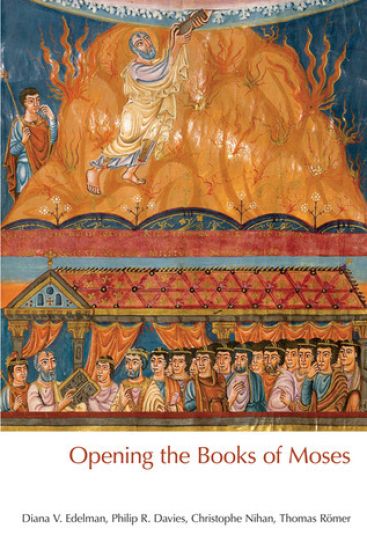
Opening the Books of Moses
Diana V. Edelman; Philip R. Davies; Christophe Nihan; Thomas Romer
Equinox Publishing Ltd
2014
nidottu
Opening the Books of Moses presents an introduction to the first five books of the Bible. It is written for any student engaged in the scholarly study of these most central of biblical texts. The aim throughout is to examine the books with a view to illuminating the ideas, beliefs and experiences of the time. This broad overview provides: a survey of the current state of Pentateuchal research; an analysis of how the texts were shaped by their time and audience; an outline of Jewish areas in the Persian period; the study concludes with an analysis of key concerns in the study of the Pentateuch, notably the Torah, geography, ethnicity, the nature of Yahweh and other deities, theories of cult, treaties and oaths, and Moses himself.
"Rethinking Biblical Scholarship" brings together seminal essays to provide readers with an assessment of the archaeological and exegetical research which has transformed the discipline of biblical studies over the last two decades. The essays focus on history and historiography, exploring how scholarly constructs and ideologies mould historical, literary and cultural data and shape scholarly discourse. Most of the essays illustrate the development of what has been called a "minimalist" methodology. Among the many central topics examined are the formation of the Jewish scriptural canon and how the concepts of "prophecy" and "apocalypse" illuminate the emergence of Judaism in the late Persian and Hellenistic periods.
Opening the Books of Moses
Diana V. Edelman; Philip R. Davies; Christophe Nihan; Thomas Romer
Equinox Publishing Ltd
2011
sidottu
Opening the Books of Moses presents an introduction to the first five books of the Bible. It is written for any student engaged in the scholarly study of these most central of biblical texts. The aim throughout is to examine the books with a view to illuminating the ideas, beliefs and experiences of the time. This broad overview provides: a survey of the current state of Pentateuchal research; an analysis of how the texts were shaped by their time and audience; an outline of Jewish areas in the Persian period; the study concludes with an analysis of key concerns in the study of the Pentateuch, notably the Torah, geography, ethnicity, the nature of Yahweh and other deities, theories of cult, treaties and oaths, and Moses himself.
On the Origins of Judaism examines the formation of one of the oldest monotheistic religions. The book covers a diverse range of themes: the identity of those who produced and canonized the Hebrew Bible and subsequently shaped its interpretation; the significance and impact of Second Isaiah and the books of Ezra and Nehemiah; the roots of Jewish apocalyptic literature, and the possible origins of the Exodus story; the ethical systems of the Hebrew Bible and the Athenian tragedians; and the place of food and drink in the Qumran community. On the Origins of Judaism is the most comprehensive exploration of the roots of the Jewish faith and will be invaluable to students and scholars of biblical and religious studies.
The book starts from the problem defined by recent archaeological discovery about the societies that formed the backbone of the kingdoms of Israel and Judah, their origins and their relationship. It has become clear that the biblical notion of a 12-tribe 'nation' united by descent and religion does not correspond to these findings. The challenge is not to argue endlessly about how far the differing accounts can be reconciled, as a prolongation of an old debate about biblical 'historicity', but to try and understand what historical, social and cultural process led to the production of the biblical portrait of an Israel of 12 tribes embracing two kingdoms. Davies argues for the importance of the role of Bethel as a royal sanctuary, then a central sanctuary of the Neo-Babylonian and Persian province of Judah. In particular, the figure of Jacob as the ancestor of 'Israel', associated with Bethel, became the eponym of the biblical 'all Israel' and the name 'Israel' survived as the name of a new society, even as Jerusalem was re-established as the major, and subsequently the only, official Judaean temple.
Recent years have seen an explosion of writing on the history of Israel, prompted largely by definitive archaeological surveys and attempts to write a genuine archaeological history of ancient Israel and Judah. The scholarly world has also witnessed an intense confrontation between so-called minimalists and maximalists over the correct approach to the historicity of the Bible. Memories of Ancient Israel looks at the issues at stake in biblical history--the ideologies involved, the changing role of archaeology, and the influence of cultural contexts both ancient and modern. Philip Davies suggests a different way of defining the problem of "reliability" and "historicity" by employing the theory of cultural memory. In doing so, he provides a better explanation of how ancient societies constructed their past but also a penetrating insight into the ideological underpinnings of today's scholarly debates.
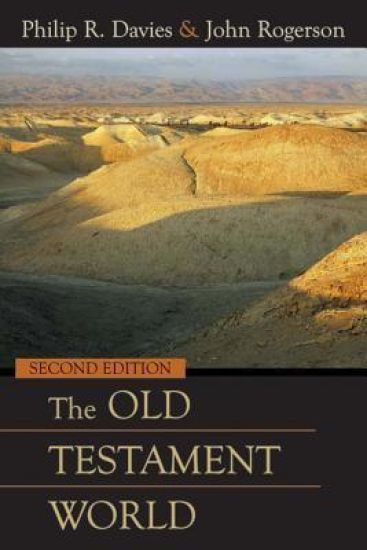
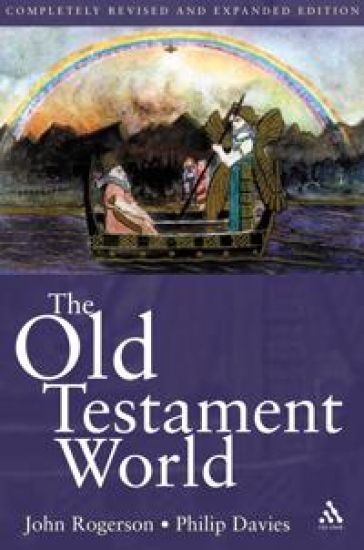
The Old Testament World, Second Edition
Philip R. Davies; John Rogerson
Westminster/John Knox Press,U.S.
2006
nidottu
Written by two leading Old Testament scholars and widely used throughout the world, Philip Davies and John Rogerson's The Old Testament World describes the historical, social, and cultural setting in which the Old Testament was written and examines the major genres of literature that it contains. Ideally suited for college-level introductory classes, it illuminates the literature of the Old Testament by showing how it was shaped by the events, social structures, and religious and intellectual ideas of the ancient civilizations and cultures in which it was produced.
Written by two leading Old Testament scholars with wide ranging expertise, this unique introduction describes the historical, social and cultural setting in which the Old Testament was written, and provides a description of the major genres of literature that it contains. it seeks, therefore, to Illuminate the literature of the Old Testament by showing how it was shaped by the events, social structures, and religions and intellectual ideas of the ancient civilizations and cultures in which it was produced. Unlike most introductions, this book does not build largely on the traditional formats. Rather than a conventional canonical-theological approach, it offers an approach for those interested in the Old Testament as a monumental cultural achievement. It is therefore ideal for students of ancient history and religion in general as well as theology, and requires a minimum of prior knowledge or expertise.
'Yours Faithfully' presents an anthology of virtual letters from the Bible, in which leading scholars imagine correspondence between biblical characters. Each letter conveys the insights that a given character might have and, together, the letters provide a rich sense of the concerns which propel and characters who inhabit the Bible. The letters are written in a range of styles - from the strictly historical to the very contemporary - and embrace the serious and the playful. The aim is to offer a commentary on familiar texts and events and to continue a long tradition of retelling stories from the Bible.
This book contains the papers delivered at the 1996 Copper Scroll Symposium which was organized by the Manchester-Sheffield Centre for Dead Sea Scrolls Research to mark the 40th Anniversary of the opening of this enigmatic scroll in Manchester. The papers cover the history of the Scroll's interpretation (P. Muchowski, P. Davies, B. Segal, M. Wise); how it should be conserved, restored and read (N. Cacoudre, M. Lundberg, E. Puech); how it was produced (P. Kyle McCarter); the meaning of its technical terms (J. F. Elwolde, A. Lange, J. Lefkovits, J. Lubbe, L. Schiffman); its genre (M. Bar-Ilan, R. Fidler, T. Lim); its geography (P. S. Alexander); its correlation with archaeological remains (H. Eshel); and not least who wrote it, when and why (S. Goranson, I Knohl, H. Stegemann, B. Thierine, A. Wolters) with an Introduction by G. Brooke. This is volume 40 in the Journal for the Study of Pseudepigrapha Supplement series.
Do religious writings make sense to any reader who does not accept the reality of the deities to which they refer? Do Christians understand the Old Testament better than the Jews understand their Bible? The Bible, argues this book, may belong to the Church or synagogue as an instrument of religious practice, but as an object of academic study it belongs to the world as a whole., and as such can function in theory and practice as a secular discourse. A number of exegetical studies suggests that a genuinely academic discourse about biblical writings - one that distances itself from received canons of interpretation - can expose a subtext of deceit within the Creation narratives, re-conceptualize the relationship between Abraham and his deity, reveal lament psalms as texts of oppression, and identify the death of Daniel's God. In a new chapter, Davies evaluates how the film Monty Python's Life of Brian contributes to 'Life of Jesus' research. Here is a challenge to conventional biblical scholarship and a bid to define and establish a genuine academic discipline of biblical studies.
Hebrew Biblical narratives are notoriously sparing in their portrayal of character, leaving much to the reader. Here a number of scholars assume the identities of some familiar biblical characters, and use the clues in the text, their own exegetical skills and knowledge of the biblical world, and their readerly imagination to fill in the gaps of the biblical text. In doing so, they remove the point of view of biblical narratives from the narrator to one of the characters, allowing the ideology of the text to be affirmed, adjusted or challenged. Contributors to this volume include Francis Landy, Athalya Brenner, Yairah Amit, John Goldingay, Jonathan Magonet, Hugh Pyper, and Philip Davies, and the biblical characters include Rahab, Isaiah, Gomer, Eve, Delilah, Joseph, Jeremiah and Haman.
Scribes and Schools is an examination of the processes which led to the canonization of the Hebrew Bible. Philip Davies sheds light on the social reasons for the development of the canon and in so doing presents a clear picture of how the Bible came into being. Volumes in the Library of Ancient Israel draw on multiple disciplines--such as archaeology, anthropology, sociology, linguistics, and literary criticism--to illuminate the everyday realities and social subtleties these ancient cultures experienced. This series employs sophisticated methods resulting in original contributions that depict the reality of the people behind the Hebrew Bible and interprets these insights for a wide variety of readers.
To find more information about Rowman and Littlefield titles, please visit www.rowmanlittlefield.com.