Kirjojen hintavertailu – 12 903 725 kirjaa ja 27 kauppaa

Kirjailija

Philip S. Gorski

Kirjat ja teokset yhdessä paikassa: 7 kirjaa, julkaisuja vuosilta 2003–2022, suosituimpiin kuuluu The Disciplinary Revolution. Vertaile teosten hintoja ja tarkista saatavuus suomalaisista kirjakaupoista.

7 kirjaa

Kirjojen julkaisuvuodet: 2003–2022.

The Flag and the Cross

The Flag and the Cross

Philip S. Gorski; Samuel L. Perry; Jemar Tisby

OXFORD UNIVERSITY PRESS INC
2022
sidottu

Halvin toimitettuna 29,80 €

A bracing examination of a force that imperils American democracy Most Americans were shocked by the violence they witnessed at the nation's Capital on January 6th, 2021. And many were bewildered by the images displayed by the insurrectionists: a wooden cross and wooden gallows; "Jesus saves" and "Don't Tread on Me;" Christian flags and Confederate Flags; even a prayer in Jesus' name after storming the Senate chamber. Where some saw a confusing jumble, Philip S. Gorski and Samuel L. Perry saw a familiar ideology: white Christian nationalism. In this short primer, Gorski and Perry explain what white Christian nationalism is and is not; when it first emerged and how it has changed; where it's headed and why it threatens democracy. Tracing the development of this ideology over the course of three centuries—and especially its influence over the last three decades—they show how, throughout American history, white Christian nationalism has animated the oppression, exclusion, and even extermination of minority groups while securing privilege for white Protestants. It enables white Christian Americans to demand "sacrifice" from others in the name of religion and nation, while defending their "rights" in the names of "liberty" and "property." White Christian nationalism motivates the anti-democratic, authoritarian, and violent impulses on display in our current political moment. The future of American democracy, Gorski and Perry argue, will depend on whether a broad spectrum of Americans—stretching from democratic socialists to classical liberals—can unite in a popular front to combat the threat to liberal democracy posed by white Christian nationalism.

American Babylon

American Babylon

Philip S. Gorski

TAYLOR FRANCIS LTD
2022
nidottu
Why did 81 percent of white evangelicals vote for Donald Trump in 2016? And what does this tell us about the relationship between Christianity and democracy in the United States? American Babylon places our present political moment against a deep historical backdrop. In Part I the author traces the development of democratic institutions from Ancient Greece through to the American Revolution and of Christian political theology from Augustine to Falwell. Part II charts the decline of democratic governance within American churches; explains the capture of evangelical Christianity by the Republican Party; and denounces the fateful embrace between white Christian nationalists and right-wing populists that culminated in Trump’s victory. An accessible and timely book, American Babylon is essential reading for those concerned with the vexed relationship of religion and politics in the United States, including students and scholars in the fields of divinity, history, political science, religious studies, and sociology.
American Babylon

American Babylon

Philip S. Gorski

Routledge
2020
sidottu
Why did 81 percent of white evangelicals vote for Donald Trump in 2016? And what does this tell us about the relationship between Christianity and democracy in the United States? American Babylon places our present political moment against a deep historical backdrop. In Part I the author traces the development of democratic institutions from Ancient Greece through to the American Revolution and of Christian political theology from Augustine to Falwell. Part II charts the decline of democratic governance within American churches; explains the capture of evangelical Christianity by the Republican Party; and denounces the fateful embrace between white Christian nationalists and right-wing populists that culminated in Trump’s victory. An accessible and timely book, American Babylon is essential reading for those concerned with the vexed relationship of religion and politics in the United States, including students and scholars in the fields of divinity, history, political science, religious studies, and sociology.
The Disciplinary Revolution

The Disciplinary Revolution

Philip S. Gorski

University of Chicago Press
2003
sidottu
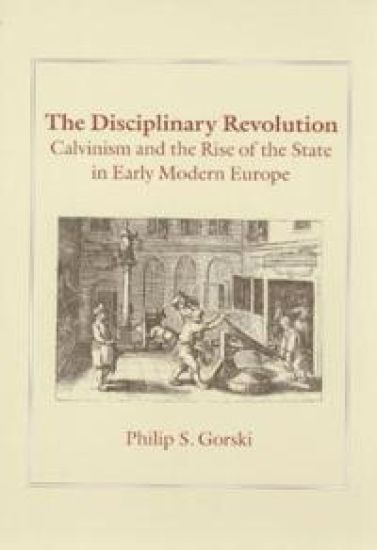
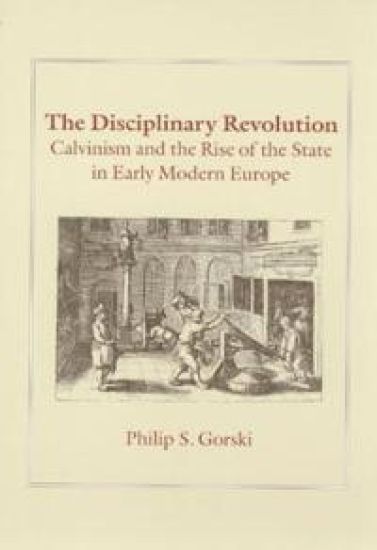
What explains the rapid growth of state power in early modern Europe? While most scholars have pointed to the impact of military or capitalist revolutions, Philip S. Gorski argues instead for the importance of a disciplinary revolution unleashed by the Reformation. By refining and diffusing a variety of disciplinary techniques and strategies, such as communal surveillance, control through incarceration and bureaucratic office-holding, Calvin and his followers created an infrastructure of religious governance and social control that served as a model for the rest of Europe -and the world. Gorski shows, for instance, how Calvinist-inspired social discipline contributed to the governance and pacification of Dutch society and to the rationalization and centralization of the Prussian state. He also compares religious and social disciplining as practiced by Calvinists, Lutherans and Catholics and finds that Calvinists took the disciplinary revolution much farther and faster, which helps explain the greater political strength of the Calvinist states. Written with clarity and vigour, "The Disciplinary Revolution" should be seen as a major work in European history, political science, social theory and religion.
The Disciplinary Revolution

The Disciplinary Revolution

Philip S. Gorski

University of Chicago Press
2003
nidottu
What explains the rapid growth of state power in early modern Europe? While most scholars have pointed to the impact of military or capitalist revolutions, Philip S. Gorski argues instead for the importance of a disciplinary revolution unleashed by the Reformation. By refining and diffusing a variety of disciplinary techniques and strategies, such as communal surveillance, control through incarceration and bureaucratic office-holding, Calvin and his followers created an infrastructure of religious governance and social control that served as a model for the rest of Europe -and the world. Gorski shows, for instance, how Calvinist-inspired social discipline contributed to the governance and pacification of Dutch society and to the rationalization and centralization of the Prussian state. He also compares religious and social disciplining as practiced by Calvinists, Lutherans and Catholics and finds that Calvinists took the disciplinary revolution much farther and faster, which helps explain the greater political strength of the Calvinist states. Written with clarity and vigour, "The Disciplinary Revolution" should be seen as a major work in European history, political science, social theory and religion.