Kirjojen hintavertailu – 12 903 725 kirjaa ja 27 kauppaa

Kirjailija

Philip Tovey

Kirjat ja teokset yhdessä paikassa: 7 kirjaa, julkaisuja vuosilta 1994–2021, suosituimpiin kuuluu Therapeutic Pluralism. Vertaile teosten hintoja ja tarkista saatavuus suomalaisista kirjakaupoista.

7 kirjaa

Kirjojen julkaisuvuodet: 1994–2021.

Therapeutic Pluralism

Therapeutic Pluralism

Alex Broom; Philip Tovey

Routledge
2008
nidottu
The profile of complementary and alternative medicine (CAM) has risen dramatically over the last decade and cancer patients represent its most prolific users. As a result, the NHS and UK cancer services are attempting to develop a wider range of therapeutic options for patients. Despite such developments, little is known about why cancer patients use CAM, its perceived benefits and the perspectives of the doctors and nurses involved. Drawing on extensive fieldwork in the UK, Therapeutic Pluralism includes over 120 interviews with cancer patients and professionals, plus innovative ‘diary’ data which, for the first time, detail the experiences of CAM users. It gives a systematic analysis of issues such as: The development of patient preferences and influences on decision making Expectations of CAM and interpretations of ‘success’ in cancer treatment The nature and importance of ‘evidence’ and ‘effectiveness’ for patients The organisational dynamics involved in integrating CAM into the NHS Pathways to CAM and the role of the Internet The role of oncology clinicians in patients’ experiences of cancer and their use of CAMs Therapeutic Pluralism is essential reading for students and researchers of medical sociology, complementary and alternative medicine and cancer. It will also be useful to medical and health professionals, and policy-makers with an interest in complementary and alternative medicine.
Therapeutic Pluralism

Therapeutic Pluralism

Alex Broom; Philip Tovey

Routledge
2008
sidottu
The profile of complementary and alternative medicine (CAM) has risen dramatically over the last decade and cancer patients represent its most prolific users. As a result, the NHS and UK cancer services are attempting to develop a wider range of therapeutic options for patients. Despite such developments, little is known about why cancer patients use CAM, its perceived benefits and the perspectives of the doctors and nurses involved. Drawing on extensive fieldwork in the UK, Therapeutic Pluralism includes over 120 interviews with cancer patients and professionals, plus innovative ‘diary’ data which, for the first time, detail the experiences of CAM users. It gives a systematic analysis of issues such as: The development of patient preferences and influences on decision making Expectations of CAM and interpretations of ‘success’ in cancer treatment The nature and importance of ‘evidence’ and ‘effectiveness’ for patients The organisational dynamics involved in integrating CAM into the NHS Pathways to CAM and the role of the Internet The role of oncology clinicians in patients’ experiences of cancer and their use of CAMs Therapeutic Pluralism is essential reading for students and researchers of medical sociology, complementary and alternative medicine and cancer. It will also be useful to medical and health professionals, and policy-makers with an interest in complementary and alternative medicine.
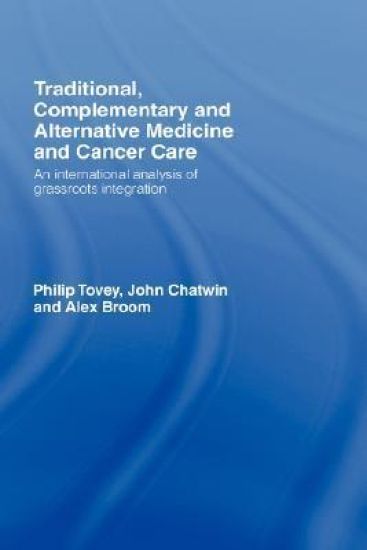
Traditional, Complementary and Alternative Medicine and Cancer Care

Traditional, Complementary and Alternative Medicine and Cancer Care

Philip Tovey; John Chatwin; Alex Broom

Routledge
2007
nidottu
Drawing on comparative fieldwork in the UK, Pakistan and Australia, this book provides the first systematic assessment of pathways and access to CAM and how it is used in health practice and by individuals with cancer. Giving fresh and invaluable insights into how differing health and societal structures influence the use complementary and alternative medicine, the book explores:the empirical, theoretical, and policy context for the study of CAM/TM and cancerthe history and character of the eight support groups in which fieldwork took place in the UK, Australia and Pakistan the nature and structure of patient support groups' history, affiliation and evolution how groups function on a day-to-day basis the extent to which what is being offered in these CAM-oriented groups is in any way innovative and challenging to the therapeutic and organisational mainstream the value of sociological work in the field which is not tied to immediate and narrow policy objectives. This is an essential resource for those studying complementary and alternative medicine sociologically, to those involved in the provision of cancer care on a day-to-day basis, and to those looking to establish a more informed (evidence-based) policy.
Traditional, Complementary and Alternative Medicine and Cancer Care

Traditional, Complementary and Alternative Medicine and Cancer Care

Philip Tovey; John Chatwin; Alex Broom

Routledge
2007
sidottu
Drawing on comparative fieldwork in the UK, Pakistan and Australia, this book provides the first systematic assessment of pathways and access to CAM and how it is used in health practice and by individuals with cancer. Giving fresh and invaluable insights into how differing health and societal structures influence the use complementary and alternative medicine, the book explores:the empirical, theoretical, and policy context for the study of CAM/TM and cancerthe history and character of the eight support groups in which fieldwork took place in the UK, Australia and Pakistan the nature and structure of patient support groups' history, affiliation and evolution how groups function on a day-to-day basis the extent to which what is being offered in these CAM-oriented groups is in any way innovative and challenging to the therapeutic and organisational mainstream the value of sociological work in the field which is not tied to immediate and narrow policy objectives. This is an essential resource for those studying complementary and alternative medicine sociologically, to those involved in the provision of cancer care on a day-to-day basis, and to those looking to establish a more informed (evidence-based) policy.
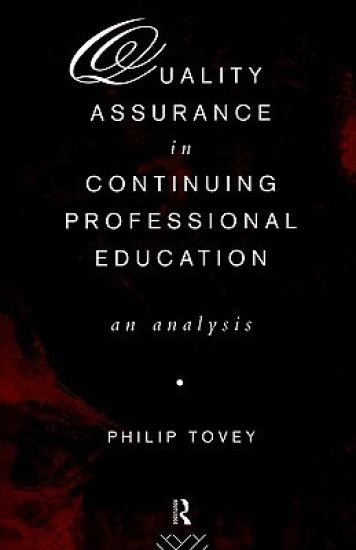
Quality Assurance in Continuing Professional Education
Higher education in the 1990s is characterised by a pre-occupation with quality assurance. This book provides an examination of what that means for one academic specialism, continuing professional education (CPE). Based on research conducted in and around UK universities, the book explores the range of existing practice in CPE, and develops a broadly based strategy for practical action. It is argued that a framework for quality should evolve from an awareness of the complex character of CPE as a distinct subject area - solutions cannot simply be brought in, but must be developed in relation to setting.