
Kirjojen hintavertailu – 12 903 725 kirjaa ja 27 kauppaa

Kirjailija

Philip W. Porter

Kirjat ja teokset yhdessä paikassa: 2 kirjaa, julkaisuja vuosilta 2006–2009, suosituimpiin kuuluu Challenging Nature. Vertaile teosten hintoja ja tarkista saatavuus suomalaisista kirjakaupoista.

2 kirjaa

Kirjojen julkaisuvuodet: 2006–2009.

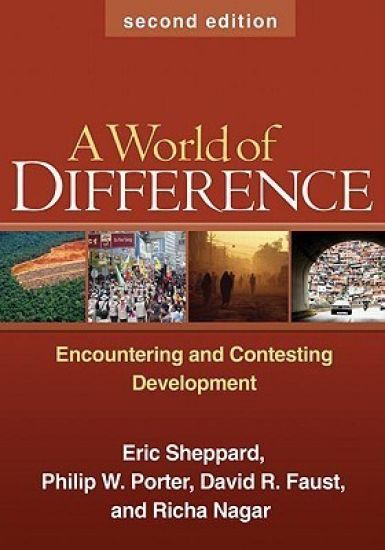
A World of Difference, Second Edition

A World of Difference, Second Edition

Eric Sheppard; Philip W. Porter; David R. Faust; Richa Nagar; Bongman Seo

Guilford Publications
2009
nidottu
Widely regarded as the authoritative text on development geography, this volume examines the nature and causes of global inequality and critically analyzes contemporary approaches to economic development across the third world. Students gain a deeper understanding of the interacting dynamics of culture, gender, race, and class; biophysical factors, such as climate, population, and natural resources; and economic and political processes—all of which have led to the present-day disparities between the first and third worlds. Numerous examples, sidebars, and figures illustrate how people in the Global South are experiencing and contesting the forces of globalization.

Challenging Nature

Challenging Nature

Philip W. Porter

University of Chicago Press
2006
sidottu
Tanga Region, Tanzania, is an area of persistent rural poverty with a long history of drought, floods, food shortages, famine, and social and economic disruption. Though farmers have been cultivating the land there for hundreds of years, they have consistently been unable to supply adequate food for the region's inhabitants. In "Challenging Nature", Philip Porter examines eighteen farming communities to understand what the farmers there know about their environment and which historical and economic factors play into the lack of food security. Porter first began work on this project in 1972, asking 250 farmers in the region about life history, environmental and agricultural changes, types of crops grown and methods of planting, environmental assessments, agricultural practices, food and water supplies, training and education, and attitudes toward nature. Twenty years later, he returned and reinterviewed as many farmers as could be found from the first survey. The result contextualizes the environmental history of the region while informing current and future agricultural development.