Kirjojen hintavertailu – 12 859 818 kirjaa ja 27 kauppaa

Kirjailija

Philip Wood

Kirjat ja teokset yhdessä paikassa: 23 kirjaa, julkaisuja vuosilta 2010–2026, suosituimpiin kuuluu Make Your Point Level 1 Student's Book with Interactive eBook. Vertaile teosten hintoja ja tarkista saatavuus suomalaisista kirjakaupoista.

23 kirjaa

Kirjojen julkaisuvuodet: 2010–2026.

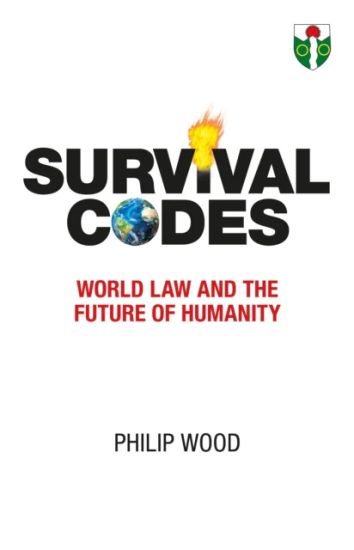
Survival Codes

Survival Codes

Philip Wood

Softwood Books
2025
nidottu
This powerful, important and inspiring work, written for the general reader, shows how our laws worldwide now are the largest and most comprehensive codes of conduct which we have and are our largest universal philosophy, essential for the future of humanity. Without these codes, without any laws or courts, societies would not survive and the survival of the human species itself would be put into question. But the world is now in crisis. The book is written for non-lawyers in all disciplines, from economists to corporate leaders, politicians to senior journalists and scientists, all over the world, as well as lawyers. It enables the reader for the first time, in one swoop, to understand the fundamentals of all our laws across every country in the world, which fields are working and which are not, and whether our laws can ward off an apocalypse or a catastrophe of our own making. Topics covered include the law relating to constitutions, democracies, rule of law, immigration, taxation, crime, regulation (including data protection, AI and banks), family, sex, inheritance, contracts (including derivatives), torts, litigation, property, markets, money, crypto, corporations, hedge funds, and the bankruptcy of corporations and sovereign states, as well as conflict of laws, public international law (including trade, the high seas, space and war), the history of law, and many other topics.

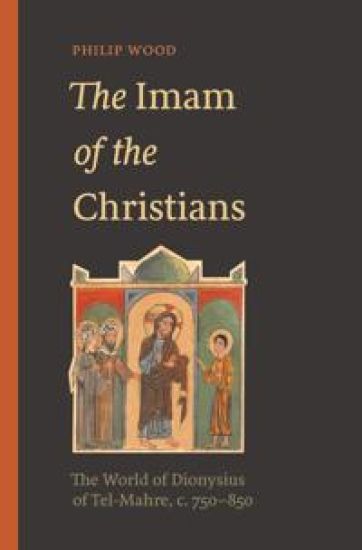
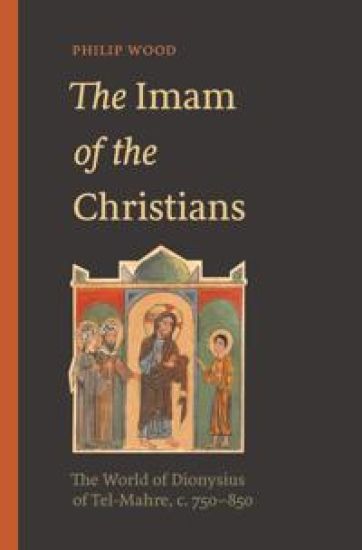
The Imam of the Christians

The Imam of the Christians

Philip Wood

PRINCETON UNIVERSITY PRESS
2025
pokkari
How Christian leaders adapted the governmental practices and political thought of their Muslim rulers in the Abbasid caliphateThe Imam of the Christians examines how Christian leaders adopted and adapted the political practices and ideas of their Muslim rulers between 750 and 850 in the Abbasid caliphate in the Jazira (modern eastern Turkey and northern Syria). Focusing on the writings of Dionysius of Tel-Mahre, the patriarch of the Jacobite church, Philip Wood describes how this encounter produced an Islamicate Christianity that differed from the Christianities of Byzantium and western Europe in far more than just theology. In doing so, Wood opens a new window on the world of early Islam and Muslims’ interactions with other religious communities. Wood shows how Dionysius and other Christian clerics, by forging close ties with Muslim elites, were able to command greater power over their coreligionists, such as the right to issue canons regulating the lives of lay people, gather tithes, and use state troops to arrest opponents. In his writings, Dionysius advertises his ease in the courts of ? Abd Allah ibn Tahir in Raqqa and the caliph al-Ma’mun in Baghdad, presenting himself as an effective advocate for the interests of his fellow Christians because of his knowledge of Arabic and his ability to redeploy Islamic ideas to his own advantage. Strikingly, Dionysius even claims that, like al-Ma’mun, he is an imam since he leads his people in prayer and rules them by popular consent. A wide-ranging examination of Middle Eastern Christian life during a critical period in the development of Islam, The Imam of the Christians is also a case study of the surprising workings of cultural and religious adaptation.
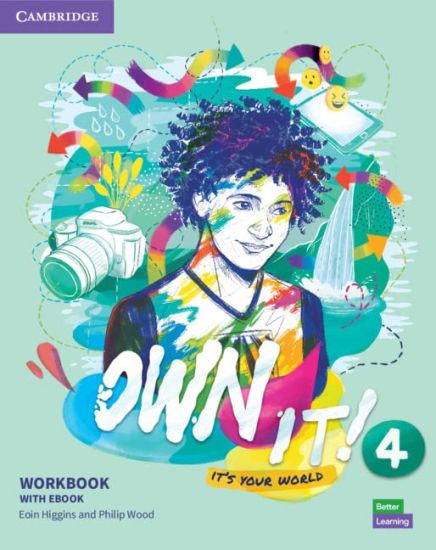
Own It! Level 4 Workbook with eBook

Own It! Level 4 Workbook with eBook

Eoin Higgins; Philip Wood

Cambridge University Press
2021
muu
We live in a rapidly changing world. With Own It!, teens develop the confidence and competencies they need to forge their own path in this ever-evolving global landscape. From developing critical and creative thinking skills and social/emotional aptitudes to working effectively in a group, Own it! helps create confident, future-ready learners who are able to meet the challenges ahead. The Student's Book includes full access to all digital tools for students, including mobile-friendly Practice Extra and the digital collaboration space.
The Imam of the Christians

The Imam of the Christians

Philip Wood

PRINCETON UNIVERSITY PRESS
2021
sidottu
How Christian leaders adapted the governmental practices and political thought of their Muslim rulers in the Abbasid caliphateThe Imam of the Christians examines how Christian leaders adopted and adapted the political practices and ideas of their Muslim rulers between 750 and 850 in the Abbasid caliphate in the Jazira (modern eastern Turkey and northern Syria). Focusing on the writings of Dionysius of Tel-Mahre, the patriarch of the Jacobite church, Philip Wood describes how this encounter produced an Islamicate Christianity that differed from the Christianities of Byzantium and western Europe in far more than just theology. In doing so, Wood opens a new window on the world of early Islam and Muslims’ interactions with other religious communities. Wood shows how Dionysius and other Christian clerics, by forging close ties with Muslim elites, were able to command greater power over their coreligionists, such as the right to issue canons regulating the lives of lay people, gather tithes, and use state troops to arrest opponents. In his writings, Dionysius advertises his ease in the courts of ? Abd Allah ibn Tahir in Raqqa and the caliph al-Ma’mun in Baghdad, presenting himself as an effective advocate for the interests of his fellow Christians because of his knowledge of Arabic and his ability to redeploy Islamic ideas to his own advantage. Strikingly, Dionysius even claims that, like al-Ma’mun, he is an imam since he leads his people in prayer and rules them by popular consent. A wide-ranging examination of Middle Eastern Christian life during a critical period in the development of Islam, The Imam of the Christians is also a case study of the surprising workings of cultural and religious adaptation.
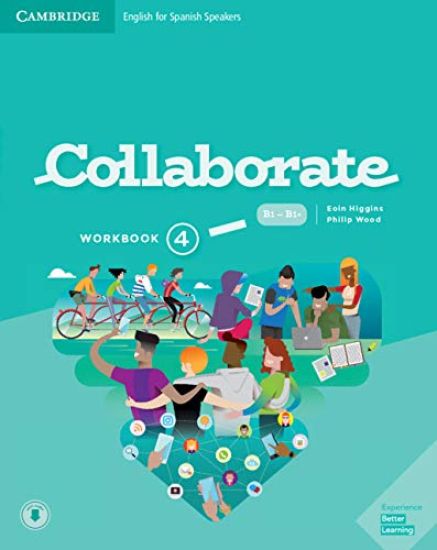
Collaborate Level 4 Workbook English for Spanish Speakers

Collaborate Level 4 Workbook English for Spanish Speakers

Eoin Higgins; Philip Wood

Cambridge University Press
2020
nidottu
Turn on the power of we Collaborate is an innovative secondary course that will help you and your students take an important step towards creating a collaborative and positive environment in the classroom. The Workbook follows the same unit structure as the Student's Book to help with easy navigation. Practice of all the unit language and skills is provided with extra sections, such as a Grammar reference and extra grammar practice; Vocabulary extra; Exam tips focused on reading, writing, listening and speaking skills; and A2 Key for Schools and B1 Preliminary for Schools exam practice (Reading and Writing papers).
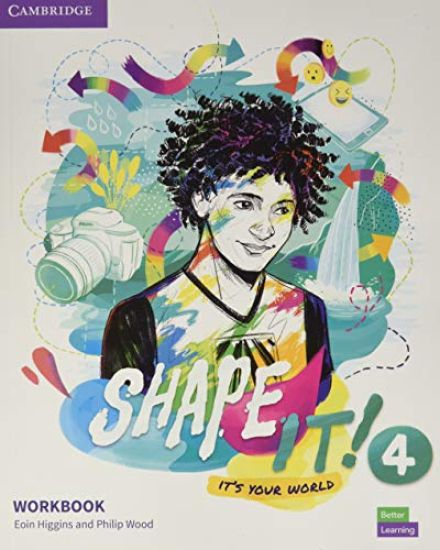
Shape It! Level 4 Workbook

Shape It! Level 4 Workbook

Eoin Higgins; Philip Wood

Cambridge University Press
2020
pokkari
With Shape It!, teens develop the confidence and competencies they need to pave their own path in an ever-evolving global landscape. With Shape It!, teens develop the confidence and competencies to pave their own path in this ever-evolving global landscape. From developing critical and creative thinking skills and social/emotional aptitudes to working effectively in a group, Shape It! helps create confident, future-ready learners who are able to meet the challenges ahead. The Workbook offers extra practice of the language covered in the Student's Book units and is perfect for the home or classroom. It includes vocabulary and grammar practice, as well as reading, writing, listening and speaking, plus a special section with generic exam material to prepare students for international exams.
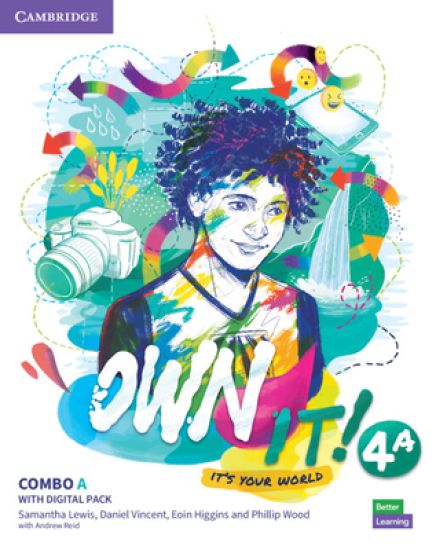
Own it! L4A Combo A with Digital Pack

Own it! L4A Combo A with Digital Pack

Samantha Lewis; Daniel Vincent; Eoin Higgins; Philip Wood

Cambridge University Press
2020
muu
Own It! is a four-level lower Secondary course which helps students gain confidence and become future ready through global topics and collaborative projects. We live in a rapidly changing world. With Own It!, teens develop the confidence and competencies they need to forge their own path in this ever-evolving global landscape. From developing critical and creative thinking skills and social/emotional aptitudes to working effectively in a group, Own it! helps create confident, future-ready learners who are able to meet the challenges ahead. This split combo edition includes units Starter to 4 of the Students' Book and Workbook combined in a single volume, with access to Practice Extra and Collaboration Plus.
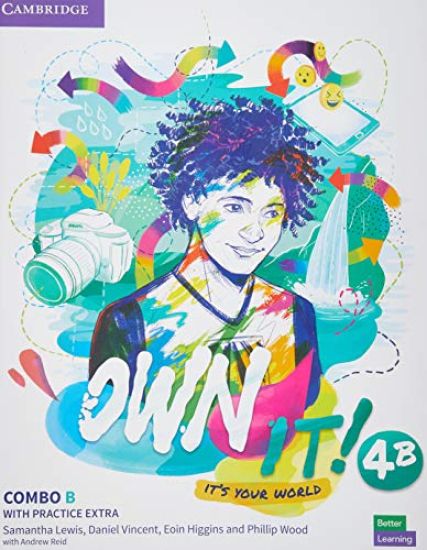
Own it! L4B Combo B with Digital Pack

Own it! L4B Combo B with Digital Pack

Samantha Lewis; Daniel Vincent; Eoin Higgins; Philip Wood

Cambridge University Press
2020
muu
Own It! is a four-level lower Secondary course which helps students gain confidence and become future ready through global topics and collaborative projects. We live in a rapidly changing world. With Own It!, teens develop the confidence and competencies they need to forge their own path in this ever-evolving global landscape. From developing critical and creative thinking skills and social/emotional aptitudes to working effectively in a group, Own it! helps create confident, future-ready learners who are able to meet the challenges ahead. This split combo edition includes units 5 to 9 of the Students' Book and Workbook combined in a single volume, with access to Practice Extra and Collaboration Plus.
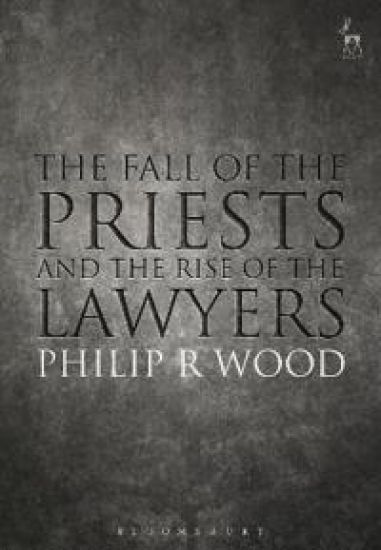
The Fall of the Priests and the Rise of the Lawyers
This fast-paced, inspiring and original work proposes that the secular legal systems around the world provide an immeasurably bigger and more comprehensive moral regime to govern our lives than the religious codes. Backed by potent and haunting images the book states that the law, for all its faults, is the one universal ethical framework that everyone believes in and that the law is now by far the most important ideology we have for our survival. The reach of the law extends not just to crime and the family, but also to vast realms relating, for example, to money, banks, tax and corporations and even securitisations and derivatives. The immense influence that the law has raises fundamental moral challenges. The author explores the decline of religions and the huge growth of law and makes suggestions for the future of law and lawyers. The innovative summaries of both the main religions and the central tenets of law worldwide provide useful insights into both the law and religions. The book will appeal to lawyers, economists, philosophers, scientists and many other specialities and is written for the general reader. Written by one of the most important lawyers of our generation, this exciting and powerful new paperback is a major philosophical statement for our times as witnessed by its enthusiastic reception when first published in 2016.
The Fall of the Priests and the Rise of the Lawyers
This fast-paced, inspiring and original work proposes that, if religions fade, then secular law provides a much more comprehensive moral regime to govern our lives. Backed by potent and haunting images, it argues that the rule of law is the one universal framework that everyone believes in and that the law is now the most important ideology we have for our survival. The author explores the decline of religions and the huge growth of law and makes predictions for the future of law and lawyers. The book maintains that even though societies may decide they can do without religions, they cannot do without law. The book helpfully summarises both the teachings of all the main religions and the central tenets of the law – governing everything from human relationships to money, banks and corporations. It shows that, without these legal constructs, some of them arcane, our societies would grind to a halt. These innovative summaries make complex ideas seem simple and provide the keys to understanding both the law and religion globally. The book will appeal to both lawyers and the general reader. The book concludes with the author’s personal code for a modern way of living to promote the survival of humankind into the future. Vividly written by one of the most important lawyers of our generation, this magisterial and exciting work offers a powerful vision of the role of law in centuries to come and its impact on how we stay alive.
History Under The Influence: Governing On Drugs

History Under The Influence: Governing On Drugs

Philip Wood

Createspace Independent Publishing Platform
2015
nidottu
History Under the Influence looks at world leaders from 336 B. C. to the 21st Century and the effects drugs and alcohol had on their decision making while holding power. Their decisions were made during times of war and peace that impacted the lives of millions. John F. Kennedy acted in key moments during this presidency under the influence of amphetamines which had long lasting ramifications through the 20th century. His use of amphetamines is related to the building of the Berlin Wall and may have played a part in the Cuban Missile Crisis. Between 1941-1945, Adolf Hitler was prescribed more than 70 medications, including amphetamines and cocaine. Toward the end of his life and the end of the European theater of World War II, Hitler displayed physical symptoms that some relate to him suffering from Parkinson's disease. Others argue they're also symptoms of heavy amphetamine use. Germany's defeat in World War II was made by bad strategic planning on Hitler's part, which may have been fueled by drug use prescribed to him by his personal physician. Winston Churchill and Joseph Stalin were functioning alcoholics before, during and after World War II. Churchill has also been thought to have taken amphetamines during World War II to help him stay awake during long nights during the war. Stalin was responsible for the deaths of millions of Russians during the Great Purges. Some argue that his murderous decisions were fueled by his alcohol use, while others suggest he may have been clinically insane. Richard Nixon drank heavily and may have been under the influence of the drug Dilantin, which is an antiepileptic drug. Nixon was not epileptic but may have taken it for other reasons which may have seriously impacted his behavior... something had to account for his bizarre behavior that was observed by many in and around the White House. Word on the street is they even took the nuclear launch codes away from him without his knowledge. Ping-Pong Diplomacy hatched when Chinese Chairman Mao Zedong was in a barbiturate induced haze. Military mastermind Napoleon Bonaparte may have lost at Waterloo due to the effects of opiates on his thinking. His physicians prescribed the drug to him before the battle to relieve pain from which he suffered. Not a lot is known about the Kim family that rules North Korea, but word has trickled out that they may have a penchant for alcohol and there are hints they take narcotics and methamphetamines. North Korea is one of the most repressive counties in the world, and the Kim's appear to have little regard for the well-being of their citizens. And the list goes on... More than a year of research, writing and editing went into History Under the Influence, and it looks at a "dark little corner" of history that isn't often discussed. Many times an author of a biography will discuss a leader's substance abuse and move on without bringing it back up again and tying the effects on the person's mind while making decisions that impact their country or area of rule. History Under the Influence does that.
The Chronicle of Seert

The Chronicle of Seert

Philip Wood

Oxford University Press
2013
sidottu
This is an open access title available under the terms of a CC BY-NC-ND 3.0 International licence. It is free to read at Oxford Scholarship Online and offered as a free PDF download from OUP and selected open access locations. This monograph uses a medieval Arabic chronicle, the Chronicle of Seert, as a window into the Christian history of Iraq. The Chronicle describes events that are unknown from other sources, but it is most useful for what it tells us about the changing agendas of those who wrote history and their audiences in the period c.400-800. By splitting the Chronicle into its constituent layers, Philip Wood presents a rich cultural history of Iraq. He examines the Christians' self-presentation as a church of the martyrs and the uncomfortable reality of close engagement with the Sasanian state. The history of the past was used as a source of solidarity in the present, to draw together disparate Christian communities. But it also represented a means of criticising figures in the present, whether these be secular rulers or over-mighty bishops and abbots. The Chronicle gives us an insight into the development of an international awareness within the church in Iraq. Christians increasingly raised their horizons to the Roman Empire in the West, which offered a model of Christian statehood, while also being the source of resented theological innovation or heresy. It also shows us the competing strands of patronage within the church: between laymen and clergy; church and state; centre and periphery. Building on earlier scholarship rooted in the contemporary Syriac sources, Wood complements that picture with the testimony of this later witness.