Kirjojen hintavertailu – 12 903 725 kirjaa ja 27 kauppaa

Kirjailija

Philip Zelikow

Kirjat ja teokset yhdessä paikassa: 8 kirjaa, julkaisuja vuosilta 2018–2025, suosituimpiin kuuluu Ledarskap och statskonst : studier i makt. Vertaile teosten hintoja ja tarkista saatavuus suomalaisista kirjakaupoista.

8 kirjaa

Kirjojen julkaisuvuodet: 2018–2025.

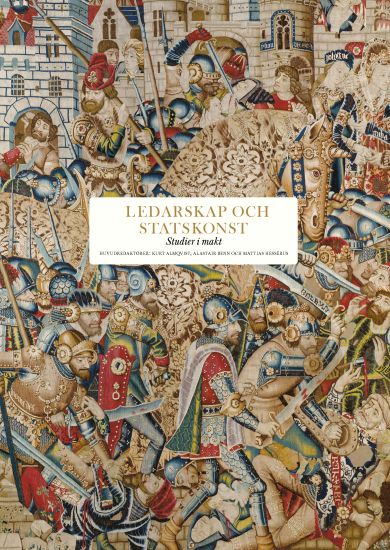
Ledarskap och statskonst : studier i makt

Ledarskap och statskonst : studier i makt

Philip Zelikow; Anna Wieslander; Lucy Ward; Edward Stringer; Nathan Shachar; Michael Scott; Kori Schake; Andreas Rödder; Iskander Rehman; Sergey Radchenko; Alina Polyakova; Gudrun Persson; Kenneth Payne; Charles Moore; Munira Mirza; Henrik Meinander; Rory Medcalf; James Marriott; Fredrik Logevall; Alexander Lee; Julian Jackson; Katja Hoyer; Oleksii Goncharenko; Francis J. Gavin; Kentaro Fujimoto; Daisy Dunn; Claire Coutinho; J.C.D. Clark; David Butterfield; Kristin Ven Bruusgaard; Elisabeth Braw; John Bew; Benedetta Berti

Bokförlaget Stolpe
2025
sidottu
Machiavellis observation om ledarskapets svåra balansgång är lika relevant i vår tid, som den en gång var i 1500-talets Florens. Kinas framväxt, Rysslands attack mot Ukraina och den växande politiska och ekonomiska närvaron i den globala södern har aktualiserat frågan om vikten av kompetent ledarskap inom politiskt styre. Denna antologi utforskar utmaningarna för ledarskap och statskonst i en allt mer komplex värld och ställer frågan huruvida vi kan skapa politiska eliter som är kapabla att på ett säkert vis vägleda väst genom de många prövningar vi står inför. Genom att se till vårt förflutna såväl som till vår samtid undersöker världsledande forskare och skribenter hur ledarskapsidéer har utvecklats genom historien för att ge oss en större förståelse för statskonsten och för vilka färdigheter och organisationer som krävs för att driva små stater, stora imperier och allt däremellan. Boken finns även i engelsk utgåva.
Tillämpad historia : Klassiska texter

Tillämpad historia : Klassiska texter

Lord Acton; J.B. Bury; Herbert Butterfield; Johann Gustav Droysen; John Lewis Gaddis; Michael Howard; Friedrich Nietzsche; Leopold von Ranke; Benjamin F. Shambaugh; Philip Zelikow; Cory J. Clark; Gill Bennett

Bokförlaget Stolpe
2023
sidottu
Uppmaningen att lära av historien är välbekant. Men vad betyder det egentligen? Förespråkarna för tillämpad historia menar att historiska studier kan användas praktiskt och ge vägledning för framtiden. Beslutsfattare och politiker kan få perspektiv, hitta ledtrådar till vart en utveckling kan leda och bedöma vad ett agerande kan få för konsekvenser. Men den tillämpade historiens ökade popularitet skymmer det faktum att historiker ända sedan antikens Grekland har analyserat de stora politiska, ekonomiska och militära frågorna med liknande perspektiv och tankesätt. Varje generation historiker har utvecklat sin forskning på basis av tidigare idéer och kunskap med målet att förstå sin samtid genom att studera det förflutna. Klassiker inom tillämpad historia tar ett stort och ambitiöst grepp om hur historisk kunskap skapas, lärs ut och används under olika epoker. I boken presenteras ett brett urval av texter från till exempel Niccolò Machiavelli, E. H. Carr, Ernest May och Margaret MacMillan, som tillsammans skapar både överblick och insikt i detta ständigt aktuella ämne. Varje text introduceras och placeras i sitt historiska sammanhang av en nu verksam historiker.
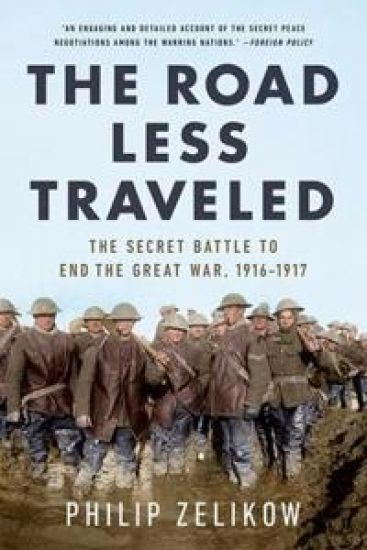
The Road Less Traveled

The Road Less Traveled

Philip Zelikow

PUBLICAFFAIRS,U.S.
2023
pokkari

Halvin toimitettuna 21,70 €

This revealing historical examination looks at the pivotal few months in the middle of the First World War, when all sides-Germany, Britain, and America-believed the war could have been concluded and changed the course of history. Two years into the most terrible conflict the world had ever known, the warring powers faced a crisis. There were no good military options. Money, men, and supplies were running short on all sides. The German chancellor secretly sought President Woodrow Wilson's mediation to end the war, just as British ministers and France's president also concluded that the time was right. The Road Less Traveled describes how tantalizingly close these far-sighted statesmen came to ending the war, saving millions of lives, and avoiding the total war that dimmed hopes for a better world. Theirs was a secret battle that is only now becoming fully understood, a story of civic courage, awful responsibility, and how some leaders rose to the occasion while others shrank from it or chased other ambitions. "Peace is on the floor waiting to be picked up!" pleaded the German ambassador to the United States. This book explains both the strategies and fumbles of people facing a great crossroads of history. The Road Less Traveled reveals one of the last great mysteries of the Great War: that it simply never should have lasted so long or cost so much.
The Road Less Traveled: The Secret Battle to End the Great War, 1916-1917
During a pivotal few months in the middle of the First World War, all sides--Germany, Britain, and America--believed the war could be concluded. Peace at the end of 1916 would have saved millions of lives and utterly changed the course of history. Two years into the most terrible conflict the world had ever known, the warring powers faced a crisis. There were no good military options. Money, men, and supplies were running short on all sides. The German chancellor secretly sought President Woodrow Wilson's mediation to end the war, just as British ministers and France's president also concluded that the time was right. The Road Less Traveled describes how tantalizingly close these far-sighted statesmen came to ending the war, saving millions of lives, and avoiding the total war that dimmed hopes for a better world. Theirs was a secret battle that is only now becoming fully understood, a story of civic courage, awful responsibility, and how some leaders rose to the occasion while others shrank from it or chased other ambitions. "Peace is on the floor waiting to be picked up " pleaded the German ambassador to the United States. This book explains both the strategies and fumbles of people facing a great crossroads of history. The Road Less Traveled reveals one of the last great mysteries of the Great War: that it simply never should have lasted so long or cost so much.
The Road Less Traveled Lib/E: The Secret Battle to End the Great War, 1916-1917
During a pivotal few months in the middle of the First World War, all sides--Germany, Britain, and America--believed the war could be concluded. Peace at the end of 1916 would have saved millions of lives and utterly changed the course of history. Two years into the most terrible conflict the world had ever known, the warring powers faced a crisis. There were no good military options. Money, men, and supplies were running short on all sides. The German chancellor secretly sought President Woodrow Wilson's mediation to end the war, just as British ministers and France's president also concluded that the time was right. The Road Less Traveled describes how tantalizingly close these far-sighted statesmen came to ending the war, saving millions of lives, and avoiding the total war that dimmed hopes for a better world. Theirs was a secret battle that is only now becoming fully understood, a story of civic courage, awful responsibility, and how some leaders rose to the occasion while others shrank from it or chased other ambitions. "Peace is on the floor waiting to be picked up " pleaded the German ambassador to the United States. This book explains both the strategies and fumbles of people facing a great crossroads of history. The Road Less Traveled reveals one of the last great mysteries of the Great War: that it simply never should have lasted so long or cost so much.
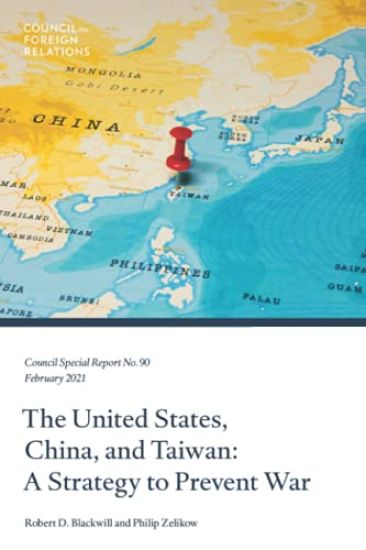
The United States, China, and Taiwan: A Strategy to Prevent War

The United States, China, and Taiwan: A Strategy to Prevent War

Robert D. Blackwill; Philip Zelikow

Council on Foreign Relations Press
2021
nidottu
Taiwan "is becoming the most dangerous flash point in the world for a possible war that involves the United States, China, and probably other major powers," warn Robert D. Blackwill, Council on Foreign Relations (CFR) Henry A. Kissinger senior fellow for U. S. foreign policy, and Philip Zelikow, University of Virginia White Burkett Miller professor of history. In a new Council Special Report, The United States, China, and Taiwan: A Strategy to Prevent War, the authors argue that the United States should change and clarify its strategy to prevent war over Taiwan. "The U. S. strategic objective regarding Taiwan should be to preserve its political and economic autonomy, its dynamism as a free society, and U. S.-allied deterrence-without triggering a Chinese attack on Taiwan.""We do not think it is politically or militarily realistic to count on a U. S. military defeat of various kinds of Chinese assaults on Taiwan, uncoordinated with allies. Nor is it realistic to presume that, after such a frustrating clash, the United States would or should simply escalate to some sort of wide-scale war against China with comprehensive blockades or strikes against targets on the Chinese mainland.""If U. S. campaign plans postulate such unrealistic scenarios," the authors add, "they will likely be rejected by an American president and by the U. S. Congress." But, they observe, "the resulting U. S. paralysis would not be the result of presidential weakness or timidity. It might arise because the most powerful country in the world did not have credible options prepared for the most dangerous military crisis looming in front of it." Proposing "a realistic strategic objective for Taiwan, and the associated policy prescriptions, to sustain the political balance that has kept the peace for the last fifty years," the authors urge the Joe Biden administration toaffirm that it is not trying to change Taiwan's status;work with its allies, especially Japan, to prepare new plans that could challenge Chinese military moves against Taiwan and help Taiwan defend itself, yet put the burden of widening a war on China; andvisibly plan, beforehand, for the disruption and mobilization that could follow a wider war, but without assuming that such a war would or should escalate to the Chinese, Japanese, or American homelands." The horrendous global consequences of a war between the United States and China, most likely over Taiwan, should preoccupy the Biden team, beginning with the president," the authors conclude.
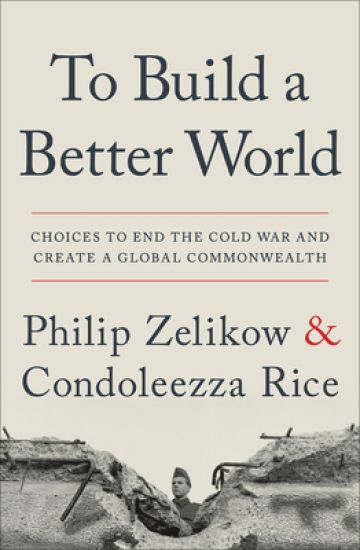
To Build a Better World: Choices to End the Cold War and Create a Global Commonwealth
A deeply researched international history and "exemplary study" (New York Times Book Review) of how a divided world ended and our present world was fashioned, as the world drifts toward another great time of choosing. Two of America's leading scholar-diplomats, Philip Zelikow and Condoleezza Rice, have combed sources in several languages, interviewed leading figures, and drawn on their own firsthand experience to bring to life the choices that molded the contemporary world. Zeroing in on the key moments of decision, the might-have-beens, and the human beings working through them, they explore both what happened and what could have happened, to show how one world ended and another took form. Beginning in the late 1970s and carrying into the present, they focus on the momentous period between 1988 and 1992, when an entire world system changed, states broke apart, and societies were transformed. Such periods have always been accompanied by terrible wars -- but not this time. This is also a story of individuals coping with uncertainty. They voice their hopes and fears. They try out desperate improvisations and careful designs. These were leaders who grew up in a "postwar" world, who tried to fashion something better, more peaceful, more prosperous, than the damaged, divided world in which they had come of age. New problems are putting their choices, and the world they made, back on the operating table. It is time to recall not only why they made their choices, but also just how great nations can step up to great challenges. Timed for the thirtieth anniversary of the fall of the Berlin Wall, To Build a Better World is an authoritative depiction of contemporary statecraft. It lets readers in on the strategies and negotiations, nerve-racking risks, last-minute decisions, and deep deliberations behind the dramas that changed the face of Europe -- and the world -- forever.
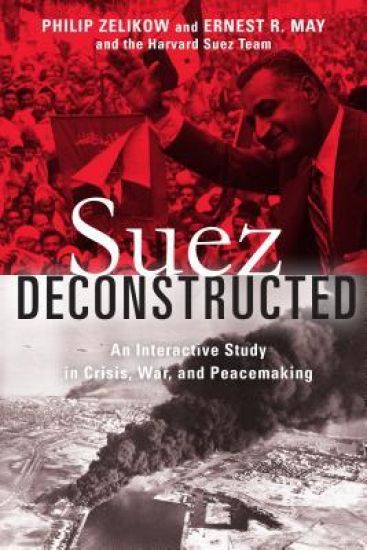
Suez Deconstructed

Suez Deconstructed

Philip Zelikow; Ernest May

Brookings Institution
2018
sidottu
Experiencing a major crisis from different viewpoints, step by stepThe Suez crisis of 1956—now little more than dim history for many people—offers a master class in statecraft. It was a potentially explosive Middle East confrontation capped by a surprise move that reshaped the region for years to come. It was a diplomatic crisis that riveted the world's attention. And it was a short but startling war that ended in unexpected ways for every country involved. Six countries, including two superpowers, had major roles, but each saw the situation differently. From one stage to the next, it could be hard to tell which state was really driving the action. As in any good ensemble, all the actors had pivotal parts to play. Like an illustration that uses an exploded view of an object to show how it works, this book uses an unprecedented design to deconstruct the Suez crisis. The story is broken down into three distinct phases. In each phase, the reader sees the issues as they were perceived by each country involved, taking into account different types of information and diverse characteristics of each leader and that leader's unique perspectives. Then, after each phase has been laid out, editorial observations invite the reader to consider the interplay. Developed by an unusual group of veteran policy practitioners and historians working as a team, Suez Deconstructed is not just a fresh way to understand the history of a major world crisis. Whether one's primary interest is statecraft or history, this study provides a fascinating step-by-step experience, repeatedly shifting from one viewpoint to another. At each stage, readers can gain rare experience in the way these very human leaders sized up their situations, defined and redefined their problems, improvised diplomatic or military solutions, sought ways to influence each other, and tried to change the course of history.