
Kirjojen hintavertailu – 12 859 829 kirjaa ja 27 kauppaa

Kirjailija

Philipp Nielsen

Kirjat ja teokset yhdessä paikassa: 3 kirjaa, julkaisuja vuosilta 2019–2022, suosituimpiin kuuluu Between Heimat and Hatred. Vertaile teosten hintoja ja tarkista saatavuus suomalaisista kirjakaupoista.

3 kirjaa

Kirjojen julkaisuvuodet: 2019–2022.

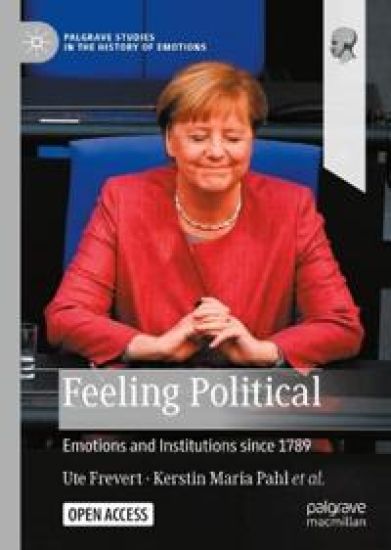
Feeling Political

Feeling Political

Ute Frevert; Kerstin Maria Pahl; Francesco Buscemi; Philipp Nielsen; Agnes Arndt; Michael Amico; Karsten Lichau; Hannah Malone; Julia Wambach; Juliane Brauer; Caroline Moine

Springer Nature Switzerland AG
2022
sidottu
Historicizing both emotions and politics, this open access book argues that the historical work of emotion is most clearly understood in terms of the dynamics of institutionalization. This is shown in twelve case studies that focus on decisive moments in European and US history from 1800 until today. Each case study clarifies how emotions were central to people’s political engagement and its effects. The sources range from parliamentary buildings and social movements, to images and speeches of presidents, from fascist cemeteries to the International Criminal Court. Both the timeframe and the geographical focus have been chosen to highlight the increasingly participatory character of nineteenth- and twentieth-century politics, which is inconceivable without the work of emotions.
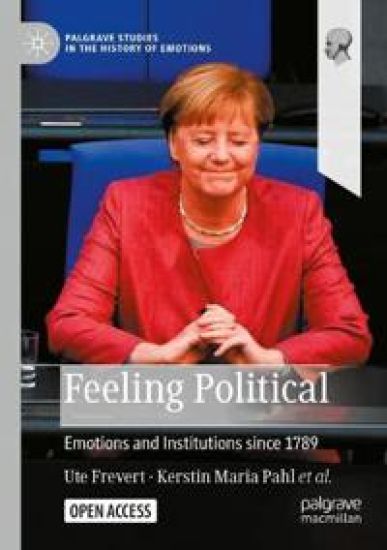
Feeling Political

Feeling Political

Ute Frevert; Kerstin Maria Pahl; Francesco Buscemi; Philipp Nielsen; Agnes Arndt; Michael Amico; Karsten Lichau; Hannah Malone; Julia Wambach; Juliane Brauer; Caroline Moine

Springer Nature Switzerland AG
2022
nidottu
Historicizing both emotions and politics, this open access book argues that the historical work of emotion is most clearly understood in terms of the dynamics of institutionalization. This is shown in twelve case studies that focus on decisive moments in European and US history from 1800 until today. Each case study clarifies how emotions were central to people’s political engagement and its effects. The sources range from parliamentary buildings and social movements, to images and speeches of presidents, from fascist cemeteries to the International Criminal Court. Both the timeframe and the geographical focus have been chosen to highlight the increasingly participatory character of nineteenth- and twentieth-century politics, which is inconceivable without the work of emotions.
Between Heimat and Hatred

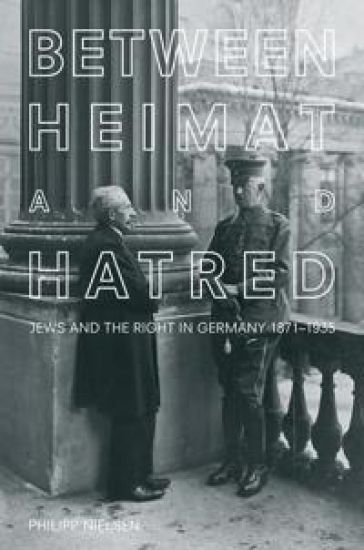
Between Heimat and Hatred

Philipp Nielsen

Oxford University Press Inc
2019
sidottu
In the decades between German unification and the demise of the Weimar Republic, German Jewry negotiated their collective and individual identity under the impression of legal emancipation, continued antisemitism, the emergence of Zionism and Socialism, the First World War, and revolution and the republic. For many German Jews liberalism and also increasingly Socialism became attractive propositions. Yet conservative parties and political positions right-of-center also held appeal for some German Jews. From Heimat to Hatred studies German Jews involved in ventures that were from the beginning, or became increasingly, of the Right. Jewish agricultural settlement, Jews' participation in the so-called "Defense of Germandom in the East", their place in military and veteran circles and finally right-of-center politics form the core of this book. These topics created a web of social activities and political persuasions neither entirely conservative nor entirely liberal. For those German Jews engaging with these issues, their motivation came from sincere love of their German Heimat-a term for home imbued with a deep sense of belonging-and from their middle-class environment, as well as to repudiate antisemitic stereotypes of rootlessness, intellectualism or cosmopolitanism. This tension stands at the heart of the book. The book also asks when did the need for self-defense start to outweigh motivations of patriotism and class? Until when could German Jews espouse views to the right of the political spectrum without appearing extreme to either Jews or non-Jews? In an exploration of identity and exclusion, Philipp Nielsen locates the moments when active Jewish members of conservative projects became the radical other. He notes that the decisive stage of the transformation of the German Right occurred precisely during a period of republican stabilization, when even mainstream right-of-center politics abandoned the state-centric, Volk-based ethnic concepts of the Weimar republic. The book builds on recent studies of Jews' relation to German nationalism, the experience of German Jews away from the large cities, and the increasing interest in Germans' obsession with regional roots and the East. The study follows these lines of inquiry to investigate the participation of some German Jews in projects dedicated to originally, or increasingly, illiberal projects. As such it shines light on an area in which Jewish participation has thus far only been treated as an afterthought and illuminates both Jewish and German history afresh.