

Kirjailija
Philipp Ther
Kirjat ja teokset yhdessä paikassa: 19 kirjaa, julkaisuja vuosilta 1998–2025, suosituimpiin kuuluu In der Mitte der Gesellschaft. Vertaile teosten hintoja ja tarkista saatavuus suomalaisista kirjakaupoista.
19 kirjaa
Kirjojen julkaisuvuodet: 1998–2025.

In the Storms of Transformation
Ulf Brunnbauer; Philipp Ther; Piotr Filipkowski; Andrew Hodges; Stefano Petrungaro; Peter Wegenschimmel
UNIVERSITY OF TORONTO PRESS
2024
sidottu
In the 1990s, states in what would become the eastern edge of the European Union transformed their political systems and economies, leaving state socialism behind for liberal democracies and free markets. In the ensuing decades, two shipyards that were once the pride of their cities – in Gdynia, Poland, and Pula, Croatia – went bankrupt, unable to withstand global competition. Through an interdisciplinary study of these two shipyards, In the Storms of Transformation brings together a team of researchers to re-evaluate the shift from state socialism to market capitalism and offer a new periodization. With perspectives from social anthropology, sociology, and business history, the book argues that this transformation began with the oil crisis of the early 1970s and ended with EU accession – in 2004 in Poland and in 2013 in Croatia – highlighting the EU competition laws and global competition that pushed the shipyards into bankruptcy and diminishing the role of the revolutions of 1989. In the Storms of Transformation bridges local labour history with global market forces, going beyond prevalent narratives of loss and nostalgia or successful neoliberal change to offer a novel and nuanced reading of post-communist transformation and its contradictions.

In the Storms of Transformation
Ulf Brunnbauer; Philipp Ther; Piotr Filipkowski; Andrew Hodges; Stefano Petrungaro; Peter Wegenschimmel
UNIVERSITY OF TORONTO PRESS
2024
pokkari
In the 1990s, states in what would become the eastern edge of the European Union transformed their political systems and economies, leaving state socialism behind for liberal democracies and free markets. In the ensuing decades, two shipyards that were once the pride of their cities – in Gdynia, Poland, and Pula, Croatia – went bankrupt, unable to withstand global competition. Through an interdisciplinary study of these two shipyards, In the Storms of Transformation brings together a team of researchers to re-evaluate the shift from state socialism to market capitalism and offer a new periodization. With perspectives from social anthropology, sociology, and business history, the book argues that this transformation began with the oil crisis of the early 1970s and ended with EU accession – in 2004 in Poland and in 2013 in Croatia – highlighting the EU competition laws and global competition that pushed the shipyards into bankruptcy and diminishing the role of the revolutions of 1989. In the Storms of Transformation bridges local labour history with global market forces, going beyond prevalent narratives of loss and nostalgia or successful neoliberal change to offer a novel and nuanced reading of post-communist transformation and its contradictions.
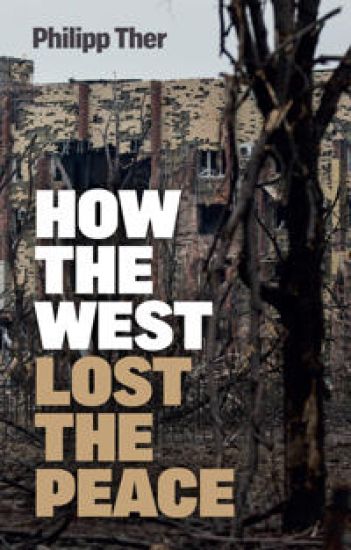
When the Berlin Wall was stormed and the Soviet Union fell apart, the West and above all the United States looked like the sole victors of history. Three decades later, the spirit of triumph rings hollow. What went wrong? In this sequel to his award-winning history of neoliberal Europe, the renowned historian Philipp Ther searches for an answer to this question. He argues that global capitalism created many losers, preparing the ground for the rise of right-wing populists and nationalists. He shows how the promise of prosperity and freedom did not catch on sufficiently in Eastern Europe despite material progress, and how the West lost Russia and alienated Turkey. Neoliberal capitalism also left the world poorly prepared to cope with Covid-19, and the pandemic further weakened the Western hegemony of the post-1989 period, which is now brutally contested by Russia’s war against Ukraine. The double punch of the pandemic and the biggest war in Europe since 1945 has brought to a close the age of transformation that was inaugurated by the end of the Cold War. This penetrating analysis of the disarray of the post-1989 world will be of great interest to anyone who wishes to understand how we got to where we are today and the tremendous challenges we now face.
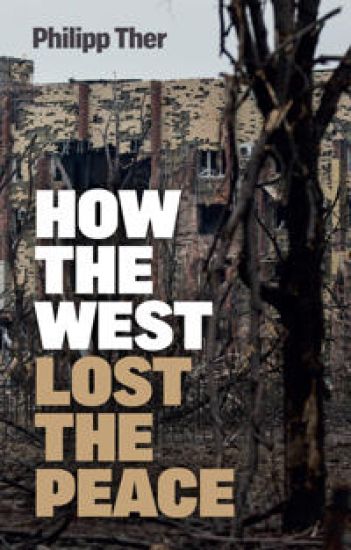
When the Berlin Wall was stormed and the Soviet Union fell apart, the West and above all the United States looked like the sole victors of history. Three decades later, the spirit of triumph rings hollow. What went wrong? In this sequel to his award-winning history of neoliberal Europe, the renowned historian Philipp Ther searches for an answer to this question. He argues that global capitalism created many losers, preparing the ground for the rise of right-wing populists and nationalists. He shows how the promise of prosperity and freedom did not catch on sufficiently in Eastern Europe despite material progress, and how the West lost Russia and alienated Turkey. Neoliberal capitalism also left the world poorly prepared to cope with Covid-19, and the pandemic further weakened the Western hegemony of the post-1989 period, which is now brutally contested by Russia’s war against Ukraine. The double punch of the pandemic and the biggest war in Europe since 1945 has brought to a close the age of transformation that was inaugurated by the end of the Cold War. This penetrating analysis of the disarray of the post-1989 world will be of great interest to anyone who wishes to understand how we got to where we are today and the tremendous challenges we now face.

The history of Europe as a continent of refugeesEuropean history has been permeated with refugees. The Outsiders chronicles every major refugee movement since 1492, when the Catholic rulers of Spain set in motion the first mass flight and expulsion in modern European history. Philipp Ther provides needed perspective on today’s “refugee crisis,” demonstrating how Europe has taken in far greater numbers of refugees in earlier periods of its history, in wartime as well as peacetime. His sweeping narrative crosses the Mediterranean and the Atlantic, taking readers from the Middle East to the shores of America. In this compelling book, Ther examines the major causes of mass flight, from religious intolerance and ethnic cleansing to political persecution and war. He describes the perils and traumas of flight and explains why refugees and asylum seekers have been welcomed in some periods—such as during the Cold War—and why they are rejected in times such as our own. He also examines the afterlives of the refugees in the receiving countries, which almost always benefited from admitting them. Tracing the lengthy routes of the refugees, he reconceptualizes Europe as a unit of geography and historiography. Turning to the history of refugees in the United States, Ther also discusses the anti-refugee politics of the Trump administration, explaining why they are un-American and bad for the country. By setting mass flight against fifteen biographical case studies, and drawing on his subjects’ experiences, itineraries, and personal convictions, Ther puts a human face on a global phenomenon that concerns all of us.

Unity brought diversity - freedom, but also insecurity. 30 years after the fall of the Berlin Wall and the unification of Germany, it is time to re-measure the various upheavals and developments. They shape - and burden - the political and social present and pose enormous challenges, especially for contemporary historical research. How has Germany changed since 1990? What balance can be drawn with regard to the political, social and cultural consequences of the association? And how are these related to developments in Europe and the world? Marianne Birthler, Norbert Frei, Philipp Ther and Ton Nijhuis will debate this, introduced and commented on by Christina Morina and Konrad H. Jarausch. The volume forms the prelude to the "Past Present" series, which takes up central themes and controversies in contemporary history, discusses them with many voices and adds new perspectives.

The history of Europe as a continent of refugeesEuropean history has been permeated with refugees. The Outsiders chronicles every major refugee movement since 1492, when the Catholic rulers of Spain set in motion the first mass flight and expulsion in modern European history. Philipp Ther provides needed perspective on today’s “refugee crisis,” demonstrating how Europe has taken in far greater numbers of refugees in earlier periods of its history, in wartime as well as peacetime. His sweeping narrative crosses the Mediterranean and the Atlantic, taking readers from the Middle East to the shores of America. In this compelling book, Ther examines the major causes of mass flight, from religious intolerance and ethnic cleansing to political persecution and war. He describes the perils and traumas of flight and explains why refugees and asylum seekers have been welcomed in some periods—such as during the Cold War—and why they are rejected in times such as our own. He also examines the afterlives of the refugees in the receiving countries, which almost always benefited from admitting them. Tracing the lengthy routes of the refugees, he reconceptualizes Europe as a unit of geography and historiography. Turning to the history of refugees in the United States, Ther also discusses the anti-refugee politics of the Trump administration, explaining why they are un-American and bad for the country. By setting mass flight against fifteen biographical case studies, and drawing on his subjects’ experiences, itineraries, and personal convictions, Ther puts a human face on a global phenomenon that concerns all of us.


Marraskuussa 1989 Berliinin muuri murtui. Kommunismi romahti Itä-Euroopassa. Entiset itäblokin valtiot ja taloudet pantiin uuteen järjestykseen. Periaatteet olivat talouden vapauttaminen, sääntelyn purkaminen ja yksityistäminen. Mukaansa tempaava kirja lähihistoriastamme kuvaa, kuinka uuden Euroopan uusi talousjärjestys muovattiin kylmän sodan jälkimullistuksissa. Euroopan historia vuodesta 1989 auttaa ymmärtämään vanhan mantereen uusia haasteita, talouden ristiriitoja ja politiikan kaaosta. Philipp Ther on historian professori Wienin yliopistossa.

An award-winning history of the transformation of Europe between 1989 and todayIn this award-winning book, Philipp Ther provides the first comprehensive history of post-1989 Europe, offering a sweeping narrative filled with vivid details and memorable stories. Europe since 1989 shows how liberalization, deregulation, and privatization had catastrophic effects on former Soviet Bloc countries. Ther refutes the idea that this economic “shock therapy” was the basis of later growth, arguing that human capital and the “transformation from below” determined economic success or failure. He also shows how the capitalist West’s effort to reshape Eastern Europe in its own likeness ended up reshaping Western Europe, especially Germany. Bringing the story up to the present, Ther compares Eastern and Southern Europe after the 2008–9 global financial crisis. A compelling account of how the new order of Europe was wrought from the chaotic aftermath of the Cold War, Europe since 1989 is essential reading for understanding post-Brexit Europe and the present dangers for democracy and the European Union.

The year 1989 brought the fall of the Berlin Wall and the collapse of communism in Eastern Europe. It was also the year that the economic theories of Reagan, Thatcher, and the Chicago School achieved global dominance. And it was these neoliberal ideas that largely determined the course of the political, economic, and social changes that transformed Europe--both east and west--over the next quarter century. This award-winning book provides the first comprehensive history of post-1989 Europe. Philipp Ther--a firsthand witness to many of the transformations, from Czechoslovakia during the Velvet Revolution to postcommunist Poland and Ukraine--offers a sweeping narrative filled with vivid details and memorable stories. He describes how liberalization, deregulation, and privatization had catastrophic effects on former Soviet Bloc countries. He refutes the idea that this economic "shock therapy" was the basis of later growth, arguing that human capital and the "transformation from below" determined economic success or failure. Most important, he shows how the capitalist West's effort to reshape Eastern Europe in its own likeness ended up reshaping Western Europe as well, in part by accelerating the pace and scope of neoliberal reforms in the West, particularly in reunified Germany. Finally, bringing the story up to the present, Ther compares events in Eastern and Southern Europe leading up to and following the 2008-9 global financial crisis. A compelling and often-surprising account of how the new order of the New Europe was wrought from the chaotic aftermath of the Cold War, this is essential reading for understanding Europe today.

Why was there such a far-reaching consensus concerning the utopian goal of national homogeneity in the first half of the twentieth century? Ethnic cleansing is analyzed here as a result of the formation of democratic nation-states, the international order based on them, and European modernity in general. Almost all mass-scale population removals were rationally and precisely organized and carried out in cold blood, with revenge, hatred and other strong emotions playing only a minor role. This book not only considers the majority of population removals which occurred in Eastern Europe, but is also an encompassing, comparative study including Western Europe, interrogating the motivations of Western statesmen and their involvement in large-scale population removals. It also reaches beyond the European continent and considers the reverberations of colonial rule and ethnic cleansing in the former British colonies.

Why was there such a far-reaching consensus concerning the utopian goal of national homogeneity in the first half of the twentieth century? Ethnic cleansing is analyzed here as a result of the formation of democratic nation-states, the international order based on them, and European modernity in general. Almost all mass-scale population removals were rationally and precisely organized and carried out in cold blood, with revenge, hatred and other strong emotions playing only a minor role. This book not only considers the majority of population removals which occurred in Eastern Europe, but is also an encompassing, comparative study including Western Europe, interrogating the motivations of Western statesmen and their involvement in large-scale population removals. It also reaches beyond the European continent and considers the reverberations of colonial rule and ethnic cleansing in the former British colonies.

Grand palaces of culture, opera theaters marked the center of European cities like the cathedrals of the Middle Ages. As opera cast its spell, almost every European city and society aspired to have its own opera house, and dozens of new theaters were constructed in the course of the "long" nineteenth century. At the time of the French Revolution in 1789, only a few, mostly royal, opera theaters, existed in Europe. However, by the turn of the nineteenth and twentieth centuries nearly every large town possessed a theater in which operas were performed, especially in Central Europe, the region upon which this book concentrates. This volume, a revised and extended version of two well-reviewed books published in German and Czech, explores the social and political background to this "opera mania" in nineteenth century Central Europe. After tracing the major trends in the opera history of the period, including the emergence of national genres of opera and its various social functions and cultural meanings, the author contrasts the histories of the major houses in Dresden (a court theater), Lemberg (a theater built and sponsored by aristocrats), and Prague (a civic institution). Beyond the operatic institutions and their key stage productions, composers such as Carl Maria von Weber, Richard Wagner, Bed?ich Smetana, Stanis?aw Moniuszko, Antonín Dvo?ák, and Richard Strauss are put in their social and political contexts. The concluding chapter, bringing together the different leitmotifs of social and cultural history explored in the rest of the book, explains the specificities of opera life in Central Europe within a wider European and global framework.
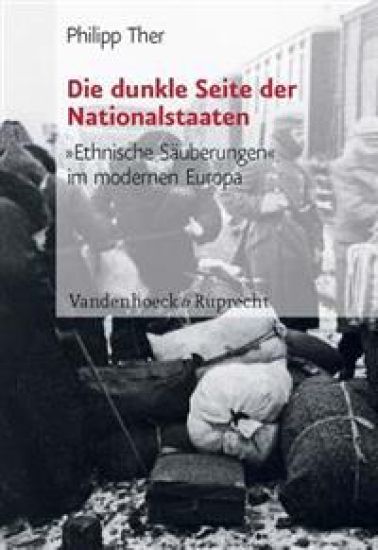
Die Dunkle Seite der Nationalstaaten: Ethnische Sauberungen Im Modernen Europa
Philipp Ther
Vandenhoeck Ruprecht
2011
sidottu
English summary: The book is the first one that deals with all major cases of ethnic cleansing in modern Europe. German description: Ethnische Sauberungen wurden nicht nur von Diktatoren, sondern auch von demokratisch gewahlten Politikern veranlasst. Sie sind vor allem eine Folge des modernen Nationalismus und der Nationalstaatsbildung im 19. und 20. Jahrhundert. Dieses Buch bietet grundlegende Einsichten in eines der dunkelsten Kapitel des modernen Europa. Es befasst sich mit den Voraussetzungen ethnischer Sauberungen ebenso wie mit den Perioden und den verantwortlichen Akteuren von Flucht, Vertreibung, Zwangsaussiedlung und Deportation. Dabei beschrankt es sich nicht auf Osteuropa, sondern beleuchtet auch die Rolle der westlichen Grossmachte. Der Autor spannt einen weiten thematischen Bogen von den Balkankriegen am Vorabend des Ersten Weltkriegs uber die ethnischen Sauberungen wahrend und infolge des Zweiten Weltkrieges bis zu den Burgerkriegen im ehemaligen Jugoslawien und im Kaukasus der 1990er Jahre.


Deutsche Und Polnische Vertriebene: Gesellschaft Und Vertriebenenpolitik in Der Sbz/Ddr Und in Polen 1945-1956
Philipp Ther
Vandenhoeck Ruprecht
1998
nidottu
Vertreibung, Vertriebene, Vertriebenenpolitik: Polen und Deutschland im Vergleich Erstmals wird die Vertriebenenproblematik in einem systematischen polnisch- deutschen Vergleich behandelt. Im Mittelpunkt stehen die Vertriebenenpolitik und das Verhältnis zwischen den Vertriebenen und anderen Bevölkerungsgruppen. Die Vertreibung nach dem Zweiten Weltkrieg war ein europäisches Phänomen, von dem keineswegs nur Deutsche betroffen waren, sondern - neben anderen - auch Polen. Nach Kriegsende behielt die Sowjetunion einen Großteil der annektierten polnischen Ostgebiete; dafür erhielt Polen die ehemaligen deutschen Ostgebiete. Als Folge dieses international gesteuerten Prozesses mußten Millionen Polen und Deutsche ihre Heimat verlassen. Philipp Ther behandelt die Vertriebenenproblematik im Vergleich zwischen Polen und der Sowjetischen Besatzungszone (SBZ)/DDR; auch Westdeutschland wird in die Betrachtung mit einbezogen. Wie kam es zu den massenhaften, gewaltsamen Bevölkerungsverschiebungen? Warum scheiterte die geplante "ordnungsgemäße und humane Durchführung" der Vertreibung? Wie wurden die Vertriebenen aufgenommen? Während in Polen die Vertriebenen unter dem Dach des polnischen Nationalismus integriert werden sollten, betrieb die SBZ/DDR eine egalitäre Politik: Durch Umverteilungen sollten die Vertriebenen in die Gesellschaft eingebunden werden. Nach dem Scheitern dieser Ansätze griffen beide Regime Ende der vierziger Jahre zunehmend zu polizeistaatlichen Maßnahmen. Die Vertriebenenproblematik wurde nun eher unterdrückt als gelöst. Eine negative, von Konflikten geprägte Einstellung anderer Bevölkerungsgruppen zu den Vertriebenen hatte die integrative Politik unterlaufen. Die Anwesenheit von Millionen Vertriebenen hatte einen prägenden Einfluß auf die Nachkriegszeit in der SBZ/DDR und in Polen. Diese Studie geht daher über eine reine Vertriebenengeschichte hinaus: Sie trägt wesentlich zum allgemeinen Verständnis der Staaten und Gesellschaften Mittel- und Osteuropas bei. Der Autor Dr. Philipp Ther ist zur Zeit Fellow am Center for European Studies an der Harvard University.