Kirjojen hintavertailu – 12 903 724 kirjaa ja 27 kauppaa

Kirjailija

Philippe Aghion

Kirjat ja teokset yhdessä paikassa: 13 kirjaa, julkaisuja vuosilta 1997–2026, suosituimpiin kuuluu An Agenda for a Growing Europe. Vertaile teosten hintoja ja tarkista saatavuus suomalaisista kirjakaupoista.

13 kirjaa

Kirjojen julkaisuvuodet: 1997–2026.

An Agenda for a Growing Europe

An Agenda for a Growing Europe

André Sapir; Philippe Aghion; Giuseppe Bertola; Martin Hellwig; Jean Pisani-Ferry; Dariusz Rosati; José Viñals; Helen Wallace; Marco Buti; Mario Nava; Peter M. Smith

Oxford University Press
2004
sidottu
Over the past decade European economic integration has seen considerable institutional success, but the economic performance of the EU has been varied. While macroeconomic stability has improved and an emphasis on cohesion preserved, the EU economic system has not delivered satisfactory growth performance. This book is the report of a high-level group commissioned by the President of the European Commission to review the EU economic system and propose a blueprint for an economic system capable of delivering faster growth along with stability and cohesion. It assesses the EU s economic performance, examines the challenges facing the EU in the coming years, and presents a series of recommendations. The report views Europe's unsatisfactory growth performance during the last decades as a symptom of its failure to transform into an innovation-based economy. It has now become clear that the context in which economic policies have been developed has changed fundamentally over the past thirty years. A system built around the assimilation of existing technologies, mass production generating economics of scale, and an industrial structure dominated by large firms with stable markets and long term employment patterns no longer delivers in the world of today, characterized by economic globalization and strong external competition. What is needed now is more opportunity for new entrants, greater mobility of employees within and across firms, more retraining, greater reliance on market financing, and higher investment in both R&D and higher education. This requires a massive and urgent change in economic policies in Europe.
Kreativ förstörelse

Kreativ förstörelse

Joel Mokyr; Philippe Aghion; Peter Howitt

Volante
2026
sidottu
En unik samling texter av Nobelpristagarna i ekonomi 2025 – Joel Mokyr, Philippe Aghion och Peter Howitt – samlade och redigerade av Johan Norberg. Genom klassiska utdrag, nyskrivna resonemang och banbrytande texter om innovation och tillväxt tecknas en bild av de idéer som format vår förståelse av ekonomisk utveckling. Med bidrag även från Nobelkommitténs ledamöter ger boken både fördjupning och sammanhang till ett av vår tids mest inflytelserika forskningsfält. Joel Mokyr är en av de ledande forskarna om den industriella revolutionens orsaker. Philippe Aghion är en av världens främsta tillväxtekonomer och en central utvecklare av teorin om kreativ förstörelse. Peter Howitt är nationalekonom vars banbrytande arbete från 1990-talet har haft stort inflytande på hur ekonomer förstår innovationens roll i ekonomin. Tillsammans belönades de med Sveriges riksbanks pris i ekonomisk vetenskap till Alfred Nobels minne 2025 för att ha förklarat innovationsdriven ekonomisk tillväxt . Under de senaste två århundradena har vi för första gången i världshistorien sett en ihållande ekonomisk tillväxt. Den har lyft mängder med människor ur fattigdom och lagt grunden till dagens välfärd. Ekonomipristagarna Joel Mokyr, Philippe Aghion och Peter Howitt förklarar genom sin forskning och publikationer hur nya innovationer sår ett frö till ytterligare framsteg.
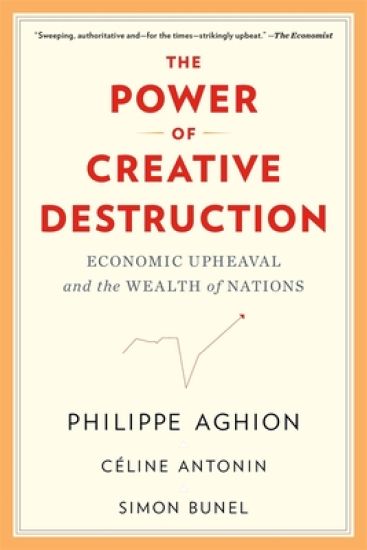
The Power of Creative Destruction

The Power of Creative Destruction

Philippe Aghion; Céline Antonin; Simon Bunel

HARVARD UNIVERSITY PRESS
2023
nidottu

Halvin toimitettuna 21,50 €

Hayek Book Prize FinalistAn Economist Best Book of the YearA Foreign Affairs Best Book of the YearA Financial Times Summer Reading Favorite“Sweeping, authoritative and—for the times—strikingly upbeat…The overall argument is compelling and…it carries a trace of Schumpeterian subversion.”—The Economist“[An] important book…Lucid, empirically grounded, wide-ranging, and well-argued.”—Martin Wolf, Financial Times“Offers…much needed insight into the sources of economic growth and the kinds of policies that will promote it…All in Washington would do well to read this volume carefully.”—Milton Ezrati, ForbesInequality is on the rise, growth stagnant, the environment in crisis. Covid seems to have exposed every crack in the system. We hear calls for radical change, but the answer is not to junk our economic system but to create a better form of capitalism. An ambitious reappraisal of the foundations of economic success that shows a fair and prosperous future is ours to make, The Power of Creative Destruction draws on cutting-edge theory and hard evidence to examine today’s most fundamental economic questions: what powers growth, competition, globalization, and middle-income traps; the roots of inequality and climate change; the impact of technology; and how to recover from economic shocks. We owe our modern standard of living to innovations enabled by free-market capitalism, it argues, but we also need state intervention—with checks and balances—to foster economic creativity, manage social disruption, and ensure that yesterday’s superstar innovators don’t pull the ladder up after them.
Volatility and Growth

Volatility and Growth

Philippe Aghion; Abhijit Banerjee

Oxford University Press
2020
nidottu
It has long been recognized that productivity growth and the business cycle are closely interrelated. Yet, until recently, the two phenomena have been investigated separately in the economics literature. This book provides the first consistent attempt to analyze the effects of macroeconomic volatility on productivity growth, and also the reverse causality from growth to business cycles. The authors show that by looking at the economy through the lens of private entrepreneurs, who invest under credit constraints, one can go some way towards explaining persistent macroeconomic volatility and the effects of volatility on growth. Beginning with an analysis of the effects of volatility on growth, the authors argue that the lower the level of financial development in a country the more detrimental the effect of volatility on growth. This prediction is confirmed by cross-country panel regressions. The data also suggests that a fixed exchange rate regime or more countercyclical budgetary policies are growth-enhancing in countries with a lower level of financial development. The former reduce aggregate volatility whereas the latter reduce the negative effects of volatility on long-term productivity-enhancing investment by firms. The book concludes with an investigation into how the interplay between credit constraints and pecuniary externalities is sufficient to generate persistent business cycles and to explain the occurrence of currency crises.
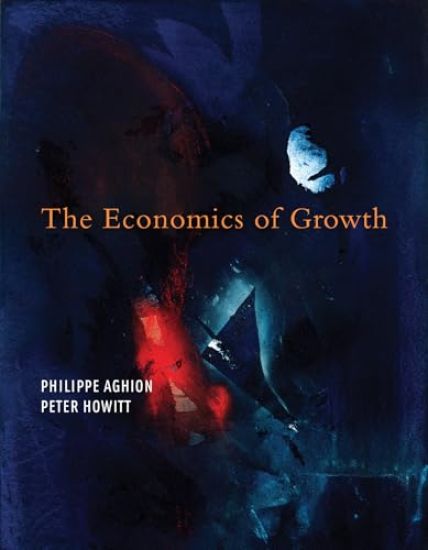
The Economics of Growth

The Economics of Growth

Philippe Aghion; Peter W. Howitt

MIT Press
2008
sidottu
A comprehensive, rigorous, and up-to-date introduction to growth economics that presents all the major growth paradigms and shows how they can be used to analyze the growth process and growth policy design. This comprehensive introduction to economic growth presents the main facts and puzzles about growth, proposes simple methods and models needed to explain these facts, acquaints the reader with the most recent theoretical and empirical developments, and provides tools with which to analyze policy design. The treatment of growth theory is fully accessible to students with a background no more advanced than elementary calculus and probability theory; the reader need not master all the subtleties of dynamic programming and stochastic processes to learn what is essential about such issues as cross-country convergence, the effects of financial development on growth, and the consequences of globalization. The book, which grew out of courses taught by the authors at Harvard and Brown universities, can be used both by advanced undergraduate and graduate students, and as a reference for professional economists in government or international financial organizations. The Economics of Growth first presents the main growth paradigms: the neoclassical model, the AK model, Romer's product variety model, and the Schumpeterian model. The text then builds on the main paradigms to shed light on the dynamic process of growth and development, discussing such topics as club convergence, directed technical change, the transition from Malthusian stagnation to sustained growth, general purpose technologies, and the recent debate over institutions versus human capital as the primary factor in cross-country income differences. Finally, the book focuses on growth policies-analyzing the effects of liberalizing market competition and entry, education policy, trade liberalization, environmental and resource constraints, and stabilization policy-and the methodology of growth policy design. All chapters include literature reviews and problem sets. An appendix covers basic concepts of econometrics.
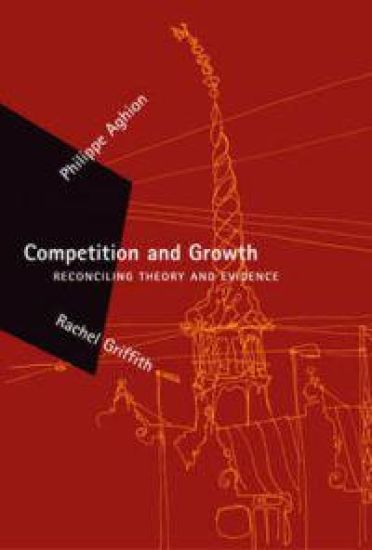
Competition and Growth

Competition and Growth

Philippe Aghion; Rachel Griffith

MIT Press
2008
pokkari

Halvin toimitettuna 41,50 €

Though competition occupies a prominent place in the history of economic thought, among economists today there is still a limited, and sometimes contradictory, understanding of its impact. In Competition and Growth, Philippe Aghion and Rachel Griffith offer the first serious attempt to provide a unified and coherent account of the effect competition policy and deregulated entry has on economic growth. The book takes the form of a dialogue between an applied theorist calling on "Schumpeterian growth" models and a microeconometrician employing new techniques to gauge competition and entry. In each chapter, theoretical models are systematically confronted with empirical data, which either invalidates the models or suggests changes in the modeling strategy. Aghion and Griffith note a fundamental divorce between theorists and empiricists who previously worked on these questions. On one hand, existing models in industrial organization or new growth economics all predict a negative effect of competition on innovation and growth: namely, that competition is bad for growth because it reduces the monopoly rents that reward successful innovators. On the other hand, common wisdom and recent empirical studies point to a positive effect of competition on productivity growth. To reconcile theory and evidence, the authors distinguish between pre- and post-innovation rents, and propose that innovation may be a way to escape competition, an idea that they confront with microeconomic data. The book's detailed analysis should aid scholars and policy makers in understanding how the benefits of tougher competition can be achieved while at the same time mitigating the negative effects competition and imitation may have on some sectors or industries.
Volatility and Growth

Volatility and Growth

Philippe Aghion; Abhijit Banerjee

Oxford University Press
2005
sidottu

Halvin toimitettuna 82,20 €

It has long been recognized that productivity growth and the business cycle are closely interrelated. Yet, until recently, the two phenomena have been investigated separately in the economics literature. This book provides the first consistent attempt to analyze the effects of macroeconomic volatility on productivity growth, and also the reverse causality from growth to business cycles. The authors show that by looking at the economy through the lens of private entrepreneurs, who invest under credit constraints, one can go some way towards explaining persistent macroeconomic volatility and the effects of volatility on growth. Beginning with an analysis of the effects of volatility on growth, the authors argue that the lower the level of financial development in a country the more detrimental the effect of volatility on growth. This prediction is confirmed by cross-country panel regressions. The data also suggests that a fixed exchange rate regime or more countercyclical budgetary policies are growth-enhancing in countries with a lower level of financial development. The former reduce aggregate volatility whereas the latter reduce the negative effects of volatility on long-term productivity-enhancing investment by firms. The book concludes with an investigation into how the interplay between credit constraints and pecuniary externalities is sufficient to generate persistent business cycles and to explain the occurrence of currency crises.
An Agenda for a Growing Europe

An Agenda for a Growing Europe

André Sapir; Philippe Aghion; Giuseppe Bertola; Martin Hellwig; Jean Pisani-Ferry; Dariusz Rosati; José Viñals; Helen Wallace; Marco Buti; Mario Nava; Peter M. Smith

Oxford University Press
2004
nidottu
Over the past decade European economic integration has seen considerable institutional success, but the economic performance of the EU has been varied. While macroeconomic stability has improved and an emphasis on cohesion preserved, the EU economic system has not delivered satisfactory growth performance. This book is the report of a high-level group commissioned by the President of the European Commission to review the EU economic system and propose a blueprint for an economic system capable of delivering faster growth along with stability and cohesion. It assesses the EU s economic performance, examines the challenges facing the EU in the coming years, and presents a series of recommendations. The report views Europe's unsatisfactory growth performance during the last decades as a symptom of its failure to transform into an innovation-based economy. It has now become clear that the context in which economic policies have been developed has changed fundamentally over the past thirty years. A system built around the assimilation of existing technologies, mass production generating economics of scale, and an industrial structure dominated by large firms with stable markets and long term employment patterns no longer delivers in the world of today, characterized by economic globalization and strong external competition. What is needed now is more opportunity for new entrants, greater mobility of employees within and across firms, more retraining, greater reliance on market financing, and higher investment in both R&D and higher education. This requires a massive and urgent change in economic policies in Europe.
Growth, Inequality, and Globalization

Growth, Inequality, and Globalization

Philippe Aghion; Jeffrey G. Williamson

Cambridge University Press
1999
pokkari
The question of how inequality is generated and how it reproduces over time has been a major concern for social scientists for more than a century. Yet the relationship between inequality and the process of economic development is far from being well understood. These Raffaele Mattioli Lectures have brought together two of the world’s leading economists, Professors Philippe Aghion (a theorist) and Jeffrey Williamson (an economic historian), to question the conventional wisdom on inequality and growth, and address its inability to explain recent economic experience. Professor Aghion assesses the affects of inequality on growth, and asks whether inequality matters: if so why is excessive inequality bad for growth, and is it possible to reconcile aggregate findings with macroeconomic theories of incentives? In the second part Jeffrey Williamson discusses the Kuznets hypothesis, and focuses on the causes of the rise of wage and income inequality in developed economies.
Growth, Inequality, and Globalization

Growth, Inequality, and Globalization

Philippe Aghion; Jeffrey G. Williamson

Cambridge University Press
1999
sidottu
The question of how inequality is generated and how it reproduces over time has been a major concern for social scientists for more than a century. Yet the relationship between inequality and the process of economic development is far from being well understood. These Raffaele Mattioli Lectures have brought together two of the world’s leading economists, Professors Philippe Aghion (a theorist) and Jeffrey Williamson (an economic historian), to question the conventional wisdom on inequality and growth, and address its inability to explain recent economic experience. Professor Aghion assesses the affects of inequality on growth, and asks whether inequality matters: if so why is excessive inequality bad for growth, and is it possible to reconcile aggregate findings with macroeconomic theories of incentives? In the second part Jeffrey Williamson discusses the Kuznets hypothesis, and focuses on the causes of the rise of wage and income inequality in developed economies.
Endogenous Growth Theory

Endogenous Growth Theory

Philippe Aghion; Peter W. Howitt

MIT Press
1997
pokkari

Halvin toimitettuna 107,90 €

Whereas other books on endogenous growth stress a particular aspect, such as trade or convergence, this book provides a comprehensive survey of the theoretical and empirical debates raised by modern growth theory. Advanced economies have experienced a tremendous increase in material well- being since the industrial revolution. Modern innovations such as personal computers, laser surgery, jet airplanes, and satellite communication have made us rich and transformed the way we live and work. But technological change has also brought with it a variety of social problems. It has been blamed at various times for increasing wage and income inequality, unemployment, obsolescence of physical and human capital, environmental deterioration, and prolonged recessions. To understand the contradictory effects of technological change on the economy, one must delve into structural details of the innovation process to analyze how laws, institutions, customs, and regulations affect peoples' incentive and ability to create new knowledge and profit from it. To show how this can be done, Philippe Aghion and Peter Howitt make use of Schumpeter's concept of creative destruction, the competitive process whereby entrepreneurs constantly seek new ideas that will render their rivals' ideas obsolete. Whereas other books on endogenous growth stress a particular aspect, such as trade or convergence, this book provides a comprehensive survey of the theoretical and empirical debates raised by modern growth theory. It develops a powerful engine of analysis that sheds light not only on economic growth per se, but on the many other phenomena that interact with growth, such as inequality, unemployment, capital accumulation, education, competition, natural resources, international trade, economic cycles, and public policy.