Kirjojen hintavertailu – 12 903 724 kirjaa ja 27 kauppaa

Kirjailija

Philippe Descola

Kirjat ja teokset yhdessä paikassa: 15 kirjaa, julkaisuja vuosilta 1994–2025, suosituimpiin kuuluu Leben und Sterben in Amazonien. Vertaile teosten hintoja ja tarkista saatavuus suomalaisista kirjakaupoista.

15 kirjaa

Kirjojen julkaisuvuodet: 1994–2025.

Politics of Worlding

Politics of Worlding

Philippe Descola

OXFORD UNIVERSITY PRESS INC
2025
sidottu
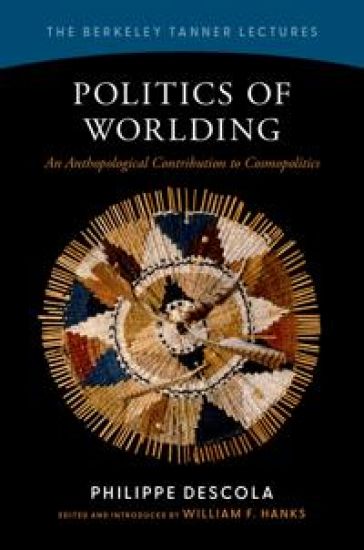
The Politics of Worldling presents Philippe Descola's Tanner Lectures on Human Values, delivered in 2023 at the University of California, Berkeley. It offers a highly readable précis of some of the central ideas that animate Descola's work, and an excellent gateway into a new vision of anthropology developed by one of its most distinguished practitioners. The lectures draw heavily on Descola's research among Achuar peoples (formerly known as Jivaro) of the Upper Amazon, and on his erudite knowledge of the comparative literature in anthropology. He presents evidence that people in different societies construe the relation between nature and culture in fundamentally different ways, according to how they view human beings versus other-than-human beings. Modern Euro-American naturalism holds that the laws of nature are universal and apply continuously across life forms, whereas human mental processes, self-consciousness and "inner lives" are unlike, and hence discontinous with the inner lives of non-human beings. Descola critiques this schema as anchronistic and destructive in the way it has led us to construct our world. He proposes alternative ways of thinking about "worldling" that might lead to less destructive outcomes, and provides a four-part typology of alternative relationships between the human and non-human, employing fascinating examples from the field. The commentators-political theorist Adom Getachew, environmental historian Timothy J. LeCain and comparative archaeologist David Wengrew-respond to the lectures and emphasize the importance of history, hybridity and the need for new, multidisciplinary approaches, to which Descola responds in a final chapter. Intellectually compelling, politically critical, and forward looking, and including an introduction by the volume editor William F. Hanks, The Politics of Worldling will be valuable for scholars and students alike interested in a concise presentation of the views of one of its most visionary theorists.
Forms of the Visible

Forms of the Visible

Philippe Descola

JOHN WILEY AND SONS LTD
2025
sidottu

Halvin toimitettuna 36,20 €

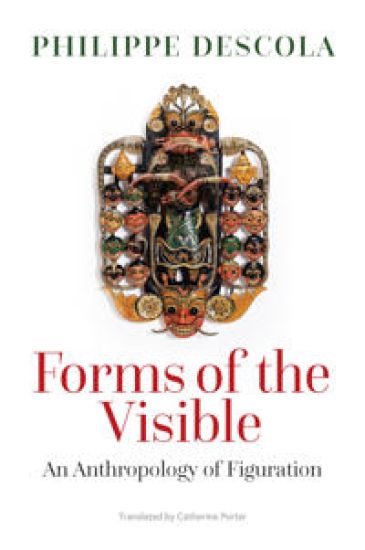
Imagery and figuration are not just figments of an artist’s imagination. Perception and imagination are always shaped by what habit has taught us to discern. The visual path we spontaneously trace through the world depends on where we are situated in the four regions of the ontological archipelago: animism, naturalism, totemism or analogism. Each of these four regions corresponds to a way of conceiving the objects that make up the world, of perceiving the continuities and discontinuities in the folds of the world and of drawing the dividing lines between humans and nonhumans. From Alaskan Yup’ik masks and Aboriginal bark paintings to miniature landscapes from the Song dynasty and Dutch Golden Age interior scenes: each image reveals, through what it shows or fails to show, a certain figurative regime, identifiable by the formal means it uses and by the device through which it can unleash its power to act. The figurative regime enables us to grasp – sometimes better than words can – the contrasting ways of living that characterize the human condition and its relation to the nonhuman. By comparing a great diversity of visual images and artworks, Descola masterfully lays the theoretical foundations for an anthropology of figuration. One of the world’s leading anthropologists, Philippe Descola has developed a comparative anthropology of relations between humans and nonhumans that has revolutionized both the human sciences and our ways of thinking about the great ecological issues of our time. His new book will be of great value to students and scholars of anthropology, visual art and art history and to anyone interested in art, culture and the relations between the human and nonhuman worlds.
The Composition of Worlds

The Composition of Worlds

Philippe Descola

JOHN WILEY AND SONS LTD
2023
sidottu
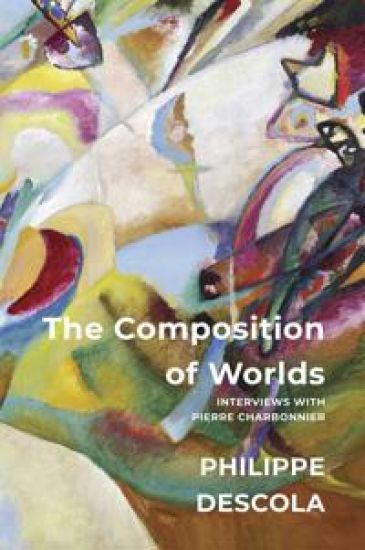
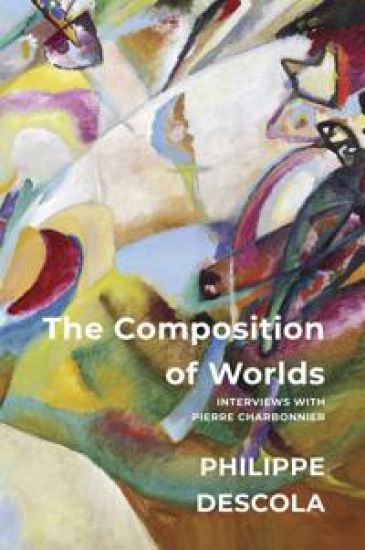
In this autobiographical reflection, the distinguished anthropologist Philippe Descola looks back on his intellectual career and examines both the central themes of his work and the key questions that have shaped anthropological debates over the past forty years. A student of Lévi-Strauss, Descola conducted ethnographic research among the Achuar of the upper Amazon in the late 1970s, focusing on how native societies relate to their environment. In this book he sheds fresh light on the evolution of his thinking from structuralism to an anthropology beyond the human, on the critique of the modern separation between nature and society, and above all on the genesis and scope of his major work Beyond Nature and Culture. This synthesis of the ways in which humans view their relationships with non-humans proposes four schemas for the ‘composition of worlds’ (animism, naturalism, totemism, analogism) that characterize our ways of inhabiting the earth. Presented in the form of an extended conversation with Pierre Charbonnier, this book is both a lucid introduction to the work of one of the most original anthropologists writing today and an impassioned plea for ontologies that are more accommodating of the diversity of beings.
The Composition of Worlds

The Composition of Worlds

Philippe Descola

JOHN WILEY AND SONS LTD
2023
nidottu
In this autobiographical reflection, the distinguished anthropologist Philippe Descola looks back on his intellectual career and examines both the central themes of his work and the key questions that have shaped anthropological debates over the past forty years. A student of Lévi-Strauss, Descola conducted ethnographic research among the Achuar of the upper Amazon in the late 1970s, focusing on how native societies relate to their environment. In this book he sheds fresh light on the evolution of his thinking from structuralism to an anthropology beyond the human, on the critique of the modern separation between nature and society, and above all on the genesis and scope of his major work Beyond Nature and Culture. This synthesis of the ways in which humans view their relationships with non-humans proposes four schemas for the ‘composition of worlds’ (animism, naturalism, totemism, analogism) that characterize our ways of inhabiting the earth. Presented in the form of an extended conversation with Pierre Charbonnier, this book is both a lucid introduction to the work of one of the most original anthropologists writing today and an impassioned plea for ontologies that are more accommodating of the diversity of beings.
Una antropología alterada por la alteridad: Entrevistas a Philippe Descola
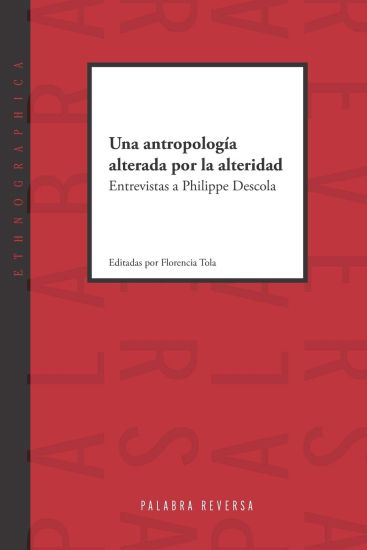
L vi-Strauss, quien suele ser considerado pol ticamente como un conservador y que en 1937 a n era marxista, desarroll la idea de que la antropolog a es revolucionaria porque nos permite vernos a nosotros a trav s de los ojos de los dem s y as nos permite entender que el curso que la civilizaci n occidental y el capitalismo industrial han seguido no es el nico posible. Otras civilizaciones, otras culturas han escogido otras formas de vivir que no pueden ser transpuestas por analog a, porque ninguna experiencia hist rica puede ser transpuesta. Estas otras formas de vivir pueden ser un est mulo para pensar alternativas para reformarnos o transformarnos, ya que otros han escogido o han seleccionado vivir en mundos muy distintos de los nuestros. El paso por la alteridad que permite la antropolog a es, en este sentido, absolutamente fundamental. Philippe Descola Acerca de la Colecci nEn el seno de la colecci n ethnographica, Palabra reversa edita entrevistas, di logos, compilaciones de art culos y ensayos que exponen reflexiones antropol gicas derivadas de experiencias de trabajo de campo. Durante la pr ctica etnogr fica, los antrop logos se ven confrontados con diversas y variadas maneras de habitar el mundo, cuya comprensi n transmiten luego a trav s de sus propios significados. La instancia de la escritura opera como una recreaci n imaginativa (Strathern 2014) de los efectos de dicha pr ctica. La escritura se muestra, as , como un lugar de pasaje. Ella transmite una experiencia etnogr fica que oscila entre la identificaci n y la alteridad, y en esa oscilaci n se construyen y reconstruyen sentidos. La serie Palabra reversa intenta dar cuenta de la potencia de la etnograf a para desplegar y ofrecer otros modos de vida, otras formas del pensamiento, otras miradas del mundo.https: //www.rumbosur.org/ethnographica/Acerca del autorPhilippe Descola es un etn logo y antrop logo franc s, dirige la c tedra creada por Claude L vi-Strauss en el Coll ge de France que hoy se llama "Antropolog a de la naturaleza". Fue director del Laboratoire d'anthropologie sociale del Coll ge de France, profesor de la cole des hautes tudes en sciences sociales de Par s y profesor invitado a m ltiples universidades del mundo. Su experiencia etnogr fica en un grupo ind gena de la Amazon a ecuatoriana, los achuar, su proyecci n te rica y su elocuente erudici n lo convirtieron en una de las figuras emblem ticas de la antropolog a contempor nea. Entre sus libros se destacan La selva culta (1986) -fruto de su investigaci n etnogr fica acerca de los modos en que los achuar se vinculan con el entorno-; Las lanzas del crep sculo (1993) que constituye una etnograf a reflexiva que muestra el funcionamiento cotidiano de una investigaci n de campo; M s all de naturaleza y cultura (2005) -obra magistral sobre las relaciones entre humanos y no-humanos- y La f brica de las im genes (2010) -fruto de su ambici n de verificar si, en las formas de figuraci n, pod an encontrarse los contrastes presentes en las diversas ontolog as desarrolladas en M s all de naturaleza y cultura.
The Sex Thieves – The Anthropology of a Rumor

The Sex Thieves – The Anthropology of a Rumor

Julien Bonhomme; Dominic Horsfall; Philippe Descola

HAU
2016
nidottu
While working in Africa, anthropologist Julien Bonhomme encountered an astonishing phenomenon: people being accused of stealing or shrinking the genitals of strangers on the simple occasion of a handshake on the street. As he soon discovered, these accusations can have dramatic outcomes: the "sex thieves" are often targeted by large crowds and publicly lynched. Moreover, such rumors are an extremely widespread practice, having affected almost half of the African continent since the 1970s. In this book, Bonhomme examines the story of the "penis snatcher," asking larger questions about how to account for such a phenomenon unique in its spatial and temporal scale without falling prey to the cliche of Africa as an exotic other. Bonhomme argues that the public belief in sex thieves cannot be considered a superstition or form of mass hysteria. Rather, he brings to light multiple factors that explain the rumor's success and shows how the cultural dynamic can operate on a vast scale. Analyzing the rumor on both transnational and local levels, he demonstrates how it arises from the ambiguities and dangers of anonymity, and thus that it reveals an occult flipside to everyday social interaction. Altogether, this book provides both richly ethnographic and theoretical understandings of urban sociality and the dynamics of human communication in contemporary Africa and beyond.
Beyond Nature and Culture

Beyond Nature and Culture

Philippe Descola; Marshall Sahlins

University of Chicago Press
2014
nidottu

Halvin toimitettuna 44,40 €

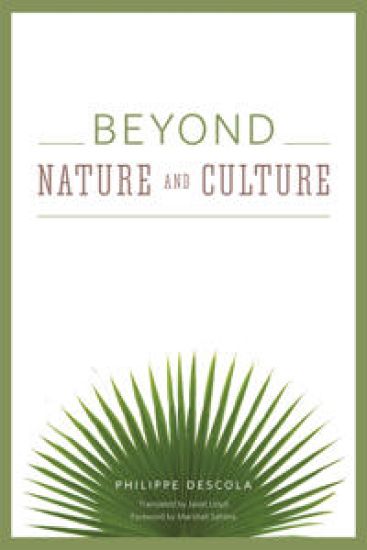
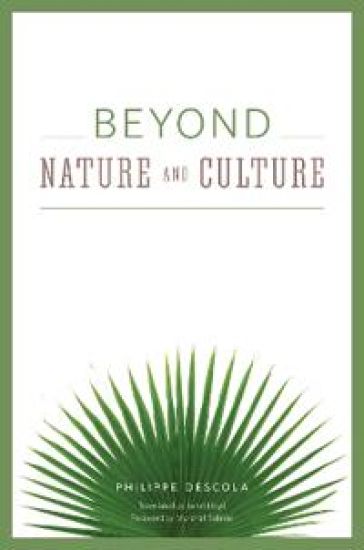
Successor to Claude Levi-Strausa at the College de France, Philippe Descola has become one of the most important anthropologists working today, and Beyond Nature and Culture has been a major influence in European intellectual life since its publication in 2005. Here, finally, it is brought to English-language readers. At its heart is a question central to both anthropology and philosophy: what is the relationship between nature and culture? Culture - as a collective human making, of art, language, and so forth - is often seen as essentially different than nature, which is portrayed as a collective of the nonhuman world, of plants, animals, geology, and natural forces. Descola shows this essential difference to be, however, not only a specifically Western notion, but also a very recent one. Drawing on ethnographic examples from around the world and theoretical understandings from cognitive science, structural analysis, and phenomenology, he formulates a sophisticated new framework, the "four ontologies" - animism, totemism, naturalism, and analogism - to account for all the ways we relate ourselves to nature. By thinking beyond nature and culture as a simple dichotomy, Descola offers nothing short of a fundamental reformulation by which anthropologists and philosophers can see the world afresh.
Beyond Nature and Culture

Beyond Nature and Culture

Philippe Descola; Marshall Sahlins

University of Chicago Press
2013
sidottu
Successor to Claude Levi-Strauss at the College de France, Philippe Descola has become one of the most important anthropologists working today, and Beyond Nature and Culture has been a major influence in European intellectual life since its French publication in 2005. Here, finally, it is brought to English-language readers. At its heart is a question central to both anthropology and philosophy: what is the relationship between nature and culture? Culture - as a collective human making, of art, language, and so forth - is often seen as essentially different than nature, which is portrayed as a collective of the nonhuman world, of plants, animals, geology, and natural forces. Descola shows this essential difference to be, however, not only a specifically Western notion, but also a very recent one. Drawing on ethnographic examples from around the world and theoretical understandings from cognitive science, structural analysis, and phenomenology, he formulates a sophisticated new framework, the "four ontologies" - animism, totemism, naturalism, and analogism - to account for all the ways we relate ourselves to nature. By thinking beyond nature and culture as a simple dichotomy, Descola offers nothing short of a fundamental reformulation by which anthropologists and philosophers can see the world afresh.
The Ecology of Others Question of Nature

The Ecology of Others Question of Nature

Philippe Descola; Geneviève Godbout; Benjamin P. Luley

Prickly Paradigm Press, LLC
2013
nidottu

Halvin toimitettuna 23,00 €

Since the end of the nineteenth century, the division between nature and culture has been fundamental to Western thought. In this groundbreaking work, renowned anthropologist Philippe Descola seeks to break down this divide, arguing for a departure from the anthropocentric model and its rigid dualistic conception of nature and culture as distinct phenomena. In its stead, Descola proposes a radical new worldview, in which beings and objects, human and nonhuman, are understood through the complex relationships between them. The "Ecology of Others" presents a compelling challenge to anthropologists, ecologists, and environmental studies scholars to rethink the way we conceive of humans, objects, and the environment. Thought-provoking and engagingly written, it will be required reading for all those interested in moving beyond the current confines of this fascinating debate.
In the Society of Nature

In the Society of Nature

Philippe Descola

Cambridge University Press
1996
pokkari
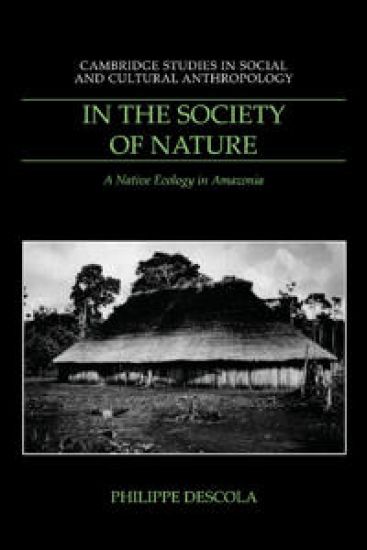
The Achuar Indians live in the remote forest reaches of the Upper Amazon and have developed sophisticated strategies of resource management. Philippe Descola, who has gathered material over several years of fieldwork, documents their rich knowledge of the environment. He explains how this technical knowledge of the increasingly threatened Amazonian ecosystems is interwoven with cosmological ideas that endow nature with the characteristics of society. Combining a symbolist approach with an ecological analysis, the book contributes a new theory of the social construction of nature.
In the Society of Nature

In the Society of Nature

Philippe Descola

Cambridge University Press
1994
sidottu
The Achuar Indians live in the remote forest reaches of the Upper Amazon and have developed sophisticated strategies of resource management. Philippe Descola, who has gathered material over several years of fieldwork, documents their rich knowledge of the environment. He explains how this technical knowledge of the increasingly threatened Amazonian ecosystems is interwoven with cosmological ideas that endow nature with the characteristics of society. Combining a symbolist approach with an ecological analysis, the book contributes a new theory of the social construction of nature.