Kirjojen hintavertailu – 12 859 827 kirjaa ja 27 kauppaa

Kirjailija

Philippe Sollers

Kirjat ja teokset yhdessä paikassa: 7 kirjaa, julkaisuja vuosilta 1983–2017, suosituimpiin kuuluu H. Vertaile teosten hintoja ja tarkista saatavuus suomalaisista kirjakaupoista.

7 kirjaa

Kirjojen julkaisuvuodet: 1983–2017.

H

H

Philippe Sollers

Equus Press
2015
pokkari
Philippe Sollers' groundbreaking 1973 novel, H, was inspired by the May 1968 Paris student/worker uprising, and, in its own right, performs a revolt against much that's been (and still is) taken for granted in the belles lettres. Described as "a music that is inscribed in language, becoming the object of its own reasoning" (Julia Kristeva) and as an "unpunctuated wall of words, an extremely active ...] mass of language" (David Hayman), H does away with plot, character and setting-and, on the typographical level, with punctuation, capitalisation, or paragraph breaks-in order to attempt what Sollers himself called "an external polylogue." The text performs an infinite fragmentation of subjectivity into a plethora of ventriloquized voices where "words turn round and come back, producing a material fullness of pleasures" and "everything is organized into a splendid series of irrelevancies" (Roland Barthes). It is this fulness of H, this "suffocation" it produces, that might be, with Barthes, termed its "beauty." Accommodating a vast range of tonalities, attitudes, modes, and ideologies, H makes a case in point of how a literary work should function according to Sollers: "A work exists by itself only potentially, and its actualization (or production) depends on its readings and on the moments at which these readings actively take place." H (translated by Veronika Stankovianska & David Vichnar) will become the first English-language translation of this influential experimental text.

The Friendship of Roland Barthes

The Friendship of Roland Barthes

Philippe Sollers

Polity Press
2017
nidottu
In Roland Barthes's eyes, Philippe Sollers embodied the figure of the contemporary writer forever seeking something new. Thirty-six years after Barthes produced his study Sollers Writer, Sollers has written a book on the man who was his friend and who shared with him a total faith in literature as a force of invention and discovery, as a resource and an encyclopaedia. They met regularly, exchanged many letters and fought many battles together, against every kind of academicism, every political and ideological regression. Barthes shed light on Sollers's work in a series of articles that are still of great relevance today. Sollers, in turn, assumed the role of Barthes's publisher at Le Seuil from the publication of his Critical Essays in 1964, and was left deeply shocked and saddened by Barthes's death in 1980. In short, they were very close to each other, despite their differences, and Sollers expresses here what this meant at the time and what it continues to represent, highlighting the themes that sustained their friendship. The book also contains some thirty letters from Barthes to Sollers, completing our image of one of the most extraordinary partnerships in French literary life.
The Friendship of Roland Barthes

The Friendship of Roland Barthes

Philippe Sollers

Polity Press
2017
sidottu
In Roland Barthes's eyes, Philippe Sollers embodied the figure of the contemporary writer forever seeking something new. Thirty-six years after Barthes produced his study Sollers Writer, Sollers has written a book on the man who was his friend and who shared with him a total faith in literature as a force of invention and discovery, as a resource and an encyclopaedia. They met regularly, exchanged many letters and fought many battles together, against every kind of academicism, every political and ideological regression. Barthes shed light on Sollers's work in a series of articles that are still of great relevance today. Sollers, in turn, assumed the role of Barthes's publisher at Le Seuil from the publication of his Critical Essays in 1964, and was left deeply shocked and saddened by Barthes's death in 1980. In short, they were very close to each other, despite their differences, and Sollers expresses here what this meant at the time and what it continues to represent, highlighting the themes that sustained their friendship. The book also contains some thirty letters from Barthes to Sollers, completing our image of one of the most extraordinary partnerships in French literary life.
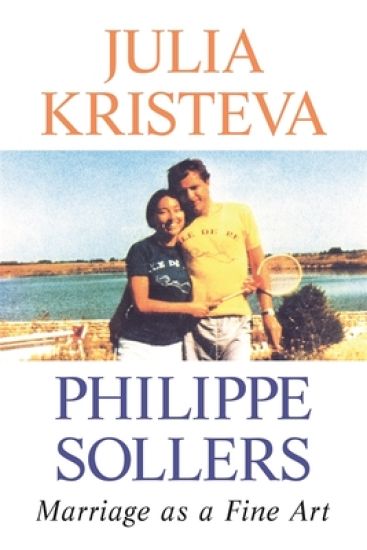
Marriage as a Fine Art

Marriage as a Fine Art

Julia Kristeva; Philippe Sollers

Columbia University Press
2016
sidottu

Halvin toimitettuna 34,40 €

"We found so much to say, to share, to learn... For it wasn't just the Marquis de Sade profile and the sporty thighs-and-calves that seduced me. It was even more, perhaps, or certainly just as much, the speed at which you used to read, and still do."-Julia Kristeva "We're married, Julia and I, that's a fact, but we each have our own personalities, our own name, activities, and freedom. Love is the full recognition of the other in their otherness. If this other is very close to you, as in this case, it seems to me that what's at stake is harmony within difference. The difference between men and women is irreducible; there's no possibility of fusion."-Philippe Sollers Marriage as a Fine Art is an enchanting series of exchanges in which Julia Kristeva and Philippe Sollers, married for fifty years, speak candidly about their love. Though they live separately, Kristeva and Sollers are fully committed to each other. Their bond is intellectual and psychological, passionate and mundane. They share everything when together, and lose themselves in their interests when apart. Their marriage is art, rich with history and meaning, idiosyncratic, and dynamic in its expression. Yet it is also as common as they come. Kristeva and Sollers have lived through the same challenges, peaks, and lulls as all married couples do. With humor and honesty, they elaborate on these moments, turning marriage's familiar aspects into exceptional examples of relating, struggling, transcending, and being. Marriage as a Fine Art is a rare chance to know these intellectuals-and marriage-more intimately.
Mysterious Mozart

Mysterious Mozart

Philippe Sollers

University of Illinois Press
2010
sidottu
Both a beguiling portrait of the artist and an idiosyncratic self-portrait of the author, Mysterious Mozart is Philippe Sollers's alternately oblique and searingly direct interpretation of Wolfgang Amadeus Mozart's oeuvre and lasting mystique, audaciously reformulated for the postmodern age. With a mix of slang, abstractions, quotations, first- and third-person narratives, and blunt opinion, French writer and critic Philippe Sollers taps into Mozart's playful correspondence and the lesser-known pieces of his enormous repertoire to analyze the popularity and public perceptions of his music. Detailing Mozart's drive to continue producing masterpieces even when saddled with debt and riddled with illness and anxiety, Sollers powerfully and meticulously analyzes Mozart's seven last great operas using a psychoanalytical approach to the characters' relationships. As Sollers explores themes of constancy, prodigy, freedom, and religion, he offers up bits of his own history, revealing his affinity for the creative geniuses of the eighteenth century and a yearning to bring that era's utopian freedom to life in contemporary times. What emerges is an inimitable portrait of a man and a musician whose greatest gift is a quirky companionability, a warm and mysterious appeal that distinguishes Mozart from other great composers and is brilliantly echoed by Sollers's artful tangle of narrative.
Writing and Seeing Architecture

Writing and Seeing Architecture

Christian de Portzamparc; Philippe Sollers; Deborah Hauptmann

University of Minnesota Press
2008
nidottu
The creative forms of literature and architecture appear to be distinct, one constructing a world on the page, the other producing the world in which we live. It is a conscious act to read literature, but the effects of architecture can pass by unnoticed. Yet, despite such obvious differences, writers and architects share a dynamic with their readers and visitors that is unpredictably similar. Writing and Seeing Architecture unveils a candid conversation between Christian de Portzamparc, celebrated French architect, and influential theorist Philippe Sollers that challenges us to see the analogous nature of writing and architecture. Their fascinating discussion offers a renewal of visionary architectural thinking by invoking past literary ideals that sought to liberate society through the reinvention of writing itself. Urging that new rules be set for each creation rather than resorting to limitations of the capitalist society, the authors’ daring confrontation of the interactions between writing and designing a space forcefully demonstrates the importance of intellectuals and practitioners intervening in the public sphere. Christian de Portzamparc is an architect whose designs include the French Embassy in Germany, the Cité de la Musique in Paris, and the LVMH Tower in New York City. He was winner of the Pritzker Architecture Prize in 1994. Philippe Sollers is a novelist and critic whose journal Tel Quel (1960–1982) published Jacques Derrida, Michel Foucault, and Bernard-Henri Lévy. He is the author of many books, including The Park and Une Vie Divine. Catherine Tihanyi’s translations include One Must Also Be Hungarian by Adam Biro and The Story of Lynx by Claude Lévi-Strauss. Deborah Hauptmann is associate professor of architecture theory at Delft University of Technology, The Netherlands.