

Kirjailija
Pico Iyer
Kirjat ja teokset yhdessä paikassa: 57 kirjaa, julkaisuja vuosilta 1989–2026, suosituimpiin kuuluu Lonely Planet Tales from Nowhere. Vertaile teosten hintoja ja tarkista saatavuus suomalaisista kirjakaupoista.
57 kirjaa
Kirjojen julkaisuvuodet: 1989–2026.

King Cobra - Mekong Adventures in French Indochina
Harry Hervey; Pico Iyer
DatASIA, Inc.
2013
pokkari
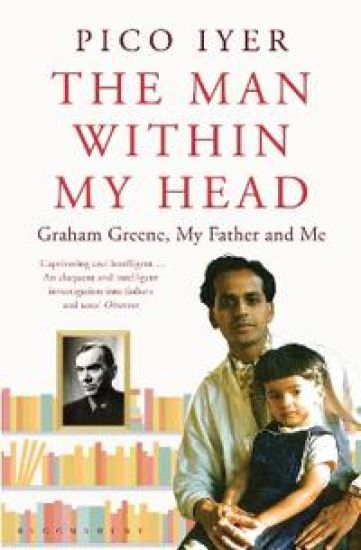
From one of our most astute observers, a haunting and unexpected investigation of the many voices he carries inside himself'The Man Within My Head is one of a handful of magical books that I have read straight through' Nicholas Shakespeare, Daily Telegraph'There are three men in this virtuoso memoir: Iyer comes to a better understanding of himself, the virtual man in his head and, movingly, the lifetime bond with his real father' The TimesWe all carry other people inside our heads – actors, leaders, writers, people from history or fiction, met or unmet, who sometimes seem closer to us than the people we know. Pico Iyer investigates the mysterious closeness he has always felt with Graham Greene and follows him from his first novel, The Man Within, to such later classics as The Quiet American. The further he delves, the more he begins to wonder whether the man within his head is not Greene but his own father, or perhaps some more shadowy aspect of himself. Drawing upon experiences across the globe – from Bolivia to Berkhamsted to Bhutan – one of our most resourceful cultural explorers gives us his most personal and revelatory book.
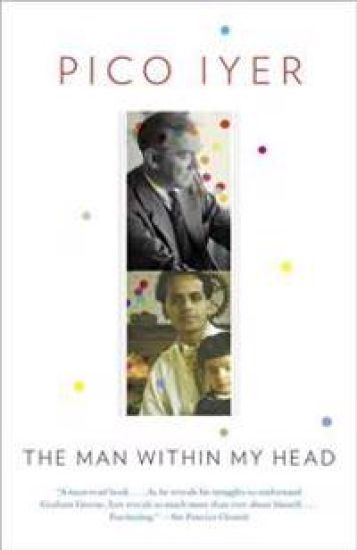
Ever since he first discovered Graham Greene's work, Pico Iyer has felt a haunting closeness with the English writer. In The Man Within My Head, Iyer follows Greene's trail from his first novel, The Man Within, to such later classics as The Quiet American, examining Greene's obsessions, his elusiveness, and his penchant for mystery. The deeper he plunges into this exploration, the more Iyer begins to wonder whether the man within his head might not be Greene but his own father, or perhaps some more shadowy aspect of himself. Drawing upon experiences across the globe, from Cuba to Bhutan, and moving, as Greene would, from Sri Lanka in war to intimate moments of introspection, this is the most personal and revelatory book yet from one of our most astute observers of inner journeys and crossing cultures.
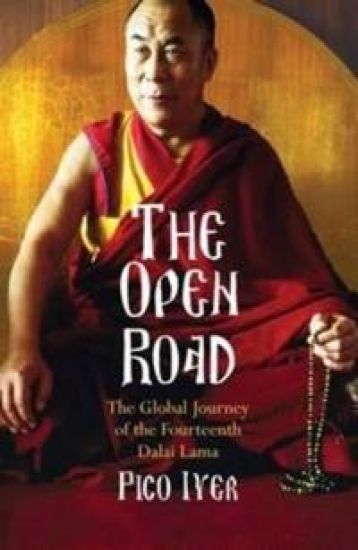
Pico Iyer has been engaged in conversation with the Dalai Lama (a friend of his father's) for the last three decades-a continuing exploration of his message and its effectiveness. Now, in this insightful, impassioned book, Iyer captures the paradoxes of the Dalai Lama's position: though he has brought the ideas of Tibet to world attention, Tibet itself is being remade as a Chinese province; though he was born in one of the most remote, least developed places on earth, he has become a champion of globalism and technology. He is a religious leader who warns against being needlessly distracted by religion; a Tibetan head of state who suggests that exile from Tibet can be an opportunity; an incarnation of a Tibetan god who stresses his everyday humanity. Moving from Dharamsala, India-the seat of the Tibetan government-in-exile-to Lhasa, Tibet, to venues in the West where the Dalai Lama's pragmatism, rigour, and scholarship are sometimes lost on an audience yearning for mystical visions, The Open Road illuminates the hidden life, the transforming ideas, and the daily challenges of a global icon.
The Open Road: The Global Journey of the Fourteenth Dalai Lama
Pico Iyer
VINTAGE
2009
nidottu
Halvin toimitettuna 23,20 €
NATIONAL BESTSELLER - For Buddhists and non-Buddhists alike, "an exceptionally intimate portrait" (Elizabeth Gilbert, author of Eat, Pray, Love) of the Dalai Lama--one of the most singular figures of our time. For over three decades, Pico Iyer, one of our most cherished travel writers, has been a friend to the Dalai Lama. Over these years through intimate conversations, he has come to know him in a way that few can claim. Here he paints an unprecedented portrait of the Dalai Lama, explaining his work and ideas about politics, science, technology, and religion. The Open Road illuminates the hidden life and the daily challenges of this global icon.
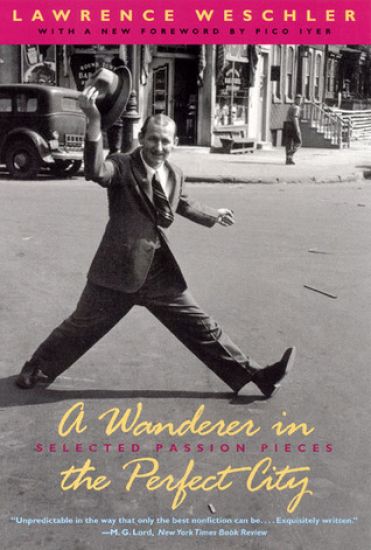
A Wanderer in the Perfect City
Lawrence Weschler; Pico Iyer
University of Chicago Press
2006
nidottu
"There is something both marvelous and hilarious," writes Lawrence Weschler, "in watching the humdrum suddenly take flight. This is, in part, a collection of such launchings." Indeed, the eight essays collected in "A Wanderer in the Perfect City" do soar into the realm of passion as Weschler profiles people who "were just moseying down the street one day, minding their own business, when suddenly and almost spontaneously, they caught fire, they became obsessed, they became intensely focused and intensely alive." With keen observations and graceful prose, Weschler carries us along as a teacher of rudimentary English from India decides that his destiny is to promote the paintings of an obscure American abstract expressionist; a gifted poker player invents a more exciting version of chess; an avant-garde Russian emigre conductor speaks Latin, exclusively, to his infant daughter; and Art Spiegelman composes Maus. But simple summaries can't do these stories justice: like music, they derive their character from digressions and details, cadence and tone. And like the upwelling of passion Weschler's characters feel, they are better experienced than explained.
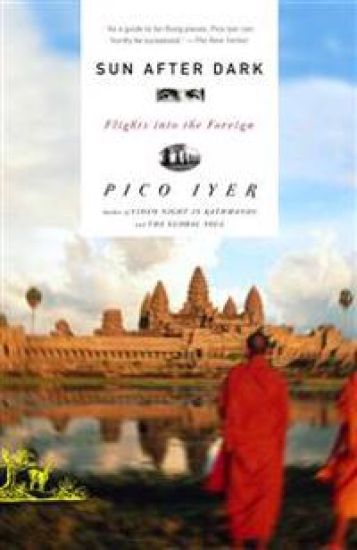
One of the best travel writers now at work in the English language brings back the sights and sounds from a dozen different frontiers. A cryptic encounter in the perfumed darkness of Bali; a tour of a Bolivian prison, conducted by an enterprising inmate; a nightmarish taxi ride across southern Yemen, where the men with guns may be customs inspectors or revolutionaries-these are just three of the stops on Pico Iyer's latest itinerary. But the true subject of Sun After Dark is the dislocations of the mind in transit. And so Iyer takes us along to meditate with Leonard Cohen and talk geopolitics with the Dalai Lama. He navigates the Magritte-like landscape of jet lag, "a place that no human had ever been until forty or so years ago." And on every page of this poetic and provocative book, he compels us to redraw our map of the world.

Pico Iyer - one of our most compelling and profoundly provocative travel writers - invites us to accompany him on an array of exotic explorations, from L. A. and Yemen to Haiti and Ethiopia, from a Bolivian prison to a hidden monastery in Tibet. He goes to Cambodia, where the main tourist attraction is a collection of skulls from the Khmer Rouge killing fields, and travels through southern Arabia in the weeks before September 11, 2001. He practices meditation with Leonard Cohen and discusses geopolitics with the Dalai Lama, travels to Easter Island and through the imaginative terrains of W. G. Sebald and Kazuo Ishiguro, weaving physical and psychological challenges together into a seamless narrative. Throughout his travels, the familiar thrill of adventure is haunted by the unsettling questions that arise for Iyer everywhere he goes: How do we reconcile suffering with the sunlight often found around it? How does the foreign instruct the traveler, precisely by discomfiting him? And how does travel take us more deeply into reality, both within us and without? Intensely affecting, Iyer's explorations are a road map of thinking in new ways about our changing world.
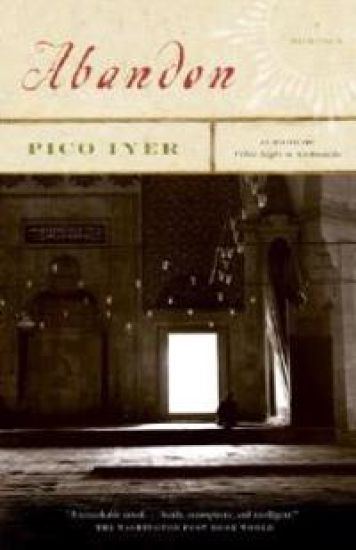
From the national bestselling author of The Half-Known Life comes an intoxicating novel that's at once a stylish intellectual mystery and a pulse-quickening love story--the love in question being at once sacred and profane. John Macmillan, a classically reticent Englishman who has moved to California to study the poems of the Sufi mystic Rumi, unexpectedly becomes involved in two equally absorbing quests. The first is for a mysterious Rumi manuscript that may have been smuggled out of Iran; the second for the elusive Camilla Jensen, who continually offers herself to him only to repeatedly slip from his grasp. Are these quests somehow related? And can Macmillan give himself over to them without losing his career and identity? Moving deftly from California academia to the mosques of Iran, filled with insights into the minds of Islam and the modern West, Abandon is a magic carpet-ride of a book.

Using his own multicultural upbringing as a point of departure, Pico Iyer sets out on a journey - both physical and psychological - towards a definition of home in this world gone mobile. He travels to America, Hong Kong, Toronto, Atlanta, England, and Japan, where he finally finds a home.
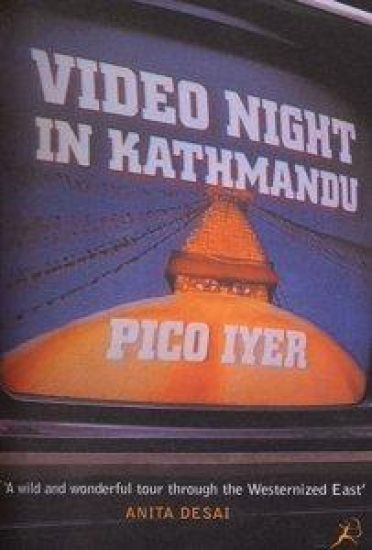
When Pico Iyer began his travels, he wanted to know how Rambo conquered Asia. Why did Dire Straits blast out over Hiroshima, Springsteen over Bali and Madonna over all? The truths he uncovers are startling, more subtle, more complex than he ever anticipated.
The Global Soul: Jet Lag, Shopping Malls, and the Search for Home
Pico Iyer
Knopf Publishing Group
2001
nidottu
From the acclaimed author of Video Nights in Kathmandu comes this intriguing new book that deciphers the cultural ramifications of globalization and the rising tide of worldwide displacement. Beginning in Los Angeles International Airport, where town life--shops, services, sociability--is available without a town, Pico Iyer takes us on a tour of the transnational village our world has become. From Hong Kong, where people actually live in self-contained hotels, to Atlanta's Olympic Village, which seems to inadvertently commemorate a sort of corporate universalism, to Japan, where in the midst of alien surfaces his apartment building is called "The Memphis," Iyer ponders what the word "home" can possibly mean in a world whose face is blurred by its cultural fusion and its alarmingly rapid rate of change.
Having captivated readers with such gems of travel writing as Video Night in Kathmandu, Pico Iyer now presents a novel whose central character is another place: the melancholy, ebullient, and dazzlingly inconsistent island that is Castro's Cuba. -On almost every page you can smell the dust, the cheap perfume and the rum of Havana today, or better still, tonight.---Los Angeles Times.
When Pico Iyer decided to go to Kyoto and live in a monastery, he did so to learn about Zen Buddhism from the inside, to get to know Kyoto, one of the loveliest old cities in the world, and to find out something about Japanese culture today -- not the world of businessmen and production lines, but the traditional world of changing seasons and the silence of temples, of the images woven through literature, of the lunar Japan that still lives on behind the rising sun of geopolitical power. All this he did. And then he met Sachiko. Vivacious, attractive, thoroughly educated, speaking English enthusiastically if eccentrically, the wife of a Japanese "salaryman" who seldom left the office before 10 P. M., Sachiko was as conversant with tea ceremony and classical Japanese literature as with rock music, Goethe, and Vivaldi. With the lightness of touch that made Video Night in Kathmandu so captivating, Pico Iyer fashions from their relationship a marvelously ironic yet heartfelt book that is at once a portrait of cross-cultural infatuation -- and misunderstanding -- and a delightfully fresh way of seeing both the old Japan and the very new. "[Iyer] is a sharp-eyed and thoughtful observer, and he is successful in evoking the life of Kyoto's malls, temples, and back streets, moonlit nights on the water, and the vulgarity of the Westernized nightclub and amusement quarter." -- New Yorker"Pico Iyers remarkable talent is enough justification for going anywhere in the world he fancies." -- Washington Post Book World
Mohawk hair-cuts in Bali, yuppies in Hong Kong and Rambo rip-offs in the movie houses of Bombay are just a few of the jarring images that Iyer brings back from the Far East. "Quick-witted and perceptive...something more than a deft and entertaining traveler's tale." -- The New Yorker"The book is filled with Iyer's enthusiasms and opinions, both engaging and provocative, and is...a sensual feast of rich impressions." -- Los Angeles Times"A fresh approach, embellished by the author's humorous and perceptive style." -- San Francisco ChronicleMohawk haircuts in Bali. Yuppies in Hong Kong. In Bombay, not one but five Rambo rip-offs, complete with music and dancing. And in the new People's Republic of China, a restaurant that serves dishes called "Yes, Sir, Cheese My Baby," "A Legitimate Beef," and "Ike and Tuna Turner." These are some of the images -- comical, poignant, and unsettling -- that Pico Iyer brings back from the Far East in this brilliant book of travel reportage. A writer for Time, Iyer approaches his subject with a camera-sharp eye, a style that suggests a cross between Paul Theroux and Hunter Thompson, and a willingness to go beyond the obvious conclusions about the hybrid cultures of East and West.
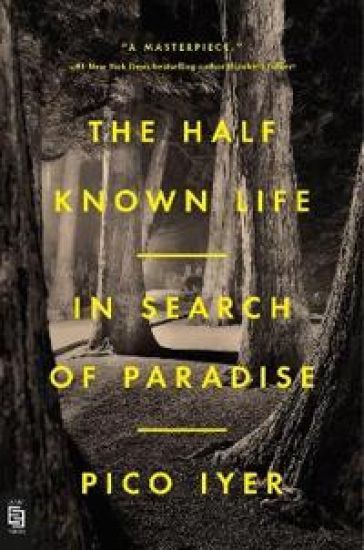
From “one of the most soulful and perceptive writers of our time” (Brain Pickings): a journey through competing ideas of paradise to see how we can live more peacefully in an ever more divided and distracted world.“Nothing less than a guided tour of the human soul…A masterpiece.” — #1 New York Times bestselling author Elizabeth Gilbert Paradise: that elusive place where the anxieties, struggles, and burdens of life fall away. Most of us dream of it, but each of us has very different ideas about where it is to be found. For some it can be enjoyed only after death; for others, it’s in our midst—or just across the ocean—if only we can find eyes to see it. Traveling from Iran to North Korea, from the Dalai Lama’s Himalayas to the ghostly temples of Japan, Pico Iyer brings together a lifetime of explorations to upend our ideas of utopia and ask how we might find peace in the midst of difficulty and suffering. Does religion lead us back to Eden or only into constant contention? Why do so many seeming paradises turn into warzones? And does paradise exist only in the afterworld – or can it be found in the here and now? For almost fifty years Iyer has been roaming the world, mixing a global soul’s delight in observing cultures with a pilgrim’s readiness to be transformed. In this culminating work, he brings together the outer world and the inner to offer us a surprising, original, often beautiful exploration of how we might come upon paradise in the midst of our very real lives