Kirjojen hintavertailu – 12 859 818 kirjaa ja 27 kauppaa

Kirjailija

Pie Corbett

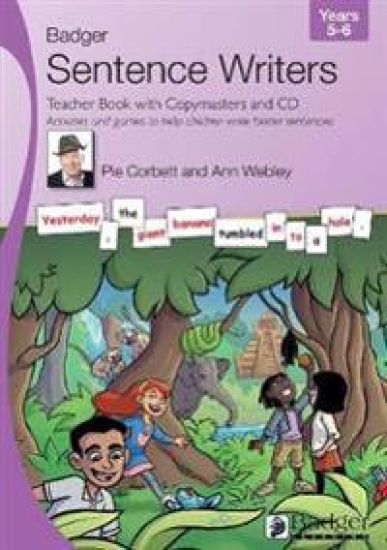
Kirjat ja teokset yhdessä paikassa: 39 kirjaa, julkaisuja vuosilta 2001–2025, suosituimpiin kuuluu Sentence Writers Teacher Book with Copymasters and CD: Years 5-6. Vertaile teosten hintoja ja tarkista saatavuus suomalaisista kirjakaupoista.

39 kirjaa

Kirjojen julkaisuvuodet: 2001–2025.

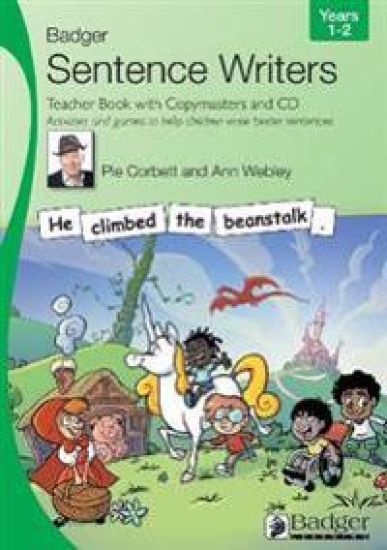
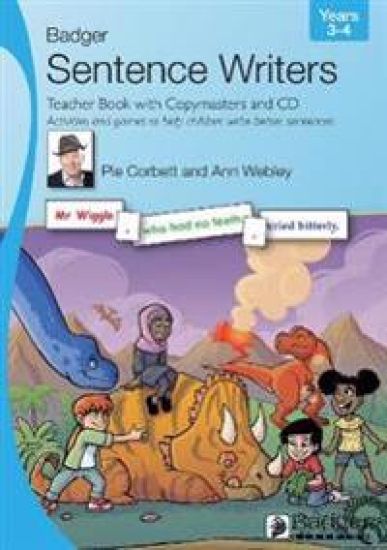
Sentence Writers Teacher Book with Copymasters and CD: Years 1-2
Badger Sentence Writers helps you teach children a range of sentence constructions and the words used within them for different purposes. They will help your pupils to write a variety of sentence types more clearly and with greater independence. Activities and games to help children become better writers. Simple and easy to use. For fiction and non-fiction. Using multi-sensory approaches to learning: kinaesthetic, visual, auditory, investigatory. CD contains: Editable copy masters for photocopying. Activities for whiteboard use. Opportunity to create your own sentences - based on the same learning objectives, but related to stories you are reading or topics you are covering in other areas of the curriculum.
Dragon Cat

Dragon Cat

Pie Corbett

Otter-Barry Books
2025
nidottu

Halvin toimitettuna 18,90 €

Look out for a lobster on the phone; watch Owl, silent ghost-flyer; glimpse a sprinting hot-dog. Check your pants for snakes, play football indoors and then… go looking for dragons. But make sure you keep your eye on Dragon Cat! You’ll find surprises and adventures, riddles and word games plus lyrical, thoughtful poems in this outstanding collection from a hugely admired poet.
Jumpstart! Literacy

Jumpstart! Literacy

Pie Corbett

Routledge
2022
sidottu
This collection of simple to use, fun, multi-sensory games and creative lesson starters will jumpstart pupils enthusiasm for literacy learning. The `jumpstarts' cover:Warming up the word - spelling and word gamesSyntactic gymnastics - creating sentences and written style Games to stimulate - talk, drama and writing Quickfire whiteboard starters - to stimulate the imagination. For use at Key Stages 2 & 3 (ages 7-14).
Talk for Writing in the Early Years: How to Teach Story and Rhyme, Involving Families 2-5 (Revised Edition)
Pie Corbett’s ground-breaking Talk for Writing approach has been successfully used by thousands of schools to teach writing creatively in an engaging way that motivates children. Now Pie and Julia take this multi-sensory approach to Early Years settings introducing a simple way to inspire young children’s language development through storytelling. Children learn language through memorable, meaningful repetition. The Talk for Writing approach enables children to internalise the language of story so that they can imitate it, innovate on it and create their own effective stories independently. Talk for Writing in the Early Years will show you how to put rhyme and story at the heart of your work with children and parents so that young learners language development and creativity flourishes. This multimedia resource shows you how to:• Select a story or rhyme the children will enjoy and tell it engagingly, encouraging the children to join in•Use a story map so they can picture what happens •Use actions to reinforce meaning and emphasise key language patterns•Help children build a bank of tales, developing their linguistic repertoire The 2 OLCs contain:1 Footage of Pie Corbett conferences with EY teachers showing Talk for Writing in action2 Clips of nursery children engaged in the Talk for Writing approach3 Advice on how to use the OLC and handouts to train all staff in the approach4 Interviews with parents and nursery school teachers on the impact of Talk for Writing5 21 stories with story maps
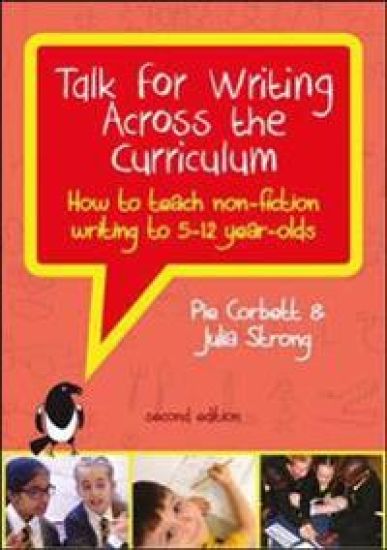
Talk for Writing Across the Curriculum: How to Teach Non-Fiction Writing to 5-12 Year-Olds (Revised Edition)
This bestselling resource has been fully updated, putting formative assessment at the heart of the Talk for Writing process and showing how to help children love writing across the curriculum. By helping children speak the language of non-fiction in a fun engaging way before they attempt to write, the Talk for Writing approach builds children's confidence and linguistic ability enabling them to craft their own writing. In the new edition, this practical resource offers: • Fully worked, tried and tested examples of how to apply Talk for Writing to each non-fiction text type • A wide range of fun activities helping children internalise how to express and link text effectively• A process that co-constructs learning so that children learn how to structure text and create toolkits of key ingredients• Guidance for teachers in England on how to apply the approach across the primary curriculum• An OLC including new footage of Pie Corbett demonstrating Talk for Writing and new footage of classes engaged in the approach • Advice on how to use the DVD and handouts to train all staff in the approach • Evidence of impact from cold to hot tasksDesigned for busy teachers, Talk for Writing across the Curriculum, second edition, will help transform children's writing and attainment across the curriculum." This book celebrates the importance of talk in becoming and growing as a writer: talk to share ideas; talk to analyse text; talk to co-construct writing; and to talk to evaluate writing. Throughout the book constantly underlines the importance of talk for learning and the many creative and rich ways talk can be used to help young writers internalise the rhythms and patterns of text. Full of practical ideas and activities, the teaching combines being creative and being critical in a wholly integrated way. An invaluable resource for primary school teachers!" Debra Myhill, Professor of Education at the University of Exeter, UK"The teaching of reading has always taken priority in policy and practice in literacy. Pie Corbett and Julia Strong have produced a very welcome counterweight to that dominance in their Talk for Writing Across the Curriculum. It is so refreshing to see suggestions for teaching to bring elements of language together, especially when done in such an entertaining and engaging way as this. This new edition makes a 'classic' even better." David Wray, Emeritus Professor, University of Warwick, UK"This latest update of Pie and Julia's best-selling book reflects changes in the curriculum, strengthening the T4W approach, using cold and hot tasks, showing new worked examples of how to apply T4W to each non-fiction type and placing formative assessment at the heart of the process. It is exciting to see how all the best ideas and findings in education are converging, evidenced in this latest 'up to the minute' excellent publication." Shirley Clarke, Formative Assessment Expert
Key Stage 2

Key Stage 2

Pie Corbett

Scholastic
2019
muu
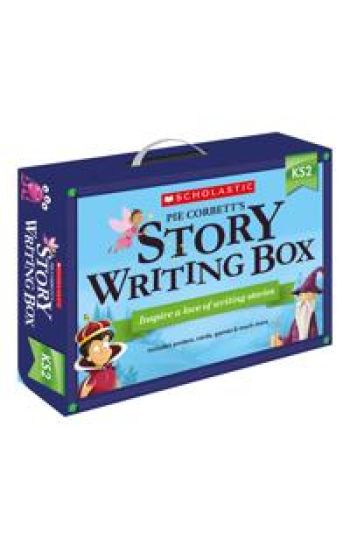
"These Writing Boxes will trigger genuine inventions that will spring from your children's own imaginations." Pie Corbett Everything you need to teach story-writing in the classroom. Pie Corbett has written a guide to teaching story-writing and put together a unique treasure trove of resources to help teachers develop children into successful story writers This Key Stage 2 Story-writing Box includes a wealth of resources to teach story-writing, encouraging children to plan, write and edit their own stories. This KS2 box is crammed with creative writing resources including: A Teacher's Guide 20 Character Cards 20 Settings Cards 20 Plot Idea Cards 20 Trigger Cards 20 Object Cards 4 Game Mats; Sentence Generator, Paragraph Creator, Sentence Changer, Story Race, that allow the children to develop stories or improve their writing 2 Posters; Story Mountain, Story Ingredients, to remind children of the story-writing process A digital resource that includes a Random Card Generator for use on the whiteboard or computer (Please note that this is an updated resource based on the previously published Story Maker's Chest by Pie Corbett, Philip and Tacey) Series Information Pie Corbett's Story-writing Boxes offer an abundance of resources for Early Years and Primary. The two boxes will help develop children into successful story-writers. Starting in EY and KS1 by reading and imitating stories, moving through to KS2 by encouraging children to plan, write and edit their own stories.
Early Years and Key Stage 1
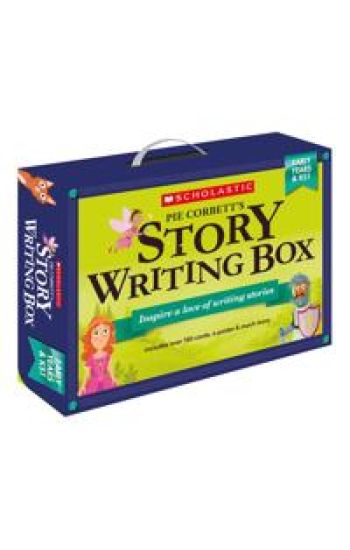
"These Writing Boxes will trigger genuine inventions that will spring from your children's own imaginations." Pie Corbett Everything you need to teach story-writing in the classroom. Pie Corbett has written a guide to teaching story-writing and put together a unique treasure trove of resources to help teachers develop children into successful story writers This Early Years and Key Stage 1 Story-writing Box gets children to read and imitate stories. They become storytellers themselves by innovating or inventing their very own stories. This box is crammed with creative writing resources including: A Teacher's Guide 20 Story Starter Cards - ideas for creating plots, characters and setting 28 Character Cards 20 Settings Cards 20 Plot Idea Cards 20 Lucky Object Cards 20 Connective Cards 30 How/Why Cards 23 Story Trail Cards - set up a trail around your school and use it for the children to develop their own story 4 Message Cards - messages from characters to help prompt writing and story ideas A Story-Writing Poster to encourage the use of interesting vocabulary A digital resource (USB) that includes a Random Card Generator for use on the whiteboard or computer (Please note that this is an updated resource based on the previously published Story Maker's Chest by Pie Corbett, Philip and Tacey) Series Information Pie Corbett's Story-writing Boxes offer an abundance of resources for Early Years and Primary. The two boxes will help develop children into successful story-writers. Starting in EY and KS1 by reading and imitating stories, moving through to KS2 by encouraging children to plan, write and edit their own stories.
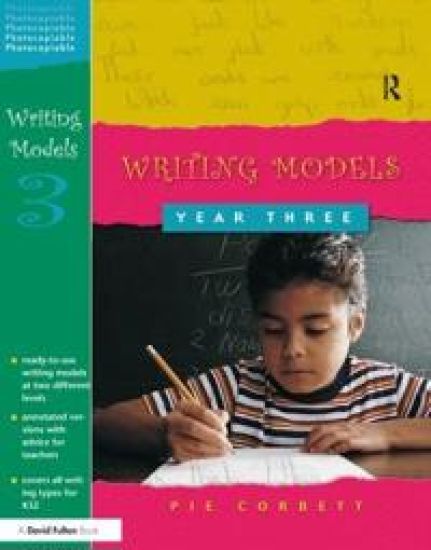
Writing Models Year 4

Writing Models Year 4

Pie Corbett

CRC Press
2018
sidottu
Teachers who want to cut lesson planning time should welcome this series. The new editions are revised in line with the new literacy framework and bring you new models. Writing Models aims to help teachers cover every sort of writing type they need; fine tune lessons by following key teaching points for each model; and deliver the new literacy units to pupils of varying ability using different versions of the same model. Each book in the series gives you: A bank of easy-to-use, photocopiable models for writing covering poetry, narrative and non-fiction Key teaching points for each model Simpler and harder examples for differentiation The newly revised second edition for Year 4 has been fully updated and restructured in line to deliver new units from the new framework and includes new writing models. Lesson planning has never been easier! The second edition of Writing Models Year 4 contains: Stories with historical settings; Stories from other cultures (new) and Stories that raise issues & dilemmas (new) Poems to explore form and Performance poems (new) Stories set in imaginary worlds and Plays (new) Newspaper reports (new); ICT-texts (new) and Persuasive writing including a model based on a DVD (new)
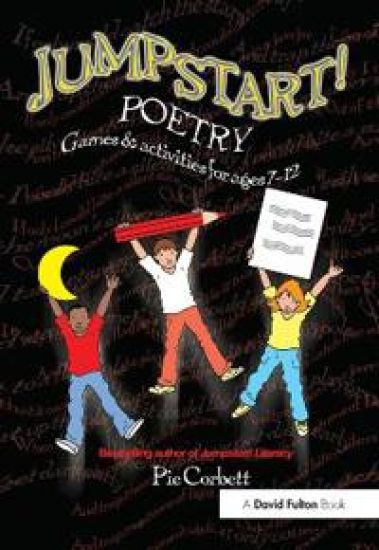
Jumpstart! Poetry

Jumpstart! Poetry

Pie Corbett

Routledge
2018
sidottu
A good poetry idea should help the children feel excited about writing and enable them to think of what to write - developing their imagination, creativity and writing skills. Jumpstart! Poetry is about involving children as creative writers through writing poems. The book contains a bank of ideas that can be drawn upon when teaching poetry but also at other times to provide a source for creative writing that children relish. There are more than 100 quick warm-ups to fire the brain into a creative mood and to ‘jumpstart’ reading, writing and performing poetry in any key stage 1 or 2 classroom. Practical, easy-to-do and vastly entertaining, this new ‘jumpstarts’ will appeal to busy teachers in any primary classroom.
How to Teach Fiction Writing at Key Stage 2
How to Teach Fiction Writing is a practical manual to help teachers of junior classes to focus on the key aspects of developing children's storywriting. The book presents a series of essential writing workshops full of creative ideas and fun activities. It also offers a range of advice including how to set up and run an effective workshop and how to monitor NLS links. Workshops focus on capturing stories, characterization, creating settings, skilful paragraphing, writing in a variety of genres from myths and fables to adventures and science fiction, and writing style.
How to Teach Story Writing at Key Stage 1
How to Teach Story Writing at Key Stage 1 is a practical manual for teachers, to be used directly in the classroom. The book begins with a series of language games, designed to warm up creativity and strengthen the imagination. This is followed by a series of creative story workshops, based on the writer's own experience both as a teacher and poet running workshops in schools. These workshops focus on growing the roots of story writing through story telling and reading, and begin with the importance of learning a few well-known tales. There are ideas for drama, role-play and art, and a few model stories are provided for story telling. Other workshops explore simple ideas for creating new stories, based around simple familiar patterns. The book also offers advice on how to organize an effective workshop for younger children, and demonstrates how to teach story writing in a dynamic, creative and imaginative way in relationship with the KS1 national literacy framework. Workshops include the story of our lives; stories that make a circle; stories about problems; days of the week tales; humbug, stuff and nonsense stories; quests; repetitive tales; wishing stories; warning stories; and cooking the story soup.
Writing Models Year 6

Writing Models Year 6

Pie Corbett

Routledge
2017
sidottu
The new edition for Year 6 has been fully updated and restructured in line to deliver new units from the new framework and includes new writing models. Lesson planning has never been easier! The revised Writing Models Year 6 contains: A range of fiction genres such as traditional tale, fantasy, chatty style (new), horror (new) and character story and parody (new) A variety of texts by a significant children‘s authors to compare (new) Poems depicting the power of imagery and Poems on a range of issues relevant to children (new) Biography and autobiography; journalistic writing including broadcasting and radio models (new) Formal writing including news report and consumer information (new); Impersonal writing including pamphlet and guide book models (new)
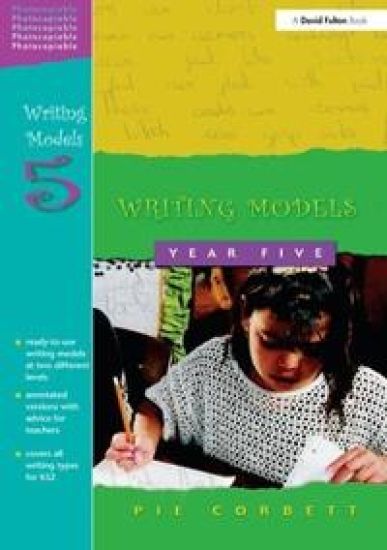
Writing Models Year 5

Writing Models Year 5

Pie Corbett

Routledge
2017
sidottu
Teachers who want to cut lesson planning time should welcome this series. The new editions are revised in line with the new literacy framework and bring you new models. Writing Models aims to help teachers cover every sort of writing type they need including visual and multimodal texts; fine tune lessons by following key teaching points for each model; and deliver the new literacy units to pupils of varying ability using different versions of the same model. Each book in the series gives you: A bank of easy-to-use, photocopiable models for writing covering poetry, narrative and non-fiction Key teaching points for each model Simpler and harder examples for differentiation The new edition for Year 5 has been fully updated and restructured in line to deliver new units from the new framework and includes new writing models. Lesson planning has never been easier! The revised Writing Models Year 5 contains: Novels and stories by significant children‘s authors (new) Traditional tales; myths; fables; legends including non-book print models such as comics, picture books and TV programmes (new) Stories from other cultures (new); Older literature (new) Film and narrative (new); Dramatic conventions including TV and radio broadcasts (new) Classic/narrative poems and Choral and performance poems Non-chronological reports, Instructions including ICT-texts (new); Recounts on MTP including new medial models (new)
Jumpstart! Grammar

Jumpstart! Grammar

Pie Corbett

Routledge
2017
sidottu
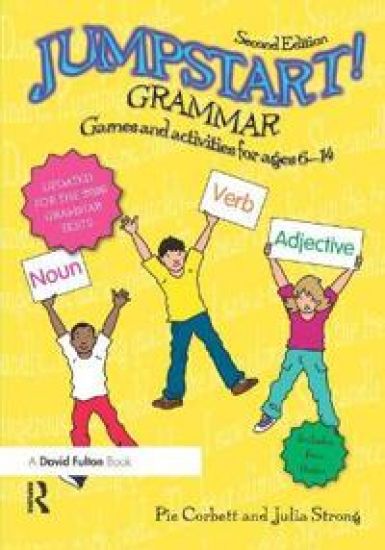
Fully updated to help teachers deal with the new 2016 Grammar Tests, this second edition presents a collection of simple to use, multi-sensory games and activities that will jumpstart pupils understanding of grammar in action It includes coverage of the subjunctive and past progressive, selecting which tense is the most definite, identifying when a word is used as a subordinating conjunction/preposition, explaining how a comma can change meaning, and an increased emphasis on the passive. Jumpstart! Grammar will prepare children for any grammar tests on the horizon in an engaging way so that they love playing with words and spinning sentences to make ideas dance. And, of course, they will be able to name the parts if that is what is required. Fun games will focus first on helping children hear the difference various types of grammar can make followed by activities to help them understand what different effects you can create with grammar. Technical terms will only be introduced once the children have established what the various features can do, with a particular focus on those terms that really help children discuss what makes language coherent and effective. This indispensable, practical book celebrates the joys of language and coherent expression; of finding just the right words or phrases to express what you want to say.
How to Teach Poetry Writing at Key Stage 3
How to Teach Poetry Writing at Key Stage 3 is a practical manual for teachers, to be used directly in the classroom. The book begins with a series of poetry games designed to warm up creativity and strengthen the imagination. These are followed by a series of creative poetry workshops, based on the writer's own experience both as a teacher and poet running workshops in schools, which focus on developing a 'poetry base' for young writers. This imaginative base provides a range of poetic techniques and gives pupils experience in developing a repertoire of different forms. The book also offers advice on how to organize an effective workshop, and demonstrates how to teach poetry writing in a dynamic, creative and imaginative way in relationship with the KS3 national framework. Pie Corbett also provides useful advice on working with visiting poets in school, addresses for relevant web-sites, a list of books for follow-up work and a glossary of poetic forms and techniques. Workshops include writing from first hand observation; autobiography - valuing our lives; writing about paintings, sculpture and music; surreal boxes and the bag of words; secrets, lies, wishes and dreams; creating images, taking word snapshots; riddles - hiding the truth; and red wheelbarrows and messages for mice.
Jumpstart! Grammar

Jumpstart! Grammar

Pie Corbett

Routledge
2015
nidottu
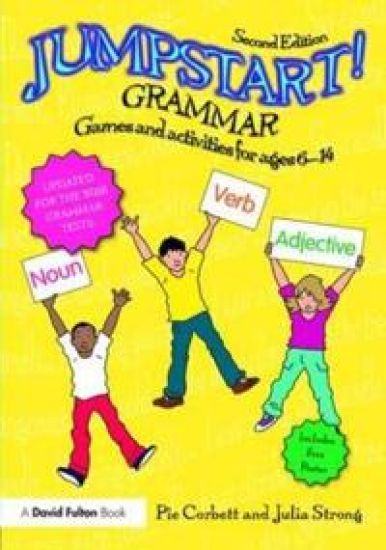
Fully updated to help teachers deal with the new 2016 Grammar Tests, this second edition presents a collection of simple to use, multi-sensory games and activities that will jumpstart pupils’ understanding of grammar in actionIt includes coverage of the subjunctive and past progressive, selecting which tense is the most definite, identifying when a word is used as a subordinating conjunction/preposition, explaining how a comma can change meaning, and an increased emphasis on the passive. Jumpstart! Grammar will prepare children for any grammar tests on the horizon in an engaging way so that they love playing with words and spinning sentences to make ideas dance. And, of course, they will be able to name the parts if that is what is required. Fun games will focus first on helping children hear the difference various types of grammar can make followed by activities to help them understand what different effects you can create with grammar. Technical terms will only be introduced once the children have established what the various features can do, with a particular focus on those terms that really help children discuss what makes language coherent and effective. This indispensable, practical book celebrates the joys of language and coherent expression; of finding just the right words or phrases to express what you want to say.
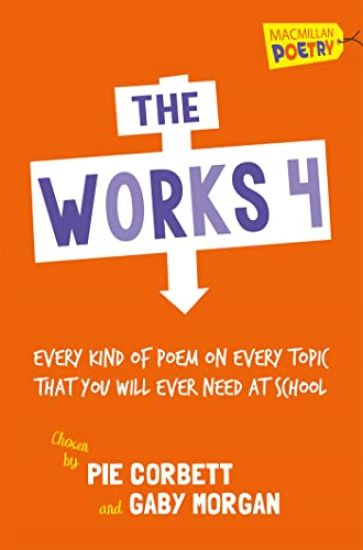
The Works 4

The Works 4

Gaby Morgan; Pie Corbett

Macmillan Children's Books
2015
pokkari
The Works 4 contains poems about everything and is divided into twenty-six alphabetical sections featuring poems about:A the ark and other creatures, B boys' stuff, C celebrations and festivals, D dinosaurs, dragons and dodos, E elements, seasons and the natural world, F friends and families, G girls' stuff, H home life, I impossible, improbable and inexplicable, J journeys, K kissing and other subjects best avoided, L love, death, war and peace, M monsters, ghosts and scary things, N north, south, east and west, O ourselves and others, P places and people, Q queens, kings and historical stuff, R rescuing the world, S senses and feelings, T teachers and school, U unpleasant poems, V viewpoints, W wonder, X words and wordplay, Y young and old, Z zapping aliens and other space poems. It also contains teachers' notes and a glossary of terms, including explanations of different poetic forms.