
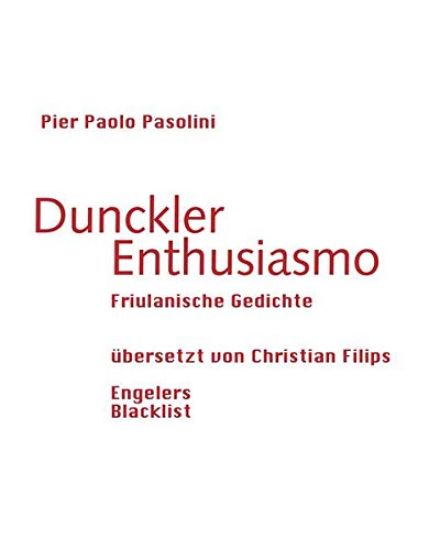
Kirjailija
Pier Paolo Pasolini
Kirjat ja teokset yhdessä paikassa: 41 kirjaa, julkaisuja vuosilta 1986–2027, suosituimpiin kuuluu St. Paul. Vertaile teosten hintoja ja tarkista saatavuus suomalaisista kirjakaupoista.
41 kirjaa
Kirjojen julkaisuvuodet: 1986–2027.
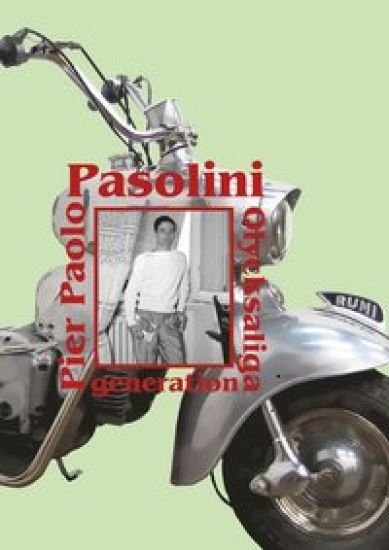
Med tidens gång har Pier Paolo Pasolini (1922-1975) alltmer kommit att framstå som den främsta italienska efterkrigspoeten. Efter att ha skrivit sin tidiga ungdomsdiktning på hembygdens friuliska dialekt, anländer han (efter ett hotande åtal för sin homosexualitet) till Rom mitt under neorealismens högdagar. Han undervisar i en förortsskola, påbörjar ett romanprojekt skrivet på förorternas slang, och rör sig efterhand i de filmkretsar där han ska komma att göra en insats som manusförfattare och regissör. Men främst utvecklar han under detta tidiga 1950-tal en poesi som inte sett sin like, realistisk men också lyrisk. Med ett skarpt öga för omgivningens detaljer, men också med en stark inre ömhet och medkänsla. >br> Dikterna har överförts till svenska av Nina M. Olsson och Håkan Sandell och tar varsamt tillvara Pasolinis musikalitet och känsla för valörer. Dikterna har också försetts med omfattande förord och noter.
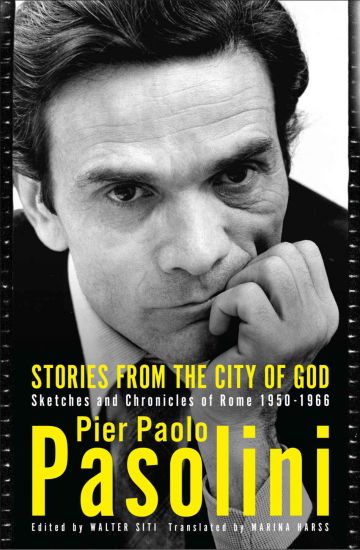
Now in paperback, a collection of the legendary filmmaker's short fiction and nonfiction from 1950 to 1966, in which we see the machinations of the creative mind in post-World War II Rome. In a portrait of the city at once poignant and intimate, we find artistic witness to the customs, dialect, squalor, and beauty of the ancient imperial capital that has succumbed to modern warfare, marginalization, and mass culture. The sketches portray the impoverished masses that Pasolini calls "the sub-proletariat," those who live under Third World conditions and for whom simple pleasures, such as a blue sweater in a storefront window, are completely out of reach. Pasolini's art develops throughout the works collected here, from his early lyricism to tragicomic outlines for screenplays, and finally to the maturation of his Neo-realism in eight chronicles on the shantytowns of Rome. The pieces in this collection were all published in Italian journals and newspapers, and then later edited by Walter Siti in the original Italian edition.
Paola De Pietri: Istanbul New Stories
Paola de Pietri; Necmi Sönmez; Pier Paolo Pasolini
Steidl Verlag
2017
sidottu
Shot in 2012 and 2013, Paola de Pietri's (born 1960) understated photographs of individuals depicted against the backdrop of dusty construction sites and newly finished buildings in Istanbul focus on the impact of the city's rapidly changing landscape on the lives and minds of its people.
Det berättas att Pier Paolo Pasolini skrev sin långa självbiografiska dikt Jag, askans sångare under en enda natt i 1960-talets mitt, för att ge till en amerikansk journalist som ersättning för en inställd intervju. Sant eller inte, manuset hittades i Pasolinis kvarlåtenskap och publicerades 1980, fem år efter hans död. Det är en vindlande, brutal text som berättar om Pasolinis liv, från uppväxtåren i Friulien till livet som omstridd författare och filmskapare, men också om nödvändigheten att uttrycka sig genom handling lika mycket som genom poesin.
The Selected Poetry of Pier Paolo Pasolini
Pier Paolo Pasolini; James Ivory
University of Chicago Press
2015
nidottu
Most people outside Italy know Pier Paolo Pasolini for his films, many of which began as literary works-Arabian Nights, The Gospel According to Matthew, The Decameron, and The Canterbury Tales among them. What most people are not aware of is that he was primarily a poet, publishing nineteen books of poems during his lifetime, as well as a visual artist, novelist, playwright, and journalist. Half a dozen of these books have been excerpted and published in English over the years, but even if one were to read all of those, the wide range of poetic styles and subjects that occupied Pasolini during his lifetime would still elude the English-language reader. For the first time, Anglophones will now be able to discover the many facets of this singular poet. Avoiding the tactics of the slim, idiosyncratic, and aesthetically or politically motivated volumes currently available in English, Stephen Sartarelli has chosen poems from every period of Pasolini's poetic oeuvre. In doing so, he gives English-language readers a more complete picture of the poet, whose verse ranged from short lyrics to longer poems and extended sequences, and whose themes ran not only to the moral, spiritual, and social spheres but also to the aesthetic and sexual, for which he is most known in the United States today. This volume shows how central poetry was to Pasolini, no matter what else he was doing in his creative life, and how poetry informed all of his work from the visual arts to his political essays to his films. Pier Paolo Pasolini was a poet of the cinema, as James Ivory says in the book's foreword, who left a trove of words on paper that can live on as the fast-deteriorating images he created on celluloid cannot. This generous selection of poems will be welcomed by poetry lovers and film buffs alike and will be an event in American letters.
Pylades ingår i en grupp mindre pjäser kallade Orestiaden. Två temata på klassicerande grund är utgångspunkt för Pylades, fadermordet och förutsättningarna för en ny och friare stadsbildning. Den unge fritänkaren Pylades ställs emot sin fosterbror, maktspelaren Orestes. Båda drivs framåt av sina gudar i ett landskap där lössläppta furirer och erynnier driver i vilda flockar. I själva verket bearbetade Pasolini det som hände runtomkring honom: strejkerna, studentupproren, öststaternas konvulsioner och de sista våldsamma kolonialkrigen. Hans eget till synes motsägelsefulla ställningstagande var för ungdomen, folkets kultur och det han i hela sin produktion kallade "verkligheten".
The Scent of India
David Clive Price; Pier Paolo Pasolini
Createspace Independent Publishing Platform
2012
nidottu

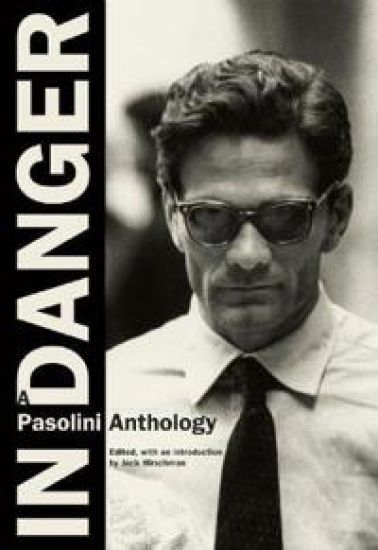
Pier Paolo Pasolini (1922-1975) was a major cultural figure in post-WWII Italy, well-known as a poet, novelist, communist intellectual, and filmmaker. In Danger is the first anthology in English devoted to his political and literary essays, with a generous selection of his poetry. Against the backdrop of post-war Italy, and through the mid-'70s, Pasolini's writings provide a fascinating portrait of a Europe in which fascists and communists violently clashed for power and where journalists ran great risks. The controversial and openly gay Pasolini was murdered at the age of fifty-three; In Danger includes his final interview, conducted hours before his death.
Amado mio är ett av de många prosaförsök som den unge Pasolini arbetar på direkt efter kriget, mellan 1946 och 1950. Det är mycket aktiva år, fyllda av litterära experiment inom prosa och poesi, år av såväl pedagogiskt som politiskt engagemang. Men det är också en plågad och svår period under vilken Pier Paolo lär sig att acceptera sin egen homosexualitet, överför den i skrift och därmed gör den till det centrala temat för sina litterära undersökningar. Amado mio författades 1948 och förblev opublicerad ända till 1982. Det är berättelsen om den unge intellektuelle Desiderios lidelse för en pojke från den friuliska landsbygden, som han möter av en slump på en "dans under bar himmel". Genom att pendla mellan den restlösa sanningen om en sexuell annanhet och kulturens fiktion eller komplikation föregriper denna tidiga roman Pasolinis verk i stort. Pasolini skulle nämligen under hela sin verksamhet förbli trogen denna utmaning: att säga sanningen genom formens lögn, men att omvandla den sistnämnda till en högre sanning, att göra sitt eget privata fall till en paradoxal och allmän figur för begäret och oron.
Das unbestrittene Hauptwerk Pasolinis, mit dem Italiens großer Schriftsteller und Ketzer den Verlorenen und Geächteten aus den Elendsquartieren der römischen Vorstädte ein unvergängliches Denkmal setzt - zur anhaltenden Wut bigotter Reaktionäre von rechts und links. Dies ist der Roman von Ricetto und seinen Freunden, die, von Eltern, Gott und der Welt verlassen, durch die Eingeweide des römischen Großstadtuniversums streunen.
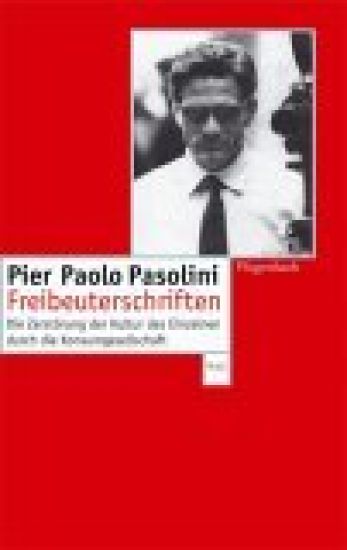
Als die Freibeuterschriften Pasolinis zum ersten Mal erschienen, waren sie - mit über 70.000 Exemplaren - nicht nur sehr erfolgreich, sondern bewirkten auch eine Wende in der Diskussion über den >Fortschritt
"Sex, death, political passion, these are the simple objects to which I give my elegiac heart" Winner of the first Renato Poggioli/William Weaver Award of PEN American Center Pier Paolo Pasolini (1922-1975), who is best known in this country as an inspired filmmaker, was also the most outspoken and original Italian writer of his generation, the author of distinguished and controversial novels and plays, political and literary criticism, and, above all, poetry. His poems are widely considered the most important contribution to Italian literature since Montale and, along with the work of Brecht and Neruda, represent the most powerful political poetry of the century. This dual-language book presents his major poems as well as an autobiographical essay, which together make for an outstanding introduction to Pasolini's exceptional gifts as a poet.
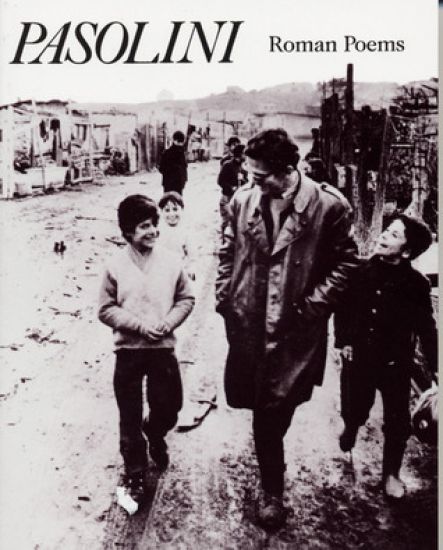
The Italian film-maker Pier Paolo Pasolini was first and always a poet--the most important civil poet, according to Alberto Moravia, in Italy in the second half of this century. His poems were at once deeply personal and passionately engaged in the political turmoil of his country. In 1949, after his homosexuality led the Italian Communist Party to expel him on charges of "moral and political unworthiness," Pasolini fled to Rome. This selection of poems from his early impoverished days on the outskirts of Rome to his last (with a backward longing glance at his native Friuli) is at the center of his poetic and filmic vision of modern Italian life as an Inferno. "From all these refusals, we know what Pasolini stood against--political ideologies of all kinds, the complacency inherent in the established social order, the corruption of the institutions of church and state. If Pasolini could be said to have stood for anything it was for the struggles of Italy's working class--both the rural peasants and those barracked in the urban slums at the edges of Italian cities--whose humanity he evoked with great eloquence and nuance. But it is his refusals that animate his legacy with an incandescent rage, a passionate and profound fury that did not, as Zigaina suggests, cry out for death--but for just the opposite." -Nathaniel Rich, The New York Review of Books Pier Paolo Pasolini was born in 1922 in Bologna. In addition to the films for which he is world famous, he wrote novels, poetry, and social and cultural criticism, and was an accomplished painter. He was murdered in 1975 at Ostia, near Rome.