

Kirjailija
Pier Vittorio Aureli
Kirjat ja teokset yhdessä paikassa: 4 kirjaa, julkaisuja vuosilta 2011–2026, suosituimpiin kuuluu Weniger ist genug. Vertaile teosten hintoja ja tarkista saatavuus suomalaisista kirjakaupoista.
4 kirjaa
Kirjojen julkaisuvuodet: 2011–2026.

Rewriting Alberti
Peter Eisenman; Pier Vittorio Aureli
MIT PRESS LTD
2025
nidottu
Halvin toimitettuna 30,10 €
A fresh, groundbreaking analysis of renowned Renaissance architect Leon Battista Alberti s five built works, suggesting a new relationship of form to meaning. Much has been written about Renaissance architect Leon Battista Alberti s mantra of part-to-whole as one of the continuing conditions of architecture. While this underlying thesis has oft been repeated in the annals of architectural history and theory, architects have rarely questioned the idea. In Rewriting Alberti, architect Peter Eisenman suggests, however, that Alberti provoked a radical discourse beyond the part-to-whole dialogue featured in his Ten Books. Eisenman s in-depth analysis of Alberti s five built works reveals a disjunction between the architect s buildings and theoretical writings, suggesting a new relationship of form to meaning based on the fragmentation of homogeneous space. Rewriting Alberti includes contributions by Pier Vittorio Aureli, Mario Carpo, and Daniel Sherer. Carpo, an architectural historian and critic, theorizes that Alberti s work initiated an idea of the discipline as a notational system akin to contemporary computational logics. By way of comparison, Sherer, an architectural historian, reconsiders critic Manfredo Tafuri s readings of Alberti, and architect and theorist Aureli draws on Alberti to propose another idea of the architectural project. Here, in one book are four different discourses (and more than 60 drawings) which look back at the origins of architectural signs and semiology and forward to understand the way that history informs architecture today.
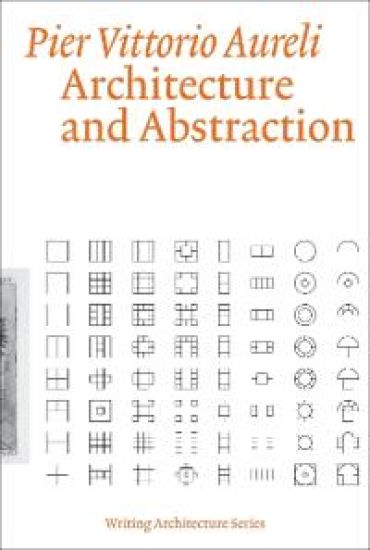
Architecture and Abstraction
Pier Vittorio Aureli
MIT PRESS LTD
2023
nidottu
Halvin toimitettuna 30,10 €
A landmark study of abstraction in architectural history, theory, and practice that challenges our assumptions about the meaning of abstract forms. In this theoretical study of abstraction in architecture—the first of its kind—Pier Vittorio Aureli argues for a reconsideration of abstraction, its meanings, and its sources. Although architects have typically interpreted abstraction in formal terms—the purposeful reduction of the complexities of design to its essentials—Aureli shows that abstraction instead arises from the material conditions of building production. In a lively study informed by Walter Benjamin, Karl Marx, Alfred Sohn-Rethel, and other social theorists, this book presents abstraction in architecture not as an aesthetic tendency but as a movement that arises from modern divisions of labor and consequent social asymmetries. These divisions were anticipated by the architecture of antiquity, which established a distinction between manual and intellectual labor, and placed the former in service to the latter. Further abstractions arose as geometry, used for measuring territories, became the intermediary between land and money and eventually produced the logic of the grid. In our own time, architectural abstraction serves the logic of capitalism and embraces the premise that all things can be exchanged—even experience itself is a commodity. To resist this turn, Aureli seeks a critique of architecture that begins not by scaling philosophical heights, but by standing at the ground level of material practice.
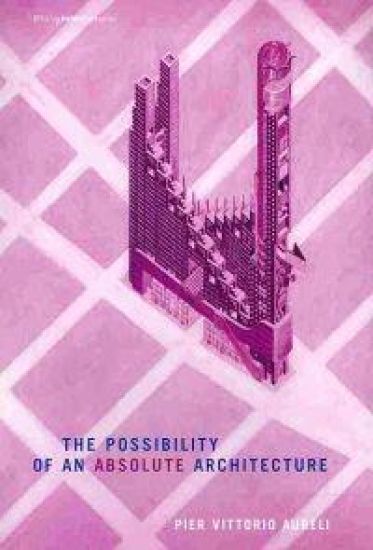
Architectural form reconsidered in light of a unitary conception of architecture and the city. In The Possibility of an Absolute Architecture, Pier Vittorio Aureli proposes that a sharpened formal consciousness in architecture is a precondition for political, cultural, and social engagement with the city. Aureli uses the term absolute not in the conventional sense of "pure," but to denote something that is resolutely itself after being separated from its other. In the pursuit of the possibility of an absolute architecture, the other is the space of the city, its extensive organization, and its government. Politics is agonism through separation and confrontation; the very condition of architectural form is to separate and be separated. Through its act of separation and being separated, architecture reveals at once the essence of the city and the essence of itself as political form: the city as the composition of (separate) parts. Aureli revisits the work of four architects whose projects were advanced through the making of architectural form but whose concern was the city at large: Andrea Palladio, Giovanni Battista Piranesi, Étienne Louis-Boullée, and Oswald Mathias Ungers. The work of these architects, Aureli argues, addressed the transformations of the modern city and its urban implications through the elaboration of specific and strategic architectural forms. Their projects for the city do not take the form of an overall plan but are expressed as an "archipelago" of site-specific interventions.