Kirjojen hintavertailu – 12 903 724 kirjaa ja 27 kauppaa
Kirjailija
Pierre Jacquet
Kirjat ja teokset yhdessä paikassa: 7 kirjaa, julkaisuja vuosilta 1998–2020, suosituimpiin kuuluu Abrégé Du Commentaire de la Coutume de Touraine. Tome 2. Vertaile teosten hintoja ja tarkista saatavuus suomalaisista kirjakaupoista.
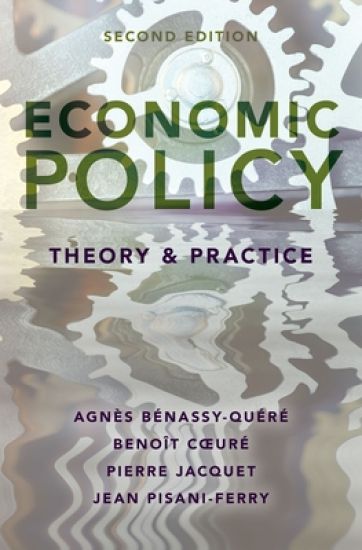
Economic Policy provides a unique combination of facts-based analysis, state-of-the art economic theory, and insights from first-hand policy experience at the national and international levels to shed light on current domestic and international policy challenges. It is ideally suited for students, practitioners, and scholars seeking understanding both of the pragmatic constraints of real-world policy making and the analytical tools that enhance inquiry and inform debates. The authors draw on their experiences as academics and as policy makers in European and international institutions to offer a deep dive into the rationale, design, and implementation of economic policy across a range of policy domains: fiscal policy, monetary policy, international finance, financial stability, taxes, long-term growth and inequality. Highlighting the ways experience, theories, and institutions interact, each chapter starts with historical examples of dilemmas and shows how theoretical approaches can help policy makers understand what is at stake and identify solutions. The authors highlight the differences between the positive approach to economic policy (how do policies impact the economy), the normative approach (what should be policymakers' objectives and against which criteria should their action be judged), and the political-economy constraints (what are the limits and obstacles to public intervention). They rely on the most recent academic research, providing technical boxes while explaining the mechanisms in plain English in the text, with appropriate illustrations. This new edition is informed by such important recent developments as the Great Recession, the strains on the European Union and the Euro, the challenges of public and private debt, the successes and setbacks to emerging markets, changes to labor markets along with the increased attention to inequality, the debates on secular stagnation and its implications for conventional and unconventional monetary policy, the re-regulation of the financial sector, the debt overhang in both the public and the private sector.
Written by four recognized experts with senior experience in research and government, this text is the first comprehensive survival kit for students and practitioners of economic policy. It is set to become an indispensable resource for everyone involved or interested in modern economic policy. Academic scholars willing to engage in policy discussions and students at graduate or advanced undergraduate levels will find it an essential bridge to the policy world. What makes the book unique is that it combines like no other, facts-based analysis, state-of-the art theories and models, and insights from first-hand policy experience at national and international levels. The book has grown out of ten years of experience teaching economic policy at the graduate level. It provides an intellectually coherent framework to understand the potentialities and limits of economic policy. It addresses positive dimensions (how do policies impact on modern economies?), normative dimensions (what should policymakers aim to achieve and against what should their action be judged?) and political-economy constraints (which are the limits and obstacles to public intervention?). It fills an important gap by reconciling in each major policy area stylized facts of recent economic history, key questions faced by contemporary policymakers, and essential lessons from theory which are captured and explained in a clear, concise, and self-contained way. All major areas of domestic and international policymaking are covered: fiscal policy, monetary policy, international finance and exchange-rate policy, tax policy, and long-term growth policies. The book concludes with a special chapter on the lessons of the financial crisis. The authors are intellectually non-partisan and they draw examples from various countries and experiences; from emerging markets to developing economies, shedding light when necessary on local specificities such as European Union rules and instruments. Economic Policy: Theory and Practice is the essential guide to economic policy in the new post-crisis context.
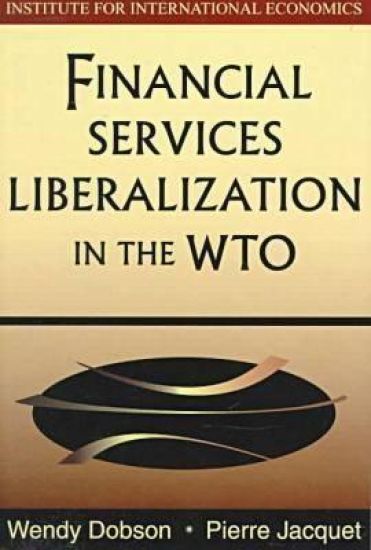
The stakes were high in the financial services negotiations that were completed in December 1997 at the World Trade Organization (WTO). The developing countries were eager to strengthen and modernize their financial systems. The industrial countries sought access to important emerging markets in Latin America and Asia for their banking, insurance, brokerage, and other financial services firms. In the end, both sides agreed to bind unilateral and regional financial opening and reform that was already under way in many countries, industrial and developing alike. The authors assess the agreement reached in the WTO, identifying its shortcomings and suggesting ways that it can be bolstered in future negotiations. They analyze the impact of the agreement, and of the Asian financial crisis, on the state of liberalization and market opening in several important emerging-market economies-including a summary of the remaining obstacles to establishing efficient and open financial sectors. This book estimates the benefits of opening the financial sector to foreign competition. It assesses the macroeconomic benefits that flow from an improved financial sector and discusses the risks and costs involved in liberalization. The authors conclude with a blueprint for future efforts to liberalize financial services and emphasize that the recent financial services agreement represented only a beginning step in that process.