Kirjojen hintavertailu – 12 903 725 kirjaa ja 27 kauppaa

Kirjailija

Pierre-Joseph Proudhon

Kirjat ja teokset yhdessä paikassa: 208 kirjaa, julkaisuja vuosilta 1994–2026, suosituimpiin kuuluu Correspondance de P.-J. Proudhon. Vertaile teosten hintoja ja tarkista saatavuus suomalaisista kirjakaupoista.

Nimi esiintyy myös muodoissa: Pierre Joseph Proudhon

208 kirjaa

Kirjojen julkaisuvuodet: 1994–2026.

Liberte, Partout Et Toujours

Liberte, Partout Et Toujours

Pierre-Joseph Proudhon

Les Belles Lettres
2009
nidottu
Un Proudhon certes foncierement anarchiste, federaliste, anti-etatiste pour tout dire, mais parfois plus proche d'etre un liberal anticapitaliste et antibourgeois qu'un socialiste et dont le combat constant pour l'emancipation de la classe ouvriere va de pair avec une rude opposition au communisme. Voici le Proudhon (1809-1865) que ce volume devoile en bousculant nombre d'idees convenues a son sujet: entre autres, que la propriete est loin d'etre forcement un vol . Ces textes selectionnes, ordonnes et presentes par Vincent Valentin, maitre de conferences a l'universite Paris-I, soulignent le caractere complexe, souvent paradoxal et evolutif, d'une ?uvre foisonnante a laquelle le lecteur contemporain n'a plus directement acces depuis longtemps. Et dont la conception vive de la liberte individuelle qui l'irrigue donne toujours a penser.

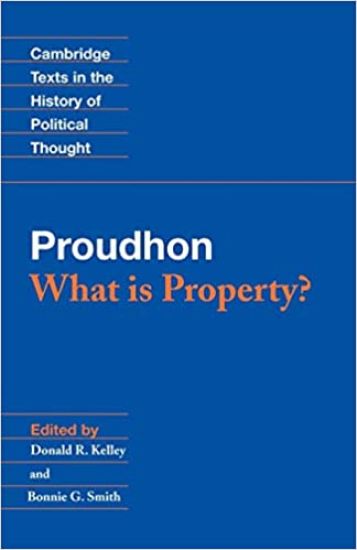
Proudhon: What is Property?

Proudhon: What is Property?

Pierre-Joseph Proudhon

Cambridge University Press
1994
pokkari

Halvin toimitettuna 30,20 €

This is a new translation of one of the classics of the traditions of anarchism and socialism. Pierre-Joseph Proudhon was a contemporary of Marx and one of the most acute, influential, and subversive critics of modern French and European society. His What is Property? (1840) produced the answer ‘Property is theft’; the book itself has become a classic of political thought through its wide-ranging and deep-reaching critique of private property as at once the essential institution of Western culture and the root cause of greed, corruption, political tyranny, social division, and violation of natural law. A critical and historical introduction situates Proudhon’s ‘diabolical work’ (as he called it) in the context of nineteenth-century social and legal controversy and of the history of political thought in general.