Kirjailija
Pierre Legrand
Kirjat ja teokset yhdessä paikassa: 23 kirjaa, julkaisuja vuosilta 2013–2026, suosituimpiin kuuluu Un hiver à Chypre. Vertaile teosten hintoja ja tarkista saatavuus suomalaisista kirjakaupoista.
23 kirjaa
Kirjojen julkaisuvuodet: 2013–2026.
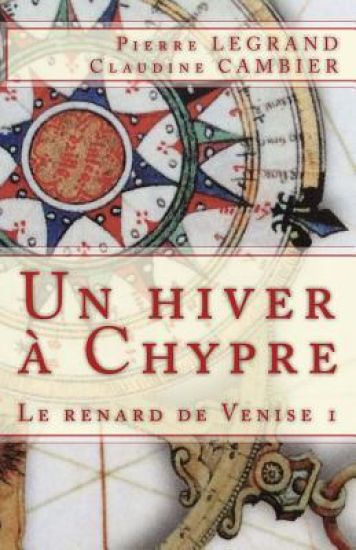
Pietro Aurelio s'engage en 1531 sur une gal re marchande de la R publique de Venise. Son aventure, relat e partiellement dans la saga CINQUECENTO, se d roule la fois sur mer, o l'on peut faire de mauvaises rencontres, mais aussi sur terre, Chypre, o il est m l pour un temps la vie de la colonie. Dans son p riple, il est confront des marins, des marchands, des pirates, des femmes, des pr tres, des paysans, des militaires et des magistrats, tout un microcosme dans lequel il devra se d placer, parfois au p ril de sa vie. Roman d'aventure et d'initiation, ce premier volume d'une s rie rassemble documentation historique, paysages et tableaux de genre, portraits cisel s, humour, amour et passion. Mais il reste avant tout un r cit haletant et rythm .
This book’s essays want to provide the intellectually-sophisticated and ethically-sensitive comparatist with the equipment that will stand comparison in optimal epistemic stead as one embarks upon the journey of elicitation and inscription towards foreign law. Negative comparative law argues that foreign law materializes as a cultural statement: every foreign law-text is encultured. And it holds that every comparatist is encultured, too: one is a socialized individual and institutionalized jurist. This double enculturation generates the comparatist’s double bind: how to account for a foreign law being ‘framed’ within a cultural fabric even as one comes to foreign law having oneself been ‘framed’ within another, different culture? One must adopt a realistic stance: understanding of foreign law as it exists is impossible. Foreignness lies beyond description or representation. But such intractability is not disqualifying, the abiding idea being to compare nonetheless, to compare on, if within the unlimited sway of the limit. This book will benefit all law teachers and postgraduate law students interested in the workings of law on the international scene, whether specialists in comparative law, public international law, private international law, transnational law, or foreign relations law – in particular, individuals bringing to bear a critical inclination to their subject-matter.
This book’s essays seek to cleanse comparative law of some of the epistemic detritus it has been collecting and that has been cluttering its theory and practice to the point where this flotsam has effectively stultified ‘good’ comparison. While a critique would pursue adjustments to the prevailing model, this text’s negative critique seeks a much more radical refurbishment as it utters an emphatic ‘no’ to the governing epistemology: it pursues, in effect, a deposition and a disposition of the leading epistemic configuration and the various assumptions regarding the acquisition of knowledge about foreign law that inform it. Negative comparative law thus operates at a primordial level inasmuch as it concerns the matter of justice: it aims to do justice to foreign law as foreignness finds itself appropriated and travestied by comparatists for ideological purposes. In the process, negative critique purports significantly to enhance comparative law’s institutional, intellectual, and ethical respectability. This book will benefit all law teachers and postgraduate law students interested in the workings of law on the international scene, whether specialists in comparative law, public international law, private international law, transnational law, or foreign relations law – in particular, individuals bringing to bear a critical inclination to their subject-matter.
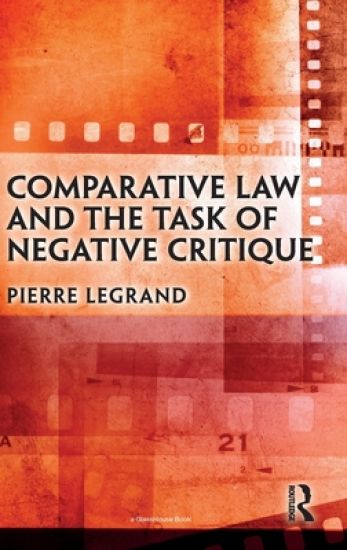
This book’s essays aim subversively and resolutely to replace the hegemonic discursive frame governing comparative law. Beyond harnessing negative critique to resist the orthodoxy’s self-assured cognitive assumptions, at once unexamined and indefensible, the argument mobilizes negativity as an empowering idea, a resource towards the displacement of the brand of comparative law that has been fostering a closing of the comparing mind. To answer the demands of the moment and herald foreign law research as a creditable intellectual development, one requires to engage in a culturalist theorization and practice of comparative law at radical variance from the prevailing positivist model. The negative turn, then, is a call to comparative action – a comparactive motion – in support of the robustly indisciplined thinking that must thoroughly inform research into foreign law. In photography, the negative has been employed productively to generate a positive print. In comparative law, negation wants to affirm edifying epistemic yields. This book will benefit all law teachers and postgraduate law students interested in the workings of law on the international scene, whether specialists in comparative law, public international law, private international law, transnational law, or foreign relations law – in particular, individuals bringing to bear a critical inclination to their subject-matter.
Written under the sign of Beckett, this book addresses comparative law's commitment to the deterritorialization of the legal and its attendant claim for the normative relevance of foreign law locally in the fabrication of statutory determinations, judicial opinions, or academic reflections. Wanting to withstand the law's persistent tendency towards nationalist retrenchment and counter comparative law's institutional marginalization, the fifteen essays at hand impart radical and discerning intellectual equipment in order to foster the valorization of the legally foreign and the comparative motion. In particular, the critique informing this manifesto examines pre-eminent topics like culture and difference, understanding and translatability, objectivity and truth, invention and tracing. Harnessing insights from a range of disciplinary discourses, this book contends that comparatists must boldly desist from their field's dominant epistemology and embrace a practice much better attuned to the study of foreignness.
Introduction to Biological Crystallography
Marie-Hélène Le Du; Pierre Legrand; Serena Sirigu
EDP Sciences
2024
pokkari
This book’s essays seek to cleanse comparative law of some of the epistemic detritus it has been collecting and that has been cluttering its theory and practice to the point where this flotsam has effectively stultified ‘good’ comparison. While a critique would pursue adjustments to the prevailing model, this text’s negative critique seeks a much more radical refurbishment as it utters an emphatic ‘no’ to the governing epistemology: it pursues, in effect, a deposition and a disposition of the leading epistemic configuration and the various assumptions regarding the acquisition of knowledge about foreign law that inform it. Negative comparative law thus operates at a primordial level inasmuch as it concerns the matter of justice: it aims to do justice to foreign law as foreignness finds itself appropriated and travestied by comparatists for ideological purposes. In the process, negative critique purports significantly to enhance comparative law’s institutional, intellectual, and ethical respectability. This book will benefit all law teachers and postgraduate law students interested in the workings of law on the international scene, whether specialists in comparative law, public international law, private international law, transnational law, or foreign relations law – in particular, individuals bringing to bear a critical inclination to their subject-matter.
Written under the sign of Beckett, this book addresses comparative law's commitment to the deterritorialization of the legal and its attendant claim for the normative relevance of foreign law locally in the fabrication of statutory determinations, judicial opinions, or academic reflections. Wanting to withstand the law's persistent tendency towards nationalist retrenchment and counter comparative law's institutional marginalization, the fifteen essays at hand impart radical and discerning intellectual equipment in order to foster the valorization of the legally foreign and the comparative motion. In particular, the critique informing this manifesto examines pre-eminent topics like culture and difference, understanding and translatability, objectivity and truth, invention and tracing. Harnessing insights from a range of disciplinary discourses, this book contends that comparatists must boldly desist from their field's dominant epistemology and embrace a practice much better attuned to the study of foreignness.
En cette ann e 1513, le nouveau Pape L on X essaye vainement d'influencer la politique de Venise. Son ambassadeur Pietro Bembo est reparti Rome sans le succ s escompt mais a laiss sur place un agent secret. En ces temps de moeurs libres, on ne s' tonne pas de voir un Monsignore fr quenter une courtisane de haut vol. Mais lorsqu'il meurt dans ses bras, se pose en plus une question mat rielle qui para t insoluble. En l'absence du Grand Chancelier Aurelio, la belle et sulfureuse Laura, ancienne courtisane devenue noble dame Borromeo, sera entra n e malgr elle dans cette affaire n buleuse et, par d fi, tentera sa mani re de la d nouer. Comment s'y prendra-t-elle et surtout, ne se trompe-t-elle pas de coupable ? Car, dans cette ville b tie sur l'eau, o affleurent les arcanes de la politique, tout est reflet et les v rit s sont multiples. Que sortira-t-il de l'in vitable face face de Laura avec Nicol Aurelio, attir plus que jamais par cette femme insaisissable ? Nous voici toujours Venise, dans sa lumi re magique, l'animation de ses venelles populeuses, l'obscurit de ses vieilles maisons. Le temps d'un croquis, voici une rencontre avec le jeune Titien; le temps d'une chasse au canard, les yeux s' garent dans les paysages mar cageux de la terre ferme ou dans les espaces sablonneux du Lido, la recherche d'une arbal te.
Législation Des Portions Ménagères Ou Parts de Marais, Dans Le Nord de la France
Pierre Legrand
Hachette Livre - BNF
2018
pokkari
Études Sur La Législation Militaire Et Sur La Jurisprudence Des Conseils de Guerre Et de Révision
Pierre Legrand
Hachette Livre - BNF
2018
pokkari
Société Royale Des Sciences, de l'Agriculture Et Des Arts de Lille. Rapport Lu En Séance Publique
Pierre Legrand
Hachette Livre - BNF
2017
pokkari
Alors qu'une affaire d'enfants noy s pi tine d sesp r ment, la mort accidentelle de l' pouse du chef du Conseil des Dix conna t des suites inattendues. Dans leur perp tuel souci d'ordre public, les Inquisiteurs d' tat confient l'enqu te au Grand Chancelier Nicol Aurelio, l'homme de tous les secrets. Qui d'autre que le fid le Mosca pourra lui permettre de reconstituer les faits ? Et pour compliquer les choses, la belle Laura dont Aurelio est amoureux, se lance dans une intrigue visant sa r habilitation. Sera-t-elle cette fois une aide ou un frein ? Apparaissent en toile de fond et presque comme acteurs, Venise, son paysage aquatique et ses ruelles sombres, ses peintres, ses institutions d'une poque la fois magnifique et cruelle. Ce troisi me tome d'une s rie polici re remet en sc ne selon un canevas diff rent les personnages d j rencontr s dans la saga CINQUECENTO.
L'opulente Venise de la Renaissance, attaqu e par toutes les puissances d'Europe, campe sur sa lagune et construit sur la terraferma un astucieux syst me hydraulique pour assurer au mieux sa s curit . Mais elle n'est pas l'abri des espions. Quand le Sage de terraferma meurt empoisonn et que ses plans ont disparu, le Conseil des Dix alarm charge de l'enqu te l'homme de tous les secrets d' tat. Nicol Aurelio, Grand Chancelier et homme de l'ombre, r ussira-t-il, avec l'aide du sbire Mosca, d m ler l' nigme nou e lors de ce souper priv , le soir de la San Mattio, souper o se sont trouv s rassembl s autour de Ser Priuli qui va mourir, un capitaine du commerce d'Orient, des amateurs et marchands d'art trangers et des courtisanes, parmi lesquelles figure la dangereuse et fascinante Laura ? Ce deuxi me tome d'une s rie remet en sc ne selon un canevas inattendu les figures d j rencontr es dans la saga CINQUECENTO.
Dans l'Europe de 1537, la paix est menac e entre Charles Quint et Fran ois 1er. En M diterran e, entre Venise et les Turcs. La R publique S r nissime de Venise doit choisir entre Fran ois et Charles, entre le grand large et la terraferma, entre le commerce et la croisade Ce dilemme partage plus que jamais Patriciens, S nat, Conseil des Dix. Tous les moyens sont bons pour faire pencher la balance d'un c t ou de l'autre. C'est ainsi qu' Venise, tout devient lutte de factions, conspirations, machinations, guerre secr te qui n'h site pas liminer ses propres complices... Ce sixi me et dernier volume de la saga CINQUECENTO nous entra ne dans les palais de Venise o fleurissent les intrigues, en Hongrie, sur la mer Adriatique, o fait rage la violence des combats. Il nous plonge dans l'ab me des passions humaines qui, entrem lant amour et ambition, forgent les destin es individuelles de Pietro, Costantino, et Nicolino. Une fois jet sous la meule, comment le grain de bl peut-il viter d' tre broy par la pierre ?