Kirjojen hintavertailu – 12 903 724 kirjaa ja 27 kauppaa

Kirjailija

Piers Beirne

Kirjat ja teokset yhdessä paikassa: 11 kirjaa, julkaisuja vuosilta 1988–2026, suosituimpiin kuuluu Criminology: A Sociological Approach. Vertaile teosten hintoja ja tarkista saatavuus suomalaisista kirjakaupoista.

11 kirjaa

Kirjojen julkaisuvuodet: 1988–2026.

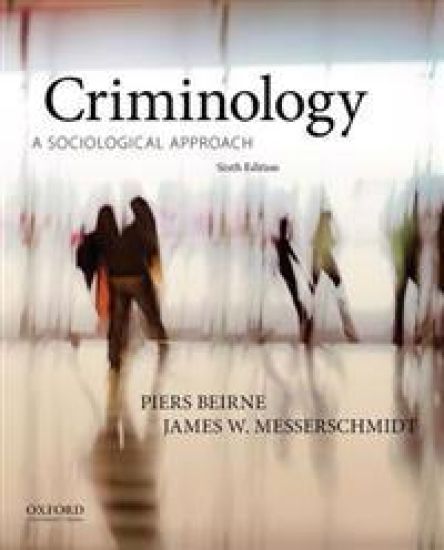
Criminology: A Sociological Approach

Criminology: A Sociological Approach

Piers Beirne; James W. Messerschmidt

Oxford University Press
2014
nidottu
Ideal for undergraduate courses in criminology--especially those taught from a critical perspective--Criminology: A Sociological Approach, Sixth Edition, is a comprehensive yet highly accessible introduction to the study of crime and criminological theory. Authors Piers Beirne and James W. Messerschmidt present the topic from a sociological standpoint, emphasizing the social construction of crime and showing how crime relates to gender, class, race, and age. Providing students with a strong theoretical foundation, the book also addresses historical, feminist, and comparative perspectives and highlights the major types of crime and victimization patterns. THE TEXT IS DIVIDED INTO THREE PARTS: * Part I focuses on four questions: "What is crime?" "How are perceptions of it influenced by the mass media and by fear ofcrime?" "How can we measure how much crime there is in the United States?" and finally, "How often does crime occur and with what degrees of seriousness?"* Part II is a systematic guide to modern criminological theory and its historical development* Part III examines specific types of crime, including property crime, interpersonal violence, white-collar crime, and politicalcrime, and it concludes with a chapter on comparative criminology and globalization The sixth edition features new and up-to-date empirical data and also covers areas not included in many criminology texts, like cultural criminology, green criminology, whiteness and crime, the rape-war connection, Ponzi schemes, domestic right-wing terrorism, and state-sanctioned torture.
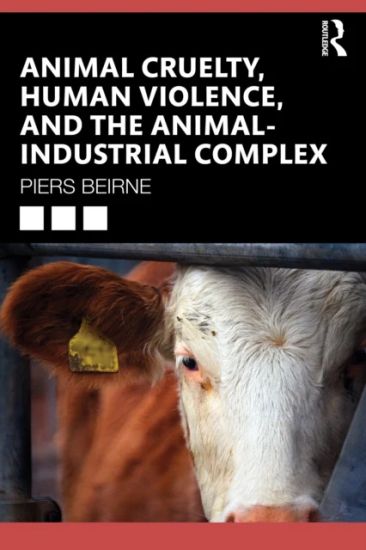
Animal Cruelty, Human Violence, and the Animal-Industrial Complex
In this book Piers Beirne confronts animal cruelty. Further advancing the multidisciplinary research program in non-speciesist and green criminology he has pursued for three decades. Beirne finds existing approaches to animal cruelty to be heavily burdened by religious, cultural and, especially, juridic baggage. He establishes that the key concept of animal cruelty law, firmly entrenched since the mid-1870s, is the fictive distinction between necessary and unnecessary suffering. While it criminalises certain interpersonal violence as animal cruelty, this murderous distinction also permits―in zones of exception created by statutory exemptions for animal capital―the slaughter of many billions of animals in the animal-industrial complex. Beirne argues that because it is so imbricated in the couplet of permissible and impermissible violence, the concept of animal cruelty is anathema to non-speciesist criminology. It should be abandoned. He therefore proposes a vigorous approach to animal abuse in which a central part is played by non-speciesist concepts of interpersonal, institutional and epistemic violence. This framework is applied in successive chapters on anthroponosis; sexist and speciesist verbal violence; human-animal sex; and the doomsday scenario of zooanthroponosis. This book is essential reading for scholars in criminology, animal studies, law, philosophy, multispecies justice and environmental ethics.
Penal Philosophy

Penal Philosophy

Tarde Gabriel; Piers Beirne

Routledge
2021
sidottu
During his lifetime and for decades after, the writings of the French magistrate and scholar Gabriel Tarde exercised considerable influence in Europe, and the United States, extending to such diverse fields as social theory, political philosophy, and psychology. Yet Tarde's intellectual accomplishments also merit honorable status in the history of criminology, where the focus of his labors was the attempt to forge a compromise between classical jurisprudence and positivism. Tarde creatively applied a general system of social psychological theory to crime and penality. He led the struggle against Lombrosian criminal anthropology and against the scientism of Franco-Belgian moral statisticians. He also participated in well-publicized and occasionally quite acrimonious debates with ?mile Durkheim about the supposed normality of crime. His ideas are difficult to grasp. The reader of Penal Philosophy may discover in any of its nine chapters a diversity of subjects attacked with different modes of reasoning supported by contradictory discursive techniques. Tarde's literary style is frequently convoluted, although sometimes quite elegant. It is often irritatingly polemical and even obscure. Nevertheless, within this volume one can discern that the several strands of Tarde's criminology are in fact complementary approaches to a common goal, namely, the procurement of an acceptable "neo-classical" basis for criminal responsibility and punishment. Tarde constructs a sociological explanation of crime in which the individual is ultimately the principal actor, and suggests forms of penalty whose principles avoided the determinist implications of positivism. In these ways, Tarde's Penal Philosophy helped to forge the dominant features of neoclassical jurisprudence. This book will be of keen interest to students of criminology, jurisprudence, and sociology.
Murdering Animals

Murdering Animals

Piers Beirne

Palgrave Macmillan
2018
sidottu
Murdering Animals confronts the speciesism underlying the disparate social censures of homicide and “theriocide” (the killing of animals by humans), and as such, is a plea to take animal rights seriously. Its substantive topics include the criminal prosecution and execution of justiciable animals in early modern Europe; images of hunters put on trial by their prey in the upside-down world of the Dutch Golden Age; the artist William Hogarth’s patriotic depictions of animals in 18th Century London; and the playwright J. M. Synge’s representation of parricide in fin de siècle Ireland. Combining insights from intellectual history, the history of the fine and performing arts, and what is known about today’s invisibilised sites of animal killing, Murdering Animals inevitably asks: should theriocide be considered murder? With its strong multi- and interdisciplinary approach, this work of collaboration will appeal to scholars of social and species justice in animal studies, criminology, sociology and law.
Confronting Animal Abuse

Confronting Animal Abuse

Piers Beirne

Rowman Littlefield Publishers
2009
sidottu
Confronting Animal Abuse presents a powerful examination of the human-animal relationship and the laws designed to protect it. Piers Beirne, a leading scholar in the growing field of green criminology, explores the heated topic of animal abuse in agriculture, science, and sport, as well as what is known, if anything, about the potential for animal assault to lead to inter-human violence. He convincingly shows how from its roots in the Irish plow-fields of 1635 through today, animal-rights legislation has been primarily shaped by human interest and why we must reconsider the terms of human-animal relationships. Beirne argues that if violations of animals' rights are to be taken seriously, then scholars and activists should examine why some harms to animals are defined as criminal, others as abusive but not criminal and still others as neither criminal nor abusive. Confronting Animal Abuse points to the need for a more inclusive concept of harms to animals, without which the meaning of animal abuse will be overwhelmingly confined to those harms that are regarded as socially unacceptable, one-on-one cases of animal cruelty. Certainly, those cases demand attention. But so, too, do those other and far more numerous institutionalized harms to animals, where abuse is routine, invisible, ubiquitous and often defined as socially acceptable. In this pioneering, pro-animal book Beirne identifies flaws in our traditional understanding of human-animal relationships, and proposes a compelling new approach.
Confronting Animal Abuse

Confronting Animal Abuse

Piers Beirne

Rowman Littlefield Publishers
2009
nidottu
Confronting Animal Abuse presents a powerful examination of the human-animal relationship and the laws designed to protect it. Piers Beirne, a leading scholar in the growing field of green criminology, explores the heated topic of animal abuse in agriculture, science, and sport, as well as what is known, if anything, about the potential for animal assault to lead to inter-human violence. He convincingly shows how from its roots in the Irish plow-fields of 1635 through today, animal-rights legislation has been primarily shaped by human interest and why we must reconsider the terms of human-animal relationships. Beirne argues that if violations of animals' rights are to be taken seriously, then scholars and activists should examine why some harms to animals are defined as criminal, others as abusive but not criminal and still others as neither criminal nor abusive. Confronting Animal Abuse points to the need for a more inclusive concept of harms to animals, without which the meaning of animal abuse will be overwhelmingly confined to those harms that are regarded as socially unacceptable, one-on-one cases of animal cruelty. Certainly, those cases demand attention. But so, too, do those other and far more numerous institutionalized harms to animals, where abuse is routine, invisible, ubiquitous and often defined as socially acceptable. In this pioneering, pro-animal book Beirne identifies flaws in our traditional understanding of human-animal relationships, and proposes a compelling new approach.
Green Criminology

Green Criminology

Piers Beirne

Ashgate Publishing Limited
2006
sidottu
In little more than a decade, Green Criminology has become an established new perspective in the field. It embraces an exciting and wide range of topics, from controversies about genetic modification through corporate offending against the environment and human communities, to animal abuse. Green Criminology provides a focal point for longstanding and new areas of research as well as making important interdisciplinary connections.
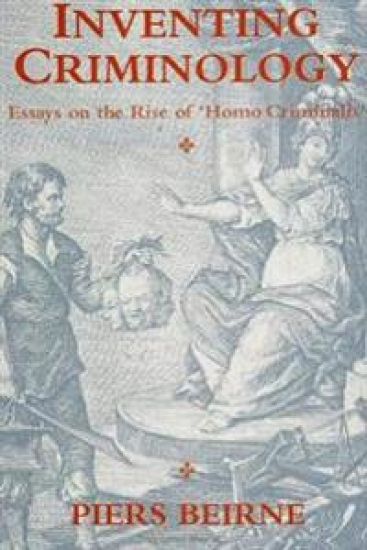
Inventing Criminology

Inventing Criminology

Piers Beirne

State University of New York Press
1993
pokkari
This book traces the intellectual history of criminology, analyzing the influence of early classical European concepts of criminality and the development of positivist methodologies. It is an original and carefully researched work, adding significantly to our knowledge of the history of criminology. From Cesare Beccaria's Dei delitti e delle pene to Charles Goring's The English Convict, Beirne offers refreshing and challenging insights on the intellectual and social histories of a variety of important concepts and movements in criminology.
Comparative Criminology

Comparative Criminology

Piers Beirne; Joan Hill

Greenwood Press
1991
sidottu
This is the first comprehensive bibliography that deals with comparative criminology and other signficant works in the field dating from the 1960s. The guide covers 500 studies on crime, law, and social control in two or more cultures. The volume is organized into three main sections: meaning and measurement in criminology, cross-national crime rates, and social control and penal policies. The work is intended for students, for scholars and professionals, and for all researchers concerned with criminal justice studies around the world. The bibliography includes a preface, eleven chapters on topics of major importance, appendices, and author and subject indexes. The chapters deal with general issues in comparative criminology, cross-national data, perceptions of crime, violent crime, crimes against property, economic and political crime, transnational corporate crime, correlates of crime, underdevelopment and modernization, social control and dispute resolution, and criminal justice and penal policies. The appendices point to useful sources for further research. In addition, a full author and subject index is provided.
Selected Writings on Soviet Law and Marxism

Selected Writings on Soviet Law and Marxism

P.I. Stuchka; Robert Sharlet; Peter B. Maggs; Piers Beirne

M.E. Sharpe
1988
sidottu
The Latvian-born legal theorist P. I. Stuchka (1865-1932), generally recognized as one of the principal architects of modern Soviet legal theory and the Soviet legal system itself, was a prodigious author and editor. Twenty essays by Stuchka written between 1917 and 1931 were selected for translation