Kirjojen hintavertailu – 12 903 725 kirjaa ja 27 kauppaa

Kirjailija

Piers Bizony

Kirjat ja teokset yhdessä paikassa: 17 kirjaa, julkaisuja vuosilta 2008–2026, suosituimpiin kuuluu The Making of Stanley Kubrick's '2001: A Space Odyssey'. Vertaile teosten hintoja ja tarkista saatavuus suomalaisista kirjakaupoista.

17 kirjaa

Kirjojen julkaisuvuodet: 2008–2026.

Robots on Screen

Robots on Screen

Piers Bizony

Quarto Publishing Plc
2026
sidottu
Early 2027 sees two significant cinema anniversaries: the 100th of Fritz Lang’s eternally influential Metropolis, and the 50th of Star Wars. The famous golden robot in the second movie owes its origins directly to the first, but Metropolis was the first time that an entity that we’d recognise as a “robot” first appeared on screen. Ever since Lang’s Maschinenmensch (“machine person”) first stunned audiences with its elegant aloofness, film makers have shown a tremendous appetite for cyborgs, androids, replicants, and all manner of human-like robots. The idea of machines in our image has fascinated and appalled us in equal measure. Now that science fiction in cinema and on TV has shaped our view of the future, we assume, without question, that humanoid robots or androids will be joining us soon. Our quest to build machines in our image could be dangerous, yet we seem compelled to try, both in screen fantasies and in the real world. Now we live in an unsettling era where robots and artificial intelligences genuinely are about to transform our lives in ways we can’t yet predict. Will robots help us or threaten us? Will machine intelligences deserve rights? Will electronic minds become smarter than our own? Will AI take our jobs? And what of us? Will the next stage in our evolution involve a fusion of flesh and machine? Across the last century, film makers have been exploring these urgent existential questions: Robots on Screen tells that story with over 200 stunning images and film stills.

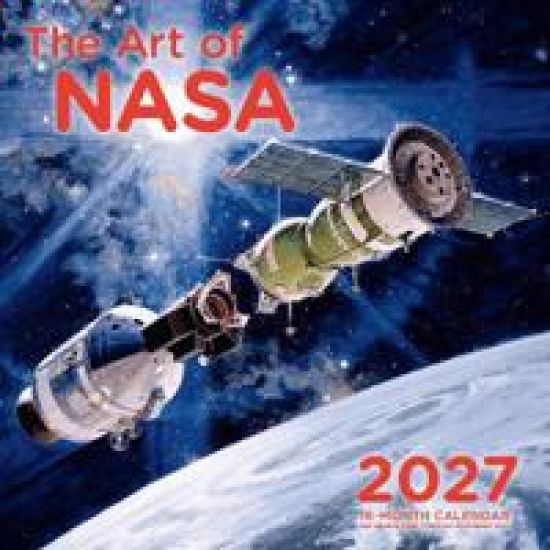
The Art of NASA 2027

The Art of NASA 2027

Piers Bizony

Quarto Publishing Group USA Inc
2026
kalenteri
For decades, NASA relied on visionary artists to make the impossible feel inevitable. With this calendar, you can spend the year marvelling at their stunning artwork and the bold space dreams they captured. Long before astronauts walked on the Moon or robots roamed Mars, painters, illustrators, and designers translated complex engineering into images that could capture the public’s attention, win political support, and inspire a generation. The Art of NASA 2027 brings together a curated selection of these remarkable works, revealing not just what NASA built, but how it first dreamed. The calendar features: 13 captivating images spanning the entire arc of the space age, from the speculative concepts of the postwar era to the bold visualizations shaping tomorrow’s missions, encompassing Mercury, Gemini, Apollo, the Space Shuttle, deep-space probes, robotics, and future Mars exploration A handy pre-2027 page that shows the months of September, October, November, and December 2026 Individual calendar pages for each month of 2027 Fascinating facts and commentary 12" × 12" image size, great for framing, ensuring that when 2027 comes to an end, you can continue to enjoy these inspiring artworks Drawn from a tradition that dates to NASA’s official art program—established in 1962 to document and humanize spaceflight through art—this calendar showcases the powerful role illustration has played in turning science into story. The result is a visually striking, idea-driven calendar that inspires, educates, and captures the sense of wonder behind humanity’s greatest journey—for you to enjoy all year long.
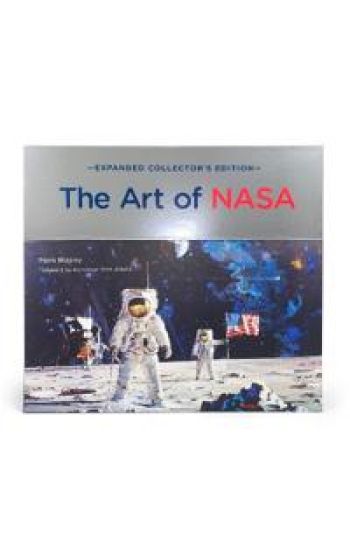
Art of NASA

Art of NASA

Piers Bizony

Quarto Publishing Group USA Inc
2023
sidottu
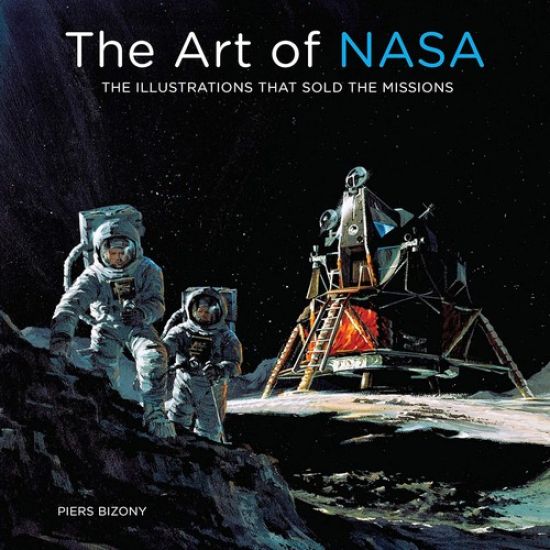
In this expanded collector’s edition of The Art of NASA, complete with a paper model Lunar Module and a poster, explore over 200 stunning artworks commissioned by NASA to sell its missions. Formed in 1958, NASA has long maintained a department of visual artists to depict the concepts and technologies created in humankind’s quest to explore the final frontier. Culled from a carefully chosen reserve of approximately 3,000 files deep in the NASA archives, the 200+ awe-inspiring illustrations presented in this special boxed edition are complemented by:32 pages of new materialA paper model of the Lunar ModuleA rolled posterA sheet of four postcardsA new foreword by astronaut Tom JonesFrom space suits to capsules, from landing modules to the Space Shuttle, the International Space Station, and more recent concepts for space planes, The Art of NASA presents 60 years of American space exploration in an unprecedented fashion. All the landmark early missions are represented in detail—Gemini, Mercury, Apollo—as are post-Space Race accomplishments, like the mission to Mars and other deep-space explorations. The insightful text relates the wonderful stories associated with the art. For instance, the incredibly rare early Apollo illustrations show how Apollo might have looked if the landing module had never been developed. Black-and-white Gemini drawings illustrate how the massive NASA art department did its stuff with ink pen and rubdown Letraset textures. Cross-sections of the Apollo–Soyuz Test Project docking adapter reveal Russian sensitivity about US “male” probes “penetrating” their spacecraft, thus the androgynous “adapter” now used universally in space. International Space Station cutaways show how huge the original plan was, but also what was retained. Every picture in The Art of NASA tells a special story. This collection of the rarest of the rare is not only a unique view of NASA history—it’s a fascinating look at the art of illustration and a glimpse of NASA history like no other.
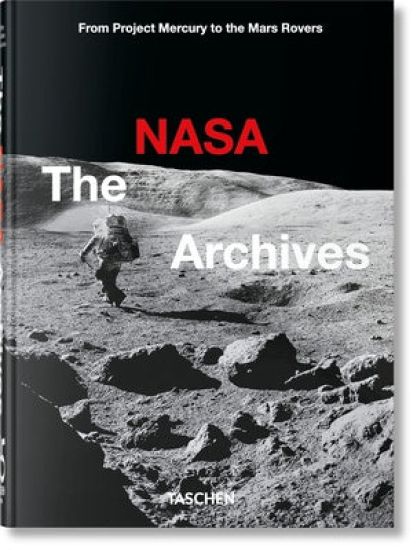
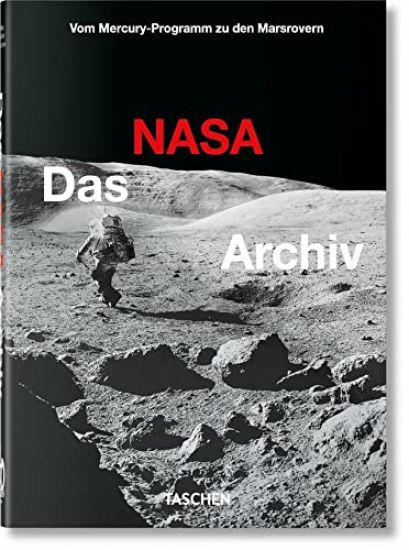
The NASA Archives. 45th Ed.

The NASA Archives. 45th Ed.

Piers Bizony

TASCHEN GMBH
2022
sidottu

Halvin toimitettuna 29,20 €

On October 1, 1958, the world’s first civilian space agency opened for business as an emergency response to the Soviet Union’s launch of Sputnik a year earlier. Within a decade, the National Aeronautics and Space Administration, universally known as NASA, had evolved from modest research teams experimenting with small converted rockets into one of the greatest technological and managerial enterprises ever known, capable of sending people to the Moon aboard gigantic rockets and of dispatching robot explorers to Venus, Mars, and worlds far beyond. In spite of occasional, tragic setbacks in NASA’s history, the Apollo lunar landing project remains a byword for American ingenuity; the winged space shuttles spearheaded the International Space Station and a dazzling array of astronomical satellites and robotic landers, and Earth observation programs have transformed our understanding of the cosmos and our home world’s fragile place within it. Throughout NASA’s 60-year history, images have played a central role. Who today is not familiar with the Hubble Space Telescope’s mesmerizing views of the universe or the pin-sharp panoramas of Mars from NASA’s surface rovers? And who could forget the photographs of the first men walking on the Moon? This compact edition is derived from our XL edition, which was researched in collaboration with NASA, and gathers hundreds of historic photographs and rare concept renderings, scanned and remastered using the latest technology. Texts by science and technology journalist Piers Bizony, former NASA chief historian Roger Launius, and best-selling Apollo historian Andrew Chaikin round out this comprehensive exploration of NASA, from its earliest days to its current development of new space systems for the future. The NASA Archives is more than just a fascinating pictorial history of the U. S. space program. It is also a profound meditation on why we choose to explore space and how we will carry on this grandest of all adventures in the years to come.
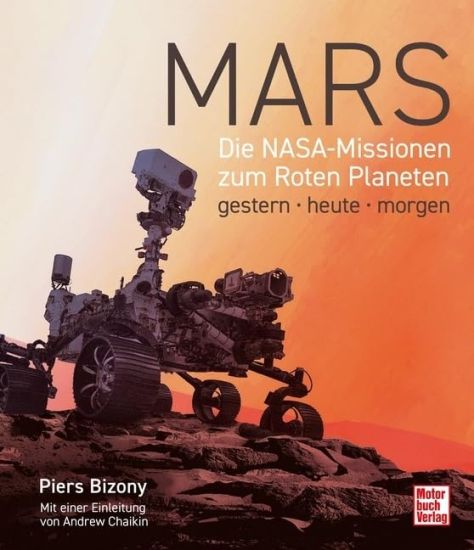
NASA Missions to Mars

NASA Missions to Mars

Piers Bizony; Andrew Chaikin

Quarto Publishing Group USA Inc
2022
sidottu
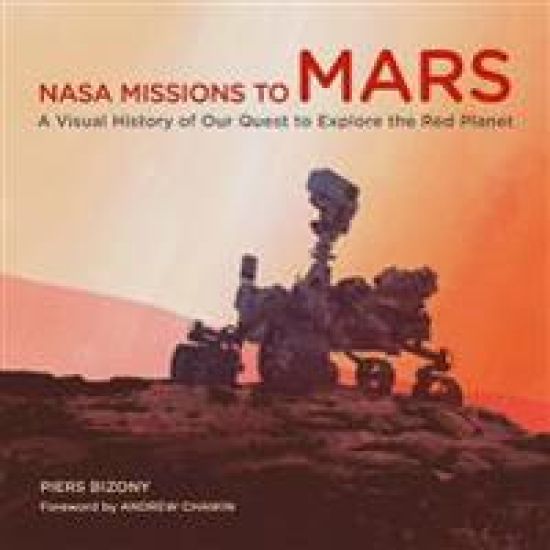
Gorgeously illustrated with NASA photography, the large-format (12 × 12 inches) NASA Missions to Mars examines everything from the first tentative steps toward the fourth planet to the 2021 landing of rover Perseverance and beyond. Space exploration has always been about pushing boundaries, but perhaps the achievement which has most piqued a sense of possibility has been the exploration of Mars. Beginning with Soviet and American flybys in the early 1960s that were part and parcel of the Space Race, acclaimed space historian Piers Bizony continues through complete coverage of the Viking 1 and 2 missions of 1975–1976. Bizony also traces NASA’s acclaimed rover program, describing the development, technologies, mission histories, and achievements of the rovers Sojourner, Opportunity, Spirit, and Curiosity—all on the 25th anniversary of their first landing. This awe-inspiring book features: An engaging and complete history of Mars explorationA treasure trove of imagery from the NASA archives, including photos and cartography beamed home, artworks and concept drawings created during development phases, as well as photography created to document testing phasesA glimpse of future plans for Mars exploration and habitationCoverage of orbiters sent to the red planet by not only NASA but by space agencies from Russia, India, Japan, Europe, China, and the UAEA two-sided 24-inch gatefold Humankind’s fascination with Mars can be traced back to prewar science fiction. While the billions of dollars and ingenious innovations have allowed us incredible views from more than 51 million miles away, no less incredible are the insights these missions, hardware, and scientists have provided into our universe—and our own planet. NASA Missions to Mars is your complete illustrated history of those efforts and a necessary volume for the bookshelf of any space enthusiast!
Art of NASA

Art of NASA

Piers Bizony

Motorbooks International
2020
sidottu
Formed in 1958, NASA has long maintained a department of visual artists to depict the concepts and technologies created in humankind’s quest to explore the final frontier. Culled from a carefully chosen reserve of approximately 3,000 files deep in the NASA archives, the 200 artworks presented in this large-format edition provide a glimpse of NASA history like no other. *A 2021 Locus Award Winner* From space suits to capsules, from landing modules to the Space Shuttle, the International Space Station, and more recent concepts for space planes, The Art of NASA presents 60 years of American space exploration in an unprecedented fashion. All the landmark early missions are represented in detail—Gemini, Mercury, Apollo—as are post-Space Race accomplishments, like the mission to Mars and other deep-space explorations. The insightful text relates the wonderful stories associated with the art. For instance, the incredibly rare early Apollo illustrations show how Apollo might have looked if the landing module had never been developed. Black-and-white Gemini drawings illustrate how the massive NASA art department did its stuff with ink pen and rubdown Letraset textures. Cross-sections of the Apollo–Soyuz Test Project docking adapter reveal Russian sensitivity about US “male” probes “penetrating” their spacecraft, thus the androgynous “adapter” now used universally in space. International Space Station cutaways show how huge the original plan was, but also what was retained. Every picture in The Art of NASA tells a special story. This collection of the rarest of the rare is not only a unique view of NASA history—it’s a fascinating look at the art of illustration, the development of now-familiar technologies, and a glimpse of what the space program might have looked like.
The Making of Stanley Kubrick's '2001: A Space Odyssey'
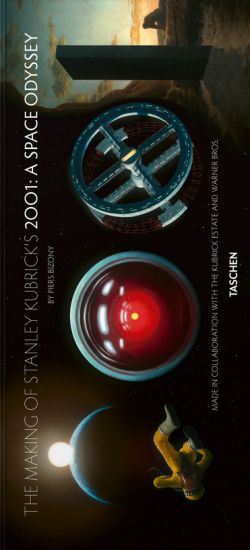
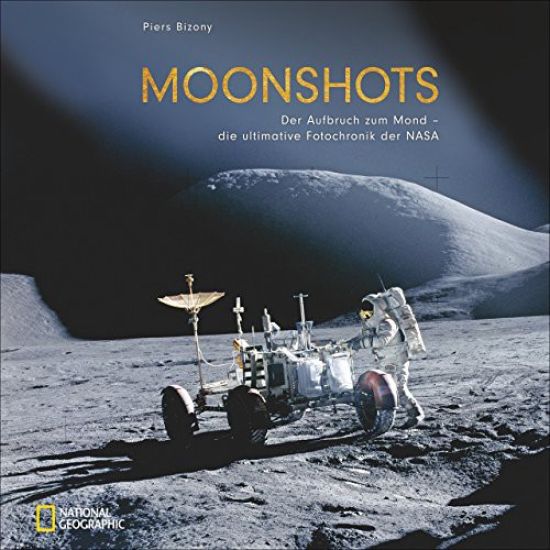
Get closer than ever to the movie that changed the movies. This behind-the-scenes spectacular of 2001: A Space Odyssey sheds light on the lead actors, senior production designers, special-effects experts and masterminds of Stanley Kubrick and Arthur C. Clarke, who together revolutionized science fiction and the art of cinema. Previously available as part of the multi-volume and instant sell-out Collector's Edition, this comprehensive visual record includes on and off set photographs, pre-production paintings, and conceptual designs from the Kubrick archives. These dazzling images offer insight both into Kubrick's meticulous directorial methods, and into the mysteries and magnetism of a film at once vast in scope and intricate in its exploration of our relationship to technology. Written and researched over several years by the outer space, special effects, and technology journalist Piers Bizony, this compendium is both an exhaustive labour of love and a monument to a masterpiece of 20th century culture.
The NASA Archives. 60 Years in Space

The NASA Archives. 60 Years in Space

Piers Bizony

Taschen GmbH
2018
sidottu
On October 1, 1958, the world’s first civilian space agency opened for business as an emergency response to the Soviet Union’s launch of Sputnik a year earlier. Within a decade, the National Aeronautics and Space Administration, universally known as NASA, had evolved from modest research teams experimenting with small converted rockets into one of the greatest technological and managerial enterprises ever known, capable of sending people to the Moon aboard gigantic rockets and of dispatching robot explorers to Venus, Mars, and worlds far beyond. In spite of occasional, tragic setbacks in NASA’s history, the Apollo lunar landing project remains a byword for American ingenuity; the winged space shuttles spearheaded the International Space Station and a dazzling array of astronomical satellites and robotic landers, and Earth observation programs have transformed our understanding of the cosmos and our home world’s fragile place within it. Throughout NASA’s 60-year history, images have played a central role. Who today is not familiar with the Hubble Space Telescope’s mesmerizing views of the universe or the pin-sharp panoramas of Mars from NASA’s surface rovers? And who could forget the photographs of the first men walking on the Moon? Researched with the collaboration of NASA, this collection gathers more than 400 historic photographs and rare concept renderings, scanned and remastered using the latest technology and reproduced in extra-large size. Texts by science and technology journalist Piers Bizony, former NASA chief historian Roger Launius, and best-selling Apollo historian Andrew Chaikin—and an extensive mission checklist documenting the key human and robotic missions—round out this comprehensive exploration of NASA, from its earliest days to its current development of new space systems for the future. The NASA Archives is more than just a fascinating pictorial history of the U. S. space program. It is also a profound meditation on why we choose to explore space and how we will carry on this grandest of all adventures in the years to come.
Atom (Icon Science)

Atom (Icon Science)

Piers Bizony; Jim Al-Khalili

Icon Books Ltd
2017
pokkari
Riddled with jealousy, rivalry, missed opportunities and moments of genius, the history of the atom's discovery is as bizarre, as capricious, and as weird as the atom itself. John Dalton gave us the first picture of the atom in the early 1800s. Almost 100 years later the young misfit New Zealander, Ernest Rutherford, showed the atom consisted mostly of space, and in doing so overturned centuries of classical science. It was a brilliant Dane, Neils Bohr, who made the next great leap - into the incredible world of quantum theory. Yet, he and a handful of other revolutionary young scientists weren't prepared for the shocks Nature had up her sleeve. This 'insightful, compelling' book (New Scientist) reveals the mind-bending discoveries that were destined to upset everything we thought we knew about reality and unleash a dangerous new force upon the world. Even today, as we peer deeper and deeper into the atom, it throws back as many questions at us as answers.
YURI's DAY: Gagarin's road to the stars

YURI's DAY: Gagarin's road to the stars

Piers Bizony; Andrew King

Createspace Independent Publishing Platform
2013
nidottu
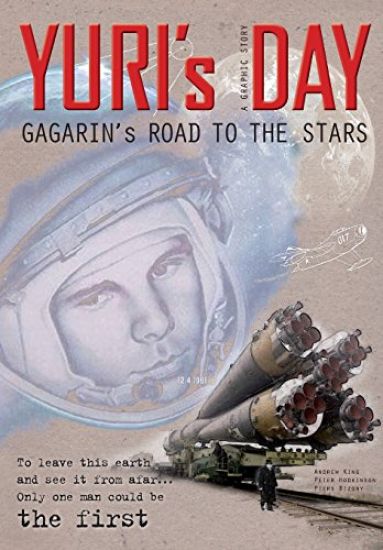
Amazing to see how much history can be distilled into the graphic novel format, a genre otherwise left to the fictional, fantastical domain. And yet this book illustrates just that - fantastical true events that led to one of mankind's greatest achievements. Yuri's Day covers much and holds no punches, opening in pre WW2 Stalinist Russia. Recognition is given to Sergei Korolev as the true hero here and his journey begins in a Siberian gulag. The influences of Konstantin Tsiolkovsky, philosophical pioneer of Russian rocket science, is also documented as well as Gagarin's childhood influences to his adult life. A well researched graphic story of a man (engineer Korolev) and his young proteg , Yuri Gagarin, altering the course of history in 1961. An extended historical essay fronts the book, with fascinating details about the origins of Yuri's adventure, and the fate of the early Soviet space programme. Stalin, World War 2, Sputnik, dog's in space, the Cold War... a 'must-have' for space and comic fans, and educational establishments too.
Starman

Starman

Jamie Doran; Piers Bizony

Bloomsbury Publishing PLC
2011
nidottu

Halvin toimitettuna 17,00 €

_______________‘Starman takes us at breakneck speed through Gagarin's strange trajectory ... Without books like these to shelter it, history is eroded by propaganda and real heroes fall victim to spin' - New Scientist‘A riveting account of Gagarin's life ... Starman brilliantly captures the atmosphere of the time' - European‘Starman was worth writing and is definitely worth reading' - Daily Telegraph_______________The definitive biography of Yuri Gagarin, re-published with new material to coincide with the fiftieth anniversary of his momentous flight into space. On April 12 1961, Yuri Gagarin became the first human to leave the Earth's atmosphere and venture into space. An icon of the 20th century, he also became a danger to himself and a threat to the Soviet state. At the age of 34, he was killed in a plane crash. Based on KGB files, restricted documents from Russian space authorities, and interviews with his friends and colleagues, this biography of the Russian cosmonaut reveals a man in turmoil: torn apart by powerful political pressures, fighting a losing battle against alcoholism and rebelling against the cruelties of a corrupt totalitarian regime.2011 marks the fiftieth anniversary of Gagarin's flight. This new edition of Starman includes a new afterword that celebrates the importance of that momentous expedition and reflects on Gagarin's legacy.
How to Build Your Own Spaceship: The Science of Personal Space Travel
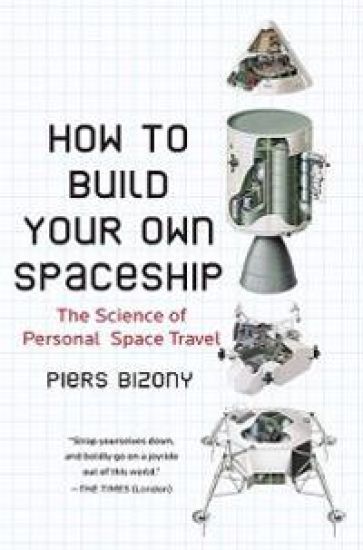
Ladies and gentlemen, start your spaceships with this book that explores an exciting new era of space travel--the perfect science gift Personal space travel is no longer the stuff of science fiction. The future is here: Civilians are launching into orbit. How to Build Your Own Spaceship takes readers on a fun and quirky trip to the forefront of commercial space travel-the latest technology, the major business players, and the personal and financial benefits that are ripe for the picking. Science-writer Piers Bizony's breadth of knowledge, quick wit, and no-nonsense explanations of the hard science in this emerging arena will satisfy even the most dedicated space fanatics. With practical advice (from picking the best jet fuel to funding your own fleet of space crafts), unbelievable space facts, and fascinating photos, Bizony's user-friendly guide to blasting off is a must-have ticket to the final frontier.
Atom

Atom

Piers Bizony; Jim Al-Khalili

Icon Books Ltd
2008
nidottu
No one ever expected the atom to be as bizarre, as capricious, and as weird as it turned out to be. Its tale is one riddled with jealousy, rivalry, missed opportunities and moments of genius. Piers Bizony tells the story of the young misfit New Zealander, Ernest Rutherford, who showed that the atom consisted mainly of empty space, a discovery that turned 200 years of classical physics on its head, and the brilliant Dane, Niels Bohr, who made the next great leap into the incredible world of quantum theory. Yet he and a handful of other Young Turks in this revolutionary new science weren't prepared for the shocks that Nature had up her sleeve. At the dawn of the Atomic Age, a dangerous new force was unleashed with terrifying speed...