
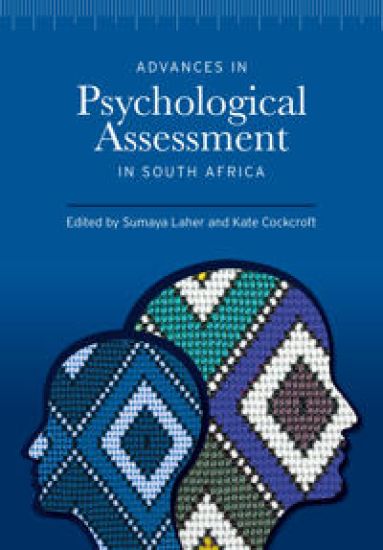
Advances in Psychological Assessment in South Africa
Zaytoon Amod; Justin August; Katherine Bain; Nabeelah Bemath; Sahba Besharati; Pieter Bronkhorst; Amanda Cromhout; Irma Eloff; Kevin Distiller; Aline Ferreira-Correia; Tharina Guse; Tasneem Hassem; Carin Hill; Nicky Israel; Anwynne Kern; Thalia Kritharis; Kobus Maree; Simangele Mayisela; Ahmed Riaz Mohamed; Kgabe Molepo; Brandon Morgan; Nadia Morton; Erica Munnik; Jan Alewyn Nel; Petrus Nel; Rabia Ruby Patel; Shazly Savahl; Pieter Schaap; Lusilda Schutte; Ann B Shuttleworth-Edwards; Linda Theron; Sharon Truter; Adri Vorster
WITS UNIVERSITY PRESS
2026
nidottu
Advances in Psychological Assessment in South Africa provides a detailed, practical and critical appraisal of the evolution of psychological testing since the publication of Psychological Assessment in South Africa: Research and Applications (2013). Editors Laher and Cockcroft once again bring together practitioners and researchers to explore new tools and methods used to evaluate mental processes and behaviours in South Africa’s unique and diverse contexts. The book covers a wide range of psychological domains, including cognitive abilities, personality traits, vocational interests and neuropsychological functions. It examines established testing methods while introducing innovative approaches, technology-driven tools and artificial intelligence-based assessments. These advancements allow for more efficient, accurate, and accessible testing, which is critical given the varied educational, cultural and linguistic backgrounds of South Africans. The country’s diversity presents both opportunities and challenges for psychological assessment. Tests must be relevant to local languages, cultures, and social realities to ensure fairness and accuracy. The book highlights efforts to develop and refine tests that reflect these needs, addressing practical issues like accessibility and ethical concerns in the aftermath of apartheid. Written for practitioners, researchers, educators, and students, the book serves as both a reflection on progress and a guide for the future. It showcases how far South Africa has come in creating reliable, culturally sensitive assessments and points to emerging trends, like the integration of Artificial Intelligence to personalise and streamline testing processes. This makes it a valuable resource for those within and beyond South Africa who are interested in understanding how psychological tools can be applied in diverse settings.