Kirjojen hintavertailu – 12 859 826 kirjaa ja 27 kauppaa

Kirjailija

Pieter Spierenburg

Kirjat ja teokset yhdessä paikassa: 9 kirjaa, julkaisuja vuosilta 2004–2021, suosituimpiin kuuluu Violence and Punishment. Vertaile teosten hintoja ja tarkista saatavuus suomalaisista kirjakaupoista.

9 kirjaa

Kirjojen julkaisuvuodet: 2004–2021.

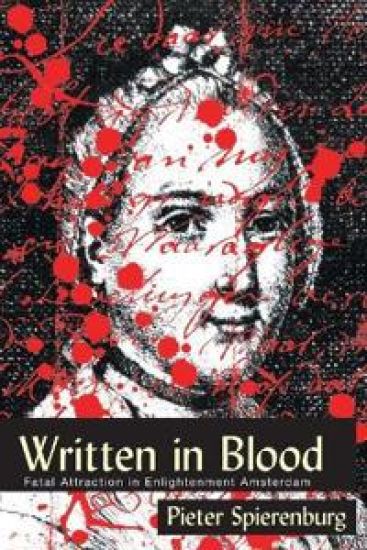
Written in Blood

Written in Blood

Pieter Spierenburg

Ohio State University Press
2021
pokkari
Pieter Spierenburg narrates two sensational murder cases among intimates in eighteenth-century Amsterdam. The cases recounted here both resulted from fatal attraction. They represented the darker side of the eighteenth-century revolution in love. This period witnessed great cultural changes affecting personal relationships and emotions. The new ideal of love demanded that couples spend much of their time together and explore each other's feelings. But this new ideal was meant for married and engaged couples only; for others it meant disaster. Love gone wrong was the theme of the sentimental novels of the age, but it also happened to real people, with fatal consequences. Written in Blood traces the lives and ultimate fate of Nathaniel Donker, who, together with the help of his mistress, brutally murders and dismembers the wife. The second tale focuses on J. B. F. van Gogh, who falls in love with a prostitute; she later rejects him and, when a letter written with his own blood fails to change her mind, he stabs her to death in a fit of passionate rage. In Written in Blood, the reader gets two stories for the price of one. And, whereas earlier microhistories have been situated in a village or a small town, the scene here is Amsterdam and its canals. Spierenburg reveals in detail what concepts like honor and gender roles came down to in individual lives. He also shows that these murders produced a strange mixture of modern romantic feelings and traditional notions of honor and shame.

Violence and Punishment

Violence and Punishment

Pieter Spierenburg

Polity Press
2012
nidottu

Halvin toimitettuna 30,20 €

This innovative book tells the fascinating tale of the long histories of violence, punishment, and the human body, and how they are all connected. Taking the decline of violence and the transformation of punishment as its guiding themes, the book highlights key dynamics of historical and social change, and charts how a refinement and civilizing of manners, and new forms of celebration and festival, accompanied the decline of violence. Pieter Spierenburg, a leading figure in historical criminology, skillfully extends his view over three continents, back to the middle ages and even beyond to the Stone Age. Ranging along the way from murder to etiquette, from social control to popular culture, from religion to death, and from honor to prisons, every chapter creatively uses the theories of Norbert Elias, while also engaging with the work of Foucault and Durkheim. The scope and rigor of the analysis will strongly interest scholars of criminology, history, and sociology, while the accessible style and the intriguing stories on which the book builds will appeal to anyone interested in the history of violence and punishment in civilization.
Violence and Punishment

Violence and Punishment

Pieter Spierenburg

Polity Press
2012
sidottu
This innovative book tells the fascinating tale of the long histories of violence, punishment, and the human body, and how they are all connected. Taking the decline of violence and the transformation of punishment as its guiding themes, the book highlights key dynamics of historical and social change, and charts how a refinement and civilizing of manners, and new forms of celebration and festival, accompanied the decline of violence. Pieter Spierenburg, a leading figure in historical criminology, skillfully extends his view over three continents, back to the middle ages and even beyond to the Stone Age. Ranging along the way from murder to etiquette, from social control to popular culture, from religion to death, and from honor to prisons, every chapter creatively uses the theories of Norbert Elias, while also engaging with the work of Foucault and Durkheim. The scope and rigor of the analysis will strongly interest scholars of criminology, history, and sociology, while the accessible style and the intriguing stories on which the book builds will appeal to anyone interested in the history of violence and punishment in civilization.
The Spectacle of Suffering

The Spectacle of Suffering

Pieter Spierenburg

Cambridge University Press
2008
pokkari
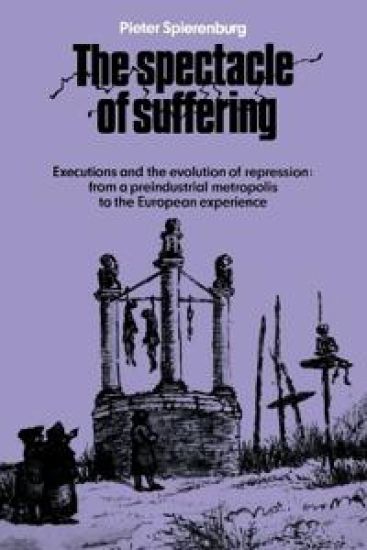
Present-day unease about the treatment of lawbreakers has deep historical roots. Pieter Spierenburg traces the long period of evolution that gave rise to the modern debate about punishment, and relates it to the development of Western European society. He argues that two elements, the public character of punishment and its infliction of physical suffering, were originally at the heart of the penal system. From the sixteenth century onwards, however, these elements began to decline. Spierenburg explains that this development reflected a wider change of attitudes which, in turn, was related to changes in society at large. The book deals successively with each of the parties involved in public executions: the hangman, the magistrates, the crowd, and the victim. Among the themes dicussed are the infamous reputation of the excutioner, the functions of ceremonial, and the social background of those about to suffer.
A History of Murder

A History of Murder

Pieter Spierenburg

Polity Press
2008
sidottu
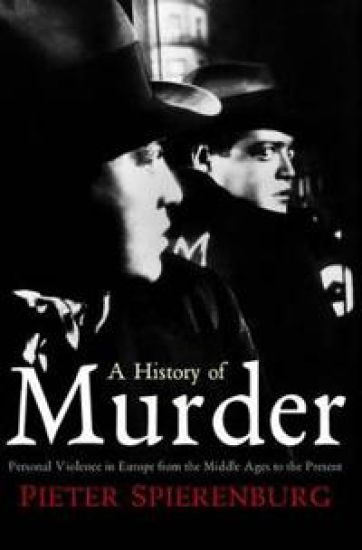
This book offers a fascinating and insightful overview of seven centuries of murder in Europe. It tells the story of the changing face of violence and documents the long-term decline in the incidence of homicide. From medieval vendettas to stylised duels, from the crime passionel of the modern period right up to recent public anxieties about serial killings and underworld assassinations, the book offers a richly illustrated account of murder’s metamorphoses. In this original and compelling contribution, Spierenburg sheds new light on several important themes. He looks, for example, at the transformation of homicide from a private matter, followed by revenge or reconciliation, into a public crime, always subject to state intervention. Combining statistical data with a cultural approach, he demonstrates the crucial role gender played in the spiritualisation of male honour and the subsequent reduction of male-on-male aggression, as well as offering a comparative view of how different social classes practised and reacted to violence. This authoritative study will be of great value to students and scholars of the history of crime and violence, criminology and the sociology of violence. At a time when murder rates are rising and public fears about violent crime are escalating, this book will also interest the general reader intrigued by how our relationship with murder reached this point.
A History of Murder

A History of Murder

Pieter Spierenburg

Polity Press
2008
nidottu

Halvin toimitettuna 32,90 €

This book offers a fascinating and insightful overview of seven centuries of murder in Europe. It tells the story of the changing face of violence and documents the long-term decline in the incidence of homicide. From medieval vendettas to stylised duels, from the crime passionel of the modern period right up to recent public anxieties about serial killings and underworld assassinations, the book offers a richly illustrated account of murder’s metamorphoses. In this original and compelling contribution, Spierenburg sheds new light on several important themes. He looks, for example, at the transformation of homicide from a private matter, followed by revenge or reconciliation, into a public crime, always subject to state intervention. Combining statistical data with a cultural approach, he demonstrates the crucial role gender played in the spiritualisation of male honour and the subsequent reduction of male-on-male aggression, as well as offering a comparative view of how different social classes practised and reacted to violence. This authoritative study will be of great value to students and scholars of the history of crime and violence, criminology and the sociology of violence. At a time when murder rates are rising and public fears about violent crime are escalating, this book will also interest the general reader intrigued by how our relationship with murder reached this point.
The Prison Experience

The Prison Experience

Pieter Spierenburg

Amsterdam University Press
2007
nidottu
The prison occupies a central position in the penal systems of modern countries. Many scholars believed –before the appearance of this book- that imprisonment did not become a major judicial sanction until the nineteenth century and the correction that Pieter Spierenburg provides is still pertinent today. First as a disciplinary institution and later as a penal option, the prison has played an important role in European societies from the late sixteenth century onward. Spierenburg traces the evolution of the prison during the early moden period, with particular emphasis on the prisons of the Netherlands, Germany, and France, but with reference to all of Europe. Spierenburg looks at the daily lives of inmates, a focus that is unusual in historical studies of prisons. He also analyzes the long-term nature of change in prisons and the conceptions of prisoners as persons who had broken away from their family bonds. His work adds to our understanding of social change and daily life in early modern Europe and will appeal to historians, sociologists, and criminologists.
Social Control in Europe

Social Control in Europe

Herman Roodenburg; Pieter Spierenburg

OHIO STATE UNIVERSITY PRESS
2004
sidottu
This first volume of a two-volume collection of essays provides a comprehensive examination of the idea of social control in the history of Europe. The uniqueness of these volumes lies in two main areas. First, the contributors compare methods of social control on many levels, from police to shaming, church to guilds. Second, they look at these formal and informal institutions as two-way processes. Unlike many studies of social control in the past, the scholars here examine how individuals and groups that are being controlled necessarily participate in and shape the manner in which they are regulated. Hardly passive victims of discipline and control, these folks instead claimed agency in that process, accepting and resisting-and thus molding-the controls under which they functioned. The essays in this volume focus on the interplay of ecclesiastical institutions and the emerging states, examining discipline from a bottom-up perspective.