Kirjojen hintavertailu – 12 903 725 kirjaa ja 27 kauppaa

Kirjailija

Pietro Pucci

Kirjat ja teokset yhdessä paikassa: 6 kirjaa, julkaisuja vuosilta 1997–2022, suosituimpiin kuuluu La Parole Au Miroir: Dans La Poesie Grecque Archaique Et Classique. Vertaile teosten hintoja ja tarkista saatavuus suomalaisista kirjakaupoista.

6 kirjaa

Kirjojen julkaisuvuodet: 1997–2022.

La Parole Au Miroir: Dans La Poesie Grecque Archaique Et Classique

La Parole Au Miroir: Dans La Poesie Grecque Archaique Et Classique

Donatien Grau; Pietro Pucci

Les Belles Lettres
2022
nidottu
Dans cette enquete au travers de la poesie grecque archaique et classique, d'Homere a Platon, nous partons a la recherche des traces de ces moments originels de la creation occidentale ou la poesie, s'enoncant, se met en scene. On y decouvre des figures de poetes des les origines, une incarnation des plus profonds questionnements createurs par les figures des muses et une parole poetique qui est en permanence a l'interface entre divinites et humanite, ou les discours sont places les uns contre les autres, dans leurs raisonnements et leurs contradictions. La poesie s'affirme comme l'espace commun du sacre et du profane, l'emplacement d'une parole autre, toujours mise en scene. L'ensemble du corpus canonique grec - celui-la meme auquel est attribue le fondement de notre civilisation - est l'objet de cet examen: l'Iliade et l'Odyssee, la Theogonie, les Hymnes homeriques, la poesie lyrique, les trois grands tragiques, Eschyle, Sophocle, Euripide, apres eux le comique Aristophane, donnent a voir les oscillations d'une parole qui integre les conditions de son enonciation et les joue dans la dramatisation de son ambition. Platon assume son role de sceau des poetes. La reference a des auteurs anterieurs, deja explicite dans la poesie lyrique, est omnipresente. L'intertextualite est antique. En prenant au serieux les textes et leurs variations, c'est a la substance meme de cette parole poetique qu'il nous est donne acces.
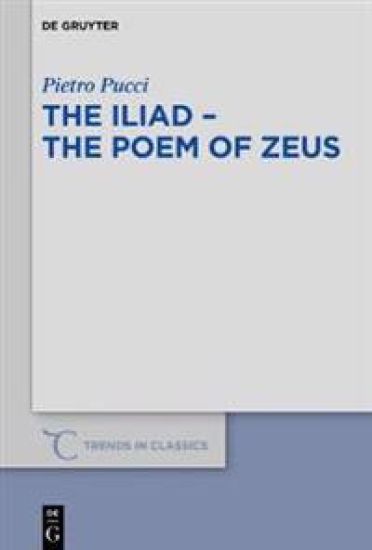
The Iliad – the Poem of Zeus

The Iliad – the Poem of Zeus

Pietro Pucci

De Gruyter
2020
isokokoinen pokkari
The scholarly tendency has too often weakened the conspicuous novelty and originality that characterizes Zeus in the Iliad. This book remedies that tendency and depicts the extraordinary figure of Zeus: lord (or impersonation) of lightning and thunders, exclusive master of human destiny --and therefore of human history—and chief of Olympus. This unique personality endowed with polyvalent powers represents itself the conflict between superhuman moral indifference for mortal destiny and anthropomorphic feelings for human beings: he both preordains the death of his son and weeps on his demise. Zeus embodies the Mysterium tremendum. This new Zeus cannot glance at the past image that the tradition painted of him without smiling at its simplicity and disrespect: a parodic or amusing tone surrounds him as he refers or is referred to aspects of his traditional image. The great characters of the Poem give two wise responses to Zeus, lord of destiny: "heroic death" or serene acceptance. We, the readers, are expected to react in the same way.
The Iliad – the Poem of Zeus

The Iliad – the Poem of Zeus

Pietro Pucci

De Gruyter
2018
sidottu
The scholarly tendency has too often weakened the conspicuous novelty and originality that characterizes Zeus in the Iliad. This book remedies that tendency and depicts the extraordinary figure of Zeus: lord (or impersonation) of lightning and thunders, exclusive master of human destiny --and therefore of human history—and chief of Olympus. This unique personality endowed with polyvalent powers represents itself the conflict between superhuman moral indifference for mortal destiny and anthropomorphic feelings for human beings: he both preordains the death of his son and weeps on his demise. Zeus embodies the Mysterium tremendum. This new Zeus cannot glance at the past image that the tradition painted of him without smiling at its simplicity and disrespect: a parodic or amusing tone surrounds him as he refers or is referred to aspects of his traditional image. The great characters of the Poem give two wise responses to Zeus, lord of destiny: "heroic death" or serene acceptance. We, the readers, are expected to react in the same way.
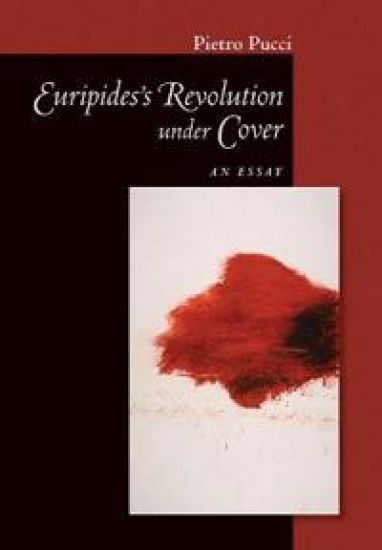
Euripides' Revolution Under Cover

Euripides' Revolution Under Cover

Pietro Pucci

Cornell University Press
2016
sidottu
In this provocative book, Pietro Pucci explores what he sees as Euripides's revolutionary literary art. While scholars have long pointed to subversive elements in Euripides's plays, Pucci goes a step further in identifying a Euripidean program of enlightened thought enacted through carefully wrought textual strategies. The driving force behind this program is Euripides's desire to subvert the traditional anthropomorphic view of the Greek gods—a belief system that in his view strips human beings of their independence and ability to act wisely and justly. Instead of fatuous religious beliefs, Athenians need the wisdom and the strength to navigate the challenges and difficulties of life. Throughout his lifetime, Euripides found himself the target of intense criticism and ridicule. He was accused of promoting new ideas that were considered destructive. Like his contemporary, Socrates, he was considered a corrupting influence. No wonder, then, that Euripides had to carry out his revolution "under cover." Pucci lays out the various ways the playwright skillfully inserted his philosophical principles into the text through innovative strategies of plot development, language and composition, and production techniques that subverted the traditionally staged anthropomorphic gods.
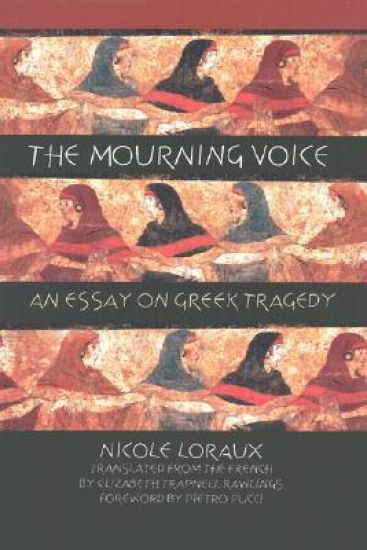
The Mourning Voice

The Mourning Voice

Nicole Loraux; Pietro Pucci

Cornell University Press
2002
sidottu
In The Mourning Voice, Nicole Loraux presents a radical challenge to what has become the dominant view of tragedy in recent years: that tragedy is primarily a civic phenomenon, infused with Athenian political ideology, which envisions its spectators first and foremost as citizens, members of the political collective. Instead, Loraux maintains, the spectator addressed by tragedy is the individual defined primarily in terms of his or her humanity, rather than in terms of affiliation with a political group. The plays, she says, involve the spectators in the emotional expressiveness of tragic suffering, thereby creating a theatrical identity. Aroused by the experience of suffering, the audience is reminded that it is witnessing a theatrical representation of the instability of the human condition—a state that Loraux asserts tragedy is uniquely suited to convey.
The Song of the Sirens and Other Essays

The Song of the Sirens and Other Essays

Pietro Pucci

Rowman Littlefield
1997
nidottu
In this collection of his essays on Homer, some new and some appearing for the first time in English, the distinguished scholar Pietro Pucci examines the linguistic and rhetorical features of the poet's works. Arguing that there can be no purely historical interpretation, given that the parameters of interpretation are themselves historically determined, Pucci focuses instead on two features of Homer's rhetoric: repetition of expression (formulae) and its effects on meaning, and the issue of intertextuality.