Kirjailija
Pink Dandelion
Kirjat ja teokset yhdessä paikassa: 14 kirjaa, julkaisuja vuosilta 2004–2019, suosituimpiin kuuluu A Convergent Model of Renewal. Vertaile teosten hintoja ja tarkista saatavuus suomalaisista kirjakaupoista.
14 kirjaa
Kirjojen julkaisuvuodet: 2004–2019.
This book explores the inter-relationship between religious groups and wider society and examines the way religious groups change in relation to societal norms, potentially to the point of undergoing processes of ‘internal secularisation’ within secular and secularist cultures. Received sociological wisdom suggests that over time religious groups moderate their claims. This comes with the potential loss of new adherents, for theorists of secularisation suggest unique or universal, rather than moderate, truth claims appear attractive to would-be recruits. At the same time, religious groups need to appear equivalent, in terms of harmlessness, to state-sanctioned religious expression in order to secure rights. Thus, religious organisations face a perpetual conundrum. Using British Quakers as a case study as they moved from a counter-cultural group to an accepted and accepting part of twentieth- and twenty-first-century society, the author builds on models of religion and non-religion in terms of flows and explores the consequences of religious assimilation when the process of constructing both distinctive appeal and ‘harmlessness’ in pursuit of rights is played out in a secular culture. A major contribution to the sociology of religion, The Cultivation of Conformity presents a new theory of internal secularisation as the ultimate stage of the cultivation of conformity, and a model of the way sects and society inter-relate.

Towards Tragedy/Reclaiming Hope
Pink Dandelion; Douglas Gwyn; Rachel Muers; Brian Phillips
Routledge
2018
nidottu
The 'death of tragedy' in the modern era has been proposed and debated in recent years, largely in terms of literature and western culture in general. Today, any catastrophe or misadventure is likely to be labeled a 'tragedy', without any inference of a larger, transcendent horizon or providential design that the word once conveyed. This book offers new perspectives on the idea of the 'death of tragedy', taking England and the Religious Society of Friends (Quakers) in particular as a case study. Chapters focus on the origins of tragedy in ancient Greece, gospel and tragedy, the beginnings of the Quaker movement in seventeenth-century England, apocalyptic versus secularized experiences of time, Edwardian Quaker triumphalism, the search for English identity in postcolonial Britain, liberal Quakerism at the end of the twentieth century, and the promise and dilemma of postmodernity. The different disciplinary perspectives of the contributing authors bring literature, history, theology and sociology into a creative and revealing conversation. A Foreword by Richard Fenn introduces the book with an original and provocative meditation on tragedy and time.
We can travel more than we have ever had the ability to before. Indeed, travel is now part of everyday life for most of us, whether to or for work, or on holiday. This book looks at how we enhance the spiritual dimension of our lives as we constantly head off to somewhere else. How has the experience of travel changed? What are our motivations? How do we nurture spirituality as we seek to overcome the discomforts of mass transit? What have the modern means of motion done to how we relate to those we travel with and amongst? How are we to travel? The potential to learn, both in head and heart ways, from our mobility has never been greater. This book offers directions we may take to reclaim and rediscover an attitude to travel that builds community, and through that enhances our sense of Spirit at work in our lives and in the world.
Historical Dictionary of the Friends (Quakers)
Margery Post Abbott; Mary Ellen Chijioke; Pink Dandelion; John William Oliver
Scarecrow Press
2011
sidottu
The modern reputation of Friends in the United States and Europe is grounded in the relief work they have conducted in the presence and aftermath of war. Friends (also known as Quakers) have coordinated the feeding and evacuation of children from war zones around the world. They have helped displaced persons without regard to politics. They have engaged in the relief of suffering in places as far-flung as Ireland, France, Germany, Ethiopia, Egypt, China, and India. Their work was acknowledged with the award of the Nobel Peace Prize in 1947 to the American Friends Service Committee (AFSC) and the Friends Service Council of Great Britain. More often, however, Quakers live, worship, and work quietly, without seeking public attention for themselves. Now, the Friends are a truly worldwide body and are recognized by their Christ-centered message of integrity and simplicity, as well as their nonviolent stance and affirmation of the belief that all people—women as well as men—may be called to the ministry. The expanded second edition of the Historical Dictionary of the Friends (Quakers) relates the history of the Friends through a chronology, an introductory essay, an extensive bibliography, and over 700 cross-referenced dictionary entries on concepts, significant figures, places, activities, and periods. This book is an excellent access point for scholars and students, who will find the overviews and sources for further research provided by this book to be enormously helpful.
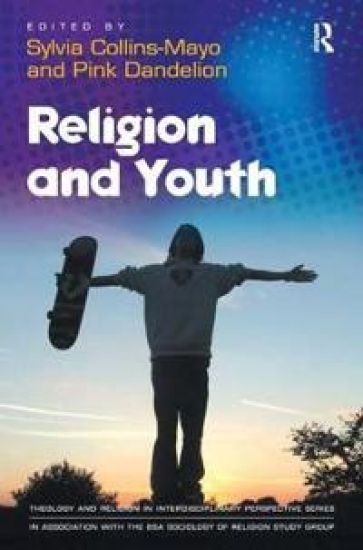
What is the future of religion given the responses of young people? What impact do existing religious forms have on youth? What kind of spirituality and religion are young people creating for themselves? Religion and Youth presents an accessible guide to the key issues in the study of youth and religion, including methodological perspectives. It provides a key teaching text in these areas for undergraduates, and a book of rigorous scholarship for postgraduates, academics and practitioners. Offering the first comprehensive international perspective on the sociology of youth and religion, this book reveals key geographical and organisational variables as well as the complexities of the engagement between youth and religion. The book is divided into six parts organised around central themes: Generation X and their legacy; The Big Picture - surveys of belief and practice in the USA, UK and Australia; Expression - how young people construct and live out their religion and spirituality; Identity - the role of religion in shaping young people's sense of self and social belonging; Transmission - passing on the faith (or not); Researching Youth Religion - debates, issues and techniques in researching young people's religion and spirituality. James A. Beckford writes the Foreword and Linda Woodhead the Epilogue.
The Quakers are a fascinating religious group both in their origins and in the variety of reinterpretations of the faith since. Emerging from the social unrest of the English civil war, the Quakers have gone on to have an influence way beyond their numbers: be it their continued stance against war or their pioneering work against slavery. At the same time, Quakers maintain a distinctive worship method to achieve the direct encounter with God which has been at the heart of the movement since its beginning. This book charts the history of Quakerism and its present-day diversity, and outlines its approach to worship, belief, theology and language, and ecumenism. ABOUT THE SERIES: The Very Short Introductions series from Oxford University Press contains hundreds of titles in almost every subject area. These pocket-sized books are the perfect way to get ahead in a new subject quickly. Our expert authors combine facts, analysis, perspective, new ideas, and enthusiasm to make interesting and challenging topics highly readable.
This is a comprehensive introduction to Quakerism which balances a history of the theology of the Quakers or Friends with an overview of present day practice. It charts the growth of the Quaker movement through the 1650s and 1660s, its different theological emphasis in the eighteenth century, and the schisms of the nineteenth century which resulted in the range of Quaker traditions found around the world today. The book focuses in particular on notions of 'endtime', 'spiritual intimacy', and what counts as 'the world' as key areas of theological change. The second half of the book uses extracts from Quaker texts to highlight differences in belief and approach between the different traditions and analyses their future prospects. The book is generously illustrated and includes numerous diagrams to help the reader. Undergraduate and graduate students will find this an essential introduction to the Quaker movement.
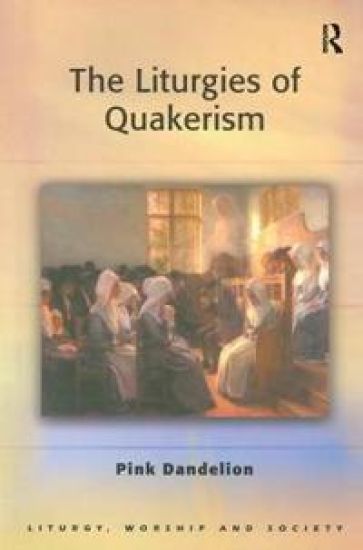
The Liturgies of Quakerism explores the nature of liturgy within a form of worship based in silence. Tracing the original seventeenth century Quakers' understanding of the 'liturgy of silence', and what for them replaced the outward forms used in other parts of Christianity, this book explains how early Quaker understandings of 'time', 'history', and 'apocalyptic' led to an inward liturgical form. The practices and understanding of twenty-first century Liberal Quakers are explored, showing that these contemporary Quakers maintain the same kind of liturgical form as their ancestors and yet understand it in a very different way. Breaking new ground in the study of Quaker liturgy, this book contrasts the two periods and looks at some of the consequences for the study of liturgy in general, and Quakerism in particular. It also explores evangelical Quaker understandings of liturgy.
Towards Tragedy/Reclaiming Hope
Pink Dandelion; Douglas Gwyn; Rachel Muers; Brian Phillips
Ashgate Publishing Limited
2004
sidottu
The 'death of tragedy' in the modern era has been proposed and debated in recent years, largely in terms of literature and western culture in general. Today, any catastrophe or misadventure is likely to be labeled a 'tragedy', without any inference of a larger, transcendent horizon or providential design that the word once conveyed. This book offers new perspectives on the idea of the 'death of tragedy', taking England and the Religious Society of Friends (Quakers) in particular as a case study. Chapters focus on the origins of tragedy in ancient Greece, gospel and tragedy, the beginnings of the Quaker movement in seventeenth-century England, apocalyptic versus secularized experiences of time, Edwardian Quaker triumphalism, the search for English identity in postcolonial Britain, liberal Quakerism at the end of the twentieth century, and the promise and dilemma of postmodernity. The different disciplinary perspectives of the contributing authors bring literature, history, theology and sociology into a creative and revealing conversation. A Foreword by Richard Fenn introduces the book with an original and provocative meditation on tragedy and time.