Kirjojen hintavertailu – 12 903 725 kirjaa ja 27 kauppaa

Kirjailija

Pinki Ramaul

Kirjat ja teokset yhdessä paikassa: 5 kirjaa, julkaisuja vuosilta 2018–2019, suosituimpiin kuuluu Himachal General Knowledge Xpress. Vertaile teosten hintoja ja tarkista saatavuus suomalaisista kirjakaupoista.

5 kirjaa

Kirjojen julkaisuvuodet: 2018–2019.

Himachal General Knowledge Xpress

Himachal General Knowledge Xpress

Pinki Ramaul; Vivek Negi; Nalin Kumar Ramaul

Nik Nos, Paonta Sahib, Hp, India
2019
nidottu
About the Book: The book Himachal General Knowledge Xpress has been written keeping in mind the aspirants of HP State Civil Services (HPAS) and other state-level competitive examinations conducted by HPPSC and HPSSB as the target reader. The book provides a mini-encyclopaedic overview of the state of Himachal Pradesh and is an earnest attempt to provide the competing youth a comprehensive study material containing concise authentic information about the varied facets including history, geography, economy, culture and politics of Himachal Pradesh. The information has been well-researched and supplemented with data, figures and maps. The authors have used their personal successful experience in competitive examinations and the scientific analysis of examination pattern for preparing an authentic and updated book on Himachal Pradesh General Knowledge. The Authors: Dr. Nalin Kumar Ramaul: Presently working in a Government College in Himachal, was selected in the Civil Services Examination 2002 conducted by UPSC and ranked 161 but did not join. Qualified Civil Services Examination (Written Prelim & Main) thrice. Awarded UGC Junior Research Fellowship. Published research papers in reputed journals of Springer and Sage, published five books, completed four research projects, organised three national seminars and three training programmes. Mrs. Pinki Ramaul: Free-lance journalist writing articles in The Tribune, The Times of India, Divya Himachal, and Himachal This Week. Published research papers in reputed journals of Springer and Sage, and published five books. Her blog is: http: //ramaul.blogspot.com/ Dr. Vivek Negi: Presently working in a Government College in Himachal. Expertise in studies in Vivekananda. Published two books. Eighteen years of teaching and research experience. Chapters: The book is well-structured with content presented in a lucid manner and arranged in appropriate chapters. The chapter on History of Himachal Pradesh has explored the history varying from early history of hill states to British rule and the popular uprisings and social reform movement. The contemporary post-Independence administrative and constitutional history is also elaborated. The chapter on Geography of Himachal Pradesh provides insight into the unique geographical features, lakes, glaciers, rivers, forest, wildlife etc. of Himachal Pradesh including various government programmes on environment. The chapter on Economy of Himachal Pradesh enumerates the economic situation of the hill state beginning with economic history of the state. The demographic features are given in simple easy to comprehend style. The structural features of the economy and sector-wise analysis is presented in a concise manner. The excellent socio-economic achievements of the state have been highlighted and explained. The abundant hydropower potential of the state is emphasised. The situation of the state finances is also revealed and updated. Thus, the book adequately and appropriately covers the economy part. Here it is pertinent to mention that one of the authors Dr. Nalin Kumar Ramaul had qualified Indian Economic Services (Written) Examination 1998 and is teaching Economics subject in Government College. Since the state of Himachal Pradesh emerged from the integration of several princely hill states, the history of each district is unique and therefore each district has been devoted a separate chapter. The Shimla town, the famous summer capital of the British India Government, has been given ample space with a separate chapter, keeping in view its vast political and historical importance, not only for the state but for the entire nation. The chapter on Art and Culture covers diverse topics including Pahari music and dance, paintings, architecture, sculptures, fairs and festivals, books, castes and communities. The last chapter covers miscellaneous information about the state including current events and eminent personalities of Himachal.

Science Quiz: (national Children's Science Congress)

Science Quiz: (national Children's Science Congress)

Pinki Ramaul; Nalin Kumar Ramaul

Independently Published
2018
nidottu
About the Book: The book "Science Quiz" emphasises on the objective and precise knowledge concentrating on the Science Quiz contests conducted under the National Children's Science Congress every year from block level to the state and national level. The science quiz is conducted under various categories and the book caters to all the three categories, viz., junior, senior, and senior secondary levels. The book intends to supplement the science text books for preparation for quiz competition under National Children's Science Congress. About the Authors: Dr. Nalin Kumar Ramaul has published research papers in reputed journals of Springer and Sage Publications, published three books, completed four research projects, organised three National Seminars, and coordinated three Research Methodology Workshops for research scholars and faculty. Presently working in a Government College in Himachal Pradesh, he had qualified Civil Services Examinations conducted by UPSC. Mrs. Pinki Ramaul, former Principal at Trivenee School of Excellence Paonta Sahib, is a free-lance journalist writing articles in The Tribune, The Times of India, Divya Himachal, and Himachal This Week. She has already published three books. Blog: http: //ramaul.blogspot.com/
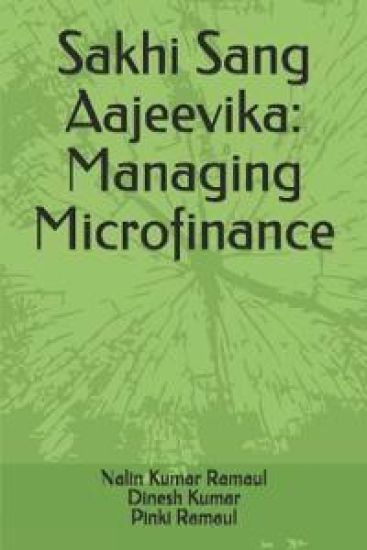
Sakhi Sang Aajeevika

Sakhi Sang Aajeevika

Dinesh Kumar; Pinki Ramaul; Nalin Kumar Ramaul

Independently Published
2018
pokkari
The book "Sakhi Sang Aajeevika: Managing Microfinance" is based on the research study sponsored by the Indian Council of Social Science Research (ICSSR), Ministry of Human Resource Development, Government of India, New Delhi, entitled "Impact of Women Self Help Groups (WSHG) formed under Swarnajayanti Gram Swarojgar Yojana (SGSY) In Himachal Pradesh". The analysis of the role of women self-help groups and micro-finance in women empowerment is important for devising appropriate policy interventions for women empowerment. Swarnajayanti Gram Swarojgar Yojana (SGSY) was a major scheme to bring the assisted rural poor families (swarojgaris) above the poverty line by assisting them to take up income generating economic activities through a mix of bank credit and government subsidy. The Ministry of Rural Development, Government of India has restructured the Swarnajayanti Gram Swarojgar Yojana (SGSY) as National Rural Livelihood Mission (NRLM), subsequently renamed as "Aajeevika". The book attempts an evaluation of the scheme in the Himalayan hill state of Himachal Pradesh on the basis of primary survey conducted during the research study in three districts - Kangra selected as the best performing district, Sirmaur as the poor performing district and Kinnaur as a tribal district. The total sample consisted of 270 women - 180 SGSY Women Self-Help Group (WSHG) members and 60 non-SHG members and 30 ex-members. Besides, 90 spouses of WSHG members were also surveyed. Thus, the total sample consisted of 360 survey respondents. The book builds on the growing body of research on the topic, blends academic and practitioner perspective and experiences, and encourages further exploration and dialogue on the subject. The research has important implications for bank managers, women micro-entrepreneurs and policy makers. There is a view that the microfinance can, at minimum, serve as a quick way to deliver finance in the interim; the idea is to then graduate microfinance clients to formal finance institutions where they can access standard 'individual' loans, possibly on a fully commercial basis. The notion of graduation should be built explicitly into the design of the scheme. The services and products need to be designed appropriately for small clients. Over the longer term, therefore, efforts to promote microfinance should go hand-in-hand with efforts to make the formal sector better at "banking the poor", and the government can play a critical role in this. The SHG movement must aim for involving every woman in rural India and link her to the micro credit and micro enterprise campaigns under SGSY/NRLM scheme. SHGs faced the problem of inadequate loan amount. The loan amounts given to the members of SHGs under SGSY/NRLM are very low. The inability of the small loans to lift people out of poverty has been a key drawback. Enterprise activities require higher outlays that could generate a poverty-alleviating income. Loan amount should be increased to the extent that they can take up an income generating activity sustainably. With the demonetisation and promotion of cashless transactions, the use of technology should be incorporated in the microfinance scheme also. Moreover, the SHGs can also be employed as business correspondents (BCs) and business facilitators (BFs) by the banks to accelerate financial inclusion and to facilitate micro-finance operations in remote areas. Our study tends to concur with other literature on the topic, which suggests that the government policies have been sub-optimal. Rather, the government policies need to be designed and implemented with care through participative development process and in a manner that will ensure that their positive impact will considerably exceed the costs and limit any potential negative side-effect. SHG movement should be recognised a people's movement and the role of government should be only to facilitate and create a supportive environment, rather than manage the movement directly.
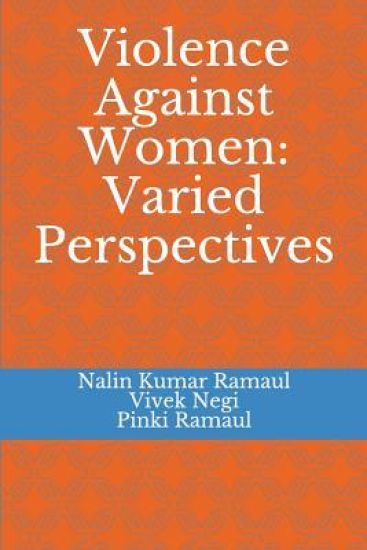
Violence Against Women: Varied Perspectives

Violence Against Women: Varied Perspectives

Vivek Negi; Pinki Ramaul; Nalin Kumar Ramaul

Independently Published
2018
nidottu
The book "Violence Against Women: Varied Perspectives" is an assorted conglomeration of research papers read and debated upon in a National Seminar on Violence against Women at Himachal Pradesh University, Shimla, sponsored by the Indian Council of Social Science Research (ICSSR), Ministry of Human Resource Development, Government of India, New Delhi. The national seminar was addressed by Hon'ble Justice A. M. Khanwilkar, Chief Justice, High Court of Himachal Pradesh, and presently Justice of the Supreme Court of India; Smt. Dhaneshwari Thakur, Chairperson, H. P. State Commission for Women; Sh. Shrawan Dogra, Advocate General, H. P.; and Prof. A. D. N. Bajpai, Vice-Chancellor of H. P. University Shimla on August 21 and 22, 2013. The book is an assortation of twenty-eight best research papers out of the two hundred seventy presented. The book provides us an insight into the national scenario regarding violence women are facing, whether domestic, at workplace, communal or perpetuated. Right from the case study of pains and sorrows of women of Kashmiri Pandits, to forced prostitution and trafficking of women in Bhubaneswar in Odisha, to pornographic commodification of women, to the domestic violence in Imphal in Manipur, and to the role of NGOs in preventing violence against women in Banaras in Uttar Pradesh, this book represents India in microcosm witnessing the dynamics of violence against women. The book builds up the vivacity of the reader by focussing not only on the issues and intricacies of gender violence but the needs to modify legal regime; good governance preventing brutal business of trafficking; and the state responsibilities in protection of women's human rights. Whereas, poverty and hunger emerge as reasons for flesh trade, legalising voluntary prostitution as a solution to curb violence against women also adds to the variegated approach of this book. The varied perspectives as mentioned in the book find their presentation incomplete if cost estimation of violence against women stands uncalculated. The editors as authors in their paper have attempted to investigate the methodological aspects of estimating the costs of violence against women on the victim, family, and the State. It is the constellation of renowned and established authors which makes this book enriched with multitudes of concepts. Not only do the authors belong to different universities but also different genres. Whereas we have Prof. Chhaya Datar, Professor and Head (Retired) from Centre for Women's Studies at the Tata Institute of Social Sciences (TISS), Mumbai; we have Dr. Pamela Singla, Professor, Department of Social Work and Dr. Manjeet Bhatia, Women Studies and Development Centre, University of Delhi too. Their expertise on the subject is of encyclopaedic range. There are contributors from the International Institute for Population Sciences, Mumbai; Banaras Hindu University, Varanasi; Institute for Social and Economic Change, Bangalore; Panjab University, Chandigarh; and Himachal Pradesh University. Besides there are also contributors from the civil society including Dr. Mala Bhandari, Director, SADARG, Noida, UP and Mrs. Pinki Ramaul from Stellar Society, HP. Hence, the reader shall find himself steered to evaluate, conceptualise, plan, and execute the promise of providing care to women. About the Editors: Dr. Nalin Kumar Ramaul has published research papers in reputed journals of Springer and Sage Publications, completed four research projects. Presently working in a Government College in Himachal Pradesh, he had qualified Civil Services Examinations conducted by UPSC. Dr. Vivek Negi is an Assistant Professor in English in Govt College Paonta Sahib HP. His expertise is in studies in Vivekananda and has guided M. Phil. scholars. He is fond of editing too. Mrs. Pinki Ramaul is a free-lance journalist writing articles in The Tribune, The Times of India, Divya Himachal, and Himachal This Week. Blog: http: //ramaul.blogspot.com/