

Kirjojen hintavertailu – 12 876 352 kirjaa ja 26 kauppaa

Kirjailija

Piotr Filipkowski

Kirjat ja teokset yhdessä paikassa: 3 kirjaa, julkaisuja vuosilta 2019–2024, suosituimpiin kuuluu Oral History and the War. Vertaile teosten hintoja ja tarkista saatavuus suomalaisista kirjakaupoista.

3 kirjaa

Kirjojen julkaisuvuodet: 2019–2024.

In the Storms of Transformation

In the Storms of Transformation

Ulf Brunnbauer; Philipp Ther; Piotr Filipkowski; Andrew Hodges; Stefano Petrungaro; Peter Wegenschimmel

UNIVERSITY OF TORONTO PRESS
2024
sidottu
In the 1990s, states in what would become the eastern edge of the European Union transformed their political systems and economies, leaving state socialism behind for liberal democracies and free markets. In the ensuing decades, two shipyards that were once the pride of their cities – in Gdynia, Poland, and Pula, Croatia – went bankrupt, unable to withstand global competition. Through an interdisciplinary study of these two shipyards, In the Storms of Transformation brings together a team of researchers to re-evaluate the shift from state socialism to market capitalism and offer a new periodization. With perspectives from social anthropology, sociology, and business history, the book argues that this transformation began with the oil crisis of the early 1970s and ended with EU accession – in 2004 in Poland and in 2013 in Croatia – highlighting the EU competition laws and global competition that pushed the shipyards into bankruptcy and diminishing the role of the revolutions of 1989. In the Storms of Transformation bridges local labour history with global market forces, going beyond prevalent narratives of loss and nostalgia or successful neoliberal change to offer a novel and nuanced reading of post-communist transformation and its contradictions.

In the Storms of Transformation

In the Storms of Transformation

Ulf Brunnbauer; Philipp Ther; Piotr Filipkowski; Andrew Hodges; Stefano Petrungaro; Peter Wegenschimmel

UNIVERSITY OF TORONTO PRESS
2024
pokkari
In the 1990s, states in what would become the eastern edge of the European Union transformed their political systems and economies, leaving state socialism behind for liberal democracies and free markets. In the ensuing decades, two shipyards that were once the pride of their cities – in Gdynia, Poland, and Pula, Croatia – went bankrupt, unable to withstand global competition. Through an interdisciplinary study of these two shipyards, In the Storms of Transformation brings together a team of researchers to re-evaluate the shift from state socialism to market capitalism and offer a new periodization. With perspectives from social anthropology, sociology, and business history, the book argues that this transformation began with the oil crisis of the early 1970s and ended with EU accession – in 2004 in Poland and in 2013 in Croatia – highlighting the EU competition laws and global competition that pushed the shipyards into bankruptcy and diminishing the role of the revolutions of 1989. In the Storms of Transformation bridges local labour history with global market forces, going beyond prevalent narratives of loss and nostalgia or successful neoliberal change to offer a novel and nuanced reading of post-communist transformation and its contradictions.
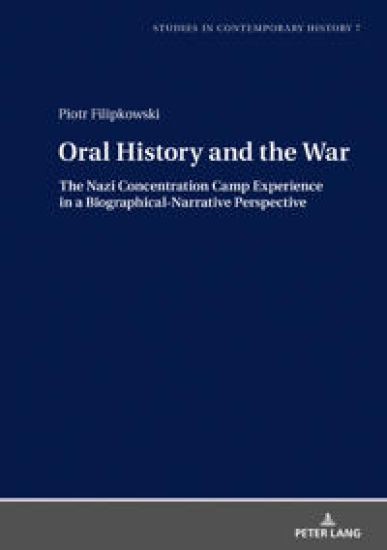
Oral History and the War

Oral History and the War

Piotr Filipkowski

Peter Lang AG
2019
sidottu
This book is rooted in the author’s experience as an interviewer and researcher in the Mauthausen Survivors Documentation Project – the biggest European oral history project devoted to a single Nazi concentration camp system, realized in the years 2002/2003 at the University of Vienna. Over 850 Mauthausen survivors have been recorded worldwide, more than 160 of them in Poland, and over 30 by the author. The work offers an in-depth analysis of Polish survivors’ accounts, sensitive to both, form and content of these stories, as well as their social and cultural framing. The analysis is accompanied by an interpretation of (Polish) camp experiences in a broader biographical and historical perspective. The book is an interpretive journey from camp experiences, through the survivors’ memories, to narratives recalling them - and backwards.