Kirjojen hintavertailu – 12 903 725 kirjaa ja 27 kauppaa
Kirjailija
Pliny The Younger
Kirjat ja teokset yhdessä paikassa: 37 kirjaa, julkaisuja vuosilta 1969–2025, suosituimpiin kuuluu The Letters of the Younger Pliny. Vertaile teosten hintoja ja tarkista saatavuus suomalaisista kirjakaupoista.
Nimi esiintyy myös muodoissa: Pliny (The Younger ), Pliny (the Younger)
Pliny the Younger's nine-book Epistles is a masterpiece of Roman prose. Often mined as a historical and pedagogical sourcebook, this collection of 'private' letters is now finding recognition as a rich and rewarding work in its own right. The second book is a typically varied yet taut suite of miniatures, including among its twenty letters the trial of Marius Priscus and Pliny's famous portrait of his Laurentine villa. This edition, the first to address a complete book of Epistles in over a century, presents a Latin text together with an introduction and commentary intended for students, teachers and scholars. With clear linguistic explanations and full literary analysis, it invites readers to a fresh appreciation of Pliny's lettered art.
Pliny the Younger's nine-book Epistles is a masterpiece of Roman prose. Often mined as a historical and pedagogical sourcebook, this collection of 'private' letters is now finding recognition as a rich and rewarding work in its own right. The second book is a typically varied yet taut suite of miniatures, including among its twenty letters the trial of Marius Priscus and Pliny's famous portrait of his Laurentine villa. This edition, the first to address a complete book of Epistles in over a century, presents a Latin text together with an introduction and commentary intended for students, teachers and scholars. With clear linguistic explanations and full literary analysis, it invites readers to a fresh appreciation of Pliny's lettered art.
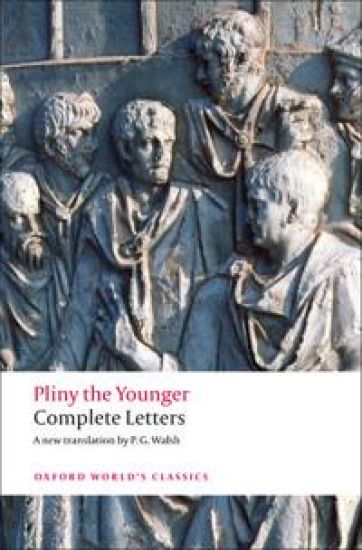
'Gaius Pliny sends greetings to his friend Septicius Clarus...' In these letters to his friends and relations, Pliny provides a fascinating insight into Roman life in the period 97 to 112 AD. Part autobiography, part social history, they document the career and interests of a senator and leading imperial official whose friends include the historians Tacitus and Suetonius. Pliny's letters cover a wide range of topics, from the contemporary political scene to domestic affairs, the educational system, the rituals and conduct of Roman religion, the treatment of slaves, and the phenomena of nature. He describes in vivid detail the eruption of Vesuvius which killed his uncle, and the daily routines of a well-to-do Roman in the courts, and at leisure, enjoying rural pursuits at his country estates. In the introduction to his lively and sympathetic new translation, P. G. Walsh examines the background to these often intimate and enthralling letters. ABOUT THE SERIES: For over 100 years Oxford World's Classics has made available the widest range of literature from around the globe. Each affordable volume reflects Oxford's commitment to scholarship, providing the most accurate text plus a wealth of other valuable features, including expert introductions by leading authorities, helpful notes to clarify the text, up-to-date bibliographies for further study, and much more.
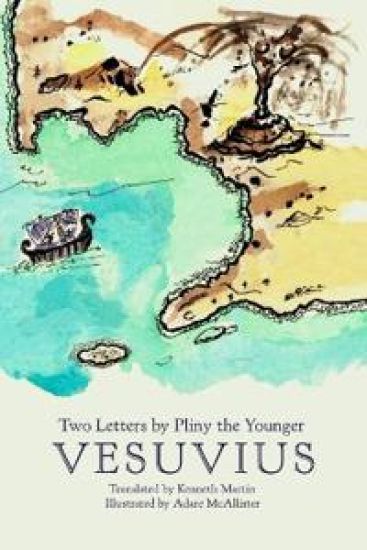
This new edition of the two letters in which Pliny the Younger gives his eye-witness account of the most fabulous natural disaster ever fabled by mankind-the eruption of Mt. Vesuvius in Italy and the destruction of "whole communities and cities," including Pompeii features the original Latin facing an exceptionally faithful translation in contemporary English and enhanced by superbly evocative and witty drawings of the events as they are described. The reader of Vesuvius will come away from these pages with a lively sense of what really happened in those harrowing days and hours during the eruption of the famous volcano. The book includes an introduction and endnotes by the translator.
The Bibliotheca Teubneriana, established in 1849, has evolved into the world's most venerable and extensive series of editions of Greek and Latin literature, ranging from classical to Neo-Latin texts. Some 4-5 new editions are published every year. A team of renowned scholars in the field of Classical Philology acts as advisory board: Gian Biagio Conte (Scuola Normale Superiore di Pisa)Marcus Deufert (Universitat Leipzig)James Diggle (University of Cambridge)Donald J. Mastronarde (University of California, Berkeley)Franco Montanari (Universita di Genova)Heinz-Gunther Nesselrath (Georg-August-Universitat Goettingen)Dirk Obbink (University of Oxford)Oliver Primavesi (Ludwig-Maximilians Universitat Munchen)Michael D. Reeve (University of Cambridge)Richard J. Tarrant (Harvard University) Formerly out-of-print editions are offered as print-on-demand reprints. Furthermore, all new books in the Bibliotheca Teubneriana series are published as eBooks. The older volumes of the series are being successively digitized and made available as eBooks. If you are interested in ordering an out-of-print edition, which hasn't been yet made available as print-on-demand reprint, please contact us: Tessa. [email protected] editions of Latin texts published in the Bibliotheca Teubneriana are collected in the online database BTL Online.
This selection of Pliny's letters is designed to be used with A Level classes. The commentary helps students who have no special knowledge of the social and political history of the Roman empire. The selection provides a wide illustration of the private, public, and literary life of the capital of the Roman empire in the early second century A. D. Includes vocabulary and notes.
Correspondence from a distinguished and eventful life. The Younger Pliny was born in AD 61 or 62, the son of Lucius Caecilius of Comum (Como) and the Elder Pliny’s sister. He was educated at home and then in Rome under Quintilian. He was at Misenum at the time of the eruption of Vesuvius in 79 (described in two famous letters) when the Elder Pliny died. Pliny started his career at the Roman bar at the age of eighteen. He moved through the regular offices in a senator’s career, held two treasury appointments and a priesthood, and was consul in September and October 100. On this occasion he delivered the speech of thanks to the emperor Trajan which he afterwards expanded and published as the Panegyricus. After his consulship he returned to advocacy in the court and Senate, and was also president of the Tiber Conservancy Board. His hopes of retirement were cut short when he was chosen by Trajan to go out to the province of Bithynia and Pontus on a special commission as the emperor’s direct representative. He is known to have been there two years, and is presumed to have died there before the end of 113. Book 10 of the Letters contains his correspondence with Trajan during this period, and includes letters about the early Christians. Pliny's Letters are important as a social document of his times. They tell us about the man himself and his wide interests, and about his many friends, including Tacitus, Martial, and Suetonius. Pliny has a gift for description and a versatile prose style, and more than any of his contemporaries he gives an unprejudiced picture of Rome as he knew it. The Loeb Classical Library edition of Pliny the Younger is in two volumes; the first contains Books 1–7 of his Letters and an Introduction.
Correspondence from a distinguished and eventful life. The Younger Pliny was born in AD 61 or 62, the son of Lucius Caecilius of Comum (Como) and the Elder Pliny’s sister. He was educated at home and then in Rome under Quintilian. He was at Misenum at the time of the eruption of Vesuvius in 79 (described in two famous letters) when the Elder Pliny died. Pliny started his career at the Roman bar at the age of eighteen. He moved through the regular offices in a senator’s career, held two treasury appointments and a priesthood, and was consul in September and October 100. On this occasion he delivered the speech of thanks to the emperor Trajan which he afterwards expanded and published as the Panegyricus. After his consulship he returned to advocacy in the court and Senate, and was also president of the Tiber Conservancy Board. His hopes of retirement were cut short when he was chosen by Trajan to go out to the province of Bithynia and Pontus on a special commission as the emperor’s direct representative. He is known to have been there two years, and is presumed to have died there before the end of 113. Book 10 of the Letters contains his correspondence with Trajan during this period, and includes letters about the early Christians. Pliny's Letters are important as a social document of his times. They tell us about the man himself and his wide interests, and about his many friends, including Tacitus, Martial, and Suetonius. Pliny has a gift for description and a versatile prose style, and more than any of his contemporaries he gives an unprejudiced picture of Rome as he knew it. The Loeb Classical Library edition of Pliny the Younger is in two volumes; the second contains Books 8–10 of his Letters and Panegyricus.