
Kirjailija
Plutarch
Kirjat ja teokset yhdessä paikassa: 262 kirjaa, julkaisuja vuosilta 1914–2026, suosituimpiin kuuluu Alexander. Vertaile teosten hintoja ja tarkista saatavuus suomalaisista kirjakaupoista.
Nimi esiintyy myös muodoissa: Plutarch.
262 kirjaa
Kirjojen julkaisuvuodet: 1914–2026.


Themistokles und Perikles
Plutarch; Karl Heinrich Ferdinand Sintenis; Karl Fuhr
Antigonos Verlag
2024
nidottu
Plutarch's Lives of the Noble Greeks and Romans, commonly called Parallel Lives or Plutarch's Lives, is a series of 48 biographies of famous men, arranged in tandem to illuminate their common moral virtues or failings, probably written at the beginning of the second century AD. The surviving Parallel Lives comprises 23 pairs of biographies, each pair consisting of one Greek and one Roman of similar destiny, such as Alexander the Great and Julius Caesar, or Demosthenes and Cicero. It is a work of considerable importance, not only as a source of information about the individuals described, but also about the times in which they lived.

Plutarch's Lives of the Noble Greeks and Romans, commonly called Parallel Lives or Plutarch's Lives, is a series of 48 biographies of famous men, arranged in tandem to illuminate their common moral virtues or failings, probably written at the beginning of the second century AD. The surviving Parallel Lives comprises 23 pairs of biographies, each pair consisting of one Greek and one Roman of similar destiny, such as Alexander the Great and Julius Caesar, or Demosthenes and Cicero. It is a work of considerable importance, not only as a source of information about the individuals described, but also about the times in which they lived.


Selected Essays of Plutarch; In Two Volumes: Volume 2 - in large print
Plutarch
Megali Verlag
2023
sidottu

Selected Essays of Plutarch; In Two Volumes: Volume 2 - in large print
Plutarch
Megali Verlag
2023
nidottu
Plutarch created "Plutarch's Lives," a collection of biographies, in the first century AD. For instance, biographies of well-known Greek and Roman individuals are grouped together depending on how their lives differ, such as Demosthenes and Cicero or Alexander the Great and Julius Caesar. The book's main objective is to examine these great people's moral character and qualities via their history. According to Plutarch, examining the lives of these people might provide important light on morals, leadership, and the characteristics of a good person. The bios seek to combine truth and mythology in order to capture the essence of each person's personality and character rather than being just factual descriptions. Plutarch highlights the importance of looking at a person's whole life rather than just their successes or failures in isolation. Overall, "Plutarch's Lives" is a great book that never fails to move readers with its understanding of human nature, emphasis on leadership, and stress on the qualities that set a moral person apart.

The Greek philosopher Plutarch's 'Essays and Miscellanies: The Complete Works Vol. 3' is an anthology of his musings on various themes, including literary evaluation, moral philosophy, and political postulates. The book is separated into numerous divisions, each centered around a specific subject matter. In separate sections of Plutarch's tome, one can come across his musings on ethics and morals, as well as his ponderings on the universe's workings and the deities' purposes. As a skilled and insightful writer, Plutarch touches upon a wide range of topics that are sure to inspire and provoke. What he presents is easily accessible to anyone, whether studying in an academic setting or picking up the book for leisurely reading. Plutarch's impact on Western thinking and society is truly exceptional, impossible to overstate. His writings were held in high esteem by both the Greeks and Romans of ancient times, and are still being studied and admired by readers and scholars alike, worldwide.

The Complete Essays of Plutarch (Royal Collector's Edition) (Case Laminate Hardcover with Jacket)
Plutarch
Royal Classics
2021
sidottu
The Complete Essays of Plutarch includes 133 chapters on nature, Plutarch's Symposiacs, as well as his collection of literary essays. Plutarch was a Platonist, but was open to the influence of the Peripatetics, and in some details even to Stoicism despite his criticism of their principles. He rejected only Epicureanism absolutely. He attached little importance to theoretical questions and doubted the possibility of ever solving them. He was more interested in moral and religious questions. Plutarch's writings had an enormous influence on English and French literature. Shakespeare paraphrased parts of Thomas North's translation of selected Lives in his plays, and occasionally quoted from them verbatim. Plutarch's influence declined in the 19th and 20th centuries, but it remains embedded in the popular ideas of Greek and Roman history. One of his most famous quotes was one that he included in one of his earliest works. "The world of man is best captured through the lives of the men who created history." This case laminate collector's edition includes a Victorian inspired dust-jacket.
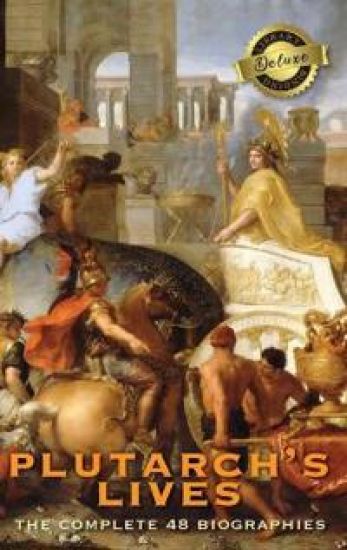
Plutarch's Lives, The Complete 48 Biographies (Deluxe Library Edition)
Plutarch
Engage Classics
2020
sidottu
Halvin toimitettuna 66,40 €
Plutarch's Lives of the Noble Greeks and Romans, commonly called Parallel Lives or Plutarch's Lives, is a series of 48 biographies of famous men, arranged in tandem to illuminate their common moral virtues or failings, probably written at the beginning of the second century AD. The work includes 23 pairs of biographies, each pair consisting of one Greek and one Roman of similar destiny, such as Alexander the Great and Julius Caesar, or Demosthenes and Cicero. Plutarch's Lives is a work of considerable importance, not only as a source of information about the individuals described, but also about the times in which they lived. Plutarch was not concerned with writing histories, but with exploring the influence of character, good or bad, on the lives and destinies of famous men. He wished to prove that the more remote past of Greece could show its men of action and achievement as well as the nearer, and therefore more impressive, past of Rome.
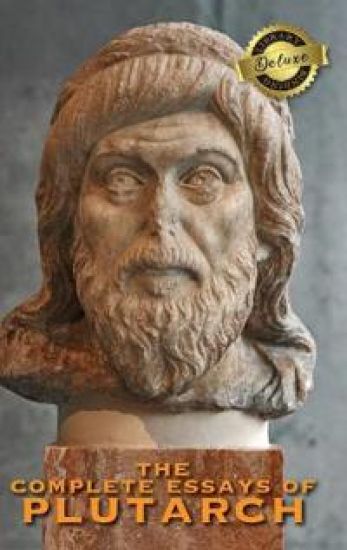
The Complete Essays of Plutarch includes 133 chapters on nature, Plutarch's Symposiacs, as well as his collection of literary essays. Plutarch was a Platonist, but was open to the influence of the Peripatetics, and in some details even to Stoicism despite his criticism of their principles. He rejected only Epicureanism absolutely. He attached little importance to theoretical questions and doubted the possibility of ever solving them. He was more interested in moral and religious questions. Plutarch's writings had an enormous influence on English and French literature. Shakespeare paraphrased parts of Thomas North's translation of selected Lives in his plays, and occasionally quoted from them verbatim. Plutarch's influence declined in the 19th and 20th centuries, but it remains embedded in the popular ideas of Greek and Roman history. One of his most famous quotes was one that he included in one of his earliest works. "The world of man is best captured through the lives of the men who created history."