

Kirjailija
Prabhat Patnaik
Kirjat ja teokset yhdessä paikassa: 22 kirjaa, julkaisuja vuosilta 1997–2025, suosituimpiin kuuluu Kapital und Imperialismus. Vertaile teosten hintoja ja tarkista saatavuus suomalaisista kirjakaupoista.
22 kirjaa
Kirjojen julkaisuvuodet: 1997–2025.
Liberalism holds that individual freedom can be realized under capitalism. “Classical liberalism” tends to focus on excessive state interference as the primary threat to freedom. More recent theorists, however, recognize that capitalism, left to itself, would be characterized by mass social ills and argue that state intervention is necessary to guarantee individual freedom. This book is a Marxist critique of liberalism. Prabhat Patnaik demonstrates that liberalism and Marxism provide vastly differing accounts of individual freedom and the forces that restrict it. In the Marxist view, people, contrary to appearances, lack real agency under capitalism. Competition coerces individuals to act according to the impersonal logic of capitalism, making them mere instruments of the system. In this way, capitalism creates universal alienation, and true individual freedom is possible only through overcoming it. Patnaik argues that socialism can secure individual agency in both economic and political spheres, though actually existing socialism has failed in this respect. He also considers what a socialist society should look like: not a planned economy but a highly decentralized system in which citizens are directly involved in taking decisions affecting their lives and enjoy fundamental economic rights as well as political ones. Readable yet rigorous, Beyond Liberalism brings together political philosophy and political economy to offer a renewed vision of socialism.
Beyond Liberalism
Prabhat Patnaik
Columbia University Press
2024
pokkari
Halvin toimitettuna 43,20 €
Liberalism holds that individual freedom can be realized under capitalism. “Classical liberalism” tends to focus on excessive state interference as the primary threat to freedom. More recent theorists, however, recognize that capitalism, left to itself, would be characterized by mass social ills and argue that state intervention is necessary to guarantee individual freedom. This book is a Marxist critique of liberalism. Prabhat Patnaik demonstrates that liberalism and Marxism provide vastly differing accounts of individual freedom and the forces that restrict it. In the Marxist view, people, contrary to appearances, lack real agency under capitalism. Competition coerces individuals to act according to the impersonal logic of capitalism, making them mere instruments of the system. In this way, capitalism creates universal alienation, and true individual freedom is possible only through overcoming it. Patnaik argues that socialism can secure individual agency in both economic and political spheres, though actually existing socialism has failed in this respect. He also considers what a socialist society should look like: not a planned economy but a highly decentralized system in which citizens are directly involved in taking decisions affecting their lives and enjoy fundamental economic rights as well as political ones. Readable yet rigorous, Beyond Liberalism brings together political philosophy and political economy to offer a renewed vision of socialism.
Capitalism and Individual Freedom – A Marxist Economic Critique of Liberalism
Prabhat Patnaik
Tulika Books
2023
sidottu
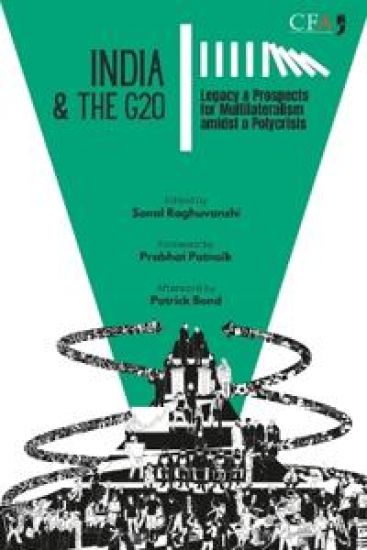
India's G20 Presidency is occurring at a crucial moment in the history of the world economy; as such it is important to ask what India's role would be sitting on this high table. This compendium brings together diverse voices that are not afraid of asking difficult questions, or presenting analyses that diverge from the mainstream narratives and attempt to provide a much needed grounded analysis of the G20 framework.

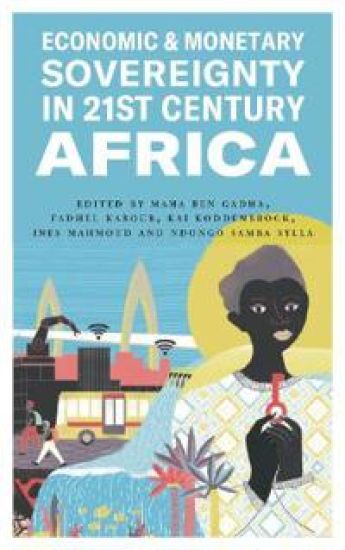
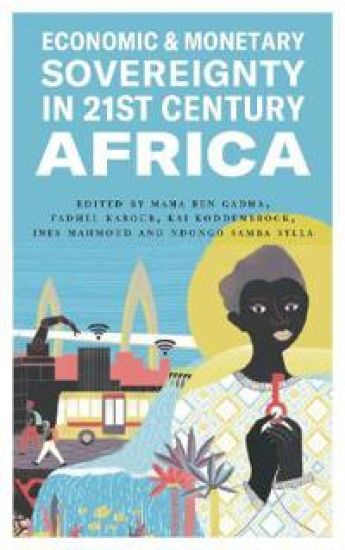
Over forty years after the formal end of colonialism, suffocating ties to Western financial systems continue to prevent African countries from achieving any meaningful monetary sovereignty. Economic and Monetary Sovereignty in 21st Century Africa traces the recent history of African monetary and financial dependencies, looking at the ways African nations are resisting colonial legacies. Using a comparative, multi-disciplinary approach, this book uncovers what went wrong after the Pan-African approaches that defined the early stages of independence, and how most African economies fell into the firm grip of the IMF, World Bank, and the EU’s strict neoliberal policies. This collection is the first to offer a wide-ranging, comparative and historical look at how African societies have attempted to increase their policy influence and move beyond neoliberal orthodoxy and US-dollar dependency. Economic and Monetary Sovereignty in 21st Century Africa is essential reading for anyone interested in the African quest for self-determination in a turbulent world of recurring economic and financial crisis.
Over forty years after the formal end of colonialism, suffocating ties to Western financial systems continue to prevent African countries from achieving any meaningful monetary sovereignty. Economic and Monetary Sovereignty in 21st Century Africa traces the recent history of African monetary and financial dependencies, looking at the ways African nations are resisting colonial legacies. Using a comparative, multi-disciplinary approach, this book uncovers what went wrong after the Pan-African approaches that defined the early stages of independence, and how most African economies fell into the firm grip of the IMF, World Bank, and the EU’s strict neoliberal policies. This collection is the first to offer a wide-ranging, comparative and historical look at how African societies have attempted to increase their policy influence and move beyond neoliberal orthodoxy and US-dollar dependency. Economic and Monetary Sovereignty in 21st Century Africa is essential reading for anyone interested in the African quest for self-determination in a turbulent world of recurring economic and financial crisis.
Capital and Imperialism
Utsa Patnaik; Prabhat Patnaik
Monthly Review Press,U.S.
2021
nidottu
Halvin toimitettuna 29,80 €
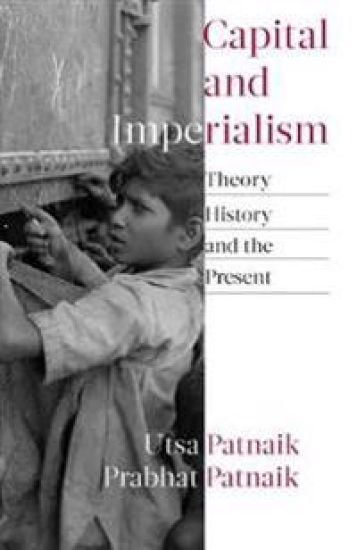
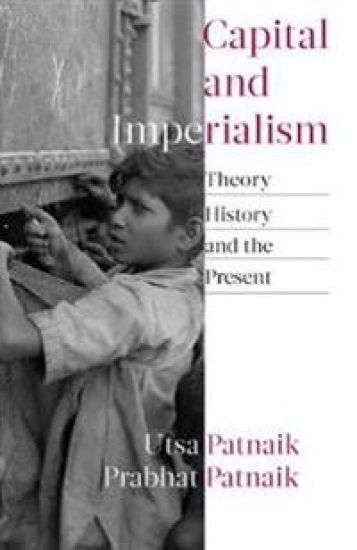
Those who control the world’s commanding economic heights, buttressed by the theories of mainstream economists, presume that capitalism is a self-contained and self-generating system. Nothing could be further from the truth. In this pathbreaking book—winner of the Paul A. Baran-Paul M. Sweezy Memorial Award—radical political economists Utsa Patnaik and Prabhat Patnaik argue that the accumulation of capital has always required the taking of land, raw materials, and bodies from noncapitalist modes of production. They begin with a thorough debunking of mainstream economics. Then, looking at the history of capitalism, from the beginnings of colonialism half a millennium ago to today’s neoliberal regimes, they discover that, over the long haul, capitalism, in order to exist, must metastasize itself in the practice of imperialism and the immiseration of countless people. A few hundred years ago, write the Patnaiks, colonialism began to ensure vast, virtually free, markets for new products in burgeoning cities in the West. But even after slavery was generally abolished, millions of people in the Global South still fell prey to the continuing lethal exigencies of the marketplace. Even after the Second World War, when decolonization led to the end of the so-called “Golden Age of Capitalism,” neoliberal economies stepped in to reclaim the Global South, imposing drastic “austerity” measures on working people. But, say the Patnaiks, this neoliberal economy, which lives from bubble to bubble, is doomed to a protracted crisis. In its demise, we are beginning to see – finally – the transcendence of the capitalist system.
Those who control the world’s commanding economic heights, buttressed by the theories of mainstream economists, presume that capitalism is a self-contained and self-generating system. Nothing could be further from the truth. In this pathbreaking book—winner of the Paul A. Baran-Paul M. Sweezy Memorial Award—radical political economists Utsa Patnaik and Prabhat Patnaik argue that the accumulation of capital has always required the taking of land, raw materials, and bodies from noncapitalist modes of production. They begin with a thorough debunking of mainstream economics. Then, looking at the history of capitalism, from the beginnings of colonialism half a millennium ago to today’s neoliberal regimes, they discover that, over the long haul, capitalism, in order to exist, must metastasize itself in the practice of imperialism and the immiseration of countless people. A few hundred years ago, write the Patnaiks, colonialism began to ensure vast, virtually free, markets for new products in burgeoning cities in the West. But even after slavery was generally abolished, millions of people in the Global South still fell prey to the continuing lethal exigencies of the marketplace. Even after the Second World War, when decolonization led to the end of the so-called “Golden Age of Capitalism,” neoliberal economies stepped in to reclaim the Global South, imposing drastic “austerity” measures on working people. But, say the Patnaiks, this neoliberal economy, which lives from bubble to bubble, is doomed to a protracted crisis. In its demise, we are beginning to see – finally – the transcendence of the capitalist system.
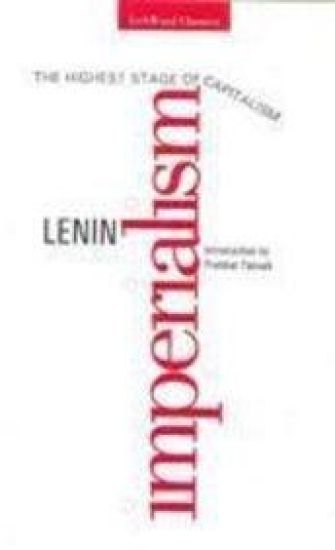
Imperialism,the Highest Stage of Capitalism
V. I. Lenin; Prabhat Patnaik
LeftWord Books
2020
nidottu
Demonetisation Decoded
Jayati Ghosh; C. P. Chandrasekhar; Prabhat Patnaik
Routledge India
2020
nidottu
On the night of 8 November 2016, at 8:15 pm, India’s Prime Minister, Narendra Modi, announced in a televised broadcast to the nation that with effect from midnight, currency notes of denominations Rs 500 and Rs 1,000 would no longer be legal tender. In one stroke, this involved the de-recognition of over 86 per cent of the value of Indian currency in circulation with only four hours’ notice. This important book provides a quick and concise explanation of the goals, implications, initial effects and the political economy of this major demonetisation move by the Government of India. It clarifies key concepts and offers astute economic analysis to guide the reader through the various claims, arguments and critiques that have been made; highlights the complexities of the processes that have been unleashed; and examines the likely outcomes in the long term as well as those that are immediately evident. Timely and lucid, this book will interest students and researchers in the fields of economics, finance, management, law, politics and governance as well as policy makers, legislators, civil society activists and the media.
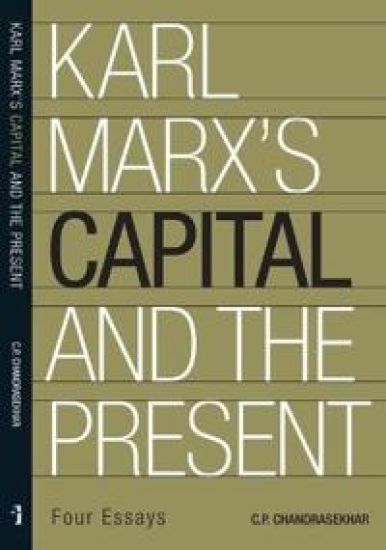
Karl Marx's 'Capital' and the Present – Four Essays
C. P. Chandrasekhar; Prabhat Patnaik
Tulika Book
2018
sidottu
The essays in this book are the texts of four public lectures on Marx's Capital, delivered by C. P. Chandrasekhar on the occasion of 150 years since the publication of Volume 1. The essays are titled: "Capital and the Critique of Bourgeois Political Economy"; "Order and Anarchy in the Capitalist System"; 'Revisiting Capital in the Age of Finance"; and "Marx's Capital and the Current Crisis in Capitalism." The book includes an introduction by Prabhat Patnaik.
Demonetisation Decoded
Jayati Ghosh; C. P. Chandrasekhar; Prabhat Patnaik
Routledge India
2017
sidottu
On the night of 8 November 2016, at 8:15 pm, India’s Prime Minister, Narendra Modi, announced in a televised broadcast to the nation that with effect from midnight, currency notes of denominations Rs 500 and Rs 1,000 would no longer be legal tender. In one stroke, this involved the de-recognition of over 86 per cent of the value of Indian currency in circulation with only four hours’ notice. This important book provides a quick and concise explanation of the goals, implications, initial effects and the political economy of this major demonetisation move by the Government of India. It clarifies key concepts and offers astute economic analysis to guide the reader through the various claims, arguments and critiques that have been made; highlights the complexities of the processes that have been unleashed; and examines the likely outcomes in the long term as well as those that are immediately evident. Timely and lucid, this book will interest students and researchers in the fields of economics, finance, management, law, politics and governance as well as policy makers, legislators, civil society activists and the media.
A Theory of Imperialism
Utsa Patnaik; Prabhat Patnaik
Columbia University Press
2016
pokkari
Halvin toimitettuna 45,20 €
In A Theory of Imperialism, economists Utsa Patnaik and Prabhat Patnaik present a new theory of the origins and mechanics of capitalism that sounds an alarm about its ongoing viability. Their theory centers on trade between the core economies of the global North and the tropical and subtropical countries of the global South and considers how the Northern demand for commodities (such as agricultural products and oil) from the South has perpetuated and solidified an imperialist relationship. The Patnaiks explore the dynamics of this process and discuss innovations that could allow the economies of the South to achieve greater prosperity without damaging the economies of the North. The result is an original theory of imperialism that brings to light the crippling limitations of neoliberal capitalism. A Theory of Imperialism also includes a response by David Harvey, who interprets the agrarian system differently and sees other factors affecting trade between the North and the South. Their debate is one of the most provocative exchanges yet over the future of the global economy as resources grow thin, populations explode, and universal prosperity becomes ever more elusive.
In A Theory of Imperialism, economists Utsa Patnaik and Prabhat Patnaik present a new theory of the origins and mechanics of capitalism that sounds an alarm about its ongoing viability. Their theory centers on trade between the core economies of the global North and the tropical and subtropical countries of the global South and considers how the Northern demand for commodities (such as agricultural products and oil) from the South has perpetuated and solidified an imperialist relationship. The Patnaiks explore the dynamics of this process and discuss innovations that could allow the economies of the South to achieve greater prosperity without damaging the economies of the North. The result is an original theory of imperialism that brings to light the crippling limitations of neoliberal capitalism. A Theory of Imperialism also includes a response by David Harvey, who interprets the agrarian system differently and sees other factors affecting trade between the North and the South. Their debate is one of the most provocative exchanges yet over the future of the global economy as resources grow thin, populations explode, and universal prosperity becomes ever more elusive.
Karl Marx's articles in the New York Daily Tribune constitute a separate genre among his works, being originally published in English and based on events in various countries in the world. There is no doubt that the work Marx undertook for his Tribune articles not only influenced his later theoretical work (one major result being his incorporation of colonialism as a factor in the genesis and expansion of capitalism), but also gave him an opportunity to apply the general principles of his method of historical materialism to the study of complex circumstances prevalent in different parts of the world. The perception of pre-colonial and colonial India that he put forth in the Tribune is a classic product of such application. The sheer boldness of Marx's explanation of India's pre-colonial 'non-history'; the remarkable insight into the nature of colonial rule which made it so different from all previous conquests of the country; the lucidity of the exposition of the dialectics of colonial impact; the passionate sympathy for the suffering of the Indians, and, at the same time, the utterly dispassionate account of the historical course that opened up before the country, entirely independent of the will and consciousness of the colonial rulers themselves; all these combine to make the Tribune set of articles a real classic on Indian history. Iqbal Husain has established the text of Marx's articles from the original files of the newspaper in which they appeared. He has also collected the extracts relating to India from the Marx-Engels correspondence during the period of the articles. Prabhat Patnaik has written a special Appreciation of what Marx's articles on India add to our understanding of his ideas and approach.
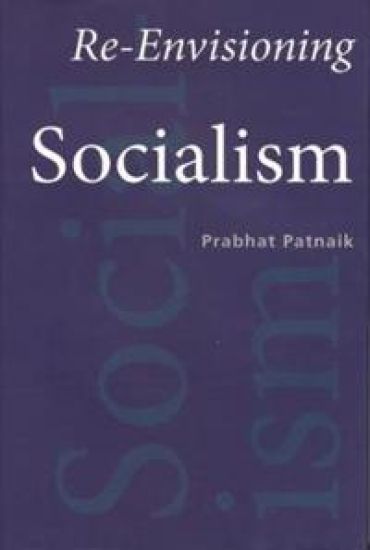
The papers in this volume are informed by a perception that can be summarized as follows. A capitalist economy is a self-driven or 'spontaneous' system. State intervention in its functioning, driven by political compulsions, tends to make it dysfunctional. This necessitates either further interventions, leading to a transcendence of the system itself, or a progressive slide-back to the pre-intervention state. To say this is not to suggest that capitalism does not need the state. It does, not only for the maintenance of capitalist property relations and for providing it with the external, precapitalist surroundings that are necessary for its functioning; but also for accelerating, through its intervention, its immanent tendencies. But state intervention that is contrary to its immanent tendencies makes capitalism dysfunctional, setting up a dialectics either of subversion of or subservience to the logic of capital. It follows that all the shibboleths of capitalism, namely freedom, democracy and individual subjectivity, are actually unachievable under capitalism. They can be realized only if the spontaneity of the economic terrain is broken through the coming into being of socialism, where the nature of property relations is such that people can shape their economic lives through collective political intervention. The case for socialism arises precisely because capitalism is not a malleable but a spontaneous system.
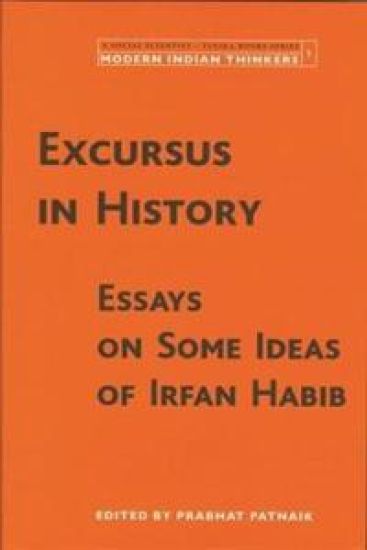
This is the first in the series of volumes on Modern Indian Thinkers which are being brought out by Social Scientist and Tulika Books. It is an examination of Professor Irfan Habib's work in different areas and an attempt to capture the totality of his thought. The 'Modern Indian Thinkers' series seeks to celebrate those who have blazed new trails and produced new ideas outside the beaten track which serve to carry forward India's social revolution. It is only appropriate that Professor Irfan Habib should be among the first to be celebrated as such a thinker. The essays in this volume are quite heterogeneous: some are in the nature of surveys of particular areas of Professor Habib's work, some critically examine his positions, some elaborate upon his ideas and some carry his ideas forward. To familiarize the reader with Professor Habib's overall intellectual project, there is an exhaustive interview with him, in which he dwells upon a whole range of themes: from Mughal India to the freedom struggle to the problems of the Communist movement. And to give brief introductions to his seminal works, there are not only articles by particular authors, but also some book reviews that were published at the time his books came out. The fact remains, however, that the essays put together in the present volume only unlock this or that gate to the field of Professor Habib's writings, and the reader will have to make his or her own way through this field. But it is a journey we would like to invite the reader to undertake.