Kirjojen hintavertailu – 12 903 724 kirjaa ja 27 kauppaa

Kirjailija

Prakash Nautiyal

Kirjat ja teokset yhdessä paikassa: 9 kirjaa, julkaisuja vuosilta 2010–2026, suosituimpiin kuuluu Communautés de diatomées de la région de Doon et Vindhyan. Vertaile teosten hintoja ja tarkista saatavuus suomalaisista kirjakaupoista.

9 kirjaa

Kirjojen julkaisuvuodet: 2010–2026.

Communautés de diatomées de la région de Doon et Vindhyan

Communautés de diatomées de la région de Doon et Vindhyan

Jyoti Verma; Jyoti Verma; Asha Agarwal; Asha Agarwal; Prakash Nautiyal; Prakash Nautiyal

Editions Notre Savoir
2026
nidottu
Pendant la majeure partie de l'histoire de la vie sur Terre, les diatom es sont microscopiques, mais elles restent extr mement importantes. On conna t plus de 10 000 esp ces de diatom es vivantes, et environ autant de formes fossiles nomm es. Plus de 90 % de la biosph re est constitu e de vie v g tale, dont les diatom es repr sentent environ un quart en poids. Elles sont extr mement abondantes dans les couches sup rieures des oc ans du globe, fournissant une nutrition de haute qualit des cr atures aussi diverses que les protozoaires et les baleines fanons, et alimentant l'atmosph re avec environ un quart de son oxyg ne. La plupart des diatom es mesurent moins d'un demi-millim tre, mais leurs corps riches en huile et recouverts d'une coquille de silice, qui se sont d pos s en grand nombre au fond des oc ans pendant de longues p riodes, se sont transform s en gisements de p trole travers le monde, et leurs squelettes ont form d' paisses couches de terre de diatom es qui ont trouv des applications dans des produits humains aussi vari s que la dynamite et (autrefois) le dentifrice.
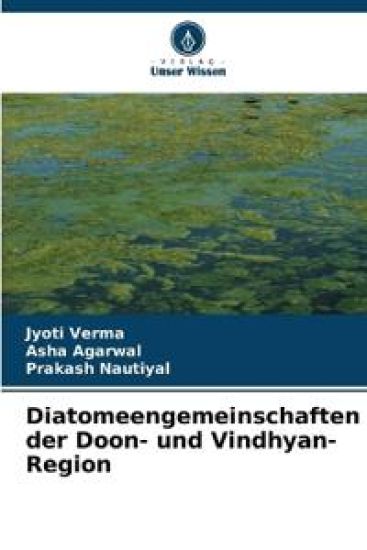
Comunità di diatomee della regione di Doon e Vindhyan

Comunità di diatomee della regione di Doon e Vindhyan

Jyoti Verma; Jyoti Verma; Asha Agarwal; Asha Agarwal; Prakash Nautiyal; Prakash Nautiyal

Edizioni Sapienza
2026
nidottu
Per gran parte della storia della vita sulla Terra, le diatomee sono microscopiche, ma continuano ad essere estremamente importanti. Sono note pi di 10.000 specie viventi di diatomee, con circa lo stesso numero di forme fossili denominate. Oltre il novanta per cento della biosfera costituito da vita vegetale, di cui le diatomee costituiscono circa un quarto in peso. Sono estremamente abbondanti negli strati superiori degli oceani del mondo, fornendo nutrimento di alta qualit a creature diverse come protozoi e balene con fanoni e rifornendo l'atmosfera con circa un quarto del suo ossigeno. La maggior parte delle diatomee ha dimensioni inferiori a mezzo millimetro, ma i loro corpi ricchi di olio e con guscio di silice, che affondano sul fondo dell'oceano in gran numero per lunghi periodi di tempo, si sono trasformati nei giacimenti di petrolio del mondo, e i loro scheletri hanno formato spessi strati di terra diatomacea che ha trovato applicazione in prodotti umani diversi come la dinamite e (in passato) il dentifricio.
Benthic Macroinvertebrate

Benthic Macroinvertebrate

Asheesh Shivam Mishra; Krishna Raj Singh; Prakash Nautiyal

LAP Lambert Academic Publishing
2020
pokkari
Determine similarities and differences in taxonomic composition and features of the characteristic assemblages of the benthic macroinvertebrate community in the streams of Bundelkhand and Doon regions and also the factors governing the abundance and assemblages within and among these regions. In both regions, physico-chemical variables show differences. The richness and density vary spatially. Within Bundelkhand the Paisuni and Ken while in Doon, the Asan and Tawa are richer than the Tons and Suswa in respective regions. The Bundelkhand is richer than the Doon region. Densities are highest for the Ken in the former and both Suswa and Asan in the latter regions, respectively. Densities are high in Doon compared with the Bundelkhand region. The taxonomic composition also varied among the tow eco-region. Scrapers and collectors are major functional groups in both regions, but former dominate in Bundelkhand while latter in the Doon. CCA shows that only 5 of the 11 factors (environmental variables) influence the composition of the benthic macroinvertebrate in both regions.