Kirjojen hintavertailu – 12 903 725 kirjaa ja 27 kauppaa
Kirjailija
Pranab Kumar Panday
Kirjat ja teokset yhdessä paikassa: 17 kirjaa, julkaisuja vuosilta 2008–2026, suosituimpiin kuuluu Digital Revolution for the Vulnerable. Vertaile teosten hintoja ja tarkista saatavuus suomalaisista kirjakaupoista.
This book analyses the challenges and possibilities connected to resource mobilisation in local government systems within South Asia; the book focuses on Bangladesh while placing the nation's experiences within the larger regional context alongside India, Nepal, and Sri Lanka. Local governments in South Asia operate within intricate political and administrative structures often marked by centralisation, limited financial autonomy, and socio-economic inequalities. Through case studies, surveys, and interviews, the book offers qualitative and quantitative data to provide a detailed investigation of resource mobilization, and chapters offer actionable solutions with practical illustrations for enhancing local government structures. The comparative approach acknowledges particular socio-economic and political contexts while identifying regional trends and transferable lessons for improving fiscal sustainability and governance reforms. The book will be of interest to academics and postgraduate students working in South Asian politics, Asian development, and public policy and governance studies more broadly. Scholars will benefit from relevant analysis examining decentralisation, fiscal federalism, and good local governance in contemporary policy debates.
Local Governance Transformation and Citizen Engagement in Bangladesh offers a thorough investigation of grassroots democratic practices and citizen engagement in local governance in the country and situates Bangladesh's experience within the larger framework of developing countries. With an eye towards their effects on governance, transparency, and accountability, the book analyses the dynamics of citizen engagement in public forums such as Ward Shava (WS) and Open Budget Meetings (OBM). Employing comparative studies of local government systems in India, Nepal, Sri Lanka, and Vietnam, the authors underscore the challenges and achievements of participatory governance in diverse socio-political settings. Combining empirical data with theoretical analysis, the book provides a valuable tool for comprehending the interaction of political culture, legal frameworks, and citizen engagement in forming sustainable local government in Bangladesh and beyond. This study provides doable suggestions for improving participative local governance by addressing structural challenges, power disparities, gender inequality, and the function of NGO. The book demonstrates how inclusive government promotes accountability and helps underprivileged groups to become more powerful, thereby promoting more fair results of progress. This book will be of interest to researchers studying political science, public administration, public policy, development studies, and Asian studies in general and governance, decentralisation, and citizen engagement in particular.
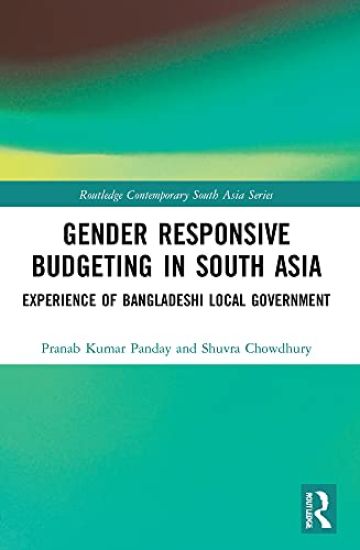
This book analyzes the practice of local-level participatory planning and budgeting and its impact on gender responsive budgeting (GRB) in Bangladesh. The book offers a conceptual framework that brings into focus the contribution of successful participatory budgeting practice to ensure GRB – the examination of whether men and women fall under existing income and expenditure patterns differently. It suggests that the ideas of participatory budgeting and GRB should be evolving together to provide a concrete idea to address gender needs. The book provides a theoretical explanation that contributes to the consolidation of the practice of GRB at the local government level through participatory budgeting. Conceptualizing the process of participatory budgeting and GRB in the context of Bangladesh, the book will be of interest to researchers in the field of Development Studies, Political Science, Public Administration, and Gender, as well as Asian Studies, in particular, South Asian Studies.
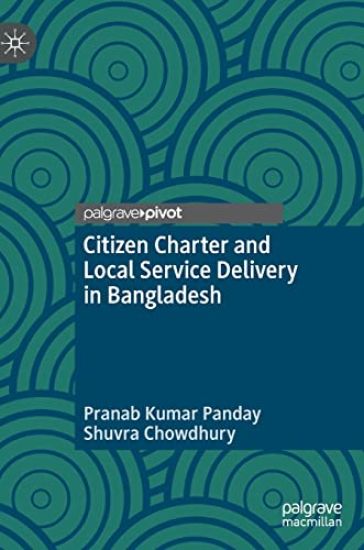
This book illuminates the importance of the citizen charter (CC) in local service delivery in Bangladesh. It describes how CC was implemented into the service delivery process and its impact. In the 1970s, the transition from traditional public administration to new public management was inspired by globalization, the emergence of an information and technological society, and many economic theories, such as public choice, principal-agent theory, and transaction cost. The purpose of the government in a welfare state is to serve the citizens by providing essential services. However, public service delivery in most developing nations is ineffective owing to corruption, waste of public funds, a lack of responsibility on the part of public employees, etc. In this context, CC emerged as a means of educating individuals on many elements of services, so they may hold service providers accountable. Thus, the issue of framing and implementation of CC has been put in place due to the persistent pressing of academicians, politicians, and practitioners advocating for better local service delivery.
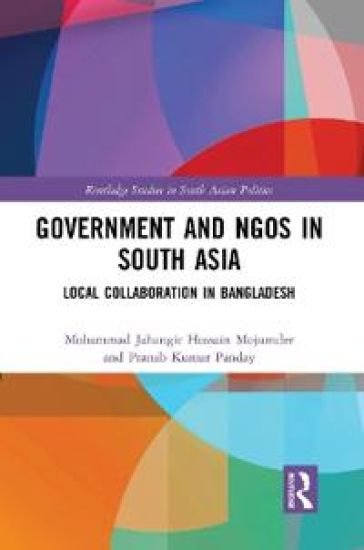
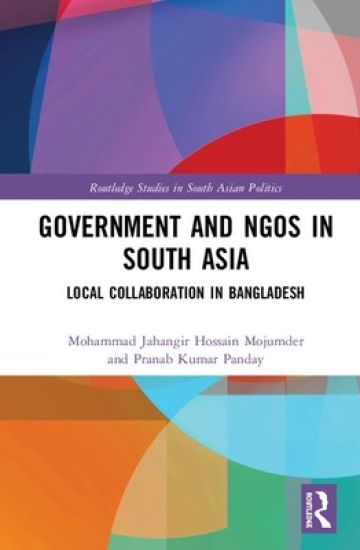
This book analyses efforts of Bangladeshi government and NGOs to strengthen local governance, and identifies the challenges posed by collaboration with NGOs. Presenting a dominantly qualitative study, the analysis explores whether engagement between the Sharique project to strengthen local governance and the Union Parishads has translated into success. In doing so, it argues that evidence points to a positive impact on institutionalising good governance and fiscal autonomy through widening participation in planning and decision-making, reinforcing accountability of functionaries and enhancing tax collection. Furthermore, this book demonstrates that the collaboration has aided the process of development of social capital between officials of councils and NGOs, as well as amongst the community members, encouraging future partnership governance. However, with the phasing out of the project as a propelling force, it also shows that the results fall short of being sustainable and, as such, that statuary support, unequivocal political commitment, and incentivising engagements are required to stabilise outcomes. Bridging a gap in the Development Studies literature, this book presents new findings on the collaboration of NGOs at the local level. It will be of interest to academics working in the field of South Asian Studies, Development Studies, and Asian Politics.
This book analyzes the practice of local-level participatory planning and budgeting and its impact on gender responsive budgeting (GRB) in Bangladesh. The book offers a conceptual framework that brings into focus the contribution of successful participatory budgeting practice to ensure GRB – the examination of whether men and women fall under existing income and expenditure patterns differently. It suggests that the ideas of participatory budgeting and GRB should be evolving together to provide a concrete idea to address gender needs. The book provides a theoretical explanation that contributes to the consolidation of the practice of GRB at the local government level through participatory budgeting. Conceptualizing the process of participatory budgeting and GRB in the context of Bangladesh, the book will be of interest to researchers in the field of Development Studies, Political Science, Public Administration, and Gender, as well as Asian Studies, in particular, South Asian Studies.
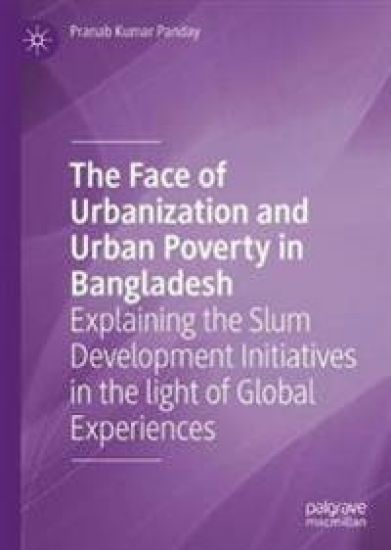
The book presents academic research on urbanization, urban poverty and slum development initiatives in South Asia, in general, and Bangladesh, in particular, in the light of global slum upgrading initiatives. It combines the urban poverty and slum development initiatives globally and country-specific context in a single frame. The book identifies different dimensions of urban poverty, best practices of slum development initiatives, and challenges of the implementation of these programs so that the government and different development partners redesign their implementation strategies as regards to reducing the urban poverty and making improvement to the living conditions of the slum dwellers. The book provides a clear understanding of the penetrating procedures of different slum development initiatives in the global perspectives, following the operation procedure of different programs in Bangladesh. This allows the readers to make a comparison of the operating procedures of different programs.
This book analyses efforts of Bangladeshi government and NGOs to strengthen local governance, and identifies the challenges posed by collaboration with NGOs. Presenting a dominantly qualitative study, the analysis explores whether engagement between the Sharique project to strengthen local governance and the Union Parishads has translated into success. In doing so, it argues that evidence points to a positive impact on institutionalising good governance and fiscal autonomy through widening participation in planning and decision-making, reinforcing accountability of functionaries and enhancing tax collection. Furthermore, this book demonstrates that the collaboration has aided the process of development of social capital between officials of councils and NGOs, as well as amongst the community members, encouraging future partnership governance. However, with the phasing out of the project as a propelling force, it also shows that the results fall short of being sustainable and, as such, that statuary support, unequivocal political commitment, and incentivising engagements are required to stabilise outcomes. Bridging a gap in the Development Studies literature, this book presents new findings on the collaboration of NGOs at the local level. It will be of interest to academics working in the field of South Asian Studies, Development Studies, and Asian Politics.
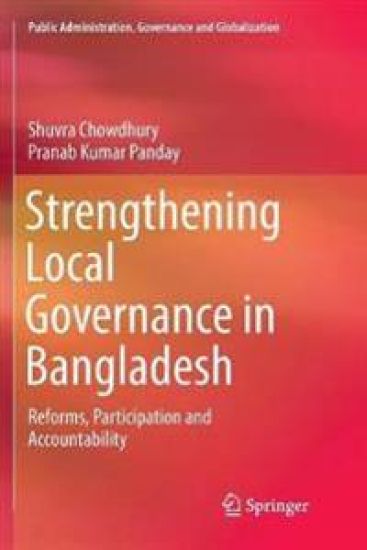
This book explores the impact of Bangladesh's Local Government Act of 2009 on the functioning of the local governments or Union Parishads (UP), with a particular emphasis on people’s participation and accountability. Throughout the chapters, the authors review the existing legal framework of UP and its relation to social accountability, examine how much of the social participation is spontaneous and how much is politically induced, question the success of the Citizen's Charter and Right to Information acts as mechanisms for social accountability, and present suggestions to remedy some of the problems facing people's participation and accountability in the UP. This book fills existing gaps in the discourse by adding new information to the literature on development research and legal reforms in Bangladesh, specifically in how those legal reforms have led to strengthening or weakening people's participation in local government. The target audience for this book are students and researchers in Asian studies , international development studies, and public administration, as well as practitioners working in the local governments discussed.
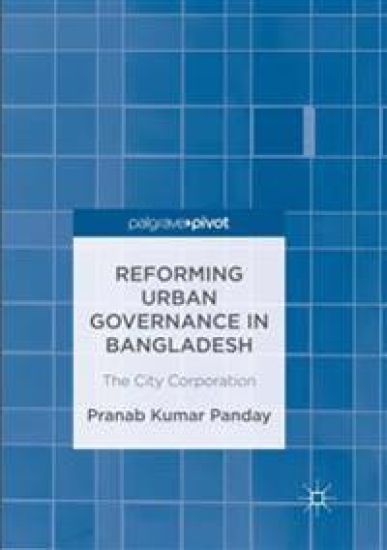
This book provides an analysis of the urban government system in Bangladesh, focusing on its upper tier, the City Corporation (CC), and the institutional and legal frameworks within which it operates. Along with a discussion of the scale and magnitude of urbanization, the book presents a comprehensive analysis of the reform agendas of CCs including their functional assignments, local political leadership, local control over administration and service delivery, local fiscal autonomy and local financial management, and local participation and accountability mechanisms. Very few efforts have been taken to analyze the comprehensive reform agenda required to make the CCs effectively discharge their duties and responsibilities in the context of Bangladesh. This book therefore not only fills this gap in the literature, but also provides recommendations on each reform agenda.
This book explores the impact of Bangladesh's Local Government Act of 2009 on the functioning of the local governments or Union Parishads (UP), with a particular emphasis on people’s participation and accountability. Throughout the chapters, the authors review the existing legal framework of UP and its relation to social accountability, examine how much of the social participation is spontaneous and how much is politically induced, question the success of the Citizen's Charter and Right to Information acts as mechanisms for social accountability, and present suggestions to remedy some of the problems facing people's participation and accountability in the UP. This book fills existing gaps in the discourse by adding new information to the literature on development research and legal reforms in Bangladesh, specifically in how those legal reforms have led to strengthening or weakening people's participation in local government. The target audience for this book are students and researchers in Asian studies , international development studies, and public administration, as well as practitioners working in the local governments discussed.
This book provides an analysis of the urban government system in Bangladesh, focusing on its upper tier, the City Corporation (CC), and the institutional and legal frameworks within which it operates. Along with a discussion of the scale and magnitude of urbanization, the book presents a comprehensive analysis of the reform agendas of CCs including their functional assignments, local political leadership, local control over administration and service delivery, local fiscal autonomy and local financial management, and local participation and accountability mechanisms. Very few efforts have been taken to analyze the comprehensive reform agenda required to make the CCs effectively discharge their duties and responsibilities in the context of Bangladesh. This book therefore not only fills this gap in the literature, but also provides recommendations on each reform agenda.
This volume offers an understanding of institutional reforms, gender-related policy dynamics, the role of different actors in the policy process, and the impact of a particular policy on the state of women’s political participation in Bangladesh. The discussion is set against the background of the Fourth World Conference on Women, 1995, in Beijing, in which a Platform for Action signed by heads of governments expressed their countries’ commitment to achieve ‘gender equality and empowerment of women’ through ensuring integration of the gender perspective at all levels. In Bangladesh, notable among the initiatives undertaken was the enactment of the Local Government (Union Parishads) (Second Amendment) of 1997, through which one-third of seats were reserved for women in the Union Parishad (UP) and the system of direct election was introduced to elect women members in reserved seats. The Act of 1997 is considered to be a milestone, since it has enhanced women’s participation in the local government politics significantly. Against this background, the specific research questions that have been addressed in this volume include: the necessity of reform for enhancing women’s participation in politics; the context against which the Government of Bangladesh enacted the Act and the reasons such an initiative was not taken earlier; the actors behind the reforms and their role in the reform process; and the impact of the reform on the state of women’s participation at the local level in Bangladesh.
This volume offers an understanding of institutional reforms, gender-related policy dynamics, the role of different actors in the policy process, and the impact of a particular policy on the state of women’s political participation in Bangladesh. The discussion is set against the background of the Fourth World Conference on Women, 1995, in Beijing, in which a Platform for Action signed by heads of governments expressed their countries’ commitment to achieve ‘gender equality and empowerment of women’ through ensuring integration of the gender perspective at all levels. In Bangladesh, notable among the initiatives undertaken was the enactment of the Local Government (Union Parishads) (Second Amendment) of 1997, through which one-third of seats were reserved for women in the Union Parishad (UP) and the system of direct election was introduced to elect women members in reserved seats. The Act of 1997 is considered to be a milestone, since it has enhanced women’s participation in the local government politics significantly. Against this background, the specific research questions that have been addressed in this volume include: the necessity of reform for enhancing women’s participation in politics; the context against which the Government of Bangladesh enacted the Act and the reasons such an initiative was not taken earlier; the actors behind the reforms and their role in the reform process; and the impact of the reform on the state of women’s participation at the local level in Bangladesh.