Kirjojen hintavertailu – 12 903 725 kirjaa ja 27 kauppaa

Kirjailija

Predrag Cicovacki

Kirjat ja teokset yhdessä paikassa: 15 kirjaa, julkaisuja vuosilta 1997–2024, suosituimpiin kuuluu Anamorphosis. Vertaile teosten hintoja ja tarkista saatavuus suomalaisista kirjakaupoista.

15 kirjaa

Kirjojen julkaisuvuodet: 1997–2024.

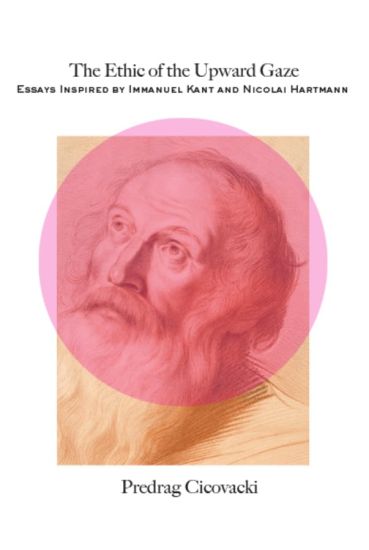
The Ethic of the Upward Gaze

The Ethic of the Upward Gaze

Predrag Cicovacki

ST AUGUSTINE'S PRESS
2024
nidottu
"Kant and Hartmann share a belief that is less common than it once was: that the aim of morality is to guide us toward becoming the best version of ourselves. Morality is not the same as prudence, nor is it a utilitarian calculus about what actions lead to our advantage. Yes, we do need to see what is in front of us, and handle what demands our immediate attention, in accordance with the rules endorsed by our societies. We also need to secure our existence as well as the material flourishing of ourselves and those who depend on us. But focusing exclusively on such issues deflects our consciousness from the high road of morality. […] These essays explore ideas relating to the suffocating and hope-crushing atmosphere of negativity and disorientation in the contemporary world. The message of this collection is that, if we dare to open our eyes and our hearts, we can find that there is much in ourselves and the world that deserves our reverence and our loving gaze. It is not too late to recall that besides the natural and the social worlds, there is yet another order of being: the spiritual. And without a connection with this spiritual order, we cannot experience our humanity at its best."
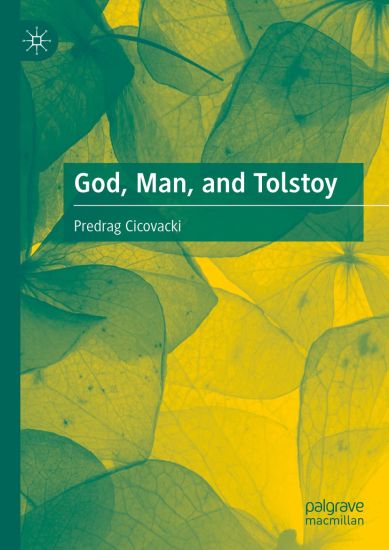
God, Man, and Tolstoy

God, Man, and Tolstoy

Predrag Cicovacki

Springer Nature Switzerland AG
2022
nidottu
? This book examines Leo Tolstoy’s struggle to understand the relationship of God and man, in connection with his attempt to answer questions regarding the meaning of life. Tolstoy addressed such issues in a systematic way and with great concerns for the future of humanity. Predrag Cicovacki approaches Tolstoy both as a thinker and as an artist, and examines various sides of his intellectual and artistic engagement: his social criticism, his ambiguous relationship to nature, his understanding of art, and his attempted reconstruction of the true religion. By combining philosophical, religious, and literary analysis, Cicovacki undertakes an interdisciplinary study, showing much can be learned from Tolstoy's insights, as well as from his mistakes.
God, Man, and Tolstoy

God, Man, and Tolstoy

Predrag Cicovacki

Springer Nature Switzerland AG
2021
sidottu
? This book examines Leo Tolstoy’s struggle to understand the relationship of God and man, in connection with his attempt to answer questions regarding the meaning of life. Tolstoy addressed such issues in a systematic way and with great concerns for the future of humanity. Predrag Cicovacki approaches Tolstoy both as a thinker and as an artist, and examines various sides of his intellectual and artistic engagement: his social criticism, his ambiguous relationship to nature, his understanding of art, and his attempted reconstruction of the true religion. By combining philosophical, religious, and literary analysis, Cicovacki undertakes an interdisciplinary study, showing much can be learned from Tolstoy's insights, as well as from his mistakes.
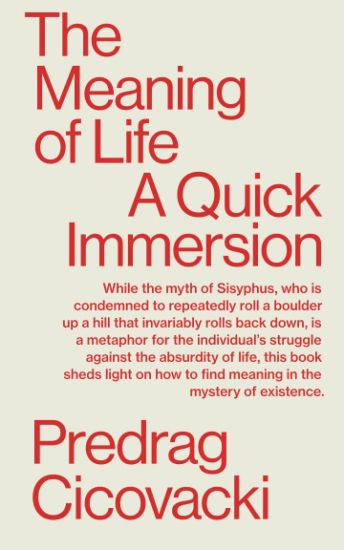
The Meaning of Life

The Meaning of Life

Predrag Cicovacki

Tibidabo Publishing, Inc.
2021
pokkari
While the myth of Sisyphus, who is condemned to repeatedly roll a boulder up a hill that invariably rolls back down, is a metaphor for the individual's struggle against the absurdity of life, this book sheds light on how to find meaning in the mystery of existence. Predrag Cicovacki invites us to reflect on what makes life meaningful. His book teaches us that theory and practice, ideas about life and ways of life should be inseparable. As talking about morality should not be detached from practicing virtue, discussing the meaning of life should not be separated from attempting to live as meaningfully as possible. Examining the lives of those we most admire reveals that living a meaningful life cannot ultimately be a mere quest for individual achievement or happiness. The self is neither the ultimate reality, nor should it be our ultimate concern. Our quest for meaning must instead be oriented toward something that is greater than our individual lives, and what we need to discern is what are, and are not, proper objects of such devotion. We cannot do this alone. "Highly readable, heartfelt philosophical reflection on life's meaning through merit, luck, gratitude, and inspiration. A wise, insightful, and inspiring piece that helps the reader appreciate relationships in an examined life." Richard Werner the John Stewart Kennedy Professor of Philosophy, Emeritus at Hamilton College. "Drawing upon a remarkable breadth of learning, Predrag Cicovacki takes the reader on a thoughtful, illuminating and inspiring exploration of the central question of human existence." Robert Holmes Emeritus Professor of Philosophy, University of Rochester. "Concentrating on the four qualities of merit, luck, gratitude and inspiration, Predrag Cicovacki addresses the question of the meaning of life. Never glib, always accessible and nuanced as well as quietly learned, one will emerge from reading this book enriched with a variety ways both to espy and to create meaning in our lives." Dr. James Carleton Paget Reader in Early Christianity and Ancient Judaism, Fellow and Tutor of Peterhouse, University of Cambridge, UK. "I enjoyed this book immensely, finding it full of surprises. Its high ideals and aspirations are not only educational but also greatly uplifting and transport the reader gently into an elevated, calm state of mind". Percy Mark, a life-long advocate and practitioner of Schweitzer's philosophy of Reverence for Life. In 1995 he began his twenty-year period of chairmanship of Dr. Schweitzer's Hospital Fund (now called Reverence for Life UK). He is author of three books: Lanya's Journey (2019), The World View of Reverence for Life (2020), and My Path with Albert Schweitzer (2020), and founder of the Next Evolutionary Step (NESt) Initiative

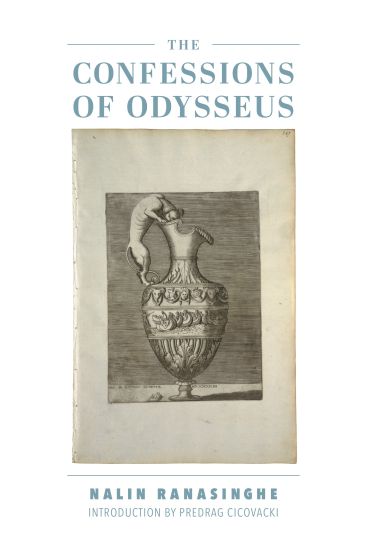
The Confessions of Odysseus

The Confessions of Odysseus

Nalin Ranasinghe; Predrag Cicovacki

ST AUGUSTINE'S PRESS
2021
sidottu
Nalin Ranasinghe undertakes the monumentally brash assignment of accusing man and then offering his defense, precisely as Homer does of Odysseus in the Iliad. Odysseus is portrayed as a human being deserving of both. For this reason and Homer’s perceptive descriptions, Ranasinghe claims Homer’s epic is the cornerstone of Western civilization. The central insights herein compel Ranasinghe to admit the necessity of heeding its lessons today, of minding its characters and seeing them in action off the page and in our own world. Predrag Cicovacki in his indispensable preface to the book, elucidates: “In Ranasinghe’s view, Odysseus is both the first recognizable human being and a model of curious and concupiscent human rationality that constantly strives toward the virtues of self-knowledge and moderation. Homer leads us to believe that the cosmos leans toward virtue, although its fundamental truths may be inherently unspeakable. This is the line of thought that Ranasinghe believes was further developed by Socrates, Plato, and Jesus, while being obscured by Aristotle, Augustine, and their followers. Homer’s later epic and his central insights are, according to Ranasinghe, the most fertile soil on which a humane civilization can grow and flourish.” Yet Ranasinghe ultimately says it best. “Homer must be read as the wisest Greeks did, not for fantastic tales of the Olympians but because his myths reveal eternal constants of the human state: the soul’s ruling passions and the possibility of knowing and educating these false gods. Wrestled with thus the Iliad becomes a cautionary tale, not one urging literal reading or mindless mimesis. It may always be that for the few who grasp Homer, many more will obey his gods or imitate his antiheroes; but the Odyssey hints that while its poet sees this potential for misuse, he is willing to take a noble risk and hope that eros can listen to and educate thumos. This faith is implicit in his tale of Achilles and the Trojan War. It is vital today that we see how the West’s end resembles its angry origins, as depicted in the Iliad. This is why Homer is said to be as fresh as the morning newspaper. His wisdom may outlive our literacy.”
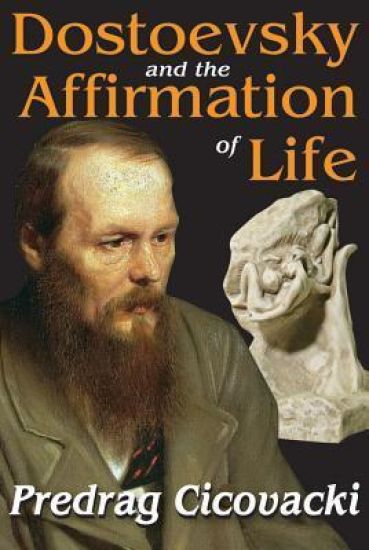
Dostoevsky and the Affirmation of Life

Dostoevsky and the Affirmation of Life

Predrag Cicovacki

Routledge
2017
sidottu
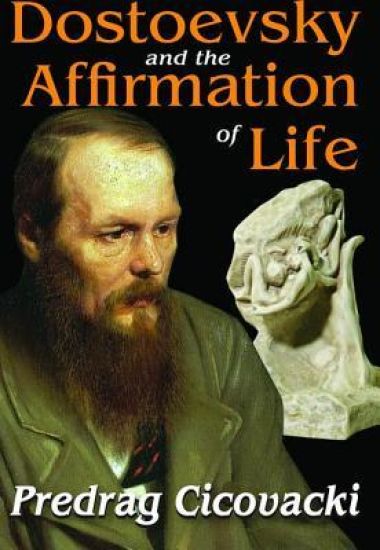
Dostoevsky's philosophy of life is unfolded in this searching analysis of his five greatest works: Notes from the Underground, Crime and Punishment, The Idiot, The Possessed, and The Brothers Karamazov. Predrag Cicovacki deals with a fundamental issue in Dostoevsky's opus neglected by all of his commentators: How can we affirm life and preserve a healthy optimism in the face of an increasingly troublesome reality? This work displays the vital significance of Dostoevsky's philosophy for understanding the human condition in the twenty-first century. The main task of this insightful effort is to reconstruct and examine Dostoevsky's "aesthetically" motivated affirmation of life, based on cycles of transgression and restoration. If life has no meaning, as his central figures claim, it is absurd to affirm life and pointless to live. Since Dostoevsky's doubts concerning the meaning of life resonate so deeply in our own age of pessimism and relativism, the central question of this book, whether Dostoevsky can overcome the skepticism of his most brilliant creation, is innately relevant. This volume includes a thorough literary analysis of Dostoevsky's texts, yet even those who have not read all of these novels will find Cicovacki's analysis interesting and enthralling. The reader will easily extrapolate Cicovacki's own philosophical interpretation of Dostoevsky's literary heritage.
Gandhi's Footprints

Gandhi's Footprints

Predrag Cicovacki

AldineTransaction
2015
sidottu
Mahatma K. Gandhi's dedication to finding a path of liberation from an epidemic of violence has been well documented before. The central issue and the novelty of this book is its focus on what Gandhi wanted to liberate us for. The book also provides an assessment of how viable his positive vision of humanity is. Gandhi revolutionized the struggle for Indian liberation from Great Britain by convincing his countrymen that they must turn to nonviolence and that India needed to be liberated from its social ills—poverty, unemployment, opium addiction, institution of child marriage, inequality of women, and Hindu-Muslim frictions—even more than it needed political freedom. Although Gandhi's legacy has not been forgotten, it has often been distorted. He is called "Mahatma" and venerated as a saint, but not followed and often misinterpreted. Predrag Cicovacki attempts to de-mythologize Gandhi and take a closer look at his thoughts, aims, and struggles. He invites us to look at the footprints Gandhi left for us, and follow them as carefully and critically as possible. Cicovacki concludes that Gandhi's spiritual vision of humanity and the importance of adherence to truth (satyagraha)are his lasting legacy.
Gandhi's Footprints

Gandhi's Footprints

Predrag Cicovacki

AldineTransaction
2015
nidottu
Mahatma K. Gandhi's dedication to finding a path of liberation from an epidemic of violence has been well documented before. The central issue and the novelty of this book is its focus on what Gandhi wanted to liberate us for. The book also provides an assessment of how viable his positive vision of humanity is. Gandhi revolutionized the struggle for Indian liberation from Great Britain by convincing his countrymen that they must turn to nonviolence and that India needed to be liberated from its social ills—poverty, unemployment, opium addiction, institution of child marriage, inequality of women, and Hindu-Muslim frictions—even more than it needed political freedom. Although Gandhi's legacy has not been forgotten, it has often been distorted. He is called "Mahatma" and venerated as a saint, but not followed and often misinterpreted. Predrag Cicovacki attempts to de-mythologize Gandhi and take a closer look at his thoughts, aims, and struggles. He invites us to look at the footprints Gandhi left for us, and follow them as carefully and critically as possible. Cicovacki concludes that Gandhi's spiritual vision of humanity and the importance of adherence to truth (satyagraha)are his lasting legacy.
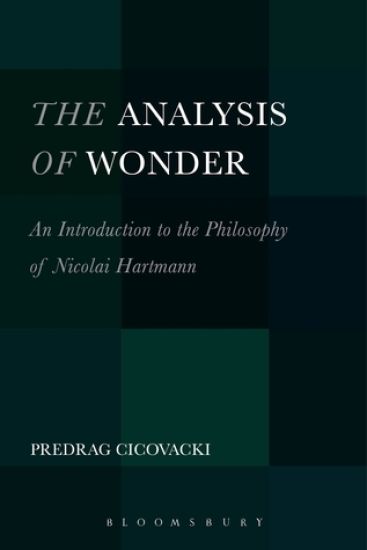
The Analysis of Wonder

The Analysis of Wonder

Predrag Cicovacki

Bloomsbury Academic USA
2015
nidottu
Structured to introduce the reader into all aspects of the philosophy of Nicolai Hartmann (1882-1950), this book aims to stimulate further interest into his thought. Once considered the most studious and systematic of all the German philosophers of the twentieth-century, this prolific author has been nearly forgotten. For many years a student and an admirer of Hartmann's work, Cicovacki argues that a closer look into Hartmann's ontologically and axiologically oriented philosophy contains a promise of a vital philosophical orientation, especially with regard to our understanding of the nature, place, and role of humanity in the larger world. "The Analysis of Wonder" - Hartmann's own definition of philosophy - is an invitation to the readers to challenge their preconceived and self-interested notions of reality in order to relearn to appreciate the always changing and conflicting world, in all of its complexity, richness, and sublimity.
The Analysis of Wonder

The Analysis of Wonder

Predrag Cicovacki

Bloomsbury Academic USA
2014
sidottu
Structured to introduce the reader into all aspects of the philosophy of Nicolai Hartmann (1882-1950), this book aims to stimulate further interest into his thought. Once considered the most studious and systematic of all the German philosophers of the twentieth-century, this prolific author has been nearly forgotten. For many years a student and an admirer of Hartmann's work, Cicovacki argues that a closer look into Hartmann's ontologically and axiologically oriented philosophy contains a promise of a vital philosophical orientation, especially with regard to our understanding of the nature, place, and role of humanity in the larger world. "The Analysis of Wonder" - Hartmann's own definition of philosophy - is an invitation to the readers to challenge their preconceived and self-interested notions of reality in order to relearn to appreciate the always changing and conflicting world, in all of its complexity, richness, and sublimity.
Dostoevsky and the Affirmation of Life

Dostoevsky and the Affirmation of Life

Predrag Cicovacki

AldineTransaction
2014
nidottu
Dostoevsky's philosophy of life is unfolded in this searching analysis of his five greatest works: Notes from the Underground, Crime and Punishment, The Idiot, The Possessed, and The Brothers Karamazov. Predrag Cicovacki deals with a fundamental issue in Dostoevsky's opus neglected by all of his commentators: How can we affirm life and preserve a healthy optimism in the face of an increasingly troublesome reality? This work displays the vital significance of Dostoevsky's philosophy for understanding the human condition in the twenty-first century. The main task of this insightful effort is to reconstruct and examine Dostoevsky's "aesthetically" motivated affirmation of life, based on cycles of transgression and restoration. If life has no meaning, as his central figures claim, it is absurd to affirm life and pointless to live. Since Dostoevsky's doubts concerning the meaning of life resonate so deeply in our own age of pessimism and relativism, the central question of this book, whether Dostoevsky can overcome the skepticism of his most brilliant creation, is innately relevant. This volume includes a thorough literary analysis of Dostoevsky's texts, yet even those who have not read all of these novels will find Cicovacki's analysis interesting and enthralling. The reader will easily extrapolate Cicovacki's own philosophical interpretation of Dostoevsky's literary heritage.
The Restoration of Albert Schweitzer's Ethical Vision

The Restoration of Albert Schweitzer's Ethical Vision

Predrag Cicovacki

Bloomsbury Academic USA
2014
nidottu
In 1913, Albert Schweitzer (1875-1965) left his internationally renowned career as a theologian, philosopher, and organ player to open a hospital in the jungles of Africa. There he developed in theory and practice his ethics of reverence for life. When he published his most important philosophical work, The Philosophy of Civilization, few people were serious about treating animals with dignity and giving any consideration to environmental issues. Schweitzer's urge was heard but not fully appreciated. One hundred years later, we are in a better position to do it. Predrag Cicovacki's book is a call to restore Schweitzer's vision. After critically and systematically discussing the most important aspects of the ethics of reverence for life, Cicovacki argues that the restoration of Schweitzer does not mean the restoration of any particular doctrine. It means summoning enough courage to reverse the deadly course of our civilization. And it also means establishing a way of life that stimulates striving toward what is the best and highest in human beings.
The Restoration of Albert Schweitzer's Ethical Vision

The Restoration of Albert Schweitzer's Ethical Vision

Predrag Cicovacki

CONTINUUM PUBLISHING CORPORATION
2012
sidottu
In 1913, Albert Schweitzer (1875-1965) left his internationally renowned career as a theologian, philosopher, and organ player to open a hospital in the jungles of Africa. There he developed in theory and practice his ethics of reverence for life. When he published his most important philosophical work, The Philosophy of Civilization, few people were serious about treating animals with dignity and giving any consideration to environmental issues. Schweitzers urge was heard but not fully appreciated. One hundred years later, we are in a better position to do it. Predrag Cicovacki book is a call to restore Schweitzers vision. After critically and systematically discussing the most important aspects of the ethics of reverence for life, Cicovacki argues that the restoration of Schweitzer does not mean the restoration of any particular doctrine. It means summoning enough courage to reverse the deadly course of our civilization. And it also means establishing a way of life that stimulates striving toward what is the best and highest in human beings.
Between Truth and Illusion

Between Truth and Illusion

Predrag Cicovacki

Rowman Littlefield Publishers
2002
nidottu
In Between Truth and Illusion, Predrag Cicovacki carefully analyzes Kant's contribution to discussions of human being and finds that he was deeply involved in the systematic development of the modern anthropocentric orientation toward liberation and dominance of the subject. On the other hands, modernity's high ideal of universal scientific and moral progress turned out to be illusory and ill-conceived. Cicovacki focuses on Kant's important observations about the limitations of the modernist project and develops an interactive conception of truth from it. Truth, the author says, presupposes a dominance of neither subject nor object, but their dynamic and reciprocal interactive relation. The absence of proper interactions leads to various forms of self-projections or illusions.
Anamorphosis

Anamorphosis

Predrag Cicovacki

University Press of America
1997
nidottu
This book intends to show that we should re-think and re-evaluate our dogmatic commitment to a cognitivistic attitude. Our high regard for knowledge is due to the fact that we expect that it will help us satisfy not only our practical needs but also guide us toward a meaningful and fulfilled life. A careful examination of the nature and limits of knowledge reveals that both expectations cannot be satisfied. Following Kant, Cicovacki comes to the conclusion that, although our knowledge of reality seems to be reliable and true, at the same time it seems to be one-sided and very narrowly oriented. Our practical purposes seem to be served quite well, but it is dubious whether our knowledge helps us understand and find our own place and role in reality. Those pursuing science and analytic philosophy do not seem to realize that our knowledge of reality is at the same time reliable and true, and yet distorting and damaging. Cicovacki focuses on Kant's question: ^D