Kirjojen hintavertailu – 12 859 829 kirjaa ja 27 kauppaa

Kirjailija

Priyanka Vyas

Kirjat ja teokset yhdessä paikassa: 3 kirjaa, julkaisuja vuosilta 1905–2025, suosituimpiin kuuluu Project Based Learning (PBL). Vertaile teosten hintoja ja tarkista saatavuus suomalaisista kirjakaupoista.

3 kirjaa

Kirjojen julkaisuvuodet: 1905–2025.

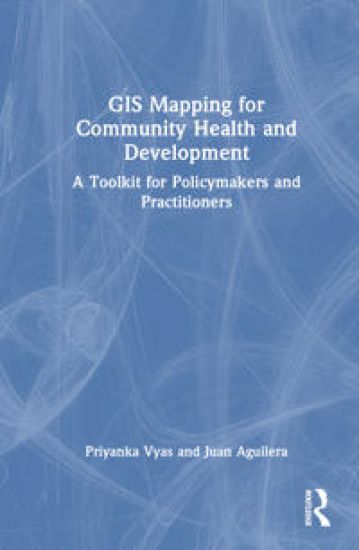
GIS Mapping for Community Health and Development

GIS Mapping for Community Health and Development

Priyanka Vyas; Juan Aguilera

TAYLOR FRANCIS LTD
2025
sidottu
This book explores how maps generated through geographical information systems (GIS) can be used to integrate principles of health equity and environmental justice into community planning and decision-making. To do this, the book puts forward the 3Ps of GIS mapping: People, Place and Policy. For each topic, the book demonstrates how different maps reveal different spatial disparities, and therefore alternative lens through which socio-cultural, political or geographical issues can be addressed. Using a step-by-step approach, and covering the core concepts by which GIS maps can be interpreted, it builds to provide a comprehensive understanding of what a GIS generated map may tell us, though crucially also what it may not. Featuring illustrated examples throughout, the book is essentially a tool-kit to support a nuanced and holistic perspective on community planning. It will appeal to policy-makers, planners, and public health consultants, as well as students moving towards this field.
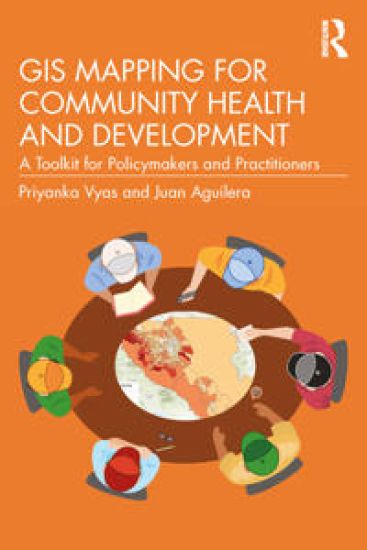
GIS Mapping for Community Health and Development

GIS Mapping for Community Health and Development

Priyanka Vyas; Juan Aguilera

TAYLOR FRANCIS LTD
2025
nidottu
This book explores how maps generated through geographical information systems (GIS) can be used to integrate principles of health equity and environmental justice into community planning and decision-making. To do this, the book puts forward the 3Ps of GIS mapping: People, Place and Policy. For each topic, the book demonstrates how different maps reveal different spatial disparities, and therefore alternative lens through which socio-cultural, political or geographical issues can be addressed. Using a step-by-step approach, and covering the core concepts by which GIS maps can be interpreted, it builds to provide a comprehensive understanding of what a GIS generated map may tell us, though crucially also what it may not. Featuring illustrated examples throughout, the book is essentially a tool-kit to support a nuanced and holistic perspective on community planning. It will appeal to policy-makers, planners, and public health consultants, as well as students moving towards this field.