
Kirjojen hintavertailu – 12 903 725 kirjaa ja 27 kauppaa

Kirjailija

Pukhraj Rakhecha

Kirjat ja teokset yhdessä paikassa: 2 kirjaa, julkaisuja vuosilta 2009–2010, suosituimpiin kuuluu Applied Hydrometeorology. Vertaile teosten hintoja ja tarkista saatavuus suomalaisista kirjakaupoista.

2 kirjaa

Kirjojen julkaisuvuodet: 2009–2010.

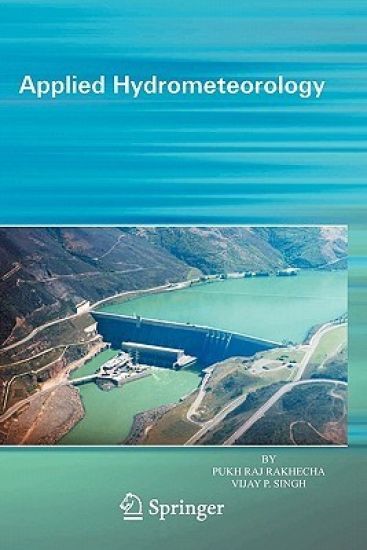
Applied Hydrometeorology

Applied Hydrometeorology

Pukhraj Rakhecha; Vijay P. Singh

Springer
2010
nidottu
Water is vital for life. Since the dawn of civilization, much effort has been made to harness sources of fresh water. Recent years have raised global awareness of the need for increasing demand of water worldwide, largely because of growing population, rising standard of living, higher demand for energy, and greater appreciation for environmental quality. As an example, the world population has increased threefold in the past five decades. In order to meet the rising water demand, water resources are being developed by building large dams, reservoirs, barrages and weirs across rivers worldwide. The guiding principle for water resources development has been to ensure adequate supply of water for agriculture, domestic use (including fine drinking water), waste disposal, industries, and energy production, with due attention to maintain the ecosystem functions. This development, however, depends on a holistic, cooperative and scientific approach. The basic inputs in the assessment of waterresources for a given region are from hydrological data and the subject of hydrology forms the core in achieving sustainable development of water resources. Barring a few exceptions, hydrological data for most river basins are sparse and therefore it is difficult to comprehensively assess their water resources. The major source of water is rainfall which occurs as a result of condensation of atmospheric moisture governed by the science of meteorology.
Applied Hydrometeorology

Applied Hydrometeorology

Pukhraj Rakhecha; Vijay P. Singh

Springer-Verlag New York Inc.
2009
sidottu
Water is vital for life. Since the dawn of civilization, much effort has been made to harness sources of fresh water. Recent years have raised global awareness of the need for increasing demand of water worldwide, largely because of growing population, rising standard of living, higher demand for energy, and greater appreciation for environmental quality. As an example, the world population has increased threefold in the past five decades. In order to meet the rising water demand, water resources are being developed by building large dams, reservoirs, barrages and weirs across rivers worldwide. The guiding principle for water resources development has been to ensure adequate supply of water for agriculture, domestic use (including fine drinking water), waste disposal, industries, and energy production, with due attention to maintain the ecosystem functions. This development, however, depends on a holistic, cooperative and scientific approach. The basic inputs in the assessment of waterresources for a given region are from hydrological data and the subject of hydrology forms the core in achieving sustainable development of water resources. Barring a few exceptions, hydrological data for most river basins are sparse and therefore it is difficult to comprehensively assess their water resources. The major source of water is rainfall which occurs as a result of condensation of atmospheric moisture governed by the science of meteorology.