
Kirjojen hintavertailu – 12 903 725 kirjaa ja 27 kauppaa

Kirjailija

Qin Lu

Kirjat ja teokset yhdessä paikassa: 2 kirjaa, julkaisuja vuosilta 2021–2024, suosituimpiin kuuluu Introduction to Financial Mathematics. Vertaile teosten hintoja ja tarkista saatavuus suomalaisista kirjakaupoista.

2 kirjaa

Kirjojen julkaisuvuodet: 2021–2024.

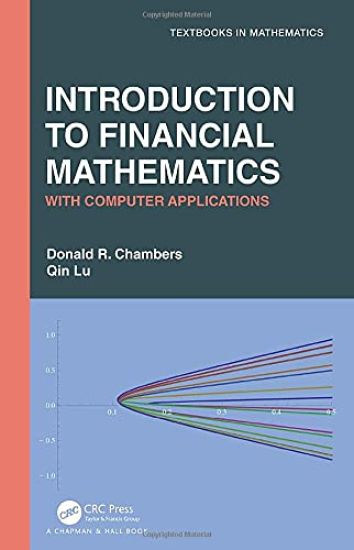
Introduction to Financial Mathematics

Introduction to Financial Mathematics

Donald R. Chambers; Qin Lu

TAYLOR FRANCIS LTD
2024
nidottu
This book’s primary objective is to educate aspiring finance professionals about mathematics and computation in the context of financial derivatives. The authors offer a balance of traditional coverage and technology to fill the void between highly mathematical books and broad finance books. The focus of this book is twofold: To partner mathematics with corresponding intuition rather than diving so deeply into the mathematics that the material is inaccessible to many readers. To build reader intuition, understanding and confidence through three types of computer applications that help the reader understand the mathematics of the models. Unlike many books on financial derivatives requiring stochastic calculus, this book presents the fundamental theories based on only undergraduate probability knowledge. A key feature of this book is its focus on applying models in three programming languages –R, Mathematica and EXCEL. Each of the three approaches offers unique advantages. The computer applications are carefully introduced and require little prior programming background. The financial derivative models that are included in this book are virtually identical to those covered in the top financial professional certificate programs in finance. The overlap of financial models between these programs and this book is broad and deep.
Introduction to Financial Mathematics

Introduction to Financial Mathematics

Donald R. Chambers; Qin Lu

CRC Press
2021
sidottu
This book’s primary objective is to educate aspiring finance professionals about mathematics and computation in the context of financial derivatives. The authors offer a balance of traditional coverage and technology to fill the void between highly mathematical books and broad finance books. The focus of this book is twofold: To partner mathematics with corresponding intuition rather than diving so deeply into the mathematics that the material is inaccessible to many readers. To build reader intuition, understanding and confidence through three types of computer applications that help the reader understand the mathematics of the models. Unlike many books on financial derivatives requiring stochastic calculus, this book presents the fundamental theories based on only undergraduate probability knowledge. A key feature of this book is its focus on applying models in three programming languages –R, Mathematica and EXCEL. Each of the three approaches offers unique advantages. The computer applications are carefully introduced and require little prior programming background. The financial derivative models that are included in this book are virtually identical to those covered in the top financial professional certificate programs in finance. The overlap of financial models between these programs and this book is broad and deep.