
Kirjojen hintavertailu – 12 903 724 kirjaa ja 27 kauppaa

Kirjailija

Qingqing Zhai

Kirjat ja teokset yhdessä paikassa: 2 kirjaa, julkaisuja vuosilta 2021–2022, suosituimpiin kuuluu Reliability Modelling and Optimization of Warm Standby Systems. Vertaile teosten hintoja ja tarkista saatavuus suomalaisista kirjakaupoista.

2 kirjaa

Kirjojen julkaisuvuodet: 2021–2022.

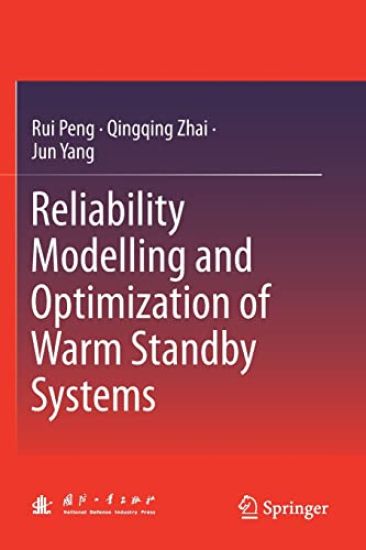
Reliability Modelling and Optimization of Warm Standby Systems

Reliability Modelling and Optimization of Warm Standby Systems

Rui Peng; Qingqing Zhai; Jun Yang

SPRINGER VERLAG, SINGAPORE
2022
nidottu
This book introduces the reliability modelling and optimization of warm standby systems. Warm standby is an attractive redundancy technique, as it consumes less energy than hot standby and switches into the active state faster than cold standby. Since a warm standby component experiences different failure rates in the standby state and active state, the reliability evaluation is challenging and the existing works are only restricted to very special cases. By adapting the decision diagrams, this book proposes the methodology to evaluate the reliability of different types of warm standby systems and studies the reliability optimization. Compared with existing works, the proposed methods allow the system to have an arbitrary number of components and allow the failure time distribution of components to observe arbitrary distributions. From this book, the readers can not only learn how to evaluate and optimize the reliability of warm standby systems but also use the methods to study the reliability of other complex systems.
Reliability Modelling and Optimization of Warm Standby Systems

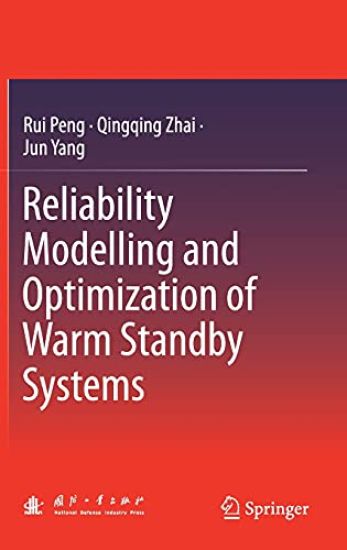
Reliability Modelling and Optimization of Warm Standby Systems

Rui Peng; Qingqing Zhai; Jun Yang

Springer Verlag, Singapore
2021
sidottu
This book introduces the reliability modelling and optimization of warm standby systems. Warm standby is an attractive redundancy technique, as it consumes less energy than hot standby and switches into the active state faster than cold standby. Since a warm standby component experiences different failure rates in the standby state and active state, the reliability evaluation is challenging and the existing works are only restricted to very special cases. By adapting the decision diagrams, this book proposes the methodology to evaluate the reliability of different types of warm standby systems and studies the reliability optimization. Compared with existing works, the proposed methods allow the system to have an arbitrary number of components and allow the failure time distribution of components to observe arbitrary distributions. From this book, the readers can not only learn how to evaluate and optimize the reliability of warm standby systems but also use the methods to study the reliability of other complex systems.