Kirjojen hintavertailu – 12 859 828 kirjaa ja 27 kauppaa

Kirjailija

R. Barri Flowers

Kirjat ja teokset yhdessä paikassa: 68 kirjaa, julkaisuja vuosilta 1986–2027, suosituimpiin kuuluu Hiding In Alaska / Colton At Risk. Vertaile teosten hintoja ja tarkista saatavuus suomalaisista kirjakaupoista.

Nimi esiintyy myös muodoissa: R Barri Flowers

68 kirjaa

Kirjojen julkaisuvuodet: 1986–2027.

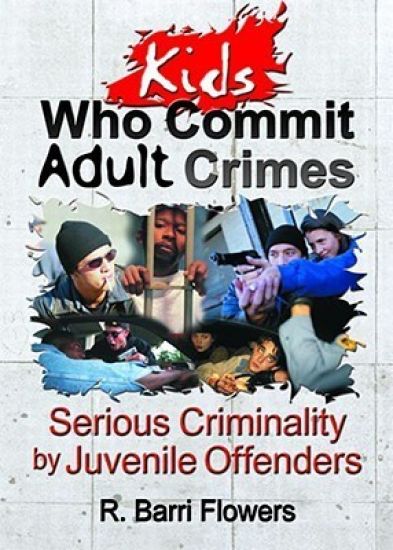
Kids Who Commit Adult Crimes

Kids Who Commit Adult Crimes

R. Barri Flowers

Routledge Member of the Taylor and Francis Group
2002
sidottu
Examine the factors that contribute to increasingly violent youth crimes in the United States! Kids Who Commit Adult Crimes: Serious Criminality by Juvenile Offenders is an examination of today’s serious, chronic, and violent youthful offender. This vital book explores the relationship between youth and serious, violent antisocial behavior in America, examining its antecedents, its onset, and its situational and motivating factors. From the Editor’s introduction: “The increasingly serious nature of juvenile criminal behavior has been felt across the country as youth violence, violent youth gangs, drug-related offenses, and other delinquent and criminal conduct has changed the way we regard minors and delinquent behavior. Recent times have seen an explosion in school tragedies, juvenile homicides, teen battering, date rape, youth family violence, teenage alcohol and drug abuse, and related youthful offenses.” Kids Who Commit Adult Crimes, divided into four parts, takes an incisive look at these issues and more:Part I explores serious juvenile crime, including its magnitude; youth violence; kids, drugs, and crime; school crime and violence; youth gangs and criminality; dating violence; and family violence. Part II examines explanations of juvenile delinquency and criminal behavior from biological, psychological, and sociological perspectives. Part III addresses juvenile crime and the justice system, including the police and juvenile offenders, youths and the juvenile and adult courts, and juvenile offenders in custody and confinement. Part IV examines responses to the problem of serious and violent juvenile offending and its precursors, including federal laws and prevention, intervention, and control strategies. Kids Who Commit Adult Crimes goes farther in its examination of youth who commit adult-like violence than other books in the field, with chapters on dating violence and family violence, in addition to school and gang violence, substance abuse issues, and more. Visit the author’s website at http://www.rbarriflowers.com
Kids Who Commit Adult Crimes

Kids Who Commit Adult Crimes

R. Barri Flowers

Routledge Member of the Taylor and Francis Group
2002
nidottu
Examine the factors that contribute to increasingly violent youth crimes in the United States! Kids Who Commit Adult Crimes: Serious Criminality by Juvenile Offenders is an examination of today’s serious, chronic, and violent youthful offender. This vital book explores the relationship between youth and serious, violent antisocial behavior in America, examining its antecedents, its onset, and its situational and motivating factors. From the Editor’s introduction: “The increasingly serious nature of juvenile criminal behavior has been felt across the country as youth violence, violent youth gangs, drug-related offenses, and other delinquent and criminal conduct has changed the way we regard minors and delinquent behavior. Recent times have seen an explosion in school tragedies, juvenile homicides, teen battering, date rape, youth family violence, teenage alcohol and drug abuse, and related youthful offenses.” Kids Who Commit Adult Crimes, divided into four parts, takes an incisive look at these issues and more:Part I explores serious juvenile crime, including its magnitude; youth violence; kids, drugs, and crime; school crime and violence; youth gangs and criminality; dating violence; and family violence. Part II examines explanations of juvenile delinquency and criminal behavior from biological, psychological, and sociological perspectives. Part III addresses juvenile crime and the justice system, including the police and juvenile offenders, youths and the juvenile and adult courts, and juvenile offenders in custody and confinement. Part IV examines responses to the problem of serious and violent juvenile offending and its precursors, including federal laws and prevention, intervention, and control strategies. Kids Who Commit Adult Crimes goes farther in its examination of youth who commit adult-like violence than other books in the field, with chapters on dating violence and family violence, in addition to school and gang violence, substance abuse issues, and more. Visit the author’s website at http://www.rbarriflowers.com
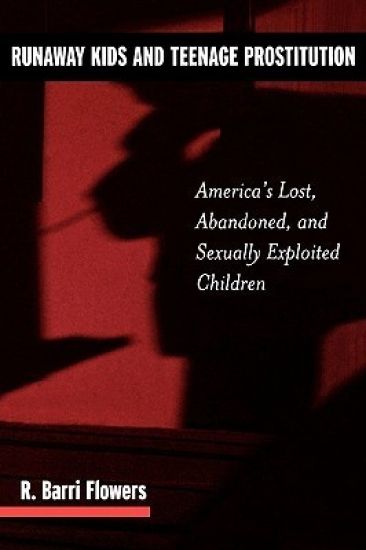
Runaway Kids and Teenage Prostitution

Runaway Kids and Teenage Prostitution

R. Barri Flowers

Praeger Publishers Inc
2001
sidottu
This concise and accessible new text examines the correlations between runaway children and teenage prostitution in the United States from a criminological, sociological, and psychological perspective. The author takes a systematic approach to defining and describing the differences between youth who run away from home and those who leave institutional settings and distinguishes the difference between runaway and throwaway children. A careful examination of teenage prostitution among girls and boys helps to illuminate the special problems faced by children who have run away. In addition, the author discusses laws related to runaways, teenage prostitution, and the sexual exploitation of minors as well as the criminal justice response to the problems. Runaways and prostitution involving youth in other countries is also explored. The text's findings support current conclusions on the characteristics of runaways, the relationship between runaways and teen prostitution, and the implications of running away from home. Runaway Kids and Teenage Prostitution is divided into five parts. Part I examines the scope and dynamics of running away and differentiates between runaways and throwaways. Part II explores teenage prostitution and provides information on girl and boy prostitutes and the people who exploit them. Child sexual abuse and child pornography as correlates to the problem are studied in Part III, and Part IV reviews the law that atttempts to combat teenage prostitution. Part V is devoted to an examination of the scope and significance of the problem in other countries. Together, these chapters provide readers with a clear picture of the problem of runaways and teenage prostitution in the United States and around the world.
Runaway Kids and Teenage Prostitution

Runaway Kids and Teenage Prostitution

R. Barri Flowers

Praeger Publishers Inc
2001
nidottu
This concise and accessible new text examines the correlations between runaway children and teenage prostitution in the United States from a criminological, sociological, and psychological perspective. The author takes a systematic approach to defining and describing the differences between youth who run away from home and those who leave institutional settings and distinguishes the difference between runaway and throwaway children. A careful examination of teenage prostitution among girls and boys helps to illuminate the special problems faced by children who have run away. In addition, the author discusses laws related to runaways, teenage prostitution, and the sexual exploitation of minors as well as the criminal justice response to the problems. Runaways and prostitution involving youth in other countries is also explored. The text's findings support current conclusions on the characteristics of runaways, the relationship between runaways and teen prostitution, and the implications of running away from home. Runaway Kids and Teenage Prostitution is divided into five parts. Part I examines the scope and dynamics of running away and differentiates between runaways and throwaways. Part II explores teenage prostitution and provides information on girl and boy prostitutes and the people who exploit them. Child sexual abuse and child pornography as correlates to the problem are studied in Part III, and Part IV reviews the law that atttempts to combat teenage prostitution. Part V is devoted to an examination of the scope and significance of the problem in other countries. Together, these chapters provide readers with a clear picture of the problem of runaways and teenage prostitution in the United States and around the world.
Minorities and Criminality

Minorities and Criminality

Ethel Brown; R. Barri Flowers

Praeger Publishers Inc
1990
nidottu
. . . Minorities and Criminality provides a cameo of valuable information about the relationship between minority status and criminality and the interaction of minorities with the criminal justice system. . . . A key strength of this book is that it provides a great deal of insight into the proclivities of different minority groups to engage in different types of criminal behavior. . . . This book would make an excellent source for persons newly becoming acquainted with the nature, scope, and dynamics of minority crime and victimization. Criminal Justice ReviewMinorities and Criminality examines the relationship between being a racial or ethnic minority member of American society and a victim or perpetrator of crime. The examination focuses specifically on blacks, Hispanics, Native Americans, and Asians--minority groups which in one way or another have been most affected by criminality and victimization. This exceptional volume explores historical mistreatment of these minority groups, current trends in victimization, patterns in criminal behavior, arrest and imprisonment among minority group members, theoretical models in criminality, differential enforcement of the law, and future implications in addressing minorities and criminality. Specific topics addressed include present trends in minority member victimization, explanations for crime causation among minority members, and the lack of etiological study on minority groups. Chapters on ethnic criminality address the dynamics and implications of black crime, the relationship between Hispanics and criminality, the high crime rate among Native Americans, and the role of minorities in organized crime, juvenile treatment issues, and topics related to the institutionalization of minority members. The final chapter suggests implications for effecting change in current dilemmas in the involvement of members of minority groups in crime.
Demographics and Criminality

Demographics and Criminality

R. Barri Flowers

Praeger Publishers Inc
1989
sidottu
As the problem of crime continues to worsen in the 1980s, the need for up-to-date, comprehensive information on its dynamics and incidence increases. This work, the fourth in a four-volume series, is the first study to focus exclusively on demographic trends in criminality and victimization for crime as a whole. Concerned with the broad picture of crime in America as well as specific demographic correlates and characteristics, it develops profiles of patterns in criminality and suggests ways of applying this demographic data to promote more effective crime control. Flowers begins by exploring the demographic aggregate features of crime and victimization in America, as well as geographical and temporal trends. The demographic correlates examined in the next section include age, gender, race, ethnicity, class, employment, income, education, marital status, and substance abuse. The third section is devoted to a survey of demographic characteristics of three deviant groups--habitual and career criminals, the prison population, and violent families. The author concludes with a discussion of the implications of demographics for the study and control of criminality and victimization in the years ahead. This book, together with its three companion volumes, will be an important resource for professionals, academians, and students in criminology, criminal justice, law, victimology, racial and ethnic studies, and related disciplines, as well as laypersons who seek greater insight into the world of crime.
Women and Criminality

Women and Criminality

Ethel Brown; R. Barri Flowers

Praeger Publishers Inc
1987
sidottu
This book is a welcome addition to the literature on women and criminality. It should be of particular interest to the general reader as a concise, well-organized and clearly written review of important aspects of this social problem. It would be excellent as a supplementary text in criminal justice, criminology, victimology, and women's studies courses. In addition to a selected bibliography, scholars will appreciate the excellent bibliographical essay which provides a basis for further research. Criminal Justice Policy ReviewThe study of women in relation to crime and the justice system remains neglected by most criminologists and justice officials--until now. This remarkable volume breaks new ground by presenting a three-part examination of women as victims of crime, as criminals, and as professionals working in criminal justice. Within this scope, the author offers significant perspectives through empirical studies, as well as experts in the fields of criminology and criminal justice. The multi-faceted roles of women with respect to crime and the justice system are explored individually and collectively, as well as in relation to the roles of men. The significance of the historical treatment of women is also examined, in addition to the women's movement, the rise in women's crime and victimization, theoretical and statistical approaches, and prominent literature in the field. In addition, pertinent social and legal questions for the future are addressed.
Children and Criminality

Children and Criminality

R. Barri Flowers

Praeger Publishers Inc
1986
sidottu
In his study of children and criminality, criminologist and research analyst Ronald Flowers provides an understanding of the relationship between child victimization and juvenile delinquency as well as a comprehensive review of the literature. Assessing the effectiveness of present conceptual frameworks, modes of research, and social and legal measures, he offers recommendations for furthering professional and research efforts in the field. His analysis blends the findings of leading experts and researchers in a variety of disciplines with relevant FBI and law enforcement data. An additional feature is the model statute for the study, prevention, and treatment of child victimization in all of its guises.