Kirjojen hintavertailu – 12 859 827 kirjaa ja 27 kauppaa

Kirjailija

R. H. W. Dillard

Kirjat ja teokset yhdessä paikassa: 3 kirjaa, julkaisuja vuosilta 1994–2001, suosituimpiin kuuluu Just Here, Just Now. Vertaile teosten hintoja ja tarkista saatavuus suomalaisista kirjakaupoista.

Nimi esiintyy myös muodoissa: R.H.W. Dillard

3 kirjaa

Kirjojen julkaisuvuodet: 1994–2001.

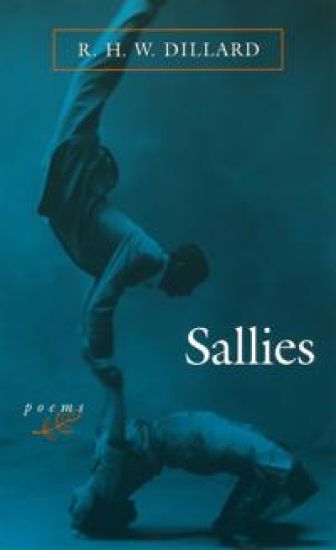
Sallies

Sallies

R. H. W. Dillard

Louisiana State University Press
2001
nidottu
Darting into the unknown as only the best poetry safely can, R. H. W. Dillard's new collection bursts with bold violations of customs, flights of fancy, and insouciant leaps of tone and form. Unwaveringly skillful, these brave sallies explore the complex texture of life and death, light and dark, in ""earth's eastering whirl,"" unafraid to confront paradox and finding in their sudden swift grace moments of ""poise and equipoise""- the preciousness of now in the face of the finite: ""Somewhere eternity extends itself like Saturday / with so many things to do and voices in the air. / Somewhere a light will fill forever / like straw spun into gold.""Dillard counterbalances his meditative forays with comic excursions into forbidden territory, including a major poem on flatulence- an ode to bran; three appreciations in verse of fellow writers' work; a barbed academic memo to a dim colleague; and, audaciously, a textbook anthologist's brief history of American poetry based on the mistaken premise that all the poets were Chinese-American acrobats (""The Flying Changs""). Sallies' daring manifests in complex rhyme patterns, unrhymed verse, concrete and found poems, and a closing set of poems complimenting a young woman in the tradition of Dante's poems to Bea-trice and drawing together the themes and stylistic variety of the entire book in a celebration of, in Emerson's words, the ""open hours / When the Gods' will sallies free"": ""By chance (or some higher plan) someone arrives / Just when we need them, shows us the way / From the window's ledge or to the open door, / Helps us to find ourselves . . . and more.
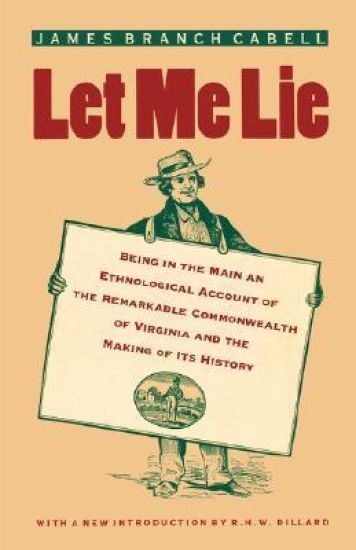
Let Me Lie

Let Me Lie

James Branch Cabell; R.H.W. Dillard

University of Virginia Press
2001
nidottu
When Let Me Lie was first published in 1947, most reviewers missed the double meaning of the book's title. Deaf to James Branch Cabell's many-layered ironic wit, they read the book as a paean to the old South. Readers of this new paperback edition are unlikely to repeat the mistake. Let Me Lie is indeed a carefully researched and brilliantly written historical narrative of Virginia from 1559 to 1946 - focusing on Tidewater, Richmond, and the Northern Neck - but as a fictional scholar remarks in the book, Cabell's history is ""both accurate and injudicious."" Virginia's story of itself, Cabell claims, depends on illusion and myth, and his skill as a satirist allows him to construct and deflate these myths simultaneously. Ranging in topic from Don Luis de Velasco and Captain John Smith to Edgar Allan Poe and Ellen Glasgow, from Confederate heroes to the oddities of the post-Civil War Old Dominion, Let Me Lie remains compulsively readable, as history, entertainment, or both.
Just Here, Just Now

Just Here, Just Now

R. H. W. Dillard

Louisiana State University Press
1994
nidottu
From the epigraph that opens this collection to the last lines of the final poem, Just Here, Just Now is a sustained meditation on the presence of spirit in the world of daily change and variety, the just here, just now. R. H. W. Dillard asserts that ""time is precious,"" not only because it is fleeting but because its particulars are precious in their holiness. Dillard's concern is with the presence of the universal in the particular, or as he puts it in ""Loading a Shoebox,"" with ""this day, / Another day like every day / Like no other.""Just Here, Just Now is as varied in its approaches to the spirit as it is in its poetic forms and subjects (which include serial murderers and the fall of the Soviet empire as well as personal memories of family, the death of a mother, and long letters to close friends). The collection moves from dark visions of love and loss in the first pages to meditations inspired by artists ranging from Henri Rousseau, Edgar Allan Poe, and Alfred Hitchcock to Thelonius Monk and Ornette Coleman. Many poems in the book's later pages deal directly with issues of meaning and belief, resolving the problems of the earlier poems through discoveries of love's presence even in loss and the mutable moment. As ""Winter Letter to Bluefield"" concludes: ""It is true we lose the things we hold dearest / But equally true that because we hold them dear / We find ourselves which we otherwise had lost, / Find ourselves whole, just now, just here.