Kirjojen hintavertailu – 12 859 826 kirjaa ja 27 kauppaa

Kirjailija

R. Keith Sawyer

Kirjat ja teokset yhdessä paikassa: 8 kirjaa, julkaisuja vuosilta 1997–2024, suosituimpiin kuuluu Pretend Play As Improvisation. Vertaile teosten hintoja ja tarkista saatavuus suomalaisista kirjakaupoista.

8 kirjaa

Kirjojen julkaisuvuodet: 1997–2024.

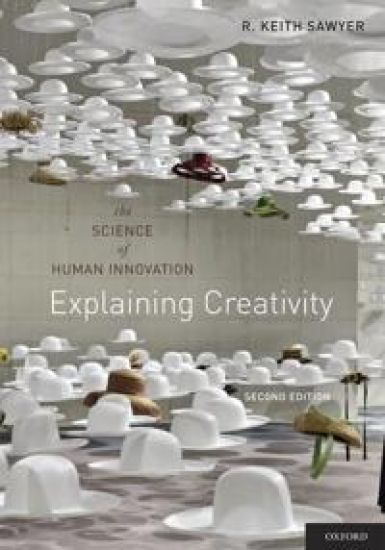
Explaining Creativity

Explaining Creativity

R. Keith Sawyer; Danah Henriksen

OXFORD UNIVERSITY PRESS INC
2024
sidottu

Halvin toimitettuna 149,40 €

Explaining Creativity is an accessible introduction to the latest scientific research on creativity. The book summarizes and integrates a broad range of research in psychology and related scientific fields. In the last 50 years, psychologists, anthropologists, and sociologists have devoted increased attention to creativity; we now know more about creativity than at any point in history. Explaining Creativity examines research on thinking processes, personality, culture, mental health, groupwork, technology, self-beliefs, and more. It also reviews creativity across fields such as the arts, science, theater, music, and writing. This new edition maintains the broad and practical, yet still detailed approach of the previous editions, but it features updated coverage on the full landscape of creative cognition, creative practice, and social and cultural contexts for creativity. With three new chapters on Creativity and Technology, Creativity and Wellbeing, and Creativity and Self, this third edition provides a comprehensive understanding of creativity for anyone interested in the topic.
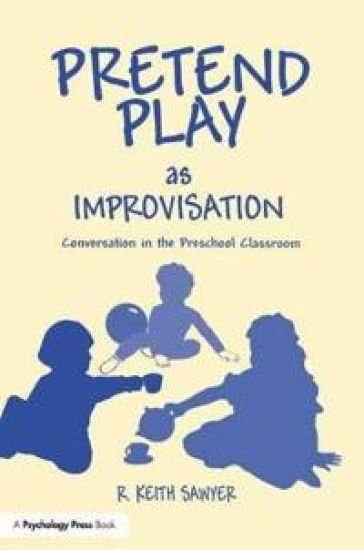
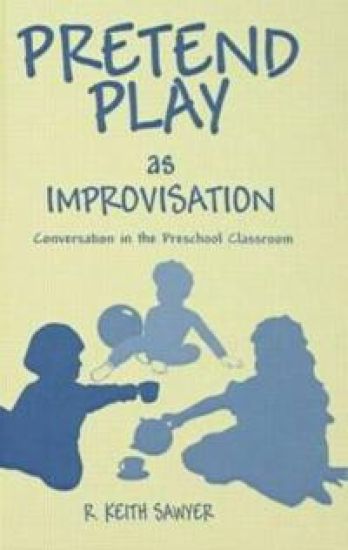
Pretend Play As Improvisation

Pretend Play As Improvisation

R. Keith Sawyer

Psychology Press Ltd
2016
nidottu
Everyday conversations including gossip, boasting, flirting, teasing, and informative discussions are highly creative, improvised interactions. Children's play is also an important, often improvisational activity. One of the most improvisational games among 3- to 5-year-old children is social pretend play--also called fantasy play, sociodramatic play, or role play. Children's imaginations have free reign during pretend play. Conversations in these play episodes are far more improvisational than the average adult conversation. Because pretend play occurs in a dramatized, fantasy world, it is less constrained by social and physical reality. This book adds to our understanding of preschoolers' pretend play by examining it in the context of a theory of improvisational performance genres. This theory, derived from in-depth analyses of the implicit and explicit rules of theatrical improvisation, proves to generalize to pretend play as well. The two genres share several characteristics: * There is no script; they are created in the moment. * There are loose outlines of structure which guide the performance. * They are collective; no one person decides what will happen. Because group improvisational genres are collective and unscripted, improvisational creativity is a collective social process. The pretend play literature states that this improvisational behavior is most prevalent during the same years that many other social and cognitive skills are developing. Children between the ages of 3 and 5 begin to develop representations of their own and others' mental states as well as learn to represent and construct narratives. Freudian psychologists and other personality theorists have identified these years as critical in the development of the personality. The author believes that if we can demonstrate that children's improvisational abilities develop during these years--and that their fantasy improvisations become more complex and creative--it might suggest that these social skills are linked to the child's developing ability to improvise with other creative performers.
Explaining Creativity

Explaining Creativity

R. Keith Sawyer

Oxford University Press Inc
2012
nidottu
Explaining Creativity is an accessible introduction to the latest scientific research on creativity. The book summarizes and integrates a broad range of research in psychology and related scientific fields. In the last 40 years, psychologists, anthropologists, and sociologists have devoted increased attention to creativity; we now know more about creativity than at any point in history. Explaining Creativity considers not only arts like painting and writing, but also science, stage performance, business innovation, and creativity in everyday life. Sawyer's approach is interdisciplinary. In addition to examining psychological studies on creativity, he draws on anthropologists' research on creativity in non-Western cultures, sociologists' research on the situations, contexts, and networks of creative activity, and cognitive neuroscientists' studies of the brain. He moves beyond the individual to consider the social and cultural contexts of creativity, including the role of collaboration in the creative process.
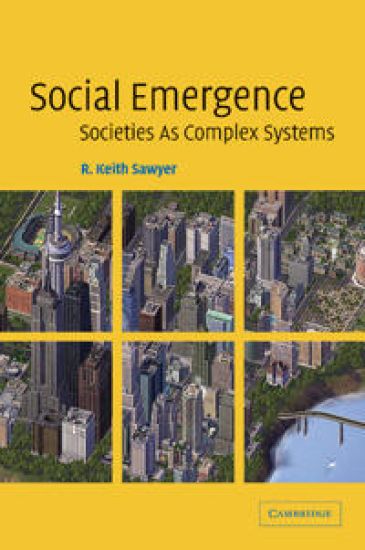
Social Emergence

Social Emergence

R. Keith Sawyer

Cambridge University Press
2005
pokkari
Can we understand important social issues by studying individual personalities and decisions? Or are societies somehow more than the people in them? Sociologists have long believed that psychology can't explain what happens when people work together in complex modern societies. In contrast, most psychologists and economists believe that if we have an accurate theory of how individuals make choices and act on them, we can explain pretty much everything about social life. Social Emergence takes a new approach to these longstanding questions. Sawyer argues that societies are complex dynamical systems, and that the best way to resolve these debates is by developing the concept of emergence, focusing on multiple levels of analysis - individuals, interactions, and groups - and with a dynamic focus on how social group phenomena emerge from communication processes among individual members. This book makes a unique contribution not only to complex systems research but also to social theory.
Creativity and Development

Creativity and Development

R. Keith Sawyer; Vera John-Steiner; Seana Moran; Robert J Sternberg; David Henry Feldman; Jeanne Nakamura; Mihaly Csikszentmihalyi

Oxford University Press Inc
2003
nidottu
What is creativity, and where does it come from? Creativity and Development explores the fascinating connections and tensions between creativity research and developmental psychology, two fields that have largely progressed independently of each other-until now. In this book, scholars influential in both fields explore the emergence of new ideas, and the development of the people and situations that bring them to fruition. The uniquely collaborative nature of Oxford's Counterpoints series allows them to engage in a dialogue, addressing the key issues and potential benefits of exploring the connections between creativity and development. Creativity and Development is based on the observation that both creativity and development are processes that occur in complex systems, in which later stages or changes emerge from the prior state of the system. In the 1970s and 1980s, creativity researchers shifted their focus from personality traits to cognitive and social processes, and the co-authors of this volume are some of the most influential figures in this shift. The central focus on system processes results in three related volume themes: how the outcomes of creativity and development emerge from dynamical processes, the interrelation between individual processes and social processes, and the role of mediating artefacts and domains in developmental and creative processes. The chapters touch on a wide range of important topics, with the authors drawing on their decades of research into creativity and development. Readers will learn about the creativity of children's play, the creative aspects of children's thinking, the creative processes of scientists, the role of education and teaching in creative development, and the role of multiple intelligences in both creativity and development. The final chapter is an important dialogue between the authors, who engage in a roundtable discussion and explore key questions facing contemporary researchers, such as: Does society suppress children's creativity? Are creativity and development specific to an intelligence or a domain? What role do social and cultural contexts play in creativity and development? Creativity and Development presents a powerful argument that both creativity scholars and developmental psychologists will benefit by becoming more familiar with each other's work.
Group Creativity

Group Creativity

R. Keith Sawyer

Psychology Press
2003
nidottu
Group Creativity explores the unique form of creativity that emerges from collaborating groups. Dr. Sawyer draws on his studies of jazz ensembles and improvisational theater groups to develop a model of creative group processes. He applies this model of group creativity to a wide range of collaborating groups, including group learning in classrooms and innovative teams in organizations. In group creativity, a group comes together to collaboratively create in real time. The creative inspiration emerges from the interaction and communication among the members, and makes the result more than the sum of its parts. The dynamic, moment-to-moment communication among jazz musicians and improvising actors is the primary topic of the book. Sawyer explores performers' close listening and sensitivity, the submerging of the ego to the group mind, and the ways that performers work together to create something better than and different from what one solitary individual could create alone. These explorations provide insight into all forms of group creativity and collaboration.
Group Creativity

Group Creativity

R. Keith Sawyer

Psychology Press
2003
sidottu
Group Creativity explores the unique form of creativity that emerges from collaborating groups. Dr. Sawyer draws on his studies of jazz ensembles and improvisational theater groups to develop a model of creative group processes. He applies this model of group creativity to a wide range of collaborating groups, including group learning in classrooms and innovative teams in organizations. In group creativity, a group comes together to collaboratively create in real time. The creative inspiration emerges from the interaction and communication among the members, and makes the result more than the sum of its parts. The dynamic, moment-to-moment communication among jazz musicians and improvising actors is the primary topic of the book. Sawyer explores performers' close listening and sensitivity, the submerging of the ego to the group mind, and the ways that performers work together to create something better than and different from what one solitary individual could create alone. These explorations provide insight into all forms of group creativity and collaboration.
Pretend Play As Improvisation

Pretend Play As Improvisation

R. Keith Sawyer

Psychology Press
1997
sidottu
Everyday conversations including gossip, boasting, flirting, teasing, and informative discussions are highly creative, improvised interactions. Children's play is also an important, often improvisational activity. One of the most improvisational games among 3- to 5-year-old children is social pretend play--also called fantasy play, sociodramatic play, or role play. Children's imaginations have free reign during pretend play. Conversations in these play episodes are far more improvisational than the average adult conversation. Because pretend play occurs in a dramatized, fantasy world, it is less constrained by social and physical reality. This book adds to our understanding of preschoolers' pretend play by examining it in the context of a theory of improvisational performance genres. This theory, derived from in-depth analyses of the implicit and explicit rules of theatrical improvisation, proves to generalize to pretend play as well. The two genres share several characteristics: * There is no script; they are created in the moment. * There are loose outlines of structure which guide the performance. * They are collective; no one person decides what will happen. Because group improvisational genres are collective and unscripted, improvisational creativity is a collective social process. The pretend play literature states that this improvisational behavior is most prevalent during the same years that many other social and cognitive skills are developing. Children between the ages of 3 and 5 begin to develop representations of their own and others' mental states as well as learn to represent and construct narratives. Freudian psychologists and other personality theorists have identified these years as critical in the development of the personality. The author believes that if we can demonstrate that children's improvisational abilities develop during these years--and that their fantasy improvisations become more complex and creative--it might suggest that these social skills are linked to the child's developing ability to improvise with other creative performers.