Kirjojen hintavertailu – 12 903 725 kirjaa ja 27 kauppaa

Kirjailija

R. Saravanan

Kirjat ja teokset yhdessä paikassa: 36 kirjaa, julkaisuja vuosilta 2008–2026, suosituimpiin kuuluu Herbal Plants -Immunomodulators. Vertaile teosten hintoja ja tarkista saatavuus suomalaisista kirjakaupoista.

Nimi esiintyy myös muodoissa: R Saravanan

36 kirjaa

Kirjojen julkaisuvuodet: 2008–2026.

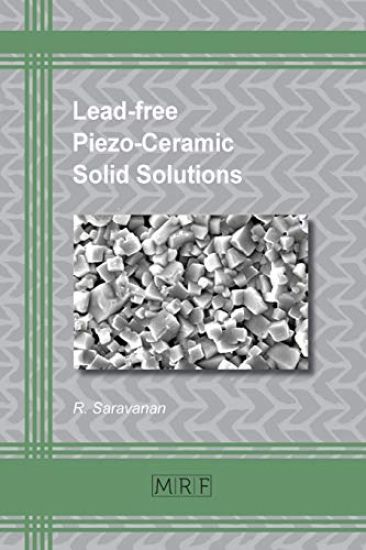
Lead-free Piezo-Ceramic Solid Solutions

Lead-free Piezo-Ceramic Solid Solutions

R Saravanan

Materials Research Forum LLC
2018
pokkari
Discover in this book the results of a systematic investigation of the dielectric, ferroelectric and piezoelectric properties of promising lead-free solid solution ceramics. Lead-based perovskite ceramics are most important for piezoelectric and ferroelectric devices, but the toxicity of lead has raised serious environmental issues. This is why much research presently is concerned with the development of efficient lead-free systems. Lead-free ceramics with the most promising piezoelectric properties are based on barium titanate, modified sodium potassium niobate, sodium bismuth titanate, etc. The present book presents the results of a systematic investigation of the dielectric, ferroelectric and piezoelectric properties of this type of lead-free solid solution ceramics as obtained by way of powder X-ray diffraction, scanning electron microscopy, energy dispersive X-ray spectroscopy, UV-visible spectroscopy, dielectric, ferroelectric and piezoelectric measurements. Also determined was the electron density distribution of five series of lead-free barium titanate piezoelectric ceramics using experimental X-ray diffraction data.
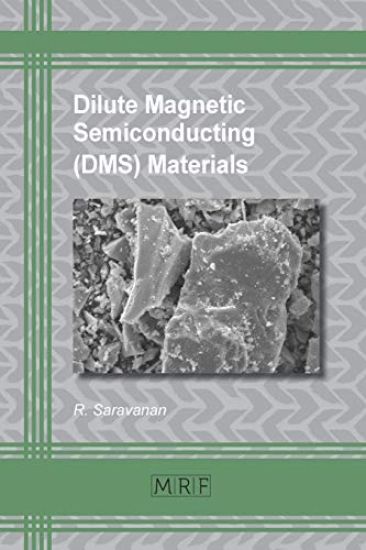
Dilute Magnetic Semiconducting (DMS) Materials

Dilute Magnetic Semiconducting (DMS) Materials

R Saravanan

Materials Research Forum LLC
2018
pokkari
Diluted Magnetic Semiconductors (DMS) play a vital role in modern electronics industry. It is important to understand the fundamental properties of these materials in order to apply them to their full potential. This book presents an analysis of the charge density distribution and other properties of some silicon and germanium based diluted magnetic semiconductors. A quantitative analysis of the charge density distribution has been done in order to obtain measurements of the charges involved in the bonding, which are decisive for the physical and chemical properties of the DMS materials. Also, the local structures of the materials have been analyzed by studying their powder X-ray diffraction intensities. Analysis of the magnetic properties of the DMS materials is mandatory and has been accomplished by magnetic measurements carried out using a vibrating sample magnetometer. The morphology of the DMS materials has been studied using scanning electron micrographs.
Non-Linear Optical Materials

Non-Linear Optical Materials

R Saravanan

Materials Research Forum LLC
2018
pokkari
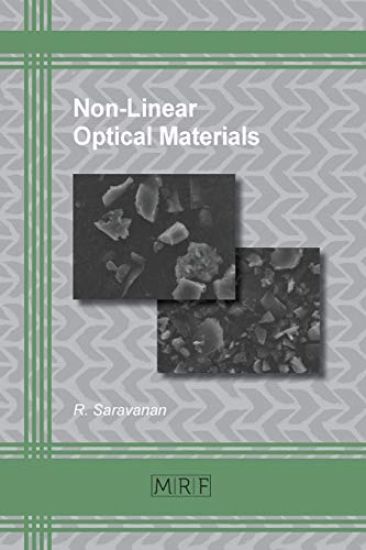
Chapter I provides an introduction to linear optics and the physical origin of non-linear optical phenomena. The principle characterization techniques for analyzing the microstructural, optical and morphological properties of non-linear optical materials are discussed: Powder X-ray diffraction (PXRD), UV-Visible spectroscopy, scanning electron microscopy (SEM), and energy dispersive X-ray spectroscopy (EDS). Also presented are methods for the structural refinement of these materials, as well as the analysis of electron density distribution by means of novel techniques and the corresponding computational procedures. Chapter II describes sample preparation and PXRD analysis of a number of non-linear optical materials, such as PbMoO4, LiNbO3, Ce: Gd3Ga5O12, CaCO3, Yb: CaF2, and Al2O3, Cr: Al2O3, V: Al2O3. Chapter III deals with the optical properties and micro-structural characterization of non-linear optical materials, such as PbMoO4, LiNbO3, Ce: Gd3Ga5O12, CaCO3, Yb: CaF2, and Al2O3, Cr: Al2O3, V: Al2O3. The band gap, crystallite size and particle size of these materials are determined by means of UV-visible spectroscopy, powder X-ray profile analysis and scanning electron microscopy. Also discussed is the elemental compositional analysis for PbMoO4, LiNbO3, Ce: Gd3Ga5O12, CaCO3, Yb: CaF2, and Al2O3, Cr: Al2O3, V: Al2O3. Chapter IV focusses on the electron density distribution analysis of non-linear optical materials, such as PbMoO4, LiNbO3, Ce: Gd3Ga5O12, CaCO3, Yb: CaF2, and Al2O3, Cr: Al2O3, V: Al2O3. The results are presented in the form of electron density maps and profiles. The bonding behavior of these materials is studied using both quantitative and qualitative analysis. Chapter V centers on the inter-atomic ordering in non-linear optical materials, and presents computations of the pair distribution function (atomic correlation function) for selected materials.
Solid Oxide Fuel Cell (SOFC) Materials

Solid Oxide Fuel Cell (SOFC) Materials

R Saravanan

Materials Research Forum LLC
2018
pokkari
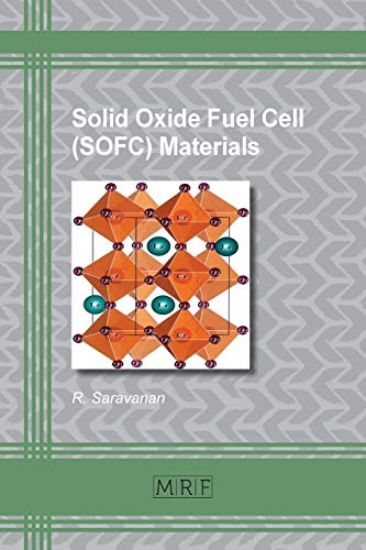
Developing materials for SOFC applications is one of the key topics in energy research. The book focuses on manganite structured materials, such as doped lanthanum chromites and lanthanum manganites, which have interesting properties: thermal and chemical stability, mixed ionic and electrical conductivity, electrocatalytic activity, magnetocaloric property and colossal magnetoresistance (CMR). These materials have applications in solid oxide fuel cells, high temperature NOx sensors, hard disk read heads, magnetic sensors and magnetoresistive random access memories. For the first time, the charge density distributions have been studied in these materials as synthesized by high temperature solid state reaction. Charge density analysis is helpful in understanding the physical and chemical properties of materials and in developing optimized structures. The morphological, elemental, optical and magnetic properties of the materials have also been studied.
Metal and Alloy Bonding - An Experimental Analysis

Metal and Alloy Bonding - An Experimental Analysis

R. Saravanan; M. Prema Rani

Springer London Ltd
2014
nidottu
Charge density analysis of materials provides a firm basis for the evaluation of the properties of materials. The design and engineering of a new combination of metals requires a firm knowledge of intermolecular features. Recent advances in technology and high-speed computation have made the crystal X-ray diffraction technique a unique tool for the determination of charge density distribution in molecular crystal. Methods have been developed to make experimental probes capable of unraveling the features of charge densities in the intra- and inter-molecular regions of crystal structures. In Metal and Alloy Bonding - An Experimental Analysis, the structural details of materials are elucidated with the X-ray diffraction technique. Analyses of the charge density and the local and average structure are given to reveal the structural properties of technologically important materials. Readers will gain a new understanding of the local and average structure of existing materials. The electron density, bonding, and charge transfer studies in Metal and Alloy Bonding - An Experimental Analysis contain useful information for researchers in the fields of physics, chemistry, materials science, and metallurgy. The properties described in these studies can contribute to the successful engineering of these technologically important materials.
Mobile Phones for Agricultural Extension

Mobile Phones for Agricultural Extension

R. Saravanan

New India Publishing Agency
2014
nidottu
The present book focuses on the mobile phone applications for agricultural extension in various countries, including Asia, Africa, Latin America, and Europe. It also offers a global review of m-agriculture initiatives, discusses the content generation process, and examines the socio-economic impact of mobile phone-based agro-advisory services. The book delves into the development of mobile phone-based agro-advisory services, analyzing their content, delivery mode, business model, and utility. It provides an overview of the evolution of mobile phones as an extension tool in different countries worldwide. This publication is designed to offer valuable insights into m-agriculture initiatives for agricultural extension across the globe to agricultural students, extension professionals, researchers, and policy makers. The lessons learned from these m-agriculture initiatives can serve as a guide for the implementation and evolution of mobile-based advisory services in agriculture.
Mobile Phones for Agricultural Extension

Mobile Phones for Agricultural Extension

R. Saravanan

New India Publishing Agency
2014
sidottu
The book at hand offers a comprehensive exploration of mobile phone applications for agricultural extension in countries across Asia, Africa, Latin America, and Europe. In addition, it features a global review of m-agriculture initiatives, including content generation processes and the socio-economic impact of mobile phone-based agro-advisory services. The book delves into the development of mobile phone-based agro-advisory services, examining their content, delivery mode, business model, and utility. It also provides valuable insights into the evolution of mobile phones as an extension tool in various countries around the world. This information will be beneficial to agricultural students, extension professionals, researchers, and policy makers who wish to better understand and work with m-agriculture initiatives. The lessons learned from these initiatives can inform the implementation and evolution of mobile-based advisory services in agriculture.
Metal and Alloy Bonding - An Experimental Analysis

Metal and Alloy Bonding - An Experimental Analysis

R. Saravanan; M. Prema Rani

Springer London Ltd
2011
sidottu
Charge density analysis of materials provides a firm basis for the evaluation of the properties of materials. The design and engineering of a new combination of metals requires a firm knowledge of intermolecular features. Recent advances in technology and high-speed computation have made the crystal X-ray diffraction technique a unique tool for the determination of charge density distribution in molecular crystal. Methods have been developed to make experimental probes capable of unraveling the features of charge densities in the intra- and inter-molecular regions of crystal structures. In Metal and Alloy Bonding - An Experimental Analysis, the structural details of materials are elucidated with the X-ray diffraction technique. Analyses of the charge density and the local and average structure are given to reveal the structural properties of technologically important materials. Readers will gain a new understanding of the local and average structure of existing materials. The electron density, bonding, and charge transfer studies in Metal and Alloy Bonding - An Experimental Analysis contain useful information for researchers in the fields of physics, chemistry, materials science, and metallurgy. The properties described in these studies can contribute to the successful engineering of these technologically important materials.
Information and Communication Technology for Agriculture and Rural Development

Information and Communication Technology for Agriculture and Rural Development

R. Saravanan; C. Kathiresan; T. Indra Devi

New India Publishing Agency
2011
sidottu
The articles contained within this book address a variety of topics, including the digital divide in rural India, e-Agriculture challenges, cyber extension, an overview of Village Knowledge Centres (VKCs), the Community Information Centre initiative in Orissa, the SATCOM application in Karnataka State, Model e-Villages in Arunachal Pradesh, the Nationwide InDG web portal initiative for rural development, Kisan Mobile Sandesh (KMS), Dynamic Market Information (DMI) via web and mobile in Tamil Nadu, expert systems for pest and disease diagnosis in rubber, Interactive Multimedia Compact Disc (IMCD), Village Information Centres among Dairy Farmers in Tamil Nadu, the KISSAN initiative of Kerala State, Mobile Agricultural School and Services (MASS) in Jharkhand, Farmers Database creation in Darjeeling District of West Bengal, Village Resource Centres (VRCs) in Uttaranchal, Pest Surveillance of Rice using satellite data, Techmode Approach for Distance Learning Courses for Field Veterinarians in Maharashtra, Information Retrieval System for Buffalo Reproduction, Web Portals and Digital Data base in Agroforestry, Watershed Modelling using GIS and Remote Sensing in Gujarat State, e-Readiness and Participation Level of Akshya and KISSAN Kerala Beneficiaries and VRC & CIC Network in Assam, Internet utilization pattern, evaluation of Kissan Call Centres (KCCs), ICT adoption level, impact, stakeholders feedback, policy implications, and recommendations.
Information and Communication Technology for Agriculture and Rural Development

Information and Communication Technology for Agriculture and Rural Development

R. Saravanan; C. Kathiresan; T. Indra Devi

New India Publishing Agency
2011
nidottu
The articles featured in this book explore a range of topics, including the digital divide in rural India, e-agriculture challenges, cyber extension, an overview of Village Knowledge Centers (VKCs), the Community Information Center initiative in Orissa, SATCOM applications in Karnataka State, Model e-Villages in Arunachal Pradesh State of North-East India, the Nationwide InDG web portal initiative for rural development, Kisan Mobile Sandesh (KMS), Dynamic Market Information (DMI) by Web and Mobile in Tamil Nadu, expert systems for pest and disease diagnosis in rubber, Interactive Multimedia Compact Disc (IMCD), Village Information Centers among Dairy Farmers in Tamil Nadu, KISSAN initiative of Kerala State, Mobile Agricultural School and Services (MASS) in Jharkhand, Farmers Database creation in Darjeeling District of West Bengal, Village Resource Centers (VRCs) in Uttaranchal, Pest Surveillance of Rice using satellite data, Techmode Approach for Distance Learning Courses for Field Veterinarians in Maharashtra, Information Retrieval System for Buffalo Reproduction, Web Portals and Digital Data Bases in Agroforestry, Watershed Modeling using GIS and Remote Sensing in Gujarat State, e-Readiness and Participation Level of Akshya and KISSAN Kerala Beneficiaries and VRC & CIC Network in Assam, Internet Utilization Pattern, Evaluation of Kissan Call Centers (KCCs), ICT Adoption Level, Impact, Stakeholders Feedback, Policy Implications, and Recommendations.
ICTs for Agricultural Extension

ICTs for Agricultural Extension

R. Saravanan

New India Publishing Agency
2010
sidottu
This book aims to document the National Policy on Information and Communication Technologies (ICTs) in agricultural extension, including ICT infrastructure and related issues. The book also includes case studies on innovative ICTs for agricultural extension initiatives, such as Village knowledge centers, information kiosks, mobile ICT units, web portals, digital databases, and networks, rural telecenters, farmer call centers, mobile telephony, video conferencing, offline multimedia CDs, decision support systems, expert systems, innovative community radio and television programs, and open distance learning. This book will be beneficial for agricultural extension students, academicians, scientists, practitioners, administrators, and policy makers, as it provides a framework for the design and implementation of sustainable ICT-enabled extension services for agricultural development. The book compiles the ICTs for Agricultural Extension: Global Experiments, Innovations, and Experiences from twenty-eight countries and offers valuable insights for those interested in this field.
ICTs for Agricultural Extension

ICTs for Agricultural Extension

R. Saravanan

New India Publishing Agency
2010
nidottu
This book aims to provide a comprehensive documentation of the National Policy on ICTs in agricultural extension, including ICT infrastructure and related issues. It also features case studies on innovative ICTs for agricultural extension initiatives, such as Village knowledge centres, information kiosks, mobile ICT units, web portals, digital databases and networks, rural telecentres, farmer call centres, mobile telephony, video conference, offline multimedia CDs, decision support systems, expert systems, innovative community radio and television programmes, and open distance learning. The book is relevant and useful to agricultural extension students, academicians, scientists, practitioners, administrators, and policy makers who seek a framework for designing and implementing sustainable ICT-enabled extension services for agricultural development. The case studies presented in this book are drawn from twenty-eight countries and will provide valuable insights into global experiments, innovations, and experiences with ICTs in agricultural extension.
Agricultural Extension

Agricultural Extension

R. Saravanan

New India Publishing Agency
2008
nidottu
Agricultural extension is currently undergoing significant global changes, with a growing demand for public extension reform. As a result, the agricultural knowledge infrastructure is evolving, giving rise to a variety of extension actors and innovative solutions to meet the needs of farmers. This book aims to document the past experiences and recent developments in agricultural knowledge information systems. The book consists of 14 country case studies, including Afghanistan, Benin, Cote dIvoire, Ghana, India, Iran, Mozambique, Nepal, Peru, the Philippines, Trinidad and Tobago, and Zimbabwe. These country studies are intended to provide insights into the experiences of extension systems and the various global agricultural extension reform measures, such as decentralization, privatization, demand-driven, and cost-recovery approaches. Additionally, the book explores institutional pluralism, including the roles of public, private, and non-governmental organizations, as well as innovative extension approaches such as farmer-to-farmer extension, participatory, and self-help group approaches, and ICT initiatives. This book will be of interest to agricultural extension students, academicians, scientists, practitioners, administrators, and policy makers who are looking to design future reforms, advance pluralistic extension systems, and integrate innovations into their extension approaches.
Agricultural Extension

Agricultural Extension

R. Saravanan

New India Publishing Agency
2008
sidottu
Agricultural extension is currently undergoing significant transformations around the world, with a heightened demand for public extension reform. The knowledge infrastructure for agriculture is evolving in a big way, as new actors and innovations emerge to cater to the needs of farmers. This book aims to document the past experiences and recent developments in the agriculture knowledge information systems by compiling the experiences of 14 countries, including Afghanistan, Benin, Cote dIvoire, Ghana, India, Iran, Mozambique, Nepal, Peru, Philippines, Trinidad and Tobago, and Zimbabwe. The 14 countries covered in the book highlight the various extension system reforms that are being implemented worldwide, including decentralization, privatization, demand-driven, and cost-recovery approaches, as well as institutional pluralism involving public, private, and NGO actors. Additionally, the book also showcases various innovations in agricultural extension, such as farmer-to-farmer extension, participatory and self-help group approaches, and ICT initiatives. This book will be of great relevance to agricultural extension students, academicians, scientists, practitioners, administrators, and policy-makers who are looking to design future reforms, advance pluralistic extension systems, and integrate innovations into their extension approaches.