Kirjojen hintavertailu – 12 903 724 kirjaa ja 27 kauppaa
Kirjailija
R. W. Emerson
Kirjat ja teokset yhdessä paikassa: 26 kirjaa, julkaisuja vuosilta 2008–2025, suosituimpiin kuuluu The conduct of life . by R.W. Emerson. Vertaile teosten hintoja ja tarkista saatavuus suomalaisista kirjakaupoista.
In "Nature", Emerson lays out and attempts to solve an abstract problem: that humans do not fully accept nature's beauty. He writes that people are distracted by the demands of the world, whereas nature gives but humans fail to reciprocate. The essay consists of eight sections: Nature, Commodity, Beauty, Language, Discipline, Idealism, Spirit and Prospects. Each section takes a different perspective on the relationship between humans and nature. In the essay Emerson explains that to experience the "wholeness" with nature for which we are naturally suited, we must be separate from the flaws and distractions imposed on us by society. Emerson believed that solitude is the single mechanism through which we can be fully engaged in the world of nature, writing "To go into solitude, a man needs to retire as much from his chamber as from society. I am not solitary whilst I read and write, though nobody is with me. But if a man would be alone, let him look at the stars." When a person experiences true solitude, in nature, it "take s] him away". Society, he says, destroys wholeness, whereas "Nature, in its ministry to man, is not only the material, but is also the process and the result. All the parts incessantly work into each other's hands for the profit of man. The wind sows the seed; the sun evaporates the sea; the wind blows the vapor to the field; the ice, on the other side of the planet, condenses rain on this; the rain feeds the plant; the plant feeds the animal; and thus the endless circulations of the divine charity nourish man." Emerson defines a spiritual relationship. In nature a person finds its spirit and accepts it as the Universal Being. He writes: "Nature is not fixed but fluid; to a pure spirit, nature is everything."
Ralph Waldo Emerson (May 25, 1803 - April 27, 1882) was an American essayist, lecturer, and poet who led the transcendentalist movement of the mid-19th century. He was seen as a champion of individualism and a prescient critic of the countervailing pressures of society, and he disseminated his thoughts through dozens of published essays and more than 1,500 public lectures across the United States. Emerson gradually moved away from the religious and social beliefs of his contemporaries, formulating and expressing the philosophy of transcendentalism in his 1836 essay "Nature". Following this work, he gave a speech entitled "The American Scholar" in 1837, which Oliver Wendell Holmes Sr. considered to be America's "intellectual Declaration of Independence". Emerson wrote most of his important essays as lectures first and then revised them for print. His first two collections of essays, Essays: First Series (1841) and Essays: Second Series (1844), represent the core of his thinking. They include the well-known essays "Self-Reliance", "The Over-Soul", "Circles", "The Poet" and "Experience". Together with "Nature", these essays made the decade from the mid-1830s to the mid-1840s Emerson's most fertile period. Emerson wrote on a number of subjects, never espousing fixed philosophical tenets, but developing certain ideas such as individuality, freedom, the ability for humankind to realize almost anything, and the relationship between the soul and the surrounding world. Emerson's "nature" was more philosophical than naturalistic: "Philosophically considered, the universe is composed of Nature and the Soul". Emerson is one of several figures who "took a more pantheist or pandeist approach by rejecting views of God as separate from the world." He remains among the linchpins of the American romantic movement, and his work has greatly influenced the thinkers, writers and poets that followed him. When asked to sum up his work, he said his central doctrine was "the infinitude of the private man." Emerson is also well known as a mentor and friend of Henry David Thoreau, a fellow transcendentalist.
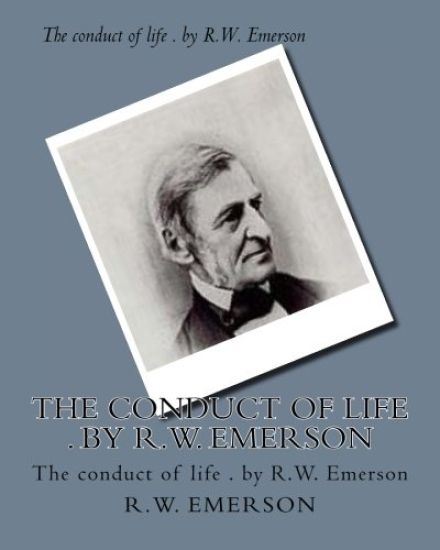
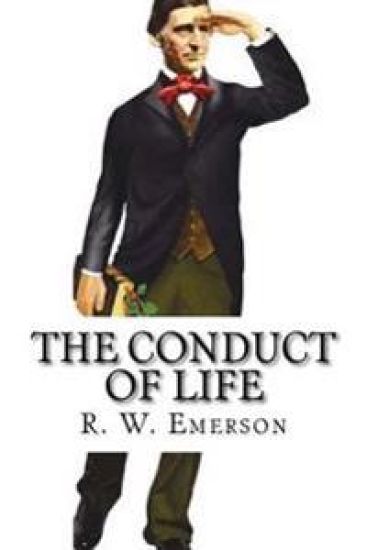
The Conduct of Life is a collection of essays by Ralph Waldo Emerson published in 1860 and revised in 1876. In this volume, Emerson sets out to answer "the question of the times: " "How shall I live?" It is composed of nine essays, each preceded by a poem. These nine essays are largely based on lectures Emerson held throughout the country, including for a young, mercantile audience in the lyceums of the Midwestern boomtowns of the 1850s
Reprint of the original, first published in 1858. The publishing house Anatiposi publishes historical books as reprints. Due to their age, these books may have missing pages or inferior quality. Our aim is to preserve these books and make them available to the public so that they do not get lost.
Reprint of the original, first published in 1858. The publishing house Anatiposi publishes historical books as reprints. Due to their age, these books may have missing pages or inferior quality. Our aim is to preserve these books and make them available to the public so that they do not get lost.