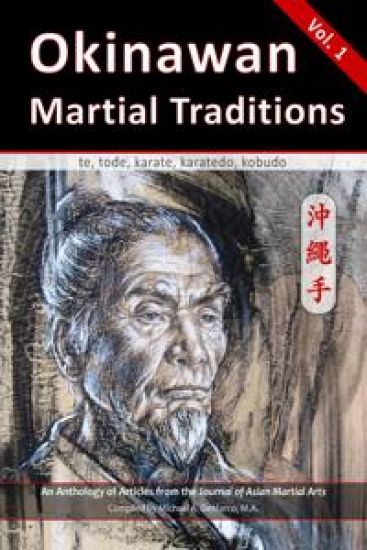
Okinawan Martial Traditions
P. McCarthy; R. Wolfe; K. Yokoyama; J. Porta; J. Lorden; J. Bluming
VIA MEDIA PUBLISHING COMPANY,US
2016
nidottu
What would you like to obtain from your research and practice of an Okinawan martial art? For an academic, it would be to obtain historical and cultural facts and details. For a practitioner, it would be to gain expertise in the combative skills. If you're interested in both, this first of a three-volume anthology is assembled for your convince to facilitate your endeavors. These volumes assemble a wealth of material originally published during the two decades when the Journal of Asian Martial Arts was in print. Hundreds of pages and photographs present the richness of Okinawan martial traditions, from the original combatives to those influenced by Chinese and mainland Japanese martial art styles. The variety of topics shown in the table of contents indicate the depth and breath in the chapters, along with the authors who are well-known for their meticulous research and practical skills in specific arts. These three volumes dive deep into the history and culture of Okinawan martial arts. You'll find coverage of the actual artifacts-the material culture related to weaponry and training methods. Instructions from the masters details both open-hand techniques as well as with weapons. The chapters offer insights into the lives of many masters over the past few centuries, giving the raison d' tre for these unique fighting arts-their reason for being. Many streams of arts have contributed to the martial traditions found on the small island: Naha-te, Shuri-te, Fukien White Crane, Shorin, Goju, Motobu, Shotokan, Isshin, Kyokushin, Pwang Gai Noon, Shito, Uechi, and the list continues. . . Along with the various styles come the associated training methods, such as conditioning exercises with weights and creatively designed apparatus, such as the punching post (makiwara), or stone lever and stone padlock-shaped weights. Some become battle-hardened by active and passive breaking of objects (tameshiwari), including wooden boards, baseball bats, rocks, and ice. The extensive use of weaponry is found in many Okinawan styles, often associated with their farming and fishing occupations. Such a blend of history and culture make the Okinawan fighting traditions a fascinating field of study. Besides being such vital sources of information, these three volumes will prove enjoyable reading and permanent at-hand reference sources in your library.