Kirjojen hintavertailu – 12 903 724 kirjaa ja 27 kauppaa

Kirjailija

Rabbi Jonathan Sacks

Kirjat ja teokset yhdessä paikassa: 4 kirjaa, julkaisuja vuosilta 2004–2020, suosituimpiin kuuluu Plough Quarterly No. 26 – What Are Families For?. Vertaile teosten hintoja ja tarkista saatavuus suomalaisista kirjakaupoista.

4 kirjaa

Kirjojen julkaisuvuodet: 2004–2020.

Plough Quarterly No. 26 – What Are Families For?

Plough Quarterly No. 26 – What Are Families For?

Ross Douthat; Edwidge Danticat; Sarah C. Williams; Rabbi Jonathan Sacks; Cardinal Christoph Schönborn; Leah Libresco Sargeant; Gina Dalfonzo; Zito Madu; Norann Voll; Noah Van Niel

Plough Publishing House
2020
pokkari
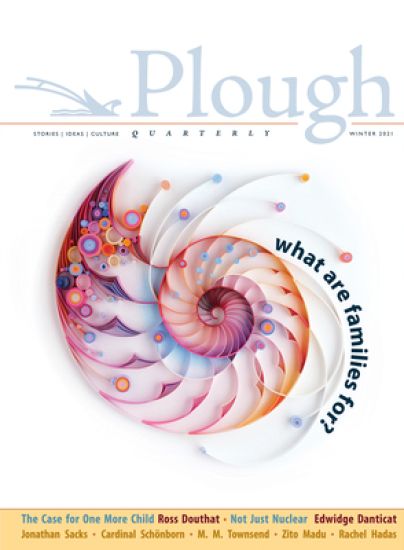
What is a family and what is it good for? Story 1: Families are in crisis, and the cause is moral breakdown. We urgently need a deep renewal of our family culture, supported by public policies that strengthen traditional marriage and encourage childbearing. Story 2: Families are in crisis, and the cause is capitalism. We need structural changes in society so that all families can flourish: parental leave, guaranteed healthcare, flexible work hours for parents, restorative justice. What if both these stories are true? This issue of Plough reflects on what a family is and what it is for, so that the transformations needed to solve the crisis of the family start from a firm basis, not a nostalgic ideal or progressive theorizing. As always, we take as a starting point the teachings of Jesus. It turns out his idea of family values might not be what people think. He calls us to extend our natural love for our biological family to a vast new throng of siblings – a family of many ethnicities and cultures that includes the widowed, the unmarried, the outsider, and the stranger. In this issue: - Ross Douthat asks what is stopping people from having the one more child they desire. - Edwidge Danticat says families are not nuclear. - Gina Dalfonzo reveals what singles know best about the church as family. - Norann Voll remembers a Jewish woman who escaped the Holocaust and married a German. - W. Bradford Wilcox and Alysse ElHage report on how the Covid pandemic has impacted the family. - Noah Van Niel asks whether masculinity is OK anymore. - Cardinal Christoph Schönborn reflects the burden of family history, celibacy, and monument toppling. - Sarah C. Williams pinpoints the source of feminist pioneer Josephine Butler’s daring. - Rabbi Jonathan Sacks begins the story of marriage 385 million years ago in a lake in Scotland. - Zito Madu recalls how his father’s amazing storytelling saved the past from oblivion. You’ll also find: - M. M. Townsend on what Louisa May Alcott and Simone de Beauvoir had in common - A special announcement about Plough’s new poetry contest: the Rhina Espaillat Poetry Award - A reading from G. K. Chesterton - Two new poems by Rachel Hadas - Reviews of Eric Edstrom’s Un-American, Maya Schenwar and Victoria Law’s Prison by Any Other Name, Brian Doyle’s One Long River of Song, and Martín Caparrós’s Hunger Plough Quarterly features stories, ideas, and culture for people eager to put their faith into action. Each issue brings you in-depth articles, interviews, poetry, book reviews, and art to help you put Jesus’ message into practice and find common cause with others.
Plough Quarterly No. 25 – Solidarity

Plough Quarterly No. 25 – Solidarity

James Gurney; Emmanuel Katongole; Rabbi Jonathan Sacks; Sally Thomas; Wesley Hill; Karen Swallow Prior; Jacaueline C. Rivers; Noah Van Niel; Ashley Lucas; James Crews; Nathan Beacom; Antje Vollmer; Eberhard Arnold

Plough Publishing House
2020
pokkari
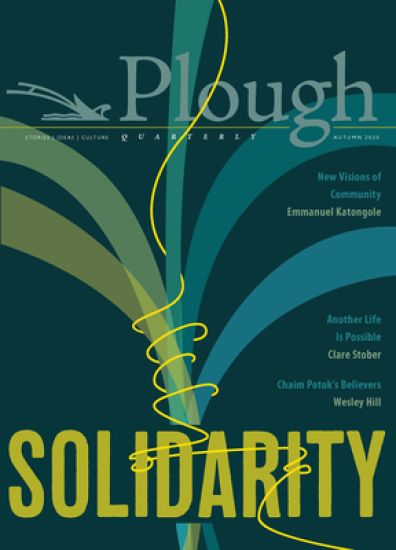
The summer of 2020 has shown us how much we all depend on one another. Whatever else they do, pandemics show us we are not alone. Covid-19 is proof that, yes, there is such a thing as society; the disease has spread precisely because we aren’t autonomous individuals disconnected from each other, but rather all belong to one great body of humanity. The pain inflicted by the pandemic is far from equally distributed. Yet it reveals ever more clearly how much we all depend on one another, and how urgently necessary it is for us to bear one another’s burdens. It’s a good time, then, to talk about solidarity. The more so because it’s a theme that’s also raised by this year’s other major development, the international protests for racial justice following George Floyd’s death. The protests, too, raised the question of solidarity in guilt, even guilt across generations. By taking up our common guilt with all humanity, we come into solidarity with the one who bears it and redeems it all. In Christ, sins are forgiven, guilt abolished, and a new way of living together becomes possible. This solidarity in forgiveness gives rise to a life of love. This issue of Plough explores what solidarity means, and what it looks like to live it out today, whether in Uganda, Bolivia, or South Korea, in an urban church, a Bruderhof, or a convent.
Covenant & Conversation

Covenant & Conversation

Rabbi Jonathan Sacks

Koren Publishers Jerusalem
2015
sidottu

Halvin toimitettuna 24,30 €

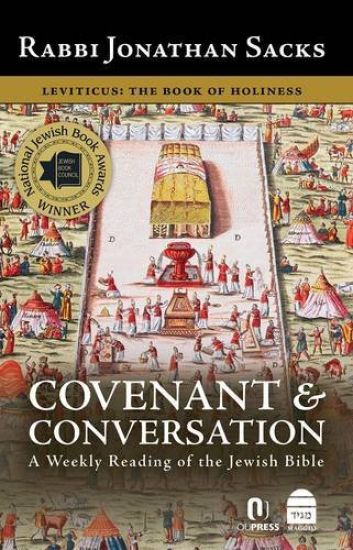
This collection makes Rabbi Jonathan Sacks' brilliant essays on the weekly Torah portion available in book form for the first time. Rabbi Sacks fuses Jewish tradition, Western philosophy and literature to present a highly developed understanding of the human condition under God's sovereignty.
A Letter in the Scrolls

A Letter in the Scrolls

Rabbi Jonathan Sacks

The Free Press
2004
pokkari
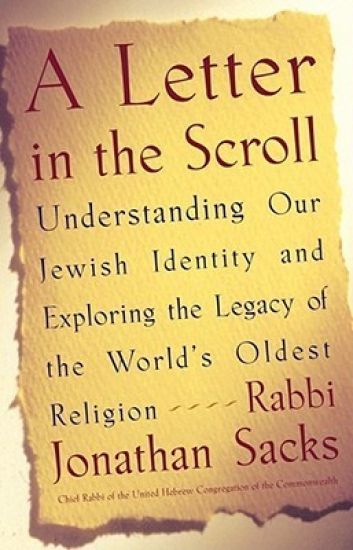
For too long, Jews have defined themselves in light of the bad things that have happened to them. And it is true that, many times in the course of history, they have been nearly decimated: when the First and Second Temples were destroyed, when the Jews were expelled from Spain, when Hitler proposed his Final Solution. Astoundingly, the Jewish people have survived catastrophe after catastrophe and remained a thriving and vibrant community. The question Rabbi Jonathan Sacks asks is, quite simply: How? How, in the face of such adversity, has Judaism remained and flourished, making a mark on human history out of all proportion to its numbers? Written originally as a wedding gift to his son and daughter-in-law, "A Letter in the Scroll" is Rabbi Sacks's personal answer to that question, a testimony to the enduring strength of his religion. Tracing the revolutionary series of philosophical and theological ideas that Judaism created -- from covenant to sabbath to formal education -- and showing us how they remain compellingly relevant in our time, Sacks portrays Jewish identity as an honor as well as a duty. The Ba'al Shem Tov, an eighteenth-century rabbi and founder of the Hasidic movement, famously noted that the Jewish people are like a living Torah scroll, and every individual Jew is a letter within it. If a single letter is damaged or missing or incorrectly drawn, a Torah scroll is considered invalid. So too, in Judaism, each individual is considered a crucial part of the people, without whom the entire religion would suffer. Rabbi Sacks uses this metaphor to make a passionate argument in favor of affiliation and practice in our secular times, and invites us to engage in our dynamic and inclusive tradition. Never has a book more eloquently expressed the joys of being a Jew. This is the story of one man's hope for the future -- a future in which the next generation, his children and ours, will happily embrace the beauty of the world's oldest religion.