Kirjojen hintavertailu – 12 859 818 kirjaa ja 27 kauppaa
Kirjailija
Rabih Alameddine
Kirjat ja teokset yhdessä paikassa: 30 kirjaa, julkaisuja vuosilta 1999–2026, suosituimpiin kuuluu Fight of the Century. Vertaile teosten hintoja ja tarkista saatavuus suomalaisista kirjakaupoista.
Dave Cole; Viet Thanh Nguyen; Jacqueline woodson; Ann Patchett; Brit Bennett; Steven Okazaki; David Handler; Geraldine Brooks; Yaa Gyasi; Sergio De La Pava; Dave Eggers; Timothy Egan; Li Yiyun; Meg Wolitzer; Hector Tobar; Aleksandar Hemon; Elizabeth Strout; Rabih Alameddine; Moriel Rothman-Zecher; Jonathan Lethem; Salman Rushdie; Lauren Groff; Jennifer Egan; Scott Turow; Morgan Parker; Victor Lavalle; Michael Cunningham; Neil Gaiman; Jesmyn Ward; Moses Sumney; George Saunders; Marlon James; William Finnegan; Anthony Doerr
The American Civil Liberties Union partners with award-winning authors Michael Chabon and Ayelet Waldman in this “forceful, beautifully written” (Associated Press) collection that brings together many of our greatest living writers, each contributing an original piece inspired by a historic ACLU case. On January 19, 1920, a small group of idealists and visionaries, including Helen Keller, Jane Addams, Roger Baldwin, and Crystal Eastman, founded the American Civil Liberties Union. A century after its creation, the ACLU remains the nation’s premier defender of the rights and freedoms guaranteed by the Constitution. In collaboration with the ACLU, authors Michael Chabon and Ayelet Waldman have curated an anthology of essays “full of struggle, emotion, fear, resilience, hope, and triumph” (Los Angeles Review of Books) about landmark cases in the organization’s one-hundred-year history. Fight of the Century takes you inside the trials and the stories that have shaped modern life. Some of the most prominent cases that the ACLU has been involved in—Brown v. Board of Education, Roe v. Wade, Miranda v. Arizona—need little introduction. Others you may never even have heard of, yet their outcomes quietly defined the world we live in now. Familiar or little-known, each case springs to vivid life in the hands of the acclaimed writers who dive into the history, narrate their personal experiences, and debate the questions at the heart of each issue. Hector Tobar introduces us to Ernesto Miranda, the felon whose wrongful conviction inspired the now-iconic Miranda rights—which the police would later read to the man suspected of killing him. Yaa Gyasi confronts the legacy of Brown v. Board of Education, in which the ACLU submitted a friend of- the-court brief questioning why a nation that has sent men to the moon still has public schools so unequal that they may as well be on different planets. True to the ACLU’s spirit of principled dissent, Scott Turow offers a blistering critique of the ACLU’s stance on campaign finance. These powerful stories, along with essays from Neil Gaiman, Meg Wolitzer, Salman Rushdie, Ann Patchett, Viet Thanh Nguyen, Louise Erdrich, George Saunders, and many more, remind us that the issues the ACLU has engaged over the past one hundred years remain as vital as ever today, and that we can never take our liberties for granted. Chabon and Waldman are donating their advance to the ACLU and the contributors are forgoing payment.
Dave Cole; Viet Thanh Nguyen; Jacqueline woodson; Ann Patchett; Brit Bennett; Steven Okazaki; David Handler; Geraldine Brooks; Yaa Gyasi; Sergio De La Pava; Dave Eggers; Timothy Egan; Li Yiyun; Meg Wolitzer; Hector Tobar; Aleksandar Hemon; Elizabeth Strout; Rabih Alameddine; Moriel Rothman-Zecher; Jonathan Lethem; Salman Rushdie; Lauren Groff; Jennifer Egan; Scott Turow; Morgan Parker; Victor Lavalle; Michael Cunningham; Neil Gaiman; Jesmyn Ward; Moses Sumney; George Saunders; Marlon James; William Finnegan; Anthony Doerr
To mark its 100-year anniversary, the American Civil Liberties Union partners with award-winning authors Michael Chabon and Ayelet Waldman to bring together many of our greatest living writers, each contributing an original piece inspired by a historic ACLU case. On January 19, 1920, a small group of idealists and visionaries, including Helen Keller, Jane Addams, Roger Baldwin, and Crystal Eastman, founded the American Civil Liberties Union. A century after its creation, the ACLU remains the nation’s premier defender of the rights and freedoms guaranteed by the Constitution. In collaboration with the ACLU, authors Michael Chabon and Ayelet Waldman have curated an anthology of essays about landmark cases in the organization’s one-hundred-year history. Fight of the Century takes you inside the trials and the stories that have shaped modern life. Some of the most prominent cases that the ACLU has been involved in—Brown v. Board of Education, Roe v. Wade, Miranda v. Arizona—need little introduction. Others you may never even have heard of, yet their outcomes quietly defined the world we live in now. Familiar or little-known, each case springs to vivid life in the hands of the acclaimed writers who dive into the history, narrate their personal experiences, and debate the questions at the heart of each issue. Hector Tobar introduces us to Ernesto Miranda, the felon whose wrongful conviction inspired the now-iconic Miranda rights—which the police would later read to the man suspected of killing him. Yaa Gyasi confronts the legacy of Brown v. Board of Education, in which the ACLU submitted a friend of- the-court brief questioning why a nation that has sent men to the moon still has public schools so unequal that they may as well be on different planets. True to the ACLU’s spirit of principled dissent, Scott Turow offers a blistering critique of the ACLU’s stance on campaign finance. These powerful stories, along with essays from Neil Gaiman, Meg Wolitzer, Salman Rushdie, Ann Patchett, Viet Thanh Nguyen, Louise Erdrich, George Saunders, and many more, remind us that the issues the ACLU has engaged over the past one hundred years remain as vital as ever today, and that we can never take our liberties for granted. Chabon and Waldman are donating their advance to the ACLU and the contributors are forgoing payment.
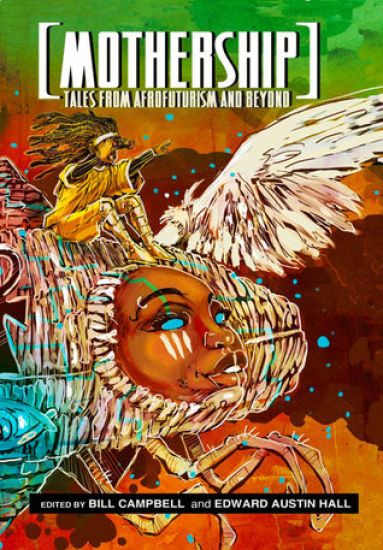
N.K. Jemisin; Victor LaValle; Junot Daz; Silvia Moreno-Garcia; Lauren Beukes; Carmen Maria Machado; Tobias Buckell; Rabih Alameddine; Nisi Shawl; S.P. Somtow; Daniel Jose Older; Eden Robinson; Ibi Zoboi; Sofia Samatar; Carlos Hernandez; Katherena Vermette
Mothership: Tales from Afrofuturism and Beyond is a groundbreaking speculative fiction anthology that showcases the work from some of the most talented writers inside and outside speculative fiction across the globe-including Junot Diaz, Victor LaValle, Lauren Beukes, N. K. Jemisin, Rabih Alameddine, S. P. Somtow, and more. These authors have earned such literary honors as the Pulitzer Prize, the American Book Award, the World Fantasy Award, and the Bram Stoker, among others.
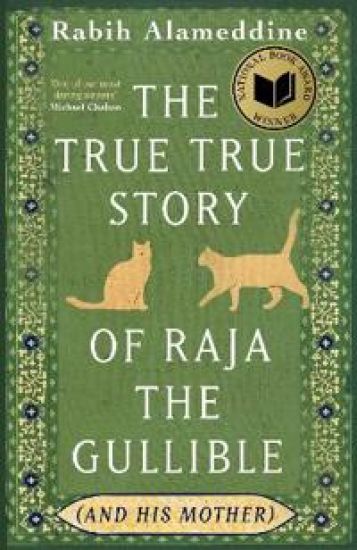
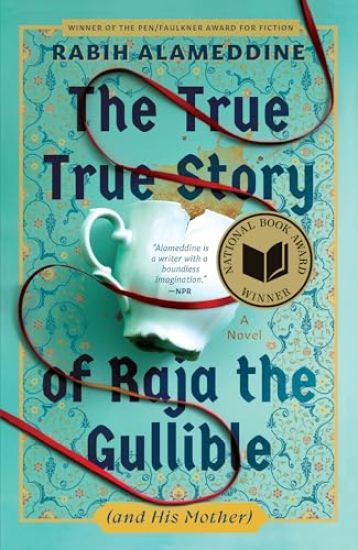
WINNER OF THE NATIONAL BOOK AWARD "Alameddine is a writer with a boundless imagination."--NPR From the winner of the PEN/Faulkner Award for Fiction comes a tragicomic love story set in Lebanon, a modern saga of family, memory, and the unbreakable attachment of a son and his mother In a tiny Beirut apartment, sixty-three-year-old Raja and his mother live side by side. A beloved high school philosophy teacher and "the neighborhood homosexual," Raja relishes books, meditative walks, order, and solitude. Zalfa, his octogenarian mother, views her son's desire for privacy as a personal affront. She demands to know every detail of Raja's work life and love life, boundaries be damned. When Raja receives an invite to an all-expenses-paid writing residency in America, the timing couldn't be better. It arrives on the heels of a series of personal and national disasters that have left Raja longing for peace and quiet away from his mother and the heartache of Lebanon. But what at first seems a stroke of good fortune soon leads Raja to recount and relive the very disasters and past betrayals he wishes to forget. Told in Raja's irresistible and wickedly funny voice, the novel dances across six decades to tell the unforgettable story of a singular life and its absurdities--a tale of mistakes, self-discovery, trauma, and maybe even forgiveness. Above all, The True True Story of Raja the Gullible (and His Mother) is a wildly unique and sparkling celebration of love.
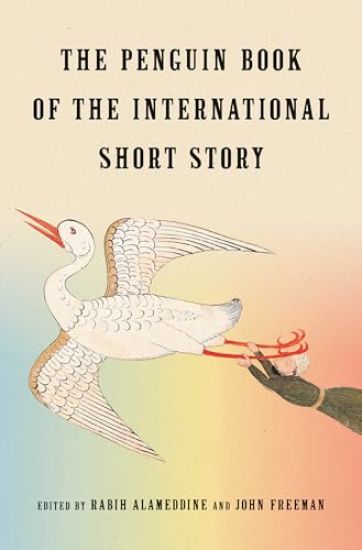
The best in short fiction from around the world, from celebrated anthologist and author John Freeman and award-winning novelist Rabih Alameddine In The Penguin Book of the International Short Story, writers from different nations, languages, and sensibilities come together in a globe-spanning and long overdue tour of modern fiction. In "Super-Frog Saves Tokyo," Haruki Murakami brings us a man who believes a giant amphibian is enlisting him to protect his city from an impending earthquake. In "War of the Clowns," Mozambique's Mia Couto sketches a perfect allegory for our divided culture. In the predecessor story to her iconic novel The Vegetarian, Han Kang depicts a protagonist quietly undergoing an unlikely transformation. A Colm T ib n character thinks, "I do not even believe in Ireland," while Carol Bensimon reflects from Brazil, "All great ideas seem like bad ones at some point." Salman Rushdie brings us to unsettled rural India, Olga Tokarczuk to an ugly woman exhibit at the circus, Abdellah Ta a to the queer Arab world, Ted Chiang to a far-off galaxy. The United States is far from the center of the literary universe. This anthology is reminiscent of iconic director Bong Joon Ho's line about overcoming "the one-inch-tall barrier of subtitles" to enter a new world of film--the work of thoughtful and accomplished translators opens the door wide for those curious about what lies beyond the Western canon and classroom. Writers from six continents, ranging from new voices to literary icons, each offer a window into a distinct point of view, both transcending and illuminating their place of origin. They offer not only captivating prose, but a reminder of the power of the imagination across space and time.
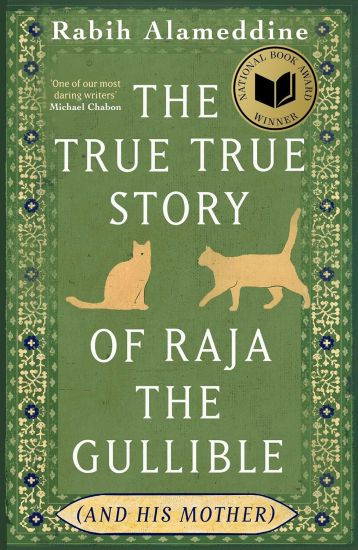
From National Book Award finalist and winner of the PEN/Faulkner Award for Fiction comes a tragicomic love story set in Lebanon, a modern saga of family, memory, and the unbreakable attachment of a son and his motherIn a tiny Beirut apartment, sixty-three-year-old Raja and his mother live side by side. A beloved high school philosophy teacher and 'the neighborhood homosexual,' Raja relishes books, meditative walks, order, and solitude. Zalfa, his octogenarian mother, views her son's desire for privacy as a personal affront. She demands to know every detail of Raja's work life and love life, boundaries be damned. When Raja receives an invite to an all-expenses-paid writing residency in America, the timing couldn't be better. It arrives on the heels of a series of personal and national disasters that have left Raja longing for peace and quiet away from his mother and the heartache of Lebanon. But what at first seems a stroke of good fortune soon leads Raja to recount and relive the very disasters and past betrayals he wishes to forget. Told in Raja's irresistible and wickedly funny voice, the novel dances across six decades to tell the unforgettable story of a singular life and its absurdities - a tale of mistakes, self-discovery, trauma, and maybe even forgiveness. Above all, The True True Story of Raja the Gullible (and His Mother) is a wildly unique and sparkling celebration of love.
"Alameddine is a writer with a boundless imagination."--NPRFrom National Book Award finalist and winner of the PEN/Faulkner Award for Fiction comes a tragicomic love story set in Lebanon, a modern saga of family, memory, and the unbreakable attachment of a son and his motherIn a tiny Beirut apartment, sixty-three-year-old Raja and his mother live side by side. A beloved high school philosophy teacher and "the neighborhood homosexual," Raja relishes books, meditative walks, order, and solitude. Zalfa, his octogenarian mother, views her son's desire for privacy as a personal affront. She demands to know every detail of Raja's work life and love life, boundaries be damned. When Raja receives an invite to an all-expenses-paid writing residency in America, the timing couldn't be better. It arrives on the heels of a series of personal and national disasters that have left Raja longing for peace and quiet away from his mother and the heartache of Lebanon. But what at first seems a stroke of good fortune soon leads Raja to recount and relive the very disasters and past betrayals he wishes to forget. Told in Raja's irresistible and wickedly funny voice, the novel dances across six decades to tell the unforgettable story of a singular life and its absurdities--a tale of mistakes, self-discovery, trauma, and maybe even forgiveness. Above all, The True True Story of Raja the Gullible (and His Mother) is a wildly unique and sparkling celebration of love.
A timely and urgent inquiry by one of global literature's leading lights In this concisely argued and illuminating book, the PEN/Faulkner Award–winning author Rabih Alameddine takes the subject of politics and art head-on, questioning the very premise of dividing these two pillars of culture into an either/or proposition. He reveals how a political dimension enlarges a work of art rather than making it less beautiful or reducing it to a polemic, as we are so often and carelessly taught. But he also ponders what makes art political to begin with: how essential is the artist’s conscious political intent, and what does the reader or viewer contribute to the work’s political capability or significance? In exploring these questions, Alameddine engages intensely with his role as an immigrant and a gay author writing inside a globally dominant, often oblivious culture, and invokes the work of numerous writers, from Tayeb Salih and Aleksandar Hemon to Teju Cole and Salman Rushdie, who also struggle to be heard as something more than an “other.” The book features throughout Alameddine’s brilliantly relatable voice—shrewd, humorous, challenging, and as honest about his own limitations as he is about his passions.
WINNER OF THE 2022 PEN/FAULKNER AWARD FOR FICTIONBy National Book Award and the National Book Critics' Circle Award finalist for An Unnecessary Woman, Rabih Alameddine, comes a transporting new novel about an Arab American trans woman's journey among Syrian refugees on Lesbos island. Mina Simpson, a Lebanese doctor, arrives at the infamous Moria refugee camp on Lesbos, Greece, after being urgently summoned for help by her friend who runs an NGO there. Alienated from her family except for her beloved brother, Mina has avoided being so close to her homeland for decades. But with a week off work and apart from her wife of thirty years, Mina hopes to accomplish something meaningful, among the abundance of Western volunteers who pose for selfies with beached dinghies and the camp's children. Soon, a boat crosses bringing Sumaiya, a fiercely resolute Syrian matriarch with terminal liver cancer. Determined to protect her children and husband at all costs, Sumaiya refuses to alert her family to her diagnosis. Bonded together by Sumaiya's secret, a deep connection sparks between the two women, and as Mina prepares a course of treatment with the limited resources on hand, she confronts the circumstances of the migrants' displacement, as well as her own constraints in helping them. Not since the inimitable Aaliya of An Unnecessary Woman has Rabih Alameddine conjured such a winsome heroine to lead us to one of the most wrenching conflicts of our time. Cunningly weaving in stories of other refugees into Mina's singular own, The Wrong End of the Telescope is a bedazzling tapestry of both tragic and amusing portraits of indomitable spirits facing a humanitarian crisis.
WINNER OF THE PEN/FAULKNER AWARD FOR FICTION 2022. By National Book Award finalist and Dos Passos Prize winner, Rabih Alameddine, comes a transporting new novel about an Arab American trans woman's personal journey among Syrian refugees on Lesbos island.
Mina Simpson, a Lebanese doctor, arrives at the infamous Moria refugee camp on Lesbos, Greece, after being urgently summoned for help by her friend who runs an NGO there. Alienated from her family except for her beloved brother, Mina has avoided being so close to her homeland for decades. But with a week off work and apart from her wife of thirty years, Mina hopes to accomplish something meaningful, among the abundance of Western volunteers who pose for selfies with beached dinghies and the camp's children. Soon, a boat crosses bringing Sumaiya, a fiercely resolute Syrian matriarch with terminal liver cancer. Determined to protect her children and husband at all costs, Sumaiya refuses to alert her family to her diagnosis. Bonded together by Sumaiya's secret, a deep connection sparks between the two women, and as Mina prepares a course of treatment with the limited resources on hand, she confronts the circumstances of the migrants' displacement, as well as her own constraints in helping them. Not since the inimitable Aaliya of An Unnecessary Woman has Rabih Alameddine conjured such a winsome heroine to lead us to one of the most wrenching conflicts of our time. Cunningly weaving in stories of other refugees into Mina's singular own, The Wrong End of the Telescope is a bedazzling tapestry of both tragic and amusing portraits of indomitable spirits facing a humanitarian crisis.
WINNER OF THE PEN/FAULKNER AWARD FOR FICTION'A beautiful, well paced, enraging, funny and heartbreaking book' the Guardian'Favorite novel of the year? Tough choice for me, but maybe The Wrong End of the Telescope, which was devastating and wondrous. Nobody writes like Rabih. Nobody gets anywhere close' John Green (#1 bestselling author) via Twitter'Spectacular . . . Alameddine's irreverent prose evokes the old master storytellers from my own Middle Eastern home . . . deeply poignant' New York TimesMina Simpson, a Lebanese doctor, arrives at the infamous Moria refugee camp on Lesbos, Greece, after being urgently summoned for help by her friend who runs an NGO there. Alienated from her family except for her beloved brother, Mina has avoided being so close to her homeland for decades. But with a week off work and apart from her wife of thirty years, Mina hopes to accomplish something meaningful, among the abundance of Western volunteers who pose for selfies with beached dinghies and the camp's children. Soon, a boat crosses bringing Sumaiya, a fiercely resolute Syrian matriarch with terminal liver cancer. Determined to protect her children and husband at all costs, Sumaiya refuses to alert her family to her diagnosis. Bonded together by Sumaiya's secret, a deep connection sparks between the two women, and as Mina prepares a course of treatment with the limited resources on hand, she confronts the circumstances of the migrants' displacement, as well as her own constraints in helping them. Not since the inimitable Aaliya of An Unnecessary Woman has Rabih Alameddine conjured such a winsome heroine to lead us to one of the most wrenching conflicts of our time. Cunningly weaving in stories of other refugees into Mina's singular own, The Wrong End of the Telescope is a bedazzling tapestry of both tragic and amusing portraits of indomitable spirits facing this humanitarian crisis.'Alameddine hits a distinctly contemporary note with this new book about refugees . . . it feels totally authentic' Sunday Times
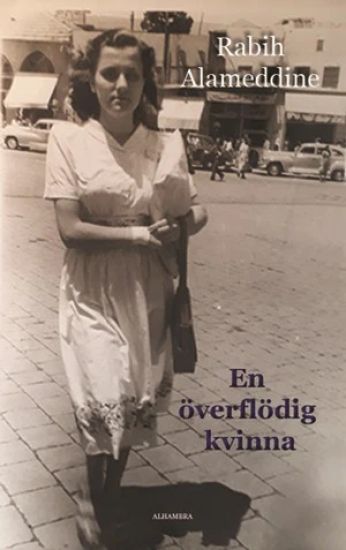
Aaliya lever sitt liv i Beirut, i en våning som har varit hennes sedan hon var ung och gift. Skild, barnlös, gudlös, faderlös och fyllda 72 - en belägenhet som knappast ger så mycket prestige, varken i världen eller i Libanon - har hon dragit sig tillbaka för att helt och hållet leva i böckernas värld. Noga väljer hon bland världslitteraturens skatter, från Leo Tolstoj till Fernando Pessoa, och sedan översätter hon, en roman om året. När detta är gjort lägger hon undan manuskriptet i det oanvända badrummet som hör till (den obefintliga) pigans rum. Minnena av inbördeskriget är fortfarande färska, men hon har funnit sitt eget sätt att handskas med dem. Författaren, den libanesisk-amerikanske Rabih Alameddine, är en av världens mest hyllade, och är född 1959 i Jordanien av drusiska föräldrar. 2014 vann han California Book Awards Gold Medal Fiction för En överflödig kvinna. Boken är en kärleksförklaring till litteraturen och dess makt att transformera. Rabih Alameddine bor i San Francisco och Beirut.
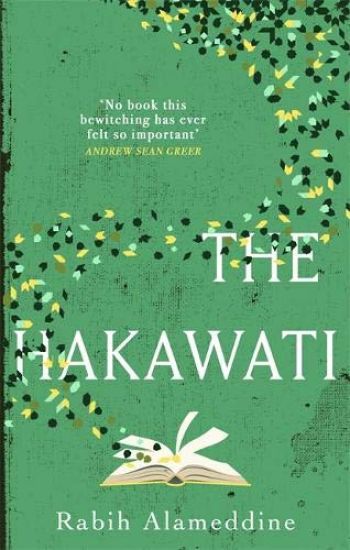
'Stunning' New York Times Book Review'Here it comes, the book of the year, on its own magic carpet. No book this bewitching has ever felt so important; no book this important has ever been so lovingly enchanted. The Hakawati is both a snapshot of our current crisis, and a story for the ages. What else can we ask the djinn of literature for?' Andrew Sean Greer, author of the Pulitzer Prize-winning LessIn 2003, Osama al-Kharrat returns to Beirut after many years in America to stand vigil at his father's deathbed. As the family gathers, stories begin to unfold: Osama's grandfather was a hakawati, or storyteller, and his bewitching tales are interwoven with classic stories of the Middle East. Here are Abraham and Isaac; Ishmael, father of the Arab tribes; the beautiful Fatima; Baybars, the slave prince who vanquished the Crusaders; and a host of mischievous imps. Through Osama, we also enter the world of the contemporary Lebanese men and women whose stories tell a larger, heartbreaking tale of seemingly endless war, conflicted identity, and survival. With The Hakawati, Rabih Alameddine has given us an Arabian Nights for this century.'Sharp, seductive storytelling' O, The Oprah Magazine
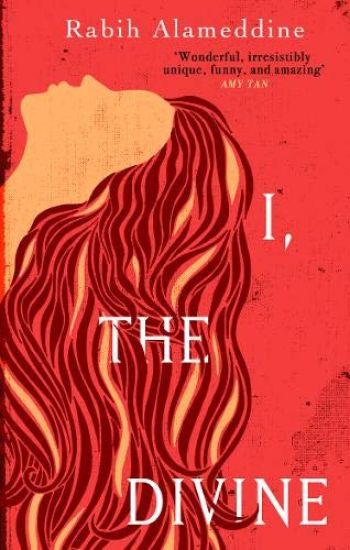
'In this delightful novel, Alameddine takes his greatest risks yet, and succeeds brilliantly, in a work that while marked by radical formal innovation, manages to be warm, sad, funny and moving' Michael ChabonNamed by her grandfather after 'the Divine' Sarah Bernhardt, Sarah Nour El-Din grows up in Beirut against the tense background of civil war. But the young Sarah finds pleasure in the everyday - her first cigarette, first kiss, seeking revenge on her tight-lipped stepmother. Then, with adulthood, comes an awareness of the fragility of life. After two failed marriages, the loss of her son, the death of one sister and the imprisonment of another, Sarah begins to tell her story. But this story is not so easy to tell. A novel written entirely in first chapters, I, THE DIVINE is an honest and touching story of one woman's struggle to come to terms with her past.
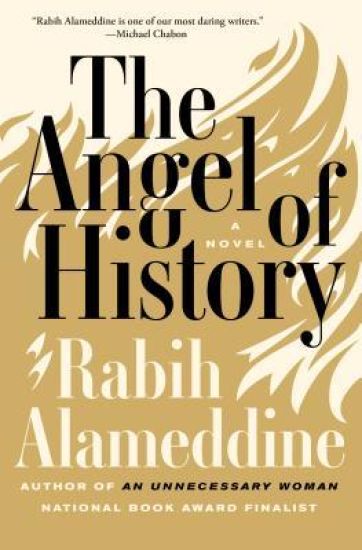
A Washington Independent Review of Books, Literary Hub, and Shelf Awareness Best Book of the YearAn Unnecessary Woman won the California Book Award and was a finalist for the National Book Award, the National Book Critics Circle Award, and the PEN Open Book Award and was a Best Book of the Year for the Washington Post, Kirkus, NPR, Amazon, Christian Science Monitor, Newsday, The Boston Globe, and The Wall Street Journal