

Kirjailija
Rachel Kerr
Kirjat ja teokset yhdessä paikassa: 7 kirjaa, julkaisuja vuosilta 2004–2026, suosituimpiin kuuluu Reconciliation. Vertaile teosten hintoja ja tarkista saatavuus suomalaisista kirjakaupoista.
7 kirjaa
Kirjojen julkaisuvuodet: 2004–2026.

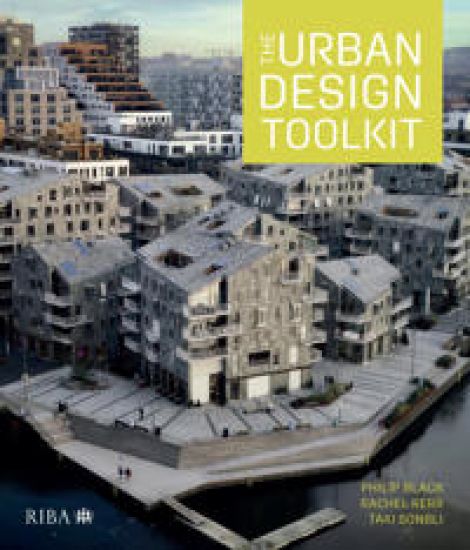
The Urban Design Toolkit provides a comprehensive compendium of applied urban design methods, techniques and approaches. Comprising 32 original ‘toolkits’, the book offers detailed step-by-step guidance across three core practices. Firstly, on contextual analysis, ranging from the strategic to the human scale and focusing on the ways in which people understand and interact with their surroundings; secondly, on the responsive design of functional streets, spaces, green infrastructure and building arrangements; and finally, on the wide-ranging approaches to effectively communicating evidence-based urban design. Over 300 original graphics and images enhance the reader’s understanding of urban design as a technical vocation. Using bespoke supporting examples and international best practice case studies, from Oslo and London to Toronto and Hong Kong, the book is a visually compelling and insightful instruction manual for students, educators and professional practitioners alike. Whatever your level of experience and expertise, The Urban Design Toolkit will enhance your understanding and develop your skills in the pursuit of contextually responsive, people-centred, high-quality urban design.
In recent years there has been a tendency to intervene in the military, political and economic affairs of failed and failing states and those emerging from violent conflict. In many cases this has been accompanied by some form of international judicial intervention to address serious and widespread abuses of international humanitarian law and human rights in recognition of an explicit link between peace and justice. A range of judicial and non-judicial approaches has been adopted in recognition of the fact that there is no one-size-fits-all model through which to seek accountability. This book considers the merits and drawbacks of these different responses and sets out an original framework for analysing transitional societies and transitional justice mechanisms. Taking as its starting point the post-Second World War tribunals at Nuremburg and Tokyo, the book goes on to discuss the creation of ad hoc international tribunals in the 1990s, hybrid/mixed courts, the International Criminal Court, domestic trials, truth commissions and traditional justice mechanisms. With examples drawn from across the world, including the former Yugoslavia, Rwanda, Cambodia, Timor-Leste, Sierra Leone, Uganda and the DRC, it presents a compelling and comprehensive study of the key responses to war crimes. Peace and Justice is a timely contribution in a world where an ever-increasing number of post-conflict societies are grappling with the complex issues of transitional justice. It will be a valuable resource for students, scholars, practitioners and policy-makers seeking to understand past violations of human rights and the most effective ways of addressing them.
In recent years there has been a tendency to intervene in the military, political and economic affairs of failed and failing states and those emerging from violent conflict. In many cases this has been accompanied by some form of international judicial intervention to address serious and widespread abuses of international humanitarian law and human rights in recognition of an explicit link between peace and justice. A range of judicial and non-judicial approaches has been adopted in recognition of the fact that there is no one-size-fits-all model through which to seek accountability. This book considers the merits and drawbacks of these different responses and sets out an original framework for analysing transitional societies and transitional justice mechanisms. Taking as its starting point the post-Second World War tribunals at Nuremburg and Tokyo, the book goes on to discuss the creation of ad hoc international tribunals in the 1990s, hybrid/mixed courts, the International Criminal Court, domestic trials, truth commissions and traditional justice mechanisms. With examples drawn from across the world, including the former Yugoslavia, Rwanda, Cambodia, Timor-Leste, Sierra Leone, Uganda and the DRC, it presents a compelling and comprehensive study of the key responses to war crimes. Peace and Justice is a timely contribution in a world where an ever-increasing number of post-conflict societies are grappling with the complex issues of transitional justice. It will be a valuable resource for students, scholars, practitioners and policy-makers seeking to understand past violations of human rights and the most effective ways of addressing them.
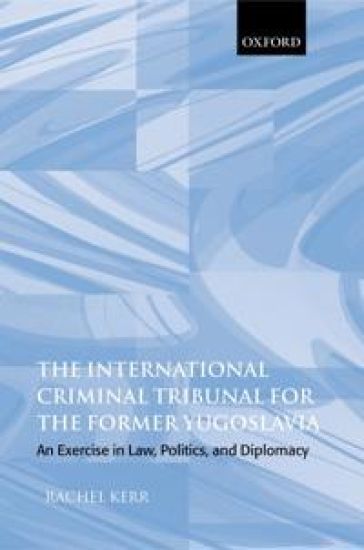
The International Criminal Tribunal for the Former Yugoslavia
Rachel Kerr
Oxford University Press
2004
sidottu
On 25 May 1993 the United Nations Security Council took the extraordinary and unprecedented step of deciding to establish the International Criminal Tribunal for the Former Yugoslavia (ICTY) as a mechanism for the restoration and maintenance of international peace and security. This was an extremely significant innovation in the use of mandatory enforcement powers by the Security Council, and the manifestation of an explicit link between peace and justice - politics and law. The establishment of ad hoc tribunals for the former Yugoslavia and Rwanda was followed by the adoption of the Rome Statute of the ICC in July 1998, the arrest of General Augusto Pinochet in London in October 1998, and the establishment of ad hoc tribunals in Cambodia, Sierra Leone, and East Timor, all of which pointed to an emerging norm of international criminal justice. The key to understanding this is the relationship between the political mandate and the judicial function. The Tribunal was established as a tool of politics, but it was a judicial, not a political tool. This book provides a systematic examination of the Tribunal, what it is, why it was established, how it functions, and where its significance lies. The central question is whether an international judicial institution, such as the Tribunal, can operate in a highly politicized context and fulfill an explicit political purpose, without the judicial process becoming politicized. Separate chapters chart the origins of the court, the process of establishment, jurisdiction, procedure, state co-operation, including obtaining custody of accused, and the role and function of the Chief Prosecutor. This last element is the key to the Tribunal's success in maintaining a delicate balancing act so that its external political function does not impinge on its impartial judicial status, and instead enhances its effectiveness. The book concludes with an assessment of the conduct of the Milosevic case to date.