Kirjojen hintavertailu – 12 879 205 kirjaa ja 26 kauppaa
Kirjailija
Rachel Pain
Kirjat ja teokset yhdessä paikassa: 5 kirjaa, julkaisuja vuosilta 2001–2025, suosituimpiin kuuluu Introducing Social Geographies. Vertaile teosten hintoja ja tarkista saatavuus suomalaisista kirjakaupoista.
`Introducing Social Geographies' is a major new text offering a comprehensive and up-to-date introduction to this important area of human geography. It presents a broad overview of social geography, clearly outlining the key theoretical and political positions, and making extensive use of examples to show how these frameworks can be used to analyse real social issues. The book is ideal for undergraduates first encountering social geography and includes topic overviews, summaries of key points, critiques, boxed case studies and suggestions for further reading.
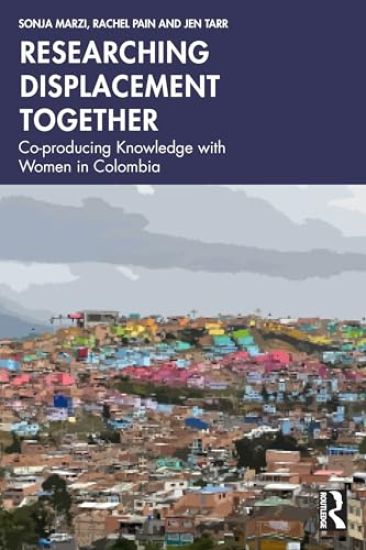
This book showcases how to co-produce research when we are unable to meet in the same geographical space. It details a remote and hybrid audio-visual participatory methodology through which women share their experiences of displacement, gender and the city. Writing as researchers and filmmakers in the UK and Colombia, alongside 24 displaced women in Bogotá and Medellín, this participatory audio-visual project explores displacement from the women’s perspectives. The book is innovative in its collaborative writing and its combination of audiovisual and textual material. It presents a methodology for remote and hybrid research, advocating for more inclusive, equitable, and decolonizing research interactions. Through three co-written chapters, it contributes to themes of displacement, gender, and the city, as displaced women share testimonies and audiovisual outputs, revealing experiences of violence, conflict, and aspirations for change as they rebuild their lives. This book stands out for its collaborative authorship and integration of text with audiovisual material, offering rich insights. It will interest researchers and practitioners working inside and outside Universities who are interested in developing remote, hybrid and audio-visual participatory methodologies as well as to those who want to understand more about displacement and the challenges of urban resettlement from women’s perspectives. After reading this book we'd appreciate if you could let us know what you think by answering some quick questions: https://app.onlinesurveys.jisc.ac.uk/s/newcastle/co-producing-knowledge-with-displaced-women-in-colombiaThe Open Access version of this book, available at www.taylorfrancis.com, has been made available under a Creative Commons Attribution (CC BY) 4.0 license.
This book showcases how to co-produce research when we are unable to meet in the same geographical space. It details a remote and hybrid audio-visual participatory methodology through which women share their experiences of displacement, gender and the city. Writing as researchers and filmmakers in the UK and Colombia, alongside 24 displaced women in Bogotá and Medellín, this participatory audio-visual project explores displacement from the women’s perspectives. The book is innovative in its collaborative writing and its combination of audiovisual and textual material. It presents a methodology for remote and hybrid research, advocating for more inclusive, equitable, and decolonizing research interactions. Through three co-written chapters, it contributes to themes of displacement, gender, and the city, as displaced women share testimonies and audiovisual outputs, revealing experiences of violence, conflict, and aspirations for change as they rebuild their lives. This book stands out for its collaborative authorship and integration of text with audiovisual material, offering rich insights. It will interest researchers and practitioners working inside and outside Universities who are interested in developing remote, hybrid and audio-visual participatory methodologies as well as to those who want to understand more about displacement and the challenges of urban resettlement from women’s perspectives. After reading this book we'd appreciate if you could let us know what you think by answering some quick questions: https://app.onlinesurveys.jisc.ac.uk/s/newcastle/co-producing-knowledge-with-displaced-women-in-colombiaThe Open Access version of this book, available at www.taylorfrancis.com, has been made available under a Creative Commons Attribution (CC BY) 4.0 license.
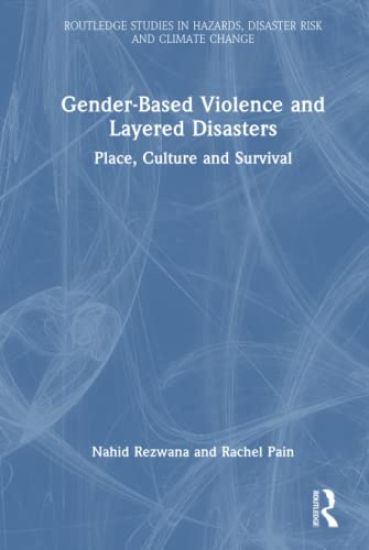
This book investigates the widespread and persistent relationship between disasters and gender-based violence, drawing on new research with victim-survivors to show how the two forms of harm constitute ‘layered disasters’ in particular places, intensifying and reproducing one another. The evidence is now overwhelming that disasters and gender-based violence are closely connected, not just in moments of crisis but in the years that follow as the social, economic and environmental impacts of disasters play out. This book addresses two key gaps in research. First, it examines what causes the relationship between disasters and gender-based violence to be so widespread and so enduring. Second, it highlights victim-survivors’ own accounts of gender-based violence and disasters. It does so by presenting findings from original research on cyclones and flooding in Bangladesh and the UK and a review of global evidence on the Covid-19 pandemic. Drawing on feminist theories, it conceptualises the coincidence of gender-based violence, disasters and other aggravating factors in particular places as ‘layered disasters.’ Taking an intersectional approach that emphasises the connections between culture, place, patriarchy, racism, poverty, settler-colonialism, environmental degradation and climate change, the authors show the significance of gender-based violence in creating vulnerability to future disasters. Forefronting victim-survivors’ experiences and understandings, the book explores the important role of trauma, and how those affected go about the process of survival and recovery. Understanding disasters as layered casts light on why tackling gender-based violence must be a key priority in disaster planning, management and recovery. The book concludes by exploring critiques of existing formal responses, which often ignore or underplay gender-based violence. The book will be of interest to all those interested in understanding the causes and impacts of disasters, as well as scholars and researchers of gender and gender-based violence.
This book investigates the widespread and persistent relationship between disasters and gender-based violence, drawing on new research with victim-survivors to show how the two forms of harm constitute ‘layered disasters’ in particular places, intensifying and reproducing one another. The evidence is now overwhelming that disasters and gender-based violence are closely connected, not just in moments of crisis but in the years that follow as the social, economic and environmental impacts of disasters play out. This book addresses two key gaps in research. First, it examines what causes the relationship between disasters and gender-based violence to be so widespread and so enduring. Second, it highlights victim-survivors’ own accounts of gender-based violence and disasters. It does so by presenting findings from original research on cyclones and flooding in Bangladesh and the UK and a review of global evidence on the Covid-19 pandemic. Drawing on feminist theories, it conceptualises the coincidence of gender-based violence, disasters and other aggravating factors in particular places as ‘layered disasters.’ Taking an intersectional approach that emphasises the connections between culture, place, patriarchy, racism, poverty, settler-colonialism, environmental degradation and climate change, the authors show the significance of gender-based violence in creating vulnerability to future disasters. Forefronting victim-survivors’ experiences and understandings, the book explores the important role of trauma, and how those affected go about the process of survival and recovery. Understanding disasters as layered casts light on why tackling gender-based violence must be a key priority in disaster planning, management and recovery. The book concludes by exploring critiques of existing formal responses, which often ignore or underplay gender-based violence. The book will be of interest to all those interested in understanding the causes and impacts of disasters, as well as scholars and researchers of gender and gender-based violence.