Kirjojen hintavertailu – 12 859 818 kirjaa ja 27 kauppaa
Kirjailija
Rachel Pieh Jones
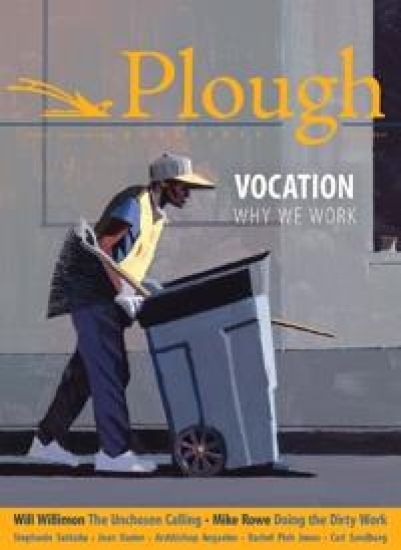
Kirjat ja teokset yhdessä paikassa: 6 kirjaa, julkaisuja vuosilta 2018–2021, suosituimpiin kuuluu Plough Quarterly No. 22 - Vocation. Vertaile teosten hintoja ja tarkista saatavuus suomalaisista kirjakaupoista.
Will Willimon; Rachel Pieh Jones; Anne-Sophie Constant; Mike Rowe; Stephanie Saldaña; Scott Beauchamp; Nathan Schneider; Phil Christman; Michael Brendan Dougherty; Julian Peters
Your job is not your vocation. Everyone hungers for work that has meaning and purpose. But what gives work meaning? Vocation, or “calling,” is the answer Protestant Christianity offers: each person is called by God to serve the common good in a particular line of work. Your vocation, evidently, might be almost anything: as a nurse, a wilderness guide, a calligrapher, a missionary, an activist, a venture capitalist, a politician, an executioner… Yet, as Will Willimon writes in this issue, the New Testament knows only one form of vocation: discipleship. And discipleship is far more likely to mean leaving father and mother, houses and land, than it is to mean embracing one’s identity as a fisherman or tax collector. This issue of Plough focuses on people who lived their lives with that sense of vocation. Such a life demands self-sacrifice and a willingness to recognize one’s own supposed strengths as weaknesses, as it did for the Canadian philosopher Jean Vanier. It involves a lifelong commitment to a flesh-and-blood church, as Coptic Archbishop Angaelos describes. It may even require a readiness to give up one’s life, as it did for Annalena Tonelli, an Italian humanitarian who pioneered the treatment of tuberculosis in the Horn of Africa. But as these stories also testify, it brings a gladness deeper than any self-chosen path. Also in this issue: - Scott Beauchamp on mercenaries - Nathan Schneider on cryptocurrencies - Stephanie Saldaña on Syrian refugee art - Peter Biles on loneliness at college - Phil Christman on Bible translation - Michael Brendan Dougherty on fatherhood - Insights on vocation from C. S. Lewis, Thérèse of Lisieux, Mother Teresa, Eberhard Arnold, Dorothy Sayers, Jean Vanier, and Gerard Manley Hopkins - poetry by Devon Balwit and Carl Sandburg - reviews of books by Robert Alter, Edwidge Danticat, Matthew D. Hockenos, Amy Waldman, and Jeremy Courtney - art and photography by Pola Rader, Dean Mitchell, Mark Freear, Timothy Jones, Pawel Filipczak, Mary Pal, Harley Manifold, Sami Lalu Jahola, Marc Chagall, and Russell Bain. Plough Quarterly features stories, ideas, and culture for people eager to put their faith into action. Each issue brings you in-depth articles, interviews, poetry, book reviews, and art to help you put Jesus’ message into practice and find common cause with others.
Gold Medal, 2022 Independent Publisher Book Awards, IPPYPersonal friendships with Somali Muslims overcome the prejudices and expand the faith of a typical American Evangelical Christian living in the Horn of Africa. When Rachel Pieh Jones moved from Minnesota to rural Somalia with her husband and twin toddlers eighteen years ago, she was secure in a faith that defined who was right and who was wrong, who was saved and who needed saving. She had been taught that Islam was evil, full of lies and darkness, and that the world would be better without it. Luckily, locals show compassion for this blundering outsider who can’t keep her headscarf on or her toddlers from tripping over AK-47s. After the murder of several foreigners forces them to evacuate, the Joneses resettle in nearby Djibouti. Jones recounts, often entertainingly, the personal encounters and growing friendships that gradually dismantle her unspoken fears and prejudices and deepen her appreciation for Islam. Unexpectedly, along the way she also gains a far richer understanding of her own Christian faith. Grouping her stories around the five pillars of Islam – creed, prayer, fasting, giving, and pilgrimage – Jones shows how her Muslim friends’ devotion to these pillars leads her to rediscover ancient Christian practices her own religious tradition has lost or neglected. Jones brings the reader along as she reexamines her assumptions about faith and God through the lens of Islam and Somali culture. Are God and Allah the same? What happens when one’s ideas about God and the Bible crumble and the only people around are Muslims? What happens is that she discovers that Jesus is more generous, daring, and loving than she ever imagined.
Anthony M. Barr; Gracy Olmstead; Stanley Hauerwas; Zito Madu; Rachel Pieh Jones; Springs Toledo; Patrick Tomassi; Scott Beauchamp; Andrea Grosso Ciponte; Eberhard Arnold; Catherine Tufariello
How did violence become OK? And is there any way back? At some point between George Floyd’s killing on May 25 and the invasion of the US Capitol on January 6, America’s consensus against political violence crumbled. Before 2020, almost everyone agreed that it should be out of bounds. Now, many are ready to justify such violence – at least when it is their side breaking windows or battling police officers. Something significant seems to have slipped. Is there any way back? As Christians, we need to consider what guilt we bear, with the rise of a decidedly unchristian “Christian nationalism” that historically has deep roots in American Christian culture. But shouldn’t we also be asking ourselves what a truly Christian stance might look like, one that reflects Jesus’ blessings on the peacemakers, the merciful, and the meek? Oscar Romero, when accused of preaching revolutionary violence, responded: “We have never preached violence, except the violence of love, which left Christ nailed to a cross.” If we take Jesus’ example and his call to nonviolence at face value, we’re left with all kinds of interesting questions: What about policing? What about the military? What about participating in government? This issue of Plough addresses some of these questions and explores what a life lived according to love rather than violence might look like. In this issue: - Anthony M. Barr revisits James Baldwin’s advice about undoing racism. - Gracy Olmstead describes welcoming the baby she did not expect during a pandemic. - Patrick Tomassi debates nonviolence with Portland’s anarchists and Proud Boys. - Scott Beauchamp advises on what not to ask war veterans. - Rachel Pieh Jones reveals what Muslims have taught her about prayer. - Eberhard Arnold argues that Christian nonviolence is more than pacifism. - Stanley Hauerwas presents a vision of church you’ve never seen in practice. - Andrea Grosso Ciponte graphically portrays the White Rose student resistance to Nazism. - Zito Madu illuminates rap’s role in escaping the violence of poverty. - Springs Toledo recounts his boxing match with an undefeated professional. You’ll also find: - An interview with poet Rhina P. Espaillat - New poems by Catherine Tufariello - Profiles of Anabaptist leader Felix Manz and community founder Lore Weber - Reviews of Marly Youmans’s Charis in the World of Wonders, Judith D. Schwartz’s The Reindeer Chronicles, Chris Lombardi’s I Ain’t Marching Anymore, and Martín Espada’s Floaters Plough Quarterly features stories, ideas, and culture for people eager to put their faith into action. Each issue brings you in-depth articles, interviews, poetry, book reviews, and art to help you put Jesus’ message into practice and find common cause with others.
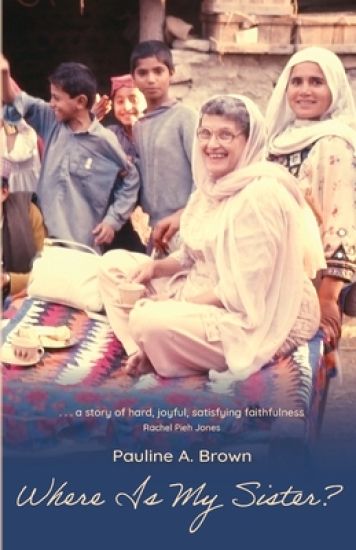
Polly Brown and her husband Ralph lived, worked, and raised their children in Pakistan for 35 years. During that time she forged deep friendships with Muslim, Christian and Hindu women who became sisters to her. In this book she tells their stories." What a wonderful book Pauline Brown invites us into her home and the homes of her Pakistani friends - "sisters" - and as we become familiar with their lives and culture and customs, we also get a glimpse into their hearts. Pauline opens her heart through the stories of individual women, from many walks of life and faith, who first became friends and then, over time, true sisters of the heart. She relates how these women taught and touched her heart and life even as she shared with them her life - and the light and life and love of Jesus. These stories leave an indelible impression of her dear "sisters," each with individual plots and some with uncertain conclusions, but all who have impacted the author and now the reader. This book does not stop with these stories. One is left with the challenge to look around, to step out of ones comfort zone, and to ask the question: "Who is my sister?" Miriam Rockness, author of A Passion for the Impossible: The Life of Lilias Trotter
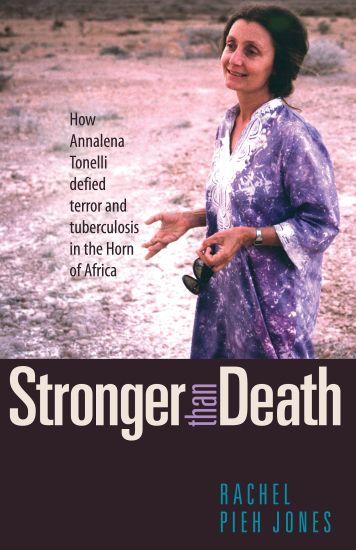
Think Mother Jones meets Mother Teresa, in Mogadishu. Amid a volatile mix of disease, war, and religious fundamentalism in the Horn of Africa, what difference could one woman make? Annalena Tonelli left behind career, family, and homeland anyway, moving to a remote Muslim village in northern Kenya to live among its outcasts – desert nomads dying of tuberculosis, history’s deadliest disease. “I am nobody,” she always insisted. Yet by the time she was killed for her work three decades later she had not only developed an effective cure for tuberculosis among nomadic peoples but also exposed a massacre, established homes and schools for the deaf, advocated against female genital mutilation, and secured treatment for ostracized AIDS patients. Months after winning the Nansen Refugee Award from the UN in 2003, Annalena Tonelli was assassinated at one of the tuberculosis hospitals she founded. Rachel Pieh Jones, an American writer, was living a few doors down, having moved to Somaliland with her husband and two children just months before. Annalena’s death would alter the course of her life. No one who encounters Annalena in these pages will leave unchanged. Her confounding, larger-than-life example challenges our assumptions about aid and development, Christian–Muslim relations, and what it means to put one’s faith into practice. Brought vividly back to life through Jones’s meticulous reporting and her own letters, Annalena presents us with a new measure of success and commitment. But she also leaves us a gift: the secret to overcoming the fear that pervades our society and our hearts – fear of disease and death, fear of terrorism and war, fear of others, and fear of failure.
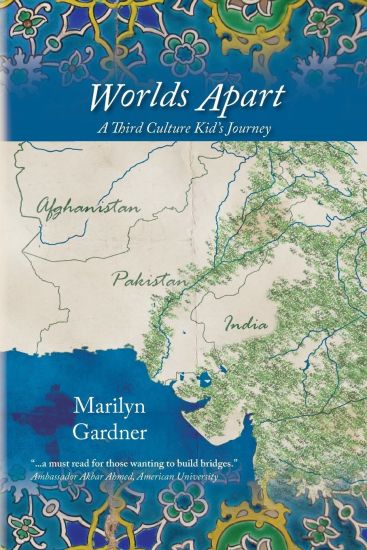
This sequel to Marilyn Gardner's Between Worlds probes deeply into the journey that forms a third culture kid's identity. Gardner weaves together memories of joy and pain, close friendships and loneliness in a compelling portrait of an international childhood. From the close quarters of boarding school, to the strangeness of furloughs in her parents' native Massachusetts, Worlds Apart is an honest and moving portrayal of a young girl's struggles with faith, friendship, and belonging. The book offers an inspiring model for other third culture kids seeking to make sense of their unique experience, and the final chapter brings together many practical resources to help TCKs navigate their own journey. "This is a book that shows the complications of a challenging childhood, the healing power of a faithful life, and the precious gifts Third Culture Kids are to the world." Rachel Pieh Jones, from the Foreword"Part spiritual reflection, part childhood reminiscence and part travelogue, Marilyn's book will be especially welcomed by those trying to make sense of their own personal stories, especially if they involve transitions across multiple cultures and geographic locations." Ambassador Jonathan Addleton, author of The Dust of Kandahar and Some Far and Distant PlaceWorlds Apart incorporates material previously published by Doorlight Publications under the title Passages Through Pakistan.