Kirjojen hintavertailu – 12 859 818 kirjaa ja 27 kauppaa

Kirjailija

Rachel Potter

Kirjat ja teokset yhdessä paikassa: 5 kirjaa, julkaisuja vuosilta 2006–2024, suosituimpiin kuuluu Why Do Bad Things Happen?. Vertaile teosten hintoja ja tarkista saatavuus suomalaisista kirjakaupoista.

5 kirjaa

Kirjojen julkaisuvuodet: 2006–2024.

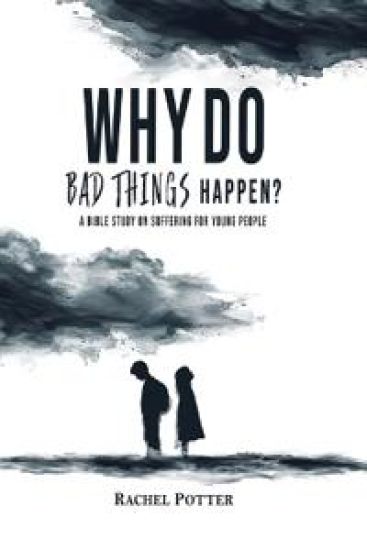
Why Do Bad Things Happen?

Why Do Bad Things Happen?

Rachel Potter

G3 Press
2024
pokkari
Have you ever wondered why bad things happen? If you haven't personally experienced suffering, you have probably heard about suffering in others' lives and throughout the world. This devotional will take you through what the Bible teaches about suffering. You will learn about the original cause of all bad things and how God has and will fix things Then you'll see how God uses bad things for good purposes. And throughout the devotional, you'll see great truths about our good God. Rachel Potter is wife to Matthew and mother to Ethan and Luke. She has degrees in Elementary Education and Ministry, and she loves using her theological training to minister in her local church. Matthew and Rachel hope to serve on the mission field someday.
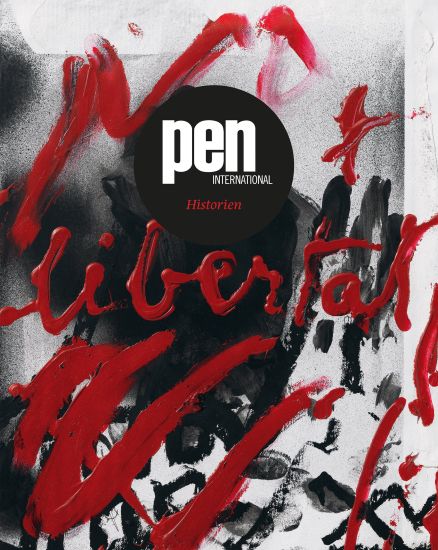
PEN International : historien - litteraturen känner inga gränser

PEN International : historien - litteraturen känner inga gränser

Ginevra Avelle; Jennifer Clement; Peter McDonald; Rachel Potter; Carles Torner; Laetitia Zecchini; Johan Svedjedal

Kaunitz-Olsson
2022
sidottu
Du håller i din hand ett stort stycke av den moderna litteraturhistorien som aldrig tidigare nedtecknats. PEN stod från början för ”Poets, Essayists, Novelists” och grundades i London 1921. Syftet var att skapa en plattform för litterärt utbyte, intellektuellt samarbete och vänskap mellan författare världen över. Sedan dess har samarbetet vuxit till ett globalt nätverk för skrivande människor och ett litterärt samhälle med hemort i mer än 100 länder. Den här boken rymmer den otroliga historien om hur PEN såg till att försvaret av yttrandefriheten och litteraturens plats i samhället blev centrala i kampen mot terror och förtryck. Från fördömandet av bokbål och förföljelse av författare i Nazityskland, över stödet till dissidentförfattare under kalla kriget, fram till dagens solidaritet med fängslade författare i diktaturens Kina har PEN hela tiden lagt sin kraft på att motarbeta alla former av censur och självcensur. Till de framstående författare som PEN kämpat för hör namn som Federico García Lorca, Stefan Zweig, Musine Kokolari, Wole Soyinka, Salman Rushdie, Ngig) wa Thiong’o, Anna Politkovskaja, Hrant Dink och Svetlana Aleksijevitj. Denna bok berättar deras historier, och många andras, rikt illustrerad med tidigare okända bilder och unika dokument.” Litteraturen känner inga gränser” – så lyder PEN:s själva grundprincip. Styrkan i dessa ord har gjort PEN International till den livskraftiga, världsomspännande organisation till litteraturens och yttrandefrihetensförsvar den är idag. Detta är berättelsen om hur det gick till.
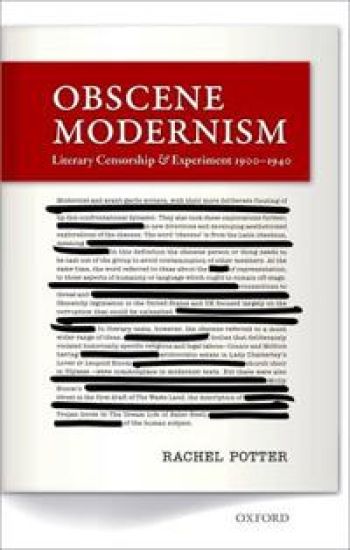
Obscene Modernism

Obscene Modernism

Rachel Potter

Oxford University Press
2013
sidottu
During the period 1900-1940 novels and poems in the UK and US were subject to strict forms of censorship and control because of their representation of sex and sexuality. At the same time, however, writers were more interested than ever before in writing about sex and excrement, incorporating obscene slang words into literary texts, and exploring previously uncharted elements of the modern psyche. This book explores the far-reaching literary, legal and philosophical consequences of this historical conflict between law and literature. Alongside the famous prosecutions of D. H. Lawrence's The Rainbow and James Joyce's Ulysses huge numbers of novels and poems were altered by publishers and printers because of concerns about prosecution. Far from curtailing the writing of obscenity, however, censorship seemed to stimulate writers to explore it further. During the period covered by this book novels and poems became more experimentally obscene, and writers were intensely interested in discussing the author's rights to free speech, the nature of obscenity and the proper parameters of literature. Literature, seen as a dangerous form of corruption by some, was identified with sexual liberation by others. While legislators tried to protect UK and US borders from obscene literature, modernist publishers and writers gravitated abroad, a development that prompted writers to defend the international rights of banned authors and books. While the period 1900-1940 was one of the most heavily policed in the history of literature, it was also the time when the parameters of literature opened up and writers seriously questioned the rights of nation states to control the production and dissemination of literature.
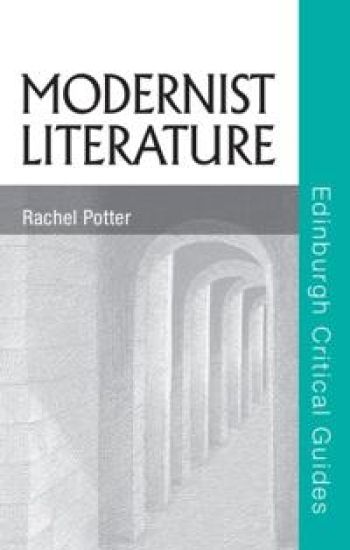
Modernist Literature

Modernist Literature

Rachel Potter

Edinburgh University Press
2012
sidottu
Introduces students to a wide range of modernist writers and critical debates in modernism studies. Discussing canonical modernist writers such as James Joyce and T. S. Eliot alongside less familiar writers such as Mina Loy and Djuna Barnes, the guide takes students through a wide-ranging modernist literary landscape. It considers how the publishing networks and collaborative projects which connected writers in the period were central to the creation of English-language modernism. It also introduces students to recent critical debates in modernism studies, with separate chapters on modernism and the writing of geography and exile, the relationship between modernism, obscenity and literary censorship, and modernism and mass culture - with a particular focus on the modernist interest in film - and modernism and politics. The book also considers the changing meaning of the word modernism through twentieth and twenty-first century criticism. Key Features: *Introduces a wide range of modernist writers, including familiar authors such as T. S. Eliot, James Joyce, Ezra Pound and Wyndham Lewis and less canonical figures such as H. D., Mina Loy, Djuna Barnes and Laura Riding *Modernism is presented as an extensive literary landscape, something that has featured significantly in recent critical discussions of modernism *Introduces students to modernist techniques and to recent debates *Shows how English-language modernism emerged, and connects this to recent debates about modernist publishing and networks Key Words: Modernism, Modernist Literature, Publishing, Obscenity, Censorship, Mass Culture, Politics

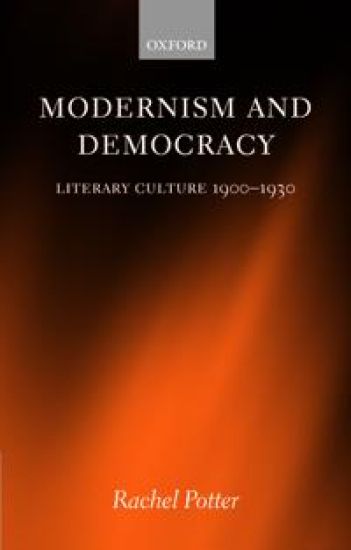
Modernism and Democracy

Modernism and Democracy

Rachel Potter

Oxford University Press
2006
sidottu
Anglo-American modernist writing and modern mass democratic states emerged at the same time, during the period of 1900-1930. Yet writers such as T. S. Eliot, W. B. Yeats, Ezra Pound, Wyndham Lewis, and Ford Madox Ford were notoriously hostile to modern democracies. They often defended, in contrast, anti-democratic forms of cultural authority. Since the late 1970s, however, our understanding of modernist culture has altered as previously marginalised writers, in particular women such as Gertrude Stein, Djuna Barnes, H. D., and Mina Loy, have been reassessed. Not only has the picture of Anglo-American modernist culture changed significantly, but the understanding of the relationship between modernist writing and politics has also shifted. Rachel Potter here reassess the relationship between modernism and democracy by analysing the wide range of different reactions by modernist writers to the new democracies. She charts the changes in the ideas of democracy as a result of the shift from liberal to mass democracies after the First World War and of women's entrance into the political and cultural spheres. By uncovering hitherto-unanalysed essays by a number of feminist writers she argues that in fact there was a widespread scepticism about the consequences of mass democracy for women's liberation, and that this scepticism was central to the work of women modernist writers.